

Many home cooks wonder if you can make meatloaf in an air fryer with the same consistency as a traditional oven-baked version. The short answer is yes, and in many ways, this modern appliance produces a superior texture by utilizing rapid heat transfer. By understanding how to manage the moisture and heat distribution, you can achieve a perfectly caramelized crust while keeping the center tender and juicy.
This method is surprisingly efficient, often cutting down on total prep and cook time compared to a conventional range. Whether you are cooking for a small household or looking to avoid heating up the kitchen, mastering this technique will change how you approach comfort food.
The Mechanics of Air Fryer Meatloaf
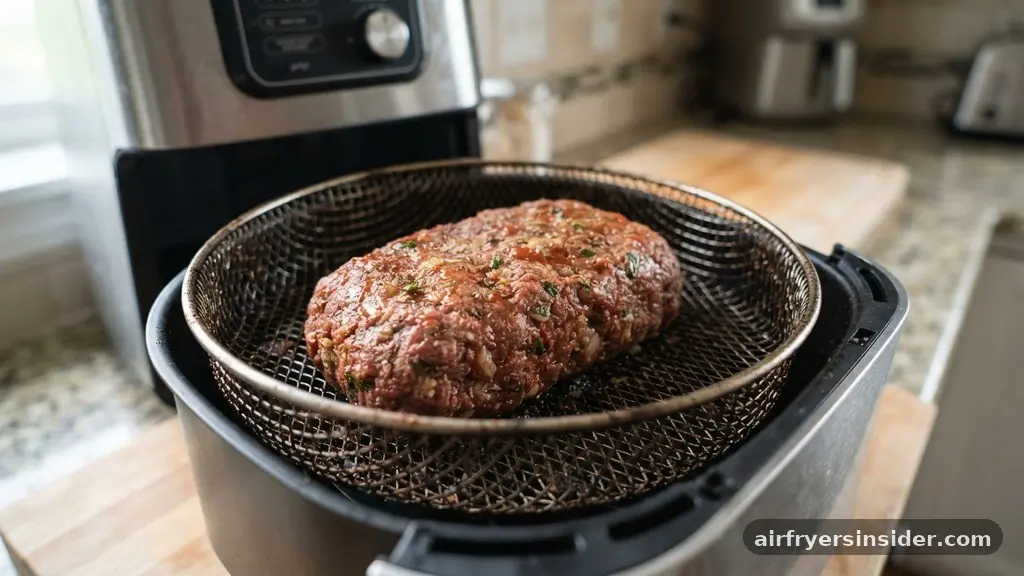
At its core, an air fryer is essentially a high-powered convection oven. When you place a loaf of meat inside, the appliance forces hot air to circulate rapidly around the food, which is the primary driver of the browning process.
Unlike a traditional oven, where heat radiates from the bottom or sides, the air fryer focuses on intense surface contact. This makes it an ideal environment for developing a rich, flavorful crust on your meatloaf without drying out the interior.
Because air circulation is so aggressive, the physics of the cooking process change slightly. You are essentially creating a convection-baked roast that benefits from constant, even heat. However, this also means the outside can brown faster than the inside cooks.
To balance this, most recipes suggest starting at a slightly lower temperature to ensure the middle reaches a safe internal temperature before the exterior becomes too dark or charred. Mastering this balance allows you to achieve that elusive combination of a crispy edge and a moist, savory center.
Choosing Your Meat and Ratios
The foundation of any great meatloaf lies in the lean-to-fat ratio of your base ingredients. Using 80/20 ground beef is generally recommended because the extra fat content provides essential moisture retention during the rapid cooking process of an air fryer. If you use meat that is too lean, such as 95% lean ground beef, the loaf may become crumbly or dry before the center is cooked through.
Many chefs prefer a blend, adding a portion of ground pork to the mix. The pork fat renders differently than beef fat, which adds a distinct depth of flavor and improves the overall mouthfeel.
Beyond the meat, your choice of binders is crucial. Breadcrumbs act as a sponge, holding onto the juices that would otherwise evaporate.
When you combine these with eggs, you create a structure that holds the loaf together under the intense heat of the circulating air. Don’t be afraid to experiment with panko or crushed crackers if you want a lighter texture, but remember that the goal is to create a cohesive mixture that won’t fall apart when you move it from the pan to your serving platter.
Preparation and Pan Selection
One of the most common questions is whether you can use a standard loaf pan in an air fryer. The answer depends entirely on the dimensions of your specific unit.
If you have a Ninja Foodi or a large-capacity Cosori, a mini loaf pan often fits perfectly, allowing you to maintain the classic shape. However, if your basket is smaller, you might need to form the meatloaf by hand and place it directly on a piece of parchment paper or a foil liner.
Using a foil liner is a smart strategy for cleanup, but ensure it doesn’t block the airflow. If you wrap the meatloaf too tightly in aluminum foil, you effectively steam it rather than air-fry it, which prevents the desired browning.
Instead, try using a small rack placement to elevate the meatloaf slightly off the bottom of the basket. This allows the hot air to circulate underneath the loaf, ensuring the bottom cooks as evenly as the top.
| Cooking Method | Heat Distribution | Crust Development |
|---|---|---|
| Traditional Oven | Radiant/Passive | Moderate |
| Air Fryer | Forced Convection | High/Crispy |
Managing Internal Temperature and Safety
Achieving the correct internal temperature is the only way to ensure your meatloaf is safe and delicious. Since air fryers vary significantly in wattage and size, you cannot rely solely on a timer. You must use a food thermometer to verify the doneness.
For ground beef and pork, you are looking for an internal temperature of at least 160 degrees Fahrenheit. Inserting a meat probe into the thickest part of the loaf during the last few minutes of cooking provides the most accurate reading.
Remember that carryover cooking will occur once you remove the meatloaf from the air fryer. The heat stored within the center of the loaf will continue to cook it for several minutes after it is pulled from the basket.
Because of this, you can often pull the meatloaf out when it hits 155 degrees Fahrenheit and let it rest on a cutting board. This resting time is vital, as it allows the juices to redistribute throughout the meat, resulting in a much more succulent slice.
The Role of Glaze and Aromatics
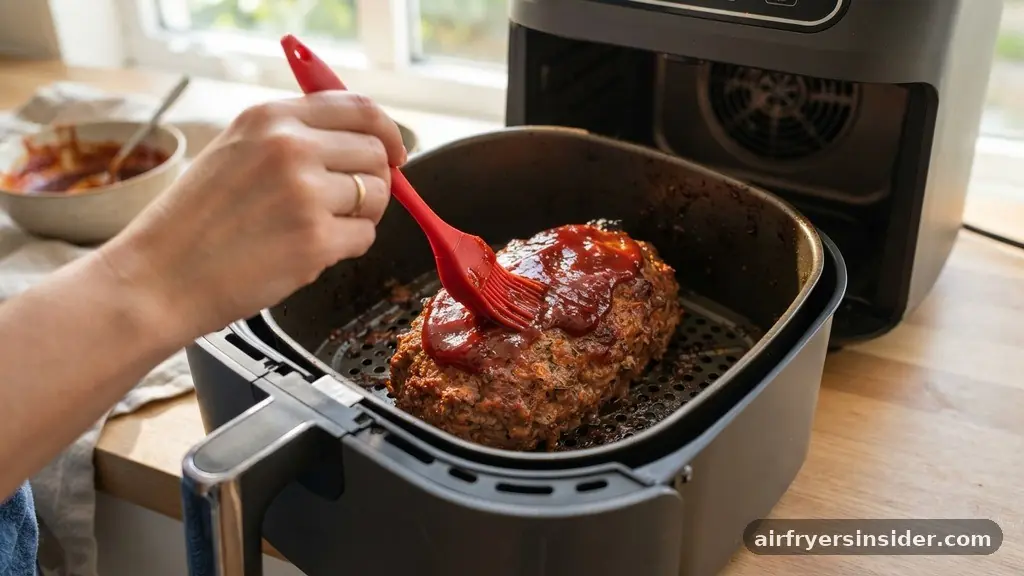
A classic meatloaf isn’t complete without a tangy glaze, and the air fryer environment is perfect for caramelizing these sugars. A mixture of ketchup, brown sugar, and a splash of Worcestershire sauce creates the perfect balance of sweet and savory.
You should apply this glaze in stages. If you put it on at the very beginning of the cooking process, the high heat might cause the sugars to burn before the meat is finished.
Instead, wait until the final 10 to 15 minutes of the cooking cycle to brush the glaze onto the surface. This allows the sauce to bubble, thicken, and form a sticky, flavorful crust that clings to the meat.
You can also incorporate aromatics like finely diced onions, garlic, or even shredded carrots into the meat mixture itself. Because the air fryer cooks faster than a standard oven, ensure these aromatics are chopped very finely so they have enough time to soften and integrate their flavors into the meat.
Addressing Common Topical Gaps
Many people struggle with the “falling apart” issue when making meatloaf in an air fryer. This often happens because the mixture is too wet or the loaf is handled too roughly before cooking. To address this, always chill your meat mixture for at least 20 minutes before shaping it.
This firms up the fats and makes the loaf easier to handle. Another common gap is the concern about smoke.
If your meatloaf is particularly fatty, the drippings can hit the bottom of the air fryer and smoke. Placing a piece of bread or a small amount of water in the bottom of the tray can help mitigate this, though keeping the loaf on a rack is the most effective solution.
Another frequent question concerns the size limit of the loaf. Trying to cook a massive, 3-pound meatloaf in a small air fryer is a recipe for disaster, as the outside will burn while the center remains raw.
If you need to feed a crowd, consider making two smaller, 1-pound loaves rather than one giant one. This increases the surface area exposed to the air, speeding up the cook time and ensuring a more consistent texture across the entire batch.
Refining Your Technique for Consistent Results
Once you have mastered the basics, you can begin to refine your process for better results. Preheating your air fryer is a step that many people skip, but it is essential for meatloaf.
When you drop a cold loaf of meat into a cold basket, the exterior doesn’t get that initial blast of heat necessary to start the browning process. By preheating for at least three to five minutes, you ensure that the cooking cycle begins immediately upon contact.
You should also consider the placement of your meatloaf in relation to the heating element. If your air fryer has a top-mounted fan, the top of your meatloaf will cook significantly faster than the bottom.
If you notice the top is browning too quickly, place a small square of aluminum foil over the top of the loaf to act as a shield. This allows the sides and interior to continue cooking without the risk of the top layer becoming bitter or burnt.
Flavor Profiles and Ingredient Variations
While the standard ketchup-based glaze is a classic, the air fryer is a great tool for experimenting with different flavor profiles. You might try a barbecue-inspired glaze using a smoky sauce and a touch of maple syrup, or perhaps a savory mushroom and herb crust. Because the air fryer concentrates flavors through moisture loss, these glazes often become more intense than they would in a traditional oven.
Don’t hesitate to play with the interior ingredients as well. Fresh herbs like parsley, thyme, or rosemary add a brightness that cuts through the richness of the ground beef.
If you enjoy a bit of heat, adding finely diced jalapeños or a dash of hot sauce into the mix can provide a nice contrast to the sweet glaze. Since the cooking time is relatively short, you don’t have to worry about delicate herbs losing their flavor, which often happens during long, multi-hour roasts.
Maintenance and Care
Cleaning your air fryer after making meatloaf is a task that shouldn’t be overlooked. Meatloaf, especially when glazed, can be quite messy. If you haven’t used a liner or a rack, the drippings can bake onto the basket, making it difficult to scrub clean.
Soaking the basket in hot, soapy water immediately after removing the food is the best way to prevent residue from hardening. Most modern air fryer baskets are dishwasher safe, but hand washing is usually recommended to preserve the non-stick coating.
If you find that your basket has developed a stubborn, sticky layer from the glaze, a paste made of baking soda and water is an excellent, non-abrasive cleaner. Apply it to the affected areas, let it sit for 15 minutes, and then wipe it away. This keeps your appliance in top condition, ensuring that your next culinary project—whether it’s meatloaf or something entirely different—doesn’t carry over any unwanted flavors from previous meals.
Frequently Asked Questions
Can you use a normal loaf pan in an air fryer?
You can, provided the pan is oven-safe and small enough to fit inside your air fryer basket with at least an inch of space on all sides for air circulation. Always check the manufacturer’s dimensions before attempting to insert any bakeware into the unit.
Is air fryer meatloaf better than oven-baked?
Many find it superior because the rapid air circulation creates a crispier, more caramelized exterior while keeping the inside moist. It is also faster and doesn’t require heating up your entire kitchen, making it a highly efficient method for weeknight dinners.
How long does it take to cook a 1lb meatloaf?
A 1lb meatloaf typically takes between 25 to 35 minutes at 350 degrees Fahrenheit. However, it is essential to use a food thermometer to check for an internal temperature of 160 degrees Fahrenheit, as individual air fryer models vary in heat output.
Do you need to flip the meatloaf?
No, you do not need to flip a meatloaf in an air fryer. The convective heat circulates around the entire loaf, cooking it evenly from all sides. Flipping it would likely cause the loaf to break apart, especially if it hasn’t fully set.
The beauty of cooking meatloaf in an air fryer lies in the efficiency and the quality of the final result. By focusing on a proper lean-to-fat ratio, using a rack for even airflow, and monitoring the internal temperature with a reliable thermometer, you can elevate a humble comfort food into a weeknight staple. The ability to achieve a perfect, caramelized glaze while keeping the center tender is exactly what makes this method so popular.
As you get more comfortable with your specific appliance, don’t be afraid to adjust your seasoning or glaze to suit your personal preferences. Start with a small loaf to gauge your air fryer’s unique performance, then scale up as you master the timing. Once you see how simple and effective this process is, you will likely never go back to the conventional oven for your meatloaf recipes again.


