

Reheating leftover poultry often leads to rubbery, flavorless results, but learning how to reheat chicken thighs in air fryer settings can completely change your experience. Because air fryers use intense convection heating, they excel at restoring the texture of your meal while keeping the meat succulent.
You can avoid the soggy mess of a microwave and the slow wait times of a conventional oven by mastering a few simple adjustments. With the right approach, you will achieve that perfectly crispy skin and juicy interior every single time you pull a container from the fridge.
Why the Air Fryer Excels for Leftover Poultry
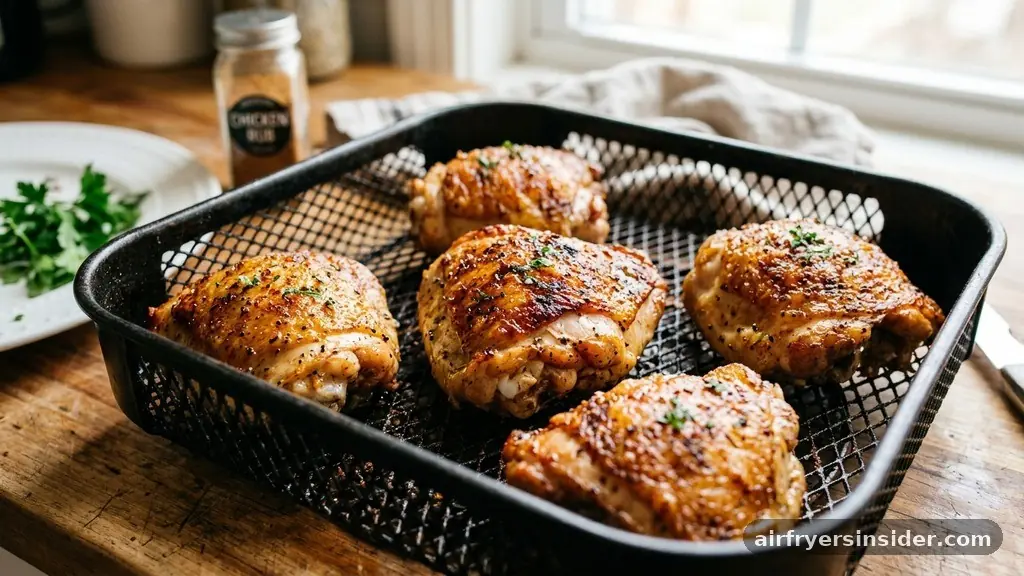
The air fryer has become a staple kitchen appliance for good reason. Unlike a microwave, which vibrates water molecules to heat food—often leading to uneven, rubbery results—the air fryer utilizes rapid hot air circulation.
This mimics the effect of a professional convection oven, allowing heat to penetrate the exterior quickly while maintaining moisture retention in the center of the meat. When you are reheating chicken thighs in air fryer baskets, you are essentially recreating the cooking environment that made the bird delicious in the first place.
This process is particularly effective for thighs because they are naturally higher in fat than breasts. That fat content works in your favor, as it helps the meat stay tender even after a second round of heating.
The high-speed airflow ensures that the surface of the poultry skin reaches a temperature where it can crisp up again, rather than just steaming in its own juices. By understanding the physics of heat transfer, you can turn a basic leftover meal into something that tastes as though it were prepared moments ago.
Preparing Your Leftovers for the Best Results
Before you place your chicken into the air fryer basket, a little preparation goes a long way. If the chicken has been stored in a tightly sealed container, it might have absorbed excess moisture from the cold.
Gently pat the exterior of the meat with a paper towel to remove any surface condensation. This simple step is crucial because excess water on the surface of the skin will turn into steam, which prevents the skin from becoming crispy and instead leaves it soft or mushy.
If you are dealing with cold, straight-from-the-fridge chicken, consider letting it sit on the counter for about ten minutes before you start. Bringing the meat closer to room temperature ensures that the interior heats through before the exterior begins to burn.
If you have the time, this small buffer helps the thermal conductivity of the meat, allowing for a more even distribution of heat. Remember to treat the chicken gently; if you are working with breaded pieces, try not to stack them too high, as this can lead to uneven heating and soggy spots where the pieces touch.
Optimizing Temperature and Timing
Finding the ideal reheating time is the most common point of confusion for home cooks. For most chicken thighs, a temperature between 350°F and 375°F works best. You want enough heat to crisp the skin, but not so much that the exterior dries out before the center warms up.
If your air fryer runs particularly hot, stick to 350°F to ensure the meat heats through gently. Start checking your chicken after about four to five minutes.
The exact duration depends on whether the chicken is bone-in or boneless. Bone-in pieces will naturally take longer because the bone acts as an insulator, requiring more time for the heat to reach the center. Boneless thighs are much more forgiving and can usually be ready in six to eight minutes.
Always use an instant-read thermometer if you are unsure; the goal is to reach an internal temperature that guarantees safe consumption without overcooking the fibers. Aiming for an internal temperature of around 165°F is the standard for safety, but since the chicken is already cooked, you are really just aiming to get it hot and appetizing.
Managing Moisture and Texture
One of the biggest risks when reheating is dehydration. Because air fryers move air so efficiently, they can quickly dry out delicate proteins.
To combat this, a light coating of fat can act as a protective barrier. A quick spritz of olive oil spray before you begin the reheating process can help conduct heat more efficiently and ensure the skin crisps up rather than turning into dry, leathery parchment.
If you find that your chicken is looking a bit dry before you even start, you can place a small piece of parchment paper at the bottom of the basket to catch any drippings, or even add a teaspoon of water to the base of the basket—not touching the chicken—to create a light steam environment during the first minute of heating. This technique helps rehydrate the fibers slightly before the intense heat kicks in to crisp the skin. Always avoid overcrowding the basket; the air needs to circulate freely around each piece to ensure that every side gets equal exposure to the heat.
The Difference Between Bone-In and Boneless
When you are figuring out how to reheat chicken thighs in air fryer models, the presence of a bone makes a significant difference in your strategy. Boneless thighs are thin and uniform, making them ideal for quick, high-heat reheating.
They are easy to stack slightly if necessary, though a single layer is always preferred. Because they lack the bone, they heat through rapidly and are less likely to end up with a cold center.
Bone-in chicken thighs, conversely, require more patience. The bone is denser than the meat and takes longer to heat up. If you crank the heat too high on bone-in pieces, the outer layer of meat will become tough and dry before the area near the bone is even warm.
For bone-in pieces, it is better to use a slightly lower temperature, such as 340°F, and extend the cooking time by a few minutes. This allows the heat to radiate from the outside in, warming the bone and the surrounding meat evenly without compromising the quality of the exterior skin.
Comparison of Reheating Methods
| Feature | Air Fryer | Microwave | Conventional Oven |
|---|---|---|---|
| Texture | Crispy/Firm | Soft/Soggy | Soft/Dry |
| Speed | Fast | Very Fast | Slow |
| Moisture | Moderate | Low | Moderate |
| Ease of Use | High | High | Moderate |
Food Safety and Internal Temperature Standards
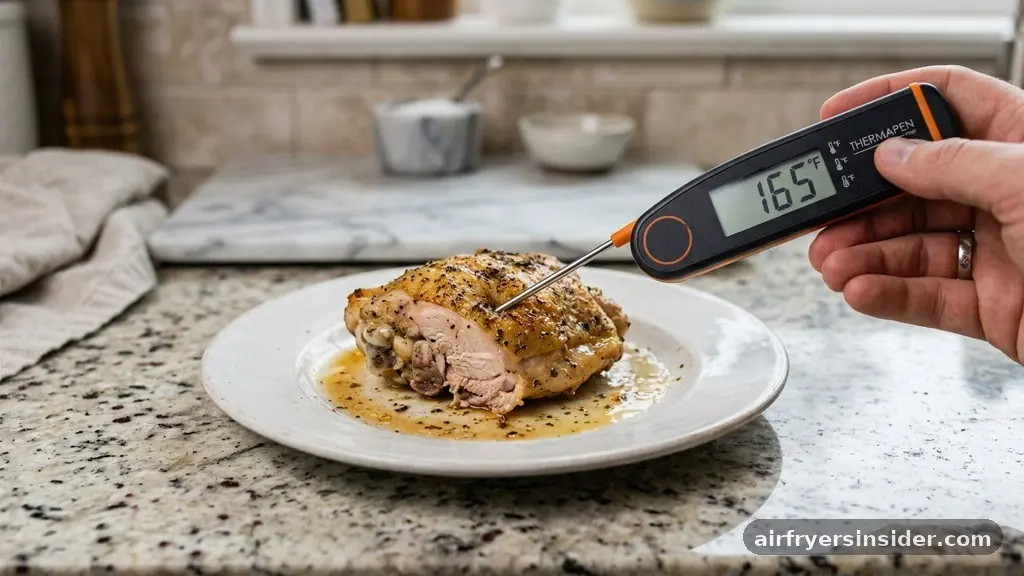
Regardless of how you choose to reheat your food, food safety must remain the priority. When reheating leftovers, you are attempting to bring the food back into the danger zone where bacteria can thrive if the process is too slow. Always ensure your chicken reaches a safe consumption temperature.
While the USDA recommends 165°F for poultry, keep in mind that since this is precooked chicken, you are not necessarily cooking it from raw; you are simply warming it. However, hitting that 165°F mark ensures that you have effectively neutralized any potential pathogens that may have developed during storage.
Using an instant-read thermometer is the only way to be certain. Do not rely on color or steam as an indicator of safety. If you are reheating a large batch, check the thickest part of the largest piece.
If the center is still cold, continue heating in one-minute increments. Once the chicken reaches the desired temperature, serve it immediately. Leaving reheated food out on the counter for extended periods after it has been warmed up increases the risk of foodborne illness, so plan your meal timing accordingly.
Troubleshooting Common Reheating Issues
Even with the best intentions, things can go wrong. If you find your chicken is burning on the outside but cold on the inside, you likely have the temperature set too high. Reduce the heat by 25 degrees and add an extra two minutes to the time.
If the chicken is becoming dry and fibrous, you might be over-reheating it. Remember, you are just warming the meat, not recooking it.
Another common issue involves excessive smoke. This usually happens if there is rendered fat in the bottom of the air fryer basket from previous uses or if the chicken is very fatty. Clean the basket thoroughly before you start, and if you notice smoke, stop the process and check the bottom of the basket for grease buildup.
Finally, if the skin is not getting crispy, it is almost certainly due to excess moisture. Ensure the chicken is dry before it goes in, and don’t be afraid to add a very light mist of oil to encourage the Maillard reaction, which is responsible for that golden-brown, flavorful finish.
Enhancing Flavor After Reheating
Reheating doesn’t have to mean eating the exact same meal you had the night before. Since you are already using the air fryer, you have the perfect opportunity to refresh the flavor profile. If the original seasoning has faded, a quick sprinkle of fresh herbs, a dash of smoked paprika, or a squeeze of lemon juice right before serving can wake up the dish.
You can also use the air fryer to add a glaze. During the last two minutes of the reheating process, brush your favorite barbecue sauce or a honey-garlic glaze onto the chicken. The heat of the air fryer will caramelize the sugars in the sauce, creating a sticky, delicious coating that tastes fresh and intentional.
This technique is particularly effective for boneless thighs, as the surface area is perfect for holding onto sauces. Experimenting with different finishing touches can make your leftovers feel like a brand-new culinary creation.
Common Mistakes to Avoid
- Overcrowding the basket: This prevents hot air circulation and results in uneven heating.
- Ignoring the fat content: Failing to drain the basket or using too much oil can lead to smoke and greasy meat.
- Using too high of a heat: This dries out the exterior before the heat reaches the center.
- Skipping the thermometer: Guessing the temperature is a recipe for food safety risks or dry, overcooked poultry.
- Heating for too long: Remember that you are reheating, not cooking from scratch; excess time equals lost moisture.
Addressing Frequently Asked Questions
How long does it take to reheat chicken in an air fryer?
Typically, it takes between 5 to 8 minutes to reheat chicken thighs. The exact time depends on the size of the pieces and whether they are bone-in or boneless. Always check for an internal temperature of 165°F to ensure it is thoroughly heated and safe to eat.
Can I reheat breaded chicken in the air fryer?
Yes, the air fryer is excellent for breaded chicken. Unlike the microwave, which turns breading into a soggy mess, the air fryer’s convection heat helps crisp up the coating again. Keep a close eye on it, as the breading can burn faster than the meat itself if the heat is too high.
Should I add oil before reheating chicken?
A light spritz of oil is highly recommended. It helps with thermal conductivity, ensuring the heat is distributed evenly across the surface of the meat. This extra fat also helps the skin crisp up beautifully, preventing the chicken from tasting dry or becoming rubbery during the reheating process.
Is it safe to reheat chicken more than once?
It is generally advised to avoid reheating chicken more than once. Every time you reheat and cool poultry, you increase the risk of foodborne illness and degradation of quality. Only reheat the specific amount you plan to consume in that sitting to ensure the best flavor and safety.
Mastering Your Leftovers
Learning how to reheat chicken thighs in air fryer equipment is a simple way to minimize food waste while maintaining high culinary standards. By controlling the temperature, ensuring proper airflow, and keeping an eye on the internal heat, you can transform what might have been a disappointing leftover meal into a delicious, juicy, and crispy dinner. The air fryer’s ability to circulate heat makes it the superior choice for restoring the texture of poultry, ensuring that you never have to deal with mushy or dried-out meat again.
Start by following these guidelines, and you will soon find that your leftovers are just as anticipated as the original meal. Take the time to experiment with your favorite seasonings and glazes, and don’t hesitate to reach out if you have further questions about optimizing your air frying routine for the best possible results.
Meta Description: Learn how to reheat chicken thighs in air fryer perfectly with our expert guide. Discover the best temperatures, timing, and tips for juicy, crispy results.


