

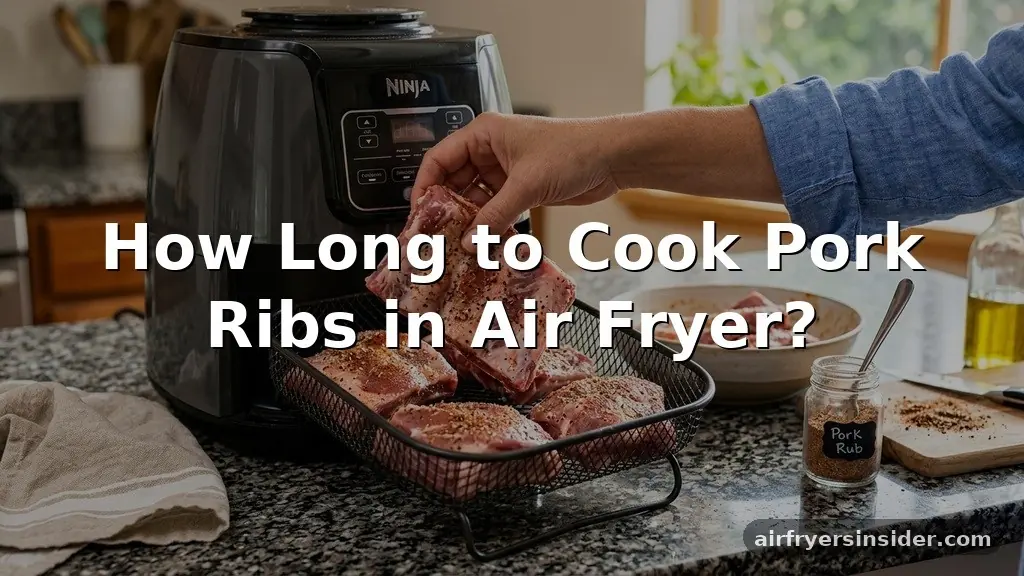
Figuring out exactly how long to cook pork ribs in air fryer setups can be the difference between a tough, chewy meal and a succulent, fall-off-the-bone dinner. Because air fryers use intense convection heat, they behave quite differently from a traditional smoker or a conventional oven. Mastering this process requires balancing the high-speed air circulation with the need for slow, steady heat to break down tough proteins.
When you get the timing and temperature right, you can achieve a perfect texture in a fraction of the time it takes to slow-cook a rack over charcoal.
Understanding the Mechanics of Air Fryer Rib Cooking 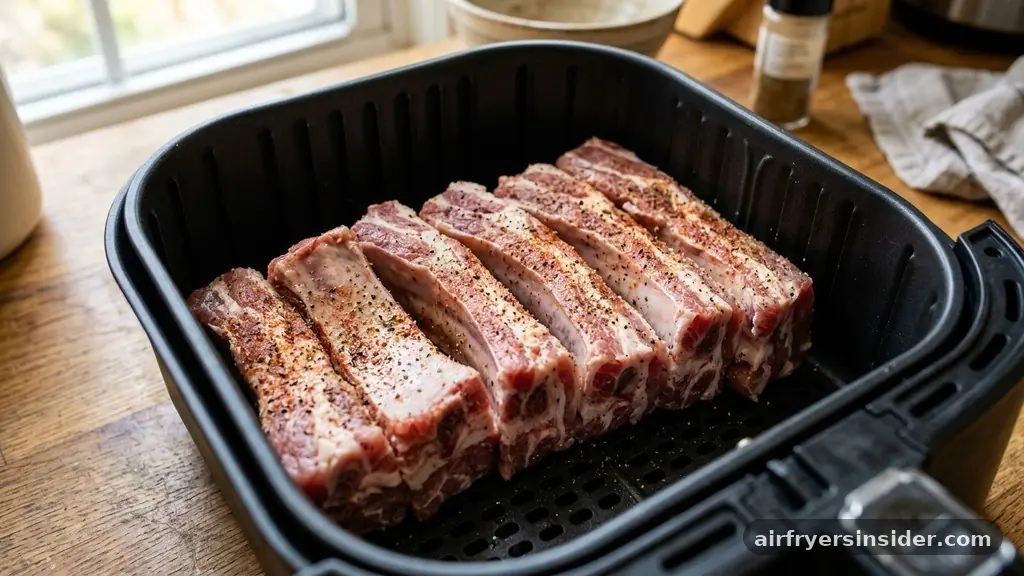
Air fryers are essentially high-powered countertop convection ovens. They rely on a heating element and a fan that circulates hot air at high speeds, which is why they are so effective at crisping the exterior of meat.
However, rib meat is loaded with connective tissue and collagen that requires time to soften. If you blast ribs at a high heat for the entire duration, you will end up with a charred, dry exterior and raw, rubbery meat near the bone.
To achieve the best results, you must mimic the low-and-slow process of traditional barbecue while utilizing the compact environment of your air fryer basket. This means starting with a lower temperature to allow for internal collagen breakdown and finishing with a higher heat to caramelize your sauce. Understanding that your appliance functions via rapid air movement helps you realize why you should never crowd the basket.
If air cannot flow freely around the ribs, you lose the benefits of the convection heat, leading to uneven cooking.
Preparing Your Ribs for Optimal Texture
Before you even worry about how long to cook pork ribs in air fryer units, you must focus on the prep work. The most critical step is the membrane removal.
That tough, papery layer of silver skin on the back of the ribs prevents seasonings from penetrating the meat and remains rubbery even after long cooking sessions. Use a butter knife to lift the edge of the membrane, then pull it away firmly with a paper towel.
Once the membrane is gone, applying a dry rub is the next step in building flavor. Whether you prefer a sweet, smoky, or spicy profile, ensure the rub is applied evenly across the entire surface. If you have the time, let the seasoned rack sit in the refrigerator for at least an hour.
This allows the salt to draw moisture to the surface and then reabsorb it, effectively tenderizing the meat before it even hits the heat.
The Ideal Temperature Strategy
Temperature control is the backbone of successful air frying. While many recipes suggest cranking the heat to 400 degrees Fahrenheit immediately, this is often a mistake for ribs.
For the initial phase of cooking, aim for a temperature between 300 and 325 degrees Fahrenheit. This lower setting allows the heat to penetrate the meat thoroughly without burning the surface sugars found in your rub.
After the meat has reached a tender state, you can increase the heat to 375 or 400 degrees Fahrenheit for the final five to ten minutes. This stage is dedicated to the Maillard reaction, where the sugars in your barbecue sauce brown and caramelize, creating that signature sticky, savory crust. If you skip the lower-temperature phase, the meat will never reach the internal temperature required for the connective tissue to dissolve, resulting in a disappointing, tough experience.
Managing the Cooking Process with Foil
When working with a standard air fryer basket, you may find that the ribs dry out before they are fully tender.
Wrapping the ribs in aluminum foil for the majority of the cooking time is a pro tip that acts as a braising method within the fryer. By sealing the moisture inside the foil packet, you create a steam-rich environment that accelerates the softening of the meat.
Place the foil-wrapped ribs in the basket for the first 25 to 35 minutes of the process. Once the internal temperature reaches roughly 185 to 190 degrees Fahrenheit, remove the foil, brush on your favorite sauce, and return the ribs to the basket for the final crisping stage. This two-part approach is the secret to achieving that elusive professional-grade texture in a home kitchen setting.
Essential Tools for Consistent Results 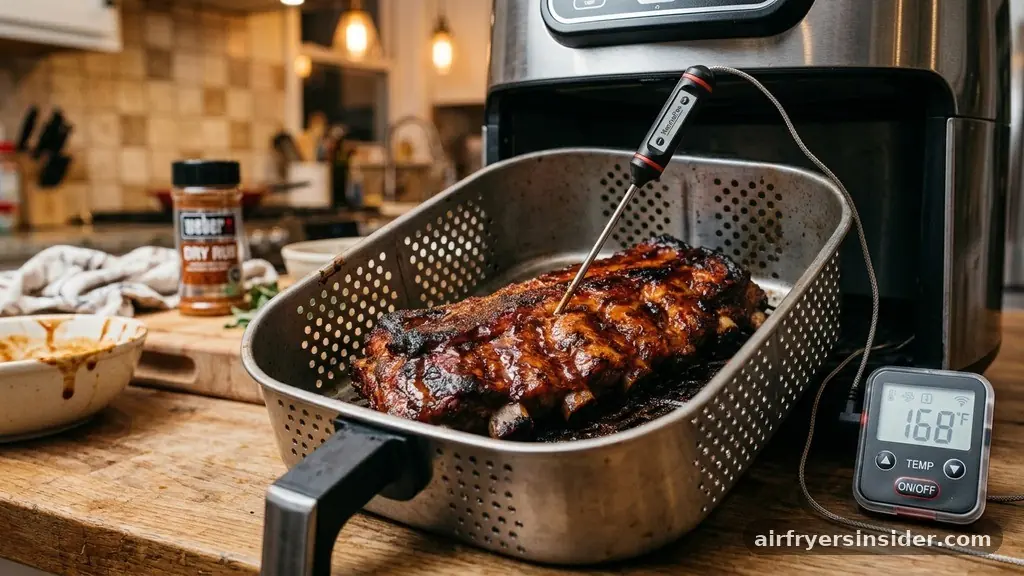
Consistency in the kitchen is rarely an accident; it is the result of using the right equipment.
A reliable meat thermometer is non-negotiable when you are learning how long to cook pork ribs in air fryer models. You should be aiming for an internal temperature of at least 195 to 205 degrees Fahrenheit for the meat to be truly tender. Relying on visual cues alone is risky, as ribs can look beautifully browned on the outside while remaining tough on the inside.
Beyond the thermometer, the capacity of your air fryer matters significantly. If you are using a compact unit like a smaller Cosori, you may need to cut a full rack into sections to ensure they fit properly.
If you own a larger Ninja Foodi, you might be able to fit more meat, but you must still arrange the pieces so they are not overlapping. Here is a quick reference table for different types of ribs:
| Rib Type | Initial Temp | Initial Time | Finishing Temp | Finishing Time |
|---|---|---|---|---|
| Baby Back Ribs | 300°F | 30-35 mins | 375°F | 5-8 mins |
| Spare Ribs | 300°F | 40-45 mins | 375°F | 8-10 mins |
Addressing Common Topical Gaps
A common issue many home cooks face is the difference between baby back ribs and spare ribs. Baby back ribs are smaller, leaner, and cook faster. Spare ribs have more fat and bone, requiring a longer stay in the heat to render down the intramuscular fat and connective tissue. If you treat them exactly the same, your baby back ribs will be perfect, but your spare ribs will be chewy.
Another gap in standard advice is the role of resting time. Many people pull the ribs out of the air fryer and slice them immediately. This is a mistake.
Allowing the ribs to rest for at least ten minutes lets the juices redistribute throughout the meat fibers. If you cut into them too quickly, the moisture escapes onto the cutting board, leaving you with dry meat. Always account for this resting period when planning your meal timing.
Troubleshooting the Smoke Point
Occasionally, you might notice smoke billowing from your air fryer.
This usually happens when the fat drippings hit the bottom of the basket and burn. If you are using a high-heat oil in your rub, ensure it has a high enough smoke point to withstand the air fryer environment. To mitigate this, place a small amount of water or a piece of bread at the very bottom of the air fryer, underneath the tray, to catch the drippings and prevent them from scorching.
If you find that your ribs are burning on the outside before they are done in the middle, check your sauce. Most barbecue sauces contain high amounts of sugar or molasses, which burn extremely quickly at temperatures above 350 degrees Fahrenheit. Only add your sauce during the final few minutes of the cooking cycle to ensure the sugars caramelize without turning into bitter, black carbon.
Comparing Air Fryer Models
Not all air fryers provide the same level of performance.
A Ninja Foodi, for instance, often features a more robust fan and heating element than basic budget models, which may cause it to cook slightly faster. Conversely, smaller, older models may have hot spots that require you to flip your meat more frequently to ensure even browning.
* Always preheat your unit for at least three to five minutes before adding the meat.
* Monitor your ribs closely during the last ten minutes, as air fryers can go from perfect to burnt very quickly.
* If your air fryer has a “roast” setting, consider using it for the first phase of cooking to provide more consistent, oven-like heat.
* Avoid using excessive amounts of sugar-heavy glazes until the very end to prevent messy cleanup and burnt flavors.
Perfecting Your Technique Over Time
The beauty of learning how long to cook pork ribs in air fryer machines is that once you understand the basic principles, you can customize the process to suit your palate. Some enthusiasts prefer their ribs with a bit of “bite,” while others insist on meat that falls away from the bone with the slightest touch of a fork.
The internal temperature is your best friend here. By tracking the temperature, you can dial in your personal preference for texture.
Don’t be afraid to experiment with different rubs or wood-smoke seasonings to replicate that outdoor grill flavor. Because the air fryer is a closed system, it doesn’t naturally impart a smoky taste, so using smoked paprika, liquid smoke, or a specialized dry rub can bridge that gap. With enough practice, you will find that the convenience of the air fryer doesn’t have to come at the expense of quality.
Frequently Asked Questions How do I know when my ribs are finished cooking?
The most reliable way is to use a meat thermometer.
Insert it into the thickest part of the meat, avoiding the bone. You are looking for an internal temperature between 195 and 205 degrees Fahrenheit. At this range, the collagen has broken down, ensuring the meat is tender.
Can I stack ribs in the air fryer basket?
It is not recommended to stack ribs.
For the air to circulate effectively and create a crispy texture, the hot air must reach all surfaces of the meat. If you layer them, the ribs in the middle will steam rather than roast, leading to an uneven and unappealing texture.
Should I preheat the air fryer before adding the ribs?
Yes, preheating is essential for consistent results. Just like a standard oven, starting the cooking process in a preheated environment ensures the temperature is stable from the first second.
This helps jumpstart the searing process and ensures your calculated cooking time remains accurate for the entire duration.
Why do my ribs turn out dry in the air fryer?
Dry ribs are usually caused by either cooking at too high a temperature for too long or failing to wrap them in foil. The air fryer is a very dry, hot environment. Using foil for the majority of the cook traps steam, which keeps the meat moist while the connective tissue softens.
Conclusion
Mastering the art of rib preparation in an air fryer is a rewarding skill that brings barbecue-quality results to your kitchen on any night of the week.
By focusing on temperature control, using the foil-wrap method for moisture retention, and ensuring you have the right internal temperature, you can consistently serve up tender, flavorful ribs. Remember that the specific timing can vary based on your appliance’s wattage and the thickness of your rack, so always use a thermometer as your final guide.
With these techniques, you are well-equipped to experiment with your favorite rubs and sauces. Enjoy the process of refining your method, and don’t hesitate to adjust your timing as you get to know the unique personality of your air fryer.
Meta Description: Learn exactly how long to cook pork ribs in air fryer units for perfect, fall-off-the-bone results. Discover temperature tips and essential preparation steps.


