

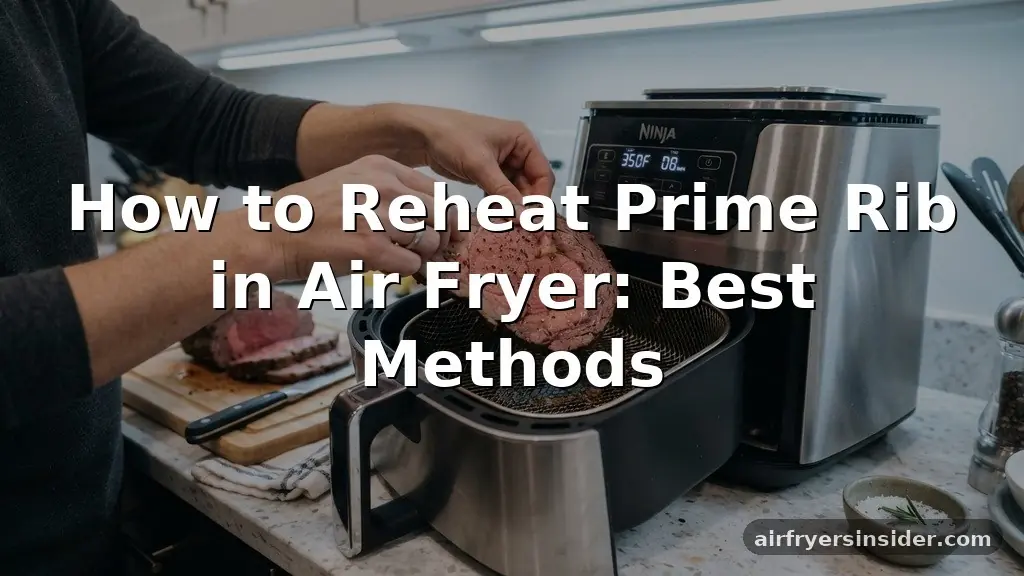
Successfully reheating prime rib in an air fryer allows you to transform a holiday centerpiece into a second meal without sacrificing that prized medium-rare finish. Many home cooks fear that warming up a high-quality beef roast will result in tough, gray, or dried-out meat, but the rapid convection heat of an air fryer actually offers a distinct advantage over traditional methods.
By focusing on temperature control and moisture retention, you can enjoy your leftovers with nearly the same texture and flavor as when they were first carved. This process requires precision, but it remains one of the most efficient ways to restore your leftovers to their former glory.
Understanding the Mechanics of Convection Reheating
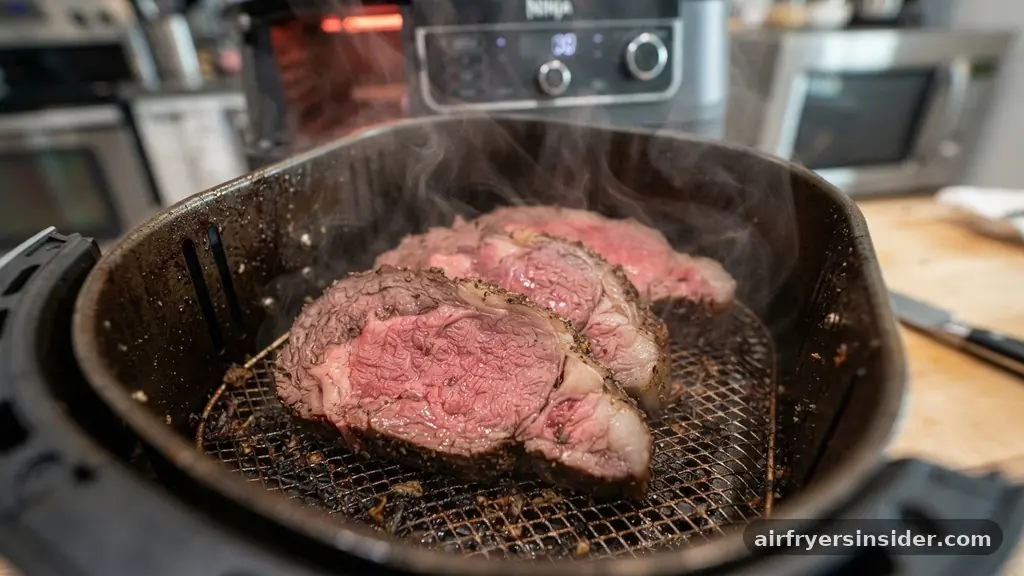
The primary challenge when warming up a thick beef roast is the risk of overcooking the exterior before the center reaches a palatable temperature. Unlike a microwave, which heats through molecular vibration and often leads to rubbery textures, the air fryer utilizes a powerful fan to circulate hot air. This form of convection cooking is highly effective because it mimics the environment of a professional kitchen’s convection oven, albeit in a smaller, more concentrated space.
When you place your slices in the air fryer basket, the hot air moves around the meat, ensuring that heat penetrates the surface evenly. Because prime rib is typically served at a specific internal temperature to maintain its quality, the goal is to warm the meat gently rather than “cooking” it further.
Thermal conductivity plays a major role here; the air fryer transfers energy to the surface of the meat quickly, so keeping the temperature low is essential. If you crank the heat too high, you lose the medium-rare center you worked so hard to achieve during the initial roasting process.
Preparing Prime Rib for the Air Fryer
Before you even consider turning on your appliance, you must prepare the meat correctly to ensure the best results. If you are starting with a large chunk of beef, slice it into uniform pieces about three-quarters of an inch thick.
Slicing the meat creates more surface area, which helps with uniform heating, but it also increases the risk of dehydration. To combat this, you should bring your leftover slices to room temperature for about 15 to 20 minutes before placing them in the basket.
Applying a small amount of fat or liquid can also make a significant difference. A light brush of olive oil or a small splash of beef broth or au jus on the slices helps conduct heat and keeps the surface from drying out.
Avoid overcrowding the air fryer basket, as this prevents the hot air from circulating freely, which can lead to uneven results. If you have a significant amount of meat to reheat, it is always better to work in batches rather than stacking the slices on top of one another.
Setting the Optimal Temperature and Timing
Achieving the perfect reheat depends entirely on your ability to manage the settings on your device. Most modern air fryers, including the Ninja Foodi, allow for precise temperature control.
For prime rib, you should aim for a lower temperature range, typically between 250°F and 300°F. While it might be tempting to use a higher setting to get the job done faster, the lower heat is much more forgiving and keeps the meat tender.
The total reheating time will vary based on the thickness of your slices and the specific model of your air fryer. Generally, you are looking at a window of three to six minutes. It is critical to use a meat thermometer to check the internal temperature of the thickest slice.
You are aiming for an internal temperature of about 120°F to 125°F. Once the meat hits this range, remove it from the heat immediately, as the residual heat will continue to raise the temperature slightly after you pull it out of the basket.
Comparing Reheating Methods
Every kitchen tool has its strengths and weaknesses when it comes to leftovers. Understanding how the air fryer stacks up against other common appliances can help you decide if it is the right choice for your specific meal.
| Method | Moisture Retention | Heating Speed | Texture Outcome |
|---|---|---|---|
| Air Fryer | Moderate | Fast | Crisp edges, warm interior |
| Oven | High | Slow | Consistent, gentle warming |
| Microwave | Low | Very Fast | Often tough or rubbery |
| Sous Vide | Excellent | Slow | Perfectly uniform temperature |
While the oven method is often cited for its ability to keep meat moist, it requires preheating and a longer wait time. The air fryer provides a middle ground: it is much faster than an oven and provides a much better texture than a microwave. The primary downside is that the air fryer can dry out the surface faster than an oven, which is why the addition of au jus or broth is so important.
Addressing Topical Gaps in Reheating
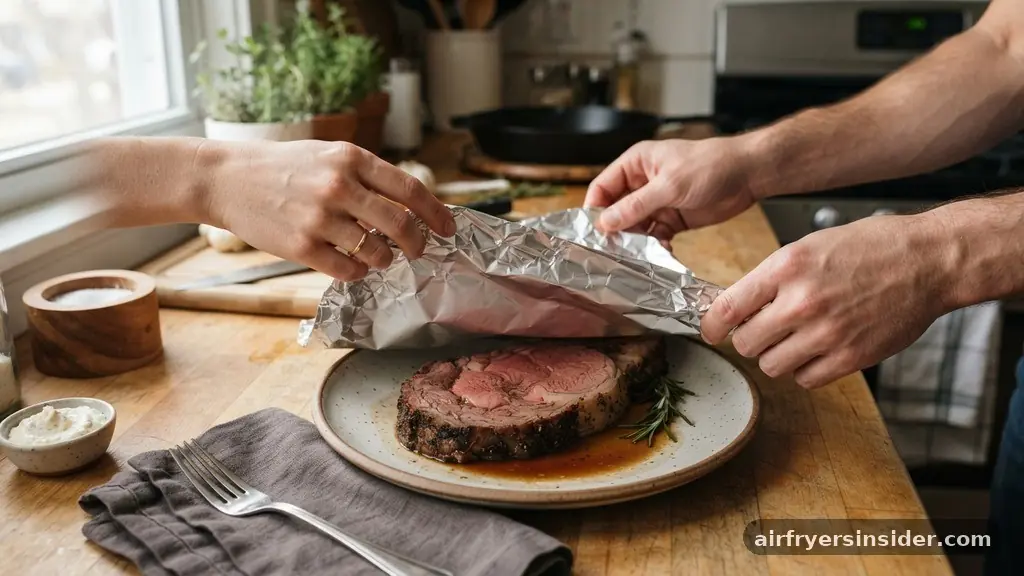
Many guides fail to mention the importance of resting the meat even after it has been reheated. Just as a roast needs to rest after coming out of the initial oven, your reheated slices benefit from a brief period of stabilization.
Placing the meat on a warm plate and covering it loosely with foil for two minutes allows the juices to redistribute throughout the fibers. This small step ensures that the very first bite is as succulent as the last.
Another common gap in advice involves the use of accessories. If you own a Ninja Foodi or a similar device, you might have access to a crisper plate or a rack.
Using a rack can be beneficial as it allows air to flow underneath the meat, preventing the bottom side from becoming soggy or overcooked against the metal basket. If your device allows for it, elevating the meat slightly can lead to a more professional, uniform finish that rivals a restaurant-style serving.
Essential Kitchen Tools for Success
You do not need a professional kitchen to reheat prime rib successfully, but having the right tools makes the process much more manageable. Beyond the air fryer itself, a high-quality digital meat thermometer is non-negotiable.
Because reheating is a delicate process, you cannot rely on visual cues alone to determine if the meat is safe and ready to eat. A probe thermometer that provides instant feedback will save your dinner from becoming overcooked.
Additionally, consider using high-heat-resistant tongs to handle the slices. You want to avoid piercing the meat with a fork, as this allows valuable juices to escape, leading to a loss of flavor and moisture.
A small silicone brush for applying au jus and a heavy-duty plate for the resting phase are also helpful additions. Keeping these items organized ensures that you can move from the fridge to the plate without fumbling, which helps maintain the internal temperature of the meat.
Food Safety and Leftover Management
Proper food safety is paramount when dealing with high-value leftovers like prime rib. Always ensure that your leftovers were stored in an airtight container in the refrigerator within two hours of the initial serving.
If the meat has been sitting out for longer than that, it should be discarded to avoid the risk of bacterial growth. When reheating, ensure the process is uninterrupted; don’t start the air fryer and then leave the kitchen for an extended period.
Leftover management also involves knowing when the meat is past its prime. Generally, cooked beef roast is safe in the refrigerator for three to four days. If you find yourself with more leftovers than you can consume in that timeframe, consider freezing the slices.
When you are ready to eat them later, allow them to thaw slowly in the refrigerator overnight before applying the air fryer reheating method. This gradual approach prevents the meat from entering the “danger zone” and keeps the texture as close to fresh as possible.
Enhancing Flavor During the Reheat
While the primary goal of the air fryer is to warm the meat, you can also use this time to enhance the overall flavor profile. A light sprinkling of fresh herbs, such as rosemary or thyme, just before the meat goes into the air fryer can infuse the beef with a pleasant aroma. Alternatively, if your prime rib was served with a horseradish cream or a red wine reduction, you can warm these sauces separately and drizzle them over the meat immediately before serving.
Do not be afraid to adjust the seasoning slightly. Leftover meat can sometimes taste less vibrant than fresh meat due to the oxidation that occurs during storage.
A tiny pinch of flaky sea salt or a crack of fresh black pepper on the surface of the meat after it comes out of the air fryer can “wake up” the flavors. By treating the reheating process as a final step in the cooking journey rather than a chore, you turn a simple leftover meal into a gourmet experience.
Common Mistakes to Avoid
Even with the best intentions, it is easy to make small errors that compromise the quality of the beef. One of the most frequent mistakes is overloading the air fryer basket. As mentioned earlier, air circulation is the secret to success, and stacking meat prevents this.
Another common error is using too much liquid. While a splash of au jus is beneficial, drowning the meat in liquid will cause the air fryer to steam the beef rather than crisp the exterior, resulting in a mushy texture.
Finally, avoid the temptation to “nuke” the meat in the microwave for a few seconds before putting it in the air fryer. While some people suggest this to speed up the process, it often leads to uneven heat distribution and ruins the delicate protein structure of the rare beef.
Stick to the air fryer from start to finish. If you find your slices are particularly thick, simply add an extra minute or two to the cooking time rather than trying to cheat the process with other appliances.
FAQ
Can I reheat leftover prime rib in an air fryer without it drying out?
Yes, you can keep it moist by adding a small amount of au jus or beef broth to the slices before heating. Keeping the temperature low, around 250°F to 300°F, and not overcooking it ensures the meat retains its tenderness and juicy quality.
Is it better to reheat prime rib in an air fryer or an oven?
The air fryer is faster and provides a slightly crisper edge, while the oven is better for gentle, uniform heating. If you have time, the oven is safer for larger roasts, but the air fryer is superior for individual slices, provided you monitor the temperature closely.
What is the ideal internal temperature for reheated prime rib?
You should aim for an internal temperature of 120°F to 125°F. This ensures the meat is warmed through while preserving the medium-rare finish. Use a digital meat thermometer to check the thickest part of the slice, as air fryers can vary in their heating intensity.
How do I keep the prime rib from becoming tough when using an air fryer?
The key is to avoid high heat. High temperatures quickly toughen the proteins in the beef. By maintaining a lower temperature and removing the meat as soon as it reaches the target internal temperature, you prevent the meat from turning gray and rubbery.
Conclusion
Mastering the art of reheating prime rib in an air fryer is a valuable skill for any home cook looking to minimize food waste while maintaining high culinary standards. By prioritizing low temperatures, ensuring proper air circulation, and checking the internal temperature with a reliable thermometer, you can reliably achieve that signature medium-rare finish every single time. Treat your leftovers with the same care you gave the original roast, and you will find that the second meal is just as enjoyable as the first.
Experiment with these techniques during your next holiday gathering or weekend dinner, and enjoy the convenience of perfect, restaurant-quality leftovers at home. If you have your own tips for perfecting this process, feel free to share your experiences in the kitchen.
Meta Description: Learn how to reheat prime rib in air fryer to achieve a perfect medium-rare finish. Discover tips for moisture retention, timing, and temperature control.


