

Getting the timing right for a perfectly toasted breakfast is a common kitchen challenge, especially when you are wondering how long to toast a bagel in the air fryer to achieve that ideal crunch. While a standard pop-up toaster is the traditional go-to, the air fryer offers a superior level of control over the final texture. By understanding the interaction between high-speed air circulation and your bagel’s density, you can transform a simple morning staple into a bakery-quality experience.
This guide breaks down the precise variables required to master this technique, ensuring you get that perfect golden brown finish without drying out the soft interior.
Why the Air Fryer Outperforms Traditional Toasters 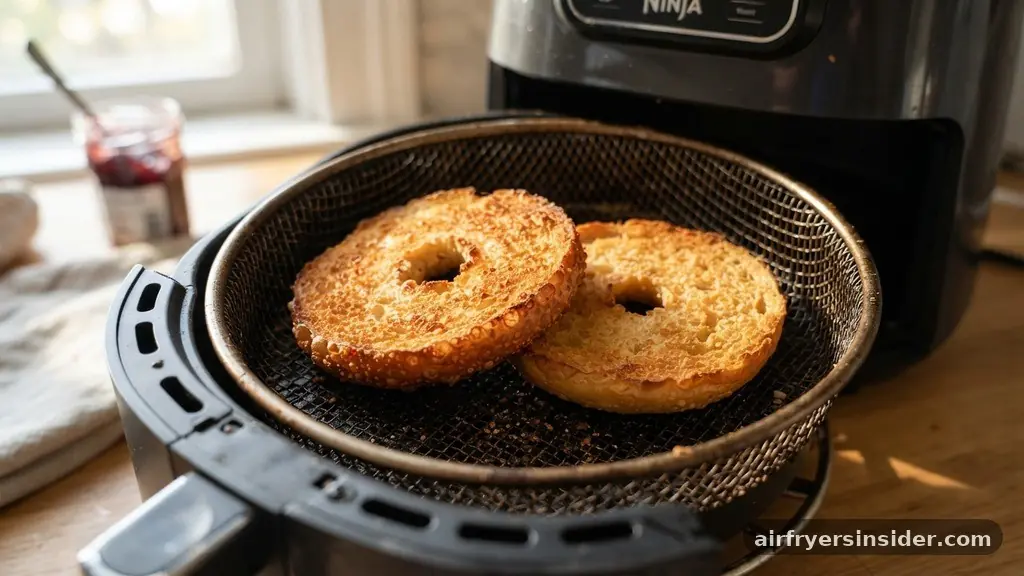
Most people rely on standard kitchen appliances like pop-up toasters because they are convenient, but they often lack the precision required for a high-quality bagel. A toaster uses radiant heat from thin wires, which can often burn the edges while leaving the center of a thick bagel cold or under-toasted. In contrast, an air fryer utilizes a powerful convection fan that circulates hot air evenly around the entire surface of the food.
This method ensures that both the cut side and the outer crust of your bagel halves receive uniform treatment. Because air fryers are essentially compact, high-powered ovens, they allow for a more controlled browning process. You aren’t just heating the surface; you are gently crisping the exterior while maintaining enough internal moisture to keep the bread from turning into a rock.
This level of control is why home cooks are increasingly turning to this method for everything from reheating leftovers to preparing the perfect morning meal.
Determining the Ideal Temperature Settings
The secret to success lies in choosing the right temperature settings. Most culinary experts recommend a range between 350 and 375 degrees Fahrenheit.
If you go too low, the bagel will dry out before it ever develops a satisfying crust. If you set the temperature too high—such as 400 degrees Fahrenheit or above—the exterior will char rapidly while the center remains frozen or doughy.
Consistency is key when working with different models like the Ninja Foodi or a Cosori. Because these machines vary in size and fan intensity, the first time you try this, it is wise to keep a close eye on the browning process. Start at 350 degrees Fahrenheit for a slower, more even toast, or move up to 375 if you prefer a more aggressive, crunchier texture.
Establishing the Perfect Cook Time
When you ask how long to toast a bagel in the air fryer, the answer usually falls between three and five minutes.
This timeframe is short enough to prevent the bread from becoming dehydrated but long enough to ensure the surface achieves that desirable golden brown color. Since every air fryer model has a slightly different heating element efficiency, your specific device may require a minute more or less.
It is helpful to check the bagel at the three-minute mark. If you prefer a lighter toast, you might be finished. If you like a darker, deeper crunch, let it run for another sixty to ninety seconds.
Always err on the side of caution; you can always add more time, but you cannot undo a burnt bagel.
The Role of Preheating and Air Circulation
Many people skip the preheating step, but for the best results, it is worth the extra minute. Preheating your air fryer ensures that the cooking chamber is at the target temperature the moment the bagel enters. This immediate exposure to heat helps seal the surface of the bread, which helps maintain the internal moisture that makes a bagel enjoyable.
Furthermore, consider the physical placement of your bagel halves. Do not stack them; place them in a single layer to ensure proper air circulation. If the air cannot flow freely around the edges, the browning will be uneven, and you will end up with soft, soggy spots that contrast poorly with the crispy parts.
If you are toasting multiple bagels, it is better to do them in batches rather than crowding the basket.
Preparing Your Bagel for Optimal Texture 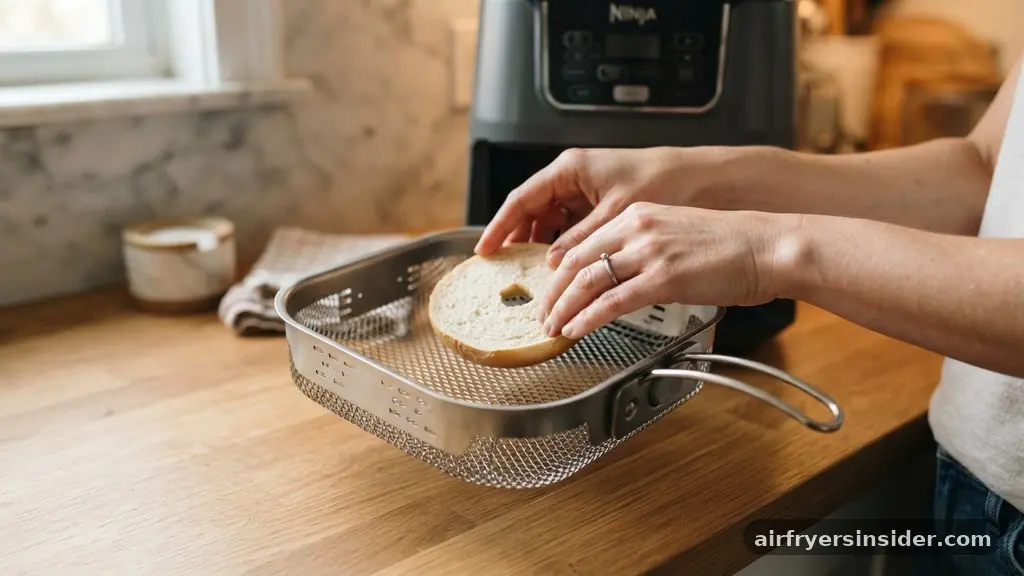
How you prepare the bagel before it hits the basket matters. If you are starting with a frozen bagel, you may need to increase the time slightly or lower the temperature to ensure the middle thaws without burning the outside.
If you are adding butter, apply it after the toasting process is complete rather than before. Putting butter on the bagel before it enters the air fryer can cause it to melt and drip through the basket grate, creating a smoky mess and potentially burning the bottom of the bagel.
Once the bagel is perfectly golden brown, you can spread your cream cheese or other toppings. The residual heat from the air fryer will make the butter melt perfectly into the nooks and crannies, creating a much better flavor profile than a standard toaster would provide.
Comparing Heating Methods for Bagels
To help you visualize how this method stacks up against traditional approaches, consider the following comparison table. It highlights why the air fryer is often considered the best toaster alternative for thicker breads.
| Method | Texture Outcome | Evenness | Speed |
|---|---|---|---|
| Pop-up Toaster | Dry/Crunchy | Low | Fast |
| Air Fryer | Crispy Outside/Soft Inside | High | Moderate |
| Conventional Oven | Uniformly Dry | High | Slow |
Addressing Common Topical Gaps
A common concern among users is the risk of the bagel becoming too tough or rubbery. This often happens when the air fryer is set to a temperature that is too low for too long. If you find your bagels are turning out like crackers, try increasing the temperature by 25 degrees and reducing the cook time by one minute. This “flash” method cooks the surface quickly while keeping the interior soft.
Another frequently overlooked factor is the type of bagel. A plain, store-bought bagel has a different density than a dense, authentic New York-style bagel. If you are dealing with a particularly thick or sourdough-based variety, it will naturally require more time.
Always adjust your expectations based on the thickness of the slice rather than sticking strictly to a single timer setting.
Troubleshooting Your Air Fryer Results
If you find that your bagel is browning too fast on the top but staying pale on the bottom, your air fryer might have a top-mounted heating element that is too close to the food. You can mitigate this by placing a small piece of parchment paper or a light wire rack cover, though this is rarely necessary. Usually, simply flipping the bagel halfway through the cycle is enough to ensure that the golden brown color is consistent on both the cut side and the crust.
If you encounter excessive smoke, it is almost certainly due to crumbs left in the bottom of the basket from a previous meal. Always ensure your basket is clean before starting. A clean basket also improves air circulation, which is vital for that perfect crunch.
Recommended Steps for Success
To summarize the process, follow these steps for the best results every time you use your air fryer:
- Preheat your air fryer to 360 degrees Fahrenheit to ensure stable heat.
- Slice the bagel evenly to ensure both sides cook at the same rate.
- Place the halves face-up in the basket, ensuring they are not overlapping.
- Set the timer for 3 minutes as a starting point for checking doneness.
- Monitor the browning closely during the final minute of the cycle.
- Remove immediately once the desired level of crispiness is achieved.
- Apply butter or cream cheese only after the bagel has been toasted.
Frequently Asked Questions
How do I prevent my bagel from getting too dry?
To avoid a dry texture, use a slightly higher temperature for a shorter duration. This creates a crisp exterior while keeping the center soft. Avoid overcooking; even one extra minute can turn a perfectly toasted bagel into something resembling a crouton.
Can I toast a frozen bagel directly in the air fryer?
Yes, you can. Simply add two minutes to your total cook time. You do not need to defrost it beforehand. The convection air is efficient enough to thaw and toast the bagel simultaneously without compromising the quality of the bread.
Is it necessary to use oil or butter before toasting?
It is not recommended to use oil or butter before toasting. Fats can drip through the basket and cause smoke. Toast the bagel plain first, and then add your desired toppings once the bread is hot and ready to absorb them.
What is the best way to reheat a bagel that is already toasted?
If you are reheating a bagel, set the air fryer to a lower temperature, around 300 degrees Fahrenheit, for about two minutes. This warms the interior and restores the crunch to the exterior without burning the surface or drying out the crumb.
Final Thoughts on Achieving the Perfect Toast
Mastering how long to toast a bagel in the air fryer is a simple way to upgrade your morning routine. By focusing on temperature control, proper air circulation, and avoiding the mistake of adding fats too early, you can enjoy a superior texture that a standard toaster simply cannot replicate. Start with the three-minute baseline, observe how your specific appliance handles the bread, and adjust accordingly to find your personal preference. Whether you like a light golden hue or a deep, dark crunch, the air fryer provides the versatility to get it right every single time. Experiment with these settings and enjoy the consistent, high-quality results that make this method a kitchen staple.


