

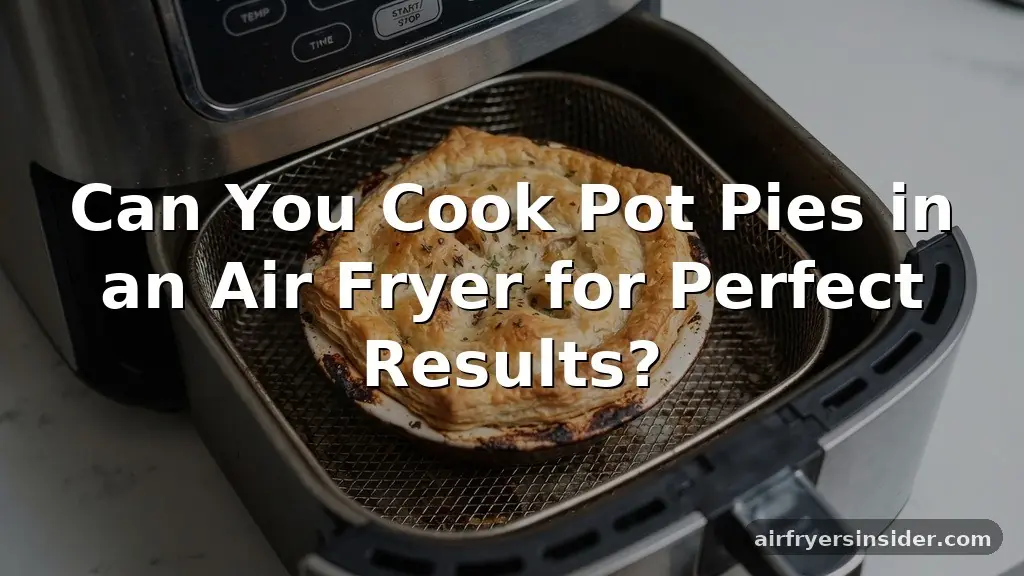
Many home cooks wonder if they can cook pot pies in an air fryer without sacrificing the quality of the crust or the consistency of the filling. The short answer is yes, and in many cases, the results are superior to traditional oven baking.
Because an air fryer acts like a powerful, compact convection oven, it creates an environment where pastry browning happens much faster than in a standard range. Whether you are looking for a quick lunch or a convenient dinner solution, understanding the mechanics of how your appliance interacts with frozen pastry will help you achieve that elusive flaky crust while ensuring the center remains hot and savory.
Understanding the Mechanics of Air Frying Pastry
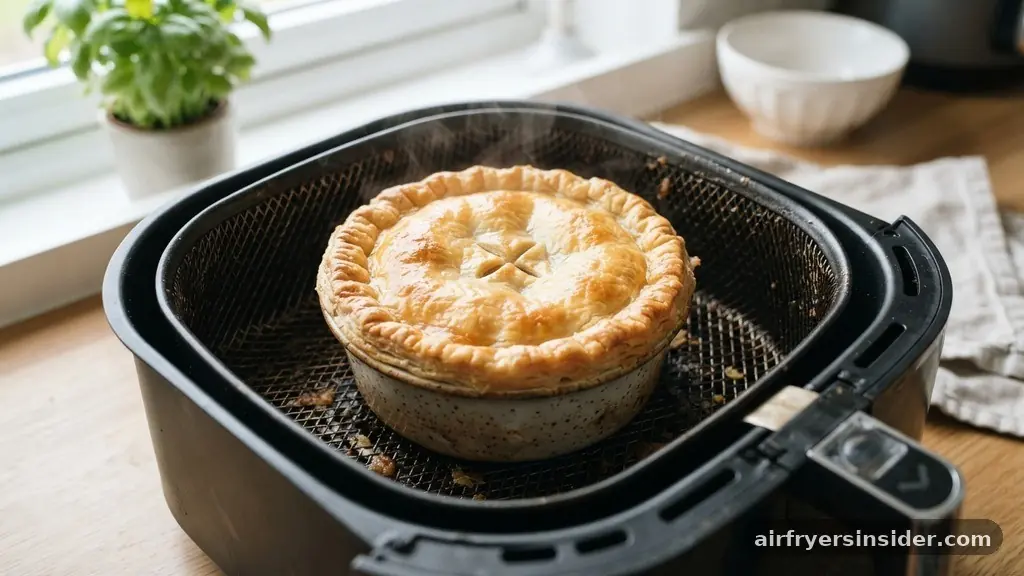
The primary reason air fryers are so effective at cooking savory pies is their use of rapid air technology. Unlike a conventional oven that relies on radiant heat from coils, an air fryer uses a high-powered convection fan to blast hot air around the food. This intense air circulation is perfect for puff pastry or standard pie dough because it forces the layers of fat to expand quickly, resulting in a light, airy, and crispy texture.
When you place a pot pie into the basket, the air circulation creates a localized heat zone that penetrates the exterior of the crust almost immediately. This rapid heat transfer is why you often don’t need to wait as long as you would with a standard oven preheat cycle.
However, the intensity of the heat can sometimes brown the top of the crust before the center has fully thawed or reached an appropriate internal temperature. Balancing this requires a nuanced approach to temperature settings, which we will explore in detail.
Essential Preparation Steps for Frozen Convenience Meals
Before you drop that pie into the basket, a few preparation steps can significantly improve your outcome. First, check the size of your pot pie tins.
Most commercial frozen pies come in thin aluminum containers that are perfectly safe for air fryer use, provided they fit comfortably without touching the sides of the basket. If the airflow is restricted by the walls of the unit, the crust will cook unevenly, leaving you with soggy spots.
If your pie comes in a cardboard sleeve, always remove it. While some ovens allow for these sleeves, the concentrated heat of an air fryer can cause the cardboard to burn or interfere with the convection fan’s performance. You should also consider whether you want to leave the pie in its original aluminum tin.
Removing it can sometimes lead to a crispier bottom crust, but it requires a bit of finesse to transfer a frozen pie without it crumbling. If you choose to remove the tin, place the pie on a piece of parchment paper designed for air fryers to prevent sticking.
Optimal Temperature Adjustments for Even Cooking
Achieving a golden brown finish requires more than just high heat. If you set your air fryer to the maximum temperature immediately, you risk burning the edges of the pastry while the middle remains cold.
Most users find that starting at a lower temperature—around 320°F to 340°F—allows the heat to penetrate the frozen filling gradually. Once the center is mostly thawed, you can bump the temperature up to 375°F or 400°F for the final few minutes to achieve that signature crispy texture.
This staged approach is particularly useful for larger meat pies that contain dense ingredients like potatoes, carrots, and thick gravy. Because the internal contents take longer to heat than the crust, patience is your best tool. You aren’t just baking; you are managing a delicate balance between pastry browning and internal heat distribution.
If you notice the top is darkening too quickly, you can employ a simple trick: foil tenting. Placing a small piece of aluminum foil over the top of the pie prevents the crust from scorching while the bottom and center finish cooking.
Monitoring Internal Temperature for Food Safety
Food safety is paramount when dealing with pre-cooked or raw-filled frozen meals. You must ensure the center of the pie reaches a safe internal temperature, typically 165°F, to guarantee that any meat or poultry inside is properly heated.
Relying solely on the timer can be misleading because different models of air fryers vary in wattage and efficiency. A digital food thermometer is an essential tool in your kitchen repertoire for this exact reason.
Simply insert the probe into the center of the pie, avoiding the very bottom of the tin to get an accurate reading of the filling. If the reading is below 165°F, simply add another two to three minutes of cooking time.
It is better to check early and add time than to serve a meal that is hot on the outside but potentially risky in the middle. Remember that the residual heat will continue to cook the pie for a minute or two after you pull it from the basket, so you can pull it out just as it hits the target temperature.
Comparing Conventional Ovens and Air Fryers
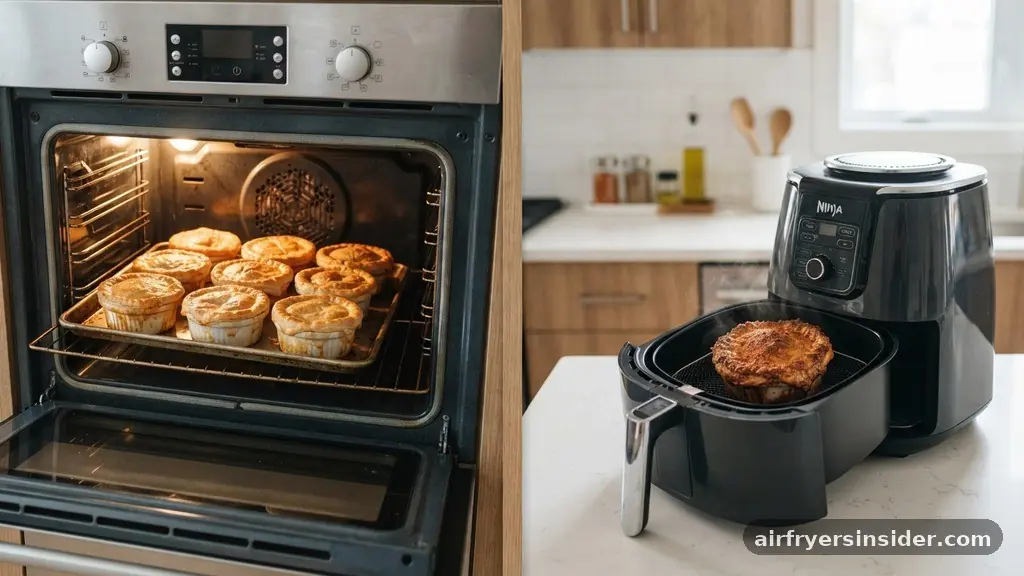
To understand why the air fryer has become a popular choice for this task, it helps to look at the differences in heat dynamics. Traditional ovens often have cold spots and struggle with consistent air movement, which is why they sometimes result in unevenly browned crusts. The following table highlights the key differences you might encounter when choosing your cooking method.
| Feature | Conventional Oven | Air Fryer |
|---|---|---|
| Cooking Time | 35–50 minutes | 18–25 minutes |
| Crust Quality | Even but sometimes soft | Consistently crispy/flaky |
| Preheating | Required (10-15 mins) | Minimal or unnecessary |
| Energy Usage | High | Low (more efficient) |
As you can see, the efficiency of an air fryer is a major advantage for quick meals. Because the cavity is smaller, the convection fan doesn’t have to work as hard to maintain a consistent temperature, which translates to faster, more reliable results for individual servings.
Addressing Common Topical Gaps
Many people ask if they can cook a pot pie from a brand like Marie Callender’s in an air fryer, and the answer is absolutely. However, there is a common misconception that you must follow the oven instructions exactly. You should ignore the oven temperature listed on the box and focus instead on the air fryer’s behavior.
Another gap in common knowledge involves the use of aluminum foil. Many people are afraid to put foil in an air fryer, but as long as it is weighted down by the pie or tucked securely so it doesn’t fly into the heating element, it is perfectly safe and highly effective for preventing burnt tops.
Additionally, many users worry about the bottom crust. If your air fryer basket has a mesh bottom, the heat will naturally circulate underneath, which is excellent.
If you have a solid tray or a basket that doesn’t allow much airflow from the bottom, you might want to flip the pie or remove it from the tin halfway through the cooking process. This ensures that the bottom doesn’t stay doughy while the top becomes overcooked.
Managing Different Types of Savory Pies
Not all pies are created equal. A chicken pot pie with a thick, puff pastry lid requires different handling than a dense beef meat pie with a traditional shortcrust base.
Puff pastry relies on high heat to puff up, so it benefits from a higher temperature setting in the final stages of cooking. Shortcrust, on the other hand, is more forgiving and can handle a steady, moderate heat throughout the entire process.
If you are reheating a leftover slice, the air fryer is significantly better than a microwave. A microwave will turn the crust into a rubbery, soft mess, whereas an air fryer will restore that crispy texture in just a few minutes.
To reheat, set the temperature to 350°F and check the progress after four minutes. The goal is to warm the filling without drying out the pastry, so keep a close watch during the final minute.
Best Practices for Consistent Results
Consistency comes down to how you load your basket. Never overcrowd the air fryer, even if you are cooking multiple small pies.
If the pies are touching, the sides will remain pale and soft because the hot air cannot reach those surfaces. If you have a large family, it is better to cook in batches rather than trying to force everything into one load.
Another tip is to lightly brush the top of the crust with an egg wash or a little bit of milk before cooking. This simple step promotes better browning and gives the crust a professional, glossy appearance. If you don’t have an egg wash, a light spritz of cooking oil will also do the trick, ensuring the pastry becomes golden brown rather than just drying out.
Troubleshooting Common Issues
If your crust is burning, you are likely using too high a temperature or your pie is placed too close to the top heating element. Most modern air fryers have the heating element at the very top of the chamber, so if you have a tall pot pie, it will be closer to the heat source.
In this case, definitely use the foil tenting method. If the center is still cold, reduce your temperature by 20 degrees and increase the time.
Sometimes the crust might crack or leak during the cooking process. This is usually due to the filling expanding faster than the crust can handle.
To mitigate this, consider poking a few small holes in the top crust with a fork before you start. This allows steam to escape, which not only prevents the pie from bursting but also helps the crust crisp up more effectively.
FAQ Section
Can I cook a frozen pot pie in an air fryer without thawing it first?
Yes, you can cook a frozen pot pie directly from the freezer. In fact, the air fryer is ideal for this because it handles the transition from frozen to fully cooked much faster than a standard oven. Just be sure to adjust the temperature to ensure the center heats through properly.
How do I know when the pot pie is fully cooked?
The best way to tell is by using a food thermometer. Insert it into the center of the pie to ensure it reaches an internal temperature of 165°F. Visually, the crust should be a deep golden brown, and the filling should be bubbling slightly around the edges of the pastry.
Is it safe to use aluminum foil in my air fryer?
It is safe to use aluminum foil, provided it is used correctly. Ensure the foil is securely tucked around the pie or weighted down by the food so it cannot be blown into the heating element by the fan. It is a great way to prevent the top from burning.
Can I cook multiple pot pies at the same time?
You can cook multiple pies if they fit comfortably in the basket without touching. If they are crowded, the airflow will be restricted, resulting in uneven cooking and soggy crusts. It is usually better to cook them in batches to ensure every pie gets that perfect, crispy finish.
Conclusion
Using an air fryer to prepare your favorite pot pies is a game-changing method for anyone who values both speed and quality. By leveraging the power of rapid air circulation and managing your temperature settings carefully, you can transform frozen convenience meals into a restaurant-quality experience right in your own kitchen. Whether you are dealing with a classic chicken pot pie or a hearty meat pie, the ability to achieve a perfectly flaky crust while ensuring the filling is piping hot is a skill that will save you time and effort.
Now that you know how to master the process, take a look at your favorite brand’s next sale and experiment with these techniques to find your perfect cooking time and temperature. Enjoy your crispy, savory results.
Meta Description: Learn if you can cook pot pies in an air fryer for a crispy, flaky crust. Discover expert tips on temperature, food safety, and achieving perfect results.


