

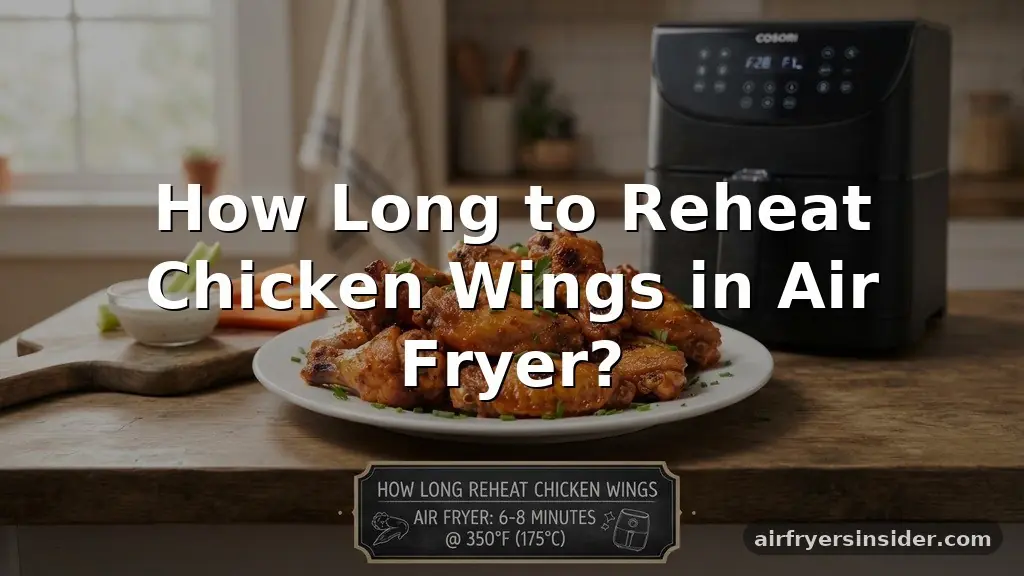
Figuring out exactly how long to reheat chicken wings in an air fryer is the secret to avoiding the rubbery, sad leftovers that usually come from a microwave. When you master the timing and temperature, those wings regain their original crunch and succulent interior, making them taste nearly as good as when they were fresh from the fryer.
Whether you are dealing with classic buffalo wings or sticky barbecue glazed pieces, the air fryer provides the perfect environment for restoring that irresistible texture. By understanding the science of convection cooking, you can easily turn your fridge-cold leftovers into a crispy, flavorful snack in just a few minutes.
Why the Air Fryer Outperforms Other Methods
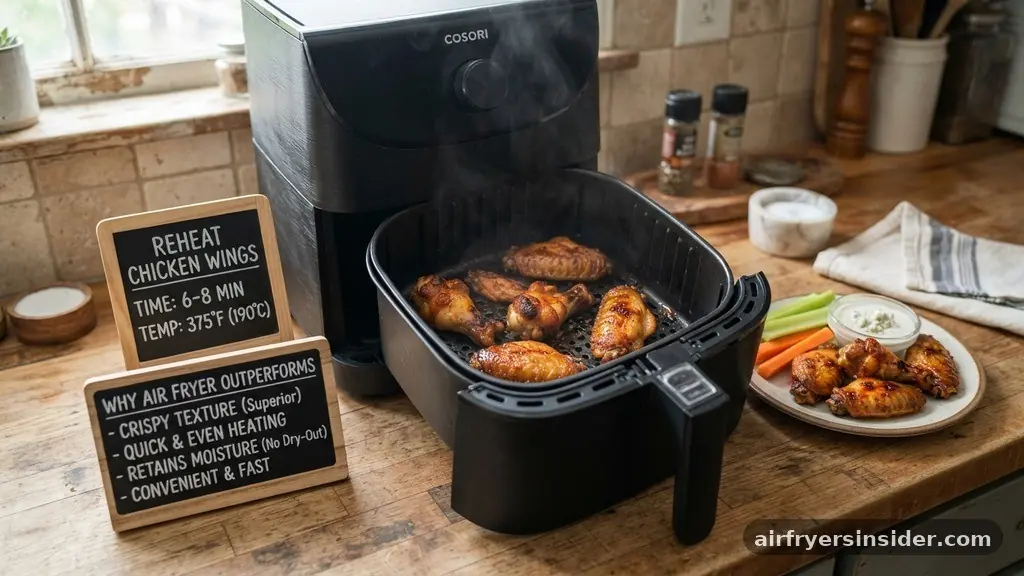
Most home cooks struggle with reheating poultry because they lack the right tools for moisture control. When you use a microwave, the waves agitate water molecules unevenly, often resulting in pockets of boiling hot meat alongside patches of rubbery, cold skin.
An oven, while reliable, can take twenty minutes just to reach temperature, leading to a long wait time that often dries out the meat before the skin gets crispy again. The air fryer changes the game by utilizing rapid air technology to blast the food with intense, circulating heat.
This process is essentially a miniature version of a professional convection oven. Because the basket is small and perforated, the hot air flows directly around the wings, rendering the fat in the skin and crisping it up rapidly. You aren’t just warming the wing through; you are actively re-cooking the exterior.
This specific method of thermal circulation ensures that the heat penetrates the meat without turning it into a dehydrated mess. If you have ever wondered why your wings feel like leather after a reheat, it is likely because they sat in a standard oven for too long. The air fryer solves this by getting the job done in a fraction of the time.
The Ideal Temperature for Reheating Wings
Setting the right temperature is just as important as the duration of the cook. If your heat is too low, the wings will sit in the basket for too long, allowing the internal juices to evaporate before the skin reaches that desired crunch.
If the temperature is too high, you risk burning the sauce or the breading before the center of the wing is warm. For most standard air fryers, 350°F to 375°F is the sweet spot.
At 350°F, you provide enough intensity to crisp the skin without scorching the exterior. If you have breaded wings, you might want to stick to the lower end of that range to prevent the crumbs from burning. For naked or buffalo wings that have been tossed in a thin sauce, 375°F works perfectly to caramelize the remaining sugars in the sauce.
Always remember that air fryers vary by brand—a Ninja Foodi or a Cosori might have slightly different fan strengths compared to a budget model. Start with the lower temperature if you are unsure, as you can always add more time, but you cannot fix a burnt wing.
Mastering the Timing for Perfect Results
When you ask how long to reheat chicken wings in an air fryer, the answer generally falls between six and ten minutes. This variance depends entirely on the size of the wings, how crowded your basket is, and whether the wings were straight from the fridge or closer to room temperature.
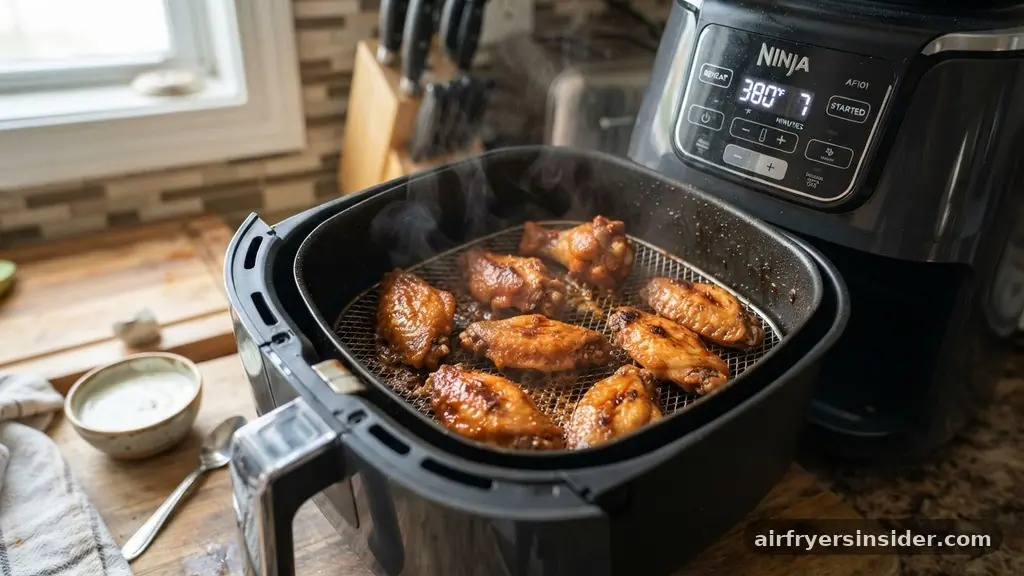
A smaller batch of six to eight wings will typically reach perfection in about six or seven minutes. If you are packing the basket to the brim, you will need to increase the time and likely shake the basket halfway through to ensure even heat distribution.
The key is to keep a close eye on the wings once you cross the five-minute mark. Because the air fryer is so efficient, the difference between “perfectly crispy” and “overcooked” can be as little as sixty seconds. Use your senses; you should be able to hear the skin sizzling as the fat renders.
If you are reheating a large pile of wings, do not be tempted to stack them. Proper airflow is essential for the convection effect to work its magic.
If you have too many, cook them in two batches. It will save you from having to deal with soggy, unevenly heated wings.
Essential Preparation Steps for Moisture Retention
Before you even turn on the machine, there are a few steps you can take to ensure the meat stays juicy. First, take the wings out of the refrigerator about ten to fifteen minutes before you plan to reheat them. Bringing the chill down slightly helps the wings heat through more evenly.
If the wings are bone-dry, a very light mist of oil spray can help conduct heat and improve the browning process. However, be careful not to overdo it, especially if the wings are already heavily sauced.
Some people prefer to use parchment paper or a silicone liner in the basket for easier cleanup. While these are convenient, they can sometimes obstruct the airflow if they cover too many of the basket’s vents. If you choose to use a liner, make sure it is specifically designed for air fryers and has enough holes to allow for proper air circulation.
Without that airflow, you lose the primary benefit of the appliance. Additionally, if the wings have a thick layer of congealed sauce, consider wiping off the excess before placing them in the basket, then re-tossing them in fresh sauce once they are hot.
Addressing Topical Gaps in Reheating Techniques
One common frustration that many home cooks face is the lack of clarity regarding different types of chicken. Reheating boneless wings requires a different approach than traditional bone-in flats and drums. Because boneless wings are often smaller and contain more breading, they can dry out much faster.
When reheating boneless wings, you should reduce the temperature to 330°F or 340°F and check them around the four-minute mark. They don’t have the protective layer of skin that bone-in wings have, making them prone to becoming tough if overheated.
Another gap in common advice is how to handle wings that were previously sauced. When you reheat buffalo wings, the sauce can often turn into a sticky, burnt mess on the bottom of the air fryer basket. To combat this, some experts recommend a “reheat and coat” method.
You warm the wings plain or with only a light dusting of spices, and then toss them in fresh, warm sauce immediately after taking them out of the air fryer. This keeps the skin crisp and ensures the flavor is vibrant, rather than tasting like it has been cooked twice.
Safety First: Internal Temperature Guidelines
Regardless of how you reheat your food, food safety remains a top priority. According to USDA guidelines, leftovers should be reheated to an internal temperature of 165°F to ensure any potential bacteria are eliminated.
While these wings were already cooked once, they have spent time in the “danger zone” while sitting in your refrigerator. Using an internal meat thermometer is the most reliable way to guarantee that the center of the wing is hot enough to be safe.
Simply insert the probe into the thickest part of the wing, avoiding the bone, which can give a false reading. If you don’t have a thermometer, you can judge by the steam. If the wings are piping hot to the touch and the meat pulls away from the bone easily, they are likely ready.
However, don’t rely on guesswork when it comes to food safety. Investing in a digital thermometer is a small price to pay for peace of mind, especially if you frequently cook and reheat poultry for your family.
Comparing Methods: Oven vs. Air Fryer
When you look at an oven vs. air fryer comparison, the air fryer is the clear winner for speed and texture. An oven requires a long preheat time and often results in a soggy bottom because the moisture has nowhere to escape. The air fryer, by contrast, creates a 360-degree heat environment that mimics a deep fryer without the excess grease.
| Feature | Air Fryer | Conventional Oven |
|---|---|---|
| Preheating Time | 2-3 minutes | 10-15 minutes |
| Reheat Time | 6-10 minutes | 15-25 minutes |
| Texture | Crispy and fresh | Often soft or dry |
| Energy Usage | Low | High |
As shown in the table above, the air fryer is significantly more efficient. Not only does it save you time, but it also uses less electricity because it doesn’t need to heat up a massive cavity. The texture difference is also striking; the air fryer’s fan-forced heat is specifically designed to remove surface moisture, which is exactly what you want for a crispy chicken wing.
Troubleshooting Common Reheating Issues
Even with the best instructions, things can go wrong. If you find that your wings are still cold in the middle after ten minutes, you likely overcrowded the basket. The air cannot circulate properly if the wings are touching or stacked.
Simply rearrange them in a single layer and give them another two to three minutes. If the skin is getting too dark but the meat is still cold, turn the temperature down by 25 degrees and continue for a few more minutes.
If your wings are coming out dry, it is almost certainly a result of overcooking. Remember that the goal is to warm the meat, not cook it again. If you are worried about moisture loss, you can place a small splash of water or broth in the bottom of the air fryer basket—underneath the rack or tray—to create a bit of steam.
This is particularly helpful for very lean wings or those that have been in the fridge for more than two days. Finally, always ensure your air fryer is clean; old grease buildup can smoke and impart an off-flavor to your food.
The Importance of Proper Storage
The quality of your reheated wings starts long before you turn on the air fryer. If you store your leftovers improperly, no amount of reheating technique will save them.
Always store your wings in an airtight container as soon as they have cooled to room temperature. Storing them in the original takeout box is a recipe for disaster, as the cardboard absorbs moisture and creates a soggy environment.
If you know you won’t be eating the wings within 48 hours, consider freezing them. Reheating frozen wings in an air fryer is entirely possible, though it requires a longer cook time—usually around 12 to 15 minutes at a slightly lower temperature of 325°F to ensure they thaw and heat through without burning. By keeping your leftovers properly sealed, you prevent them from absorbing fridge odors and drying out, which ultimately makes the reheating process much more successful.
Frequently Asked Questions
How can I tell if my wings are fully reheated?
The best way to ensure safety and quality is to use an internal meat thermometer. You are looking for an internal temperature of 165°F. If you don’t have a thermometer, the meat should be steaming hot throughout, and the skin should be noticeably crispy again.
Should I add more sauce before or after reheating?
Always add the bulk of your sauce after reheating. If you put cold, thick sauce on the wings before they go into the air fryer, it will likely burn or turn into a sticky, unappealing mess. Toss the hot, crispy wings in fresh sauce right before serving.
Can I reheat breaded wings the same way?
Yes, but be careful with the temperature. Breaded wings are more sensitive to high heat. Keep your air fryer at 330°F or 340°F to ensure the breading warms up and crisps without burning. Watch them closely, as the breading can go from golden to black very quickly.
Is it necessary to preheat the air fryer?
While not strictly required, preheating your air fryer for three minutes is highly recommended. Starting with a hot basket ensures the wings begin crisping the second they touch the surface. This helps maintain the texture and reduces the total time required for the wings to heat through.
Conclusion
Mastering the process of how long to reheat chicken wings in an air fryer transforms your leftover game. By focusing on the right temperature, avoiding overcrowding, and knowing when to add your favorite sauces, you can consistently achieve that perfect balance of crispy skin and juicy meat. It is a simple technique that saves time, energy, and most importantly, prevents food waste.
Next time you find yourself with a box of leftovers, don’t settle for the microwave—give your air fryer a few minutes to restore them to their former glory. If you have any specific tips or favorite sauces you like to use, feel free to share them, as there is always a new way to enjoy a perfectly reheated wing.
Meta Description: Learn exactly how long to reheat chicken wings in an air fryer to get crispy skin and juicy meat every time. Follow our simple, expert-tested tips.


