

Deciding whether you can put glass in air fryer units is a common dilemma for home cooks looking to expand their culinary repertoire. While these appliances are essentially compact, high-powered convection ovens, the environment inside them is unique and intense. Most people wonder if their standard kitchen dishes will survive the rapid air movement and concentrated heat.
Understanding the specific material requirements for these machines is essential to prevent accidents and keep your kitchen safe. This guide clarifies exactly what types of containers work, which ones to avoid, and how to manage the intense conditions inside your appliance without compromising your equipment or your safety.
Understanding Oven-Safe Glass and Thermal Shock
The primary concern when placing any material inside a high-heat appliance is its ability to withstand extreme temperature fluctuations. Many home cooks assume that because a container is marked as oven-safe, it is automatically safe for every high-heat application.
However, oven-safe glass is designed for the steady, ambient heat of a traditional oven. An air fryer, by contrast, uses a powerful fan to circulate hot air, which creates a much more intense environment.
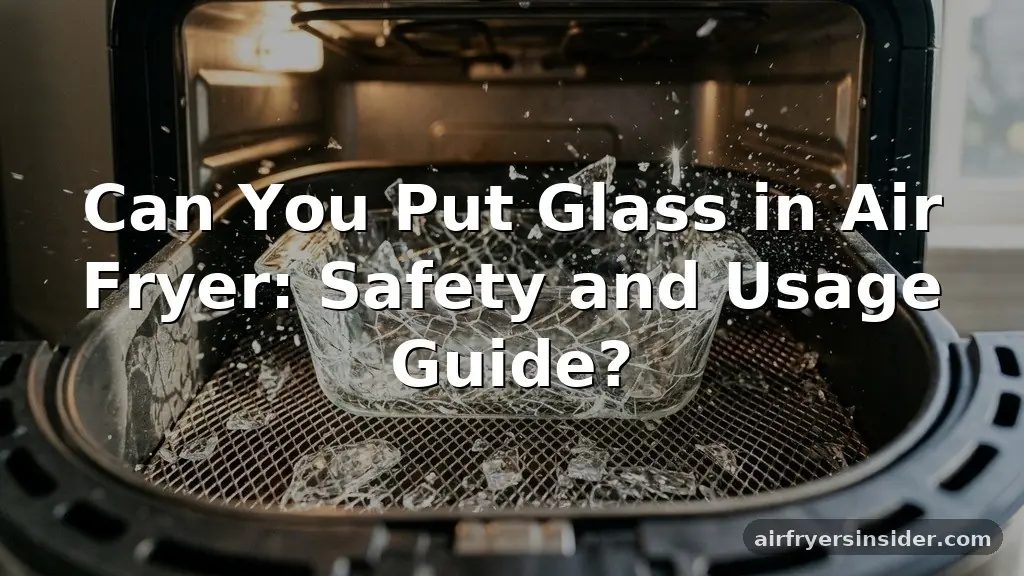
The biggest danger here is thermal shock. This occurs when a material experiences a sudden, drastic change in temperature. If you take a cold glass dish out of the refrigerator and place it into a preheated basket, the glass may expand or contract too quickly for its molecular structure to handle.
This stress often leads to the glass shattering or exploding. While borosilicate glass is specifically engineered to be more resistant to these rapid changes, even this material has its breaking point under the concentrated blast of an air fryer’s heating element.
Identifying Suitable Cookware Compatibility
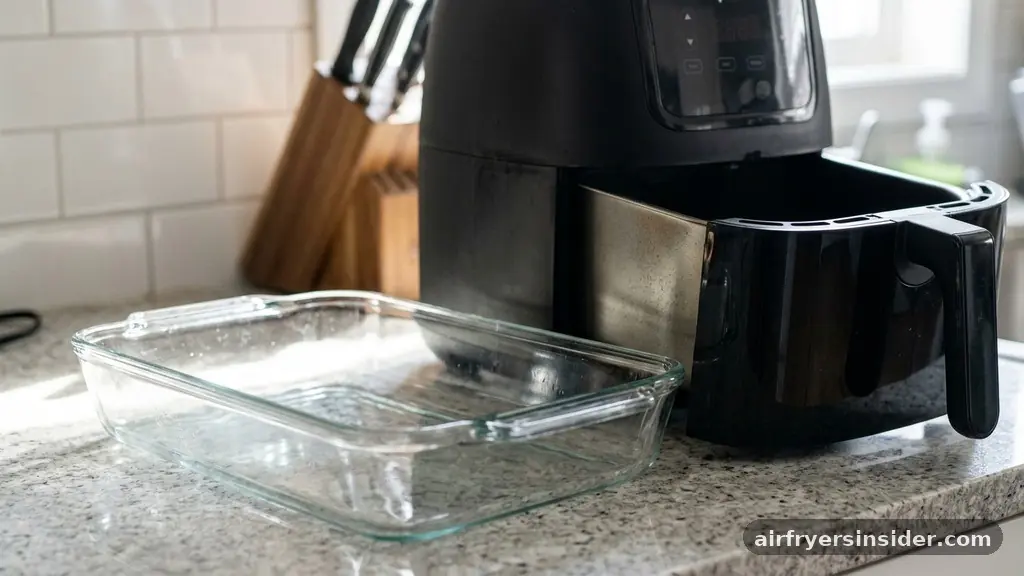
When you look at your kitchen shelves, you might see various containers that look sturdy enough for high heat. To determine if a piece of cookware compatibility exists, you must first distinguish between different types of glass. Most standard household glassware is not designed for the intense, direct heat of an air fryer.
If you are determined to use glass, it must be labeled specifically as oven-safe. Even then, you should only use it if it fits comfortably within the basket without blocking the airflow.
The air circulation aspect is critical to how these machines operate. If you place a large glass dish inside the basket, you are effectively creating a barrier that prevents the hot air from reaching the food beneath or around it.
This can lead to uneven cooking and, in some cases, can cause the machine to overheat because the fan is struggling to move air around the obstruction. Always prioritize pieces that allow for at least an inch of space between the glass edge and the walls of the air fryer basket.
The Role of Manufacturer Instructions
Before you experiment with different containers, you should always consult your manufacturer instructions. Every air fryer model has different power levels, fan speeds, and heating element placements.
Some brands explicitly state that glass should never be used, while others provide specific guidelines for using heat-resistant glassware. Ignoring these warnings can void your warranty and, more importantly, put you at risk of injury.
If the manual says to avoid glass, follow that advice strictly. Most manufacturers design their baskets to work with specific types of accessories, such as silicone molds or metal pans. These materials are often more forgiving in the air fryer environment than glass.
When in doubt, check the bottom of your dish for an oven-safe symbol. If you cannot find any markings, assume the item is not safe for high-heat cooking. It is always better to be cautious than to deal with shattered glass inside a machine that is blowing air directly onto your food.
Comparing Glass with Other Air Fryer Accessories
Choosing the right container for your cooking needs is often a matter of comparing material properties. While glass is a popular choice for baking, it is rarely the most efficient option for air frying. The following table highlights how different materials perform under the intense heat and airflow of an air fryer.
| Material | Heat Resistance | Airflow Impact | Best Use |
|---|---|---|---|
| Borosilicate Glass | High (Risk of shock) | Moderate (Blocks heat) | Casseroles, baking |
| Silicone Molds | High | Low (Flexible) | Muffins, egg bites |
| Aluminum Foil | Very High | Low (Lightweight) | Lining, easy cleanup |
| Ceramic | Moderate | Moderate | Small portions |
As shown above, while glass has its uses, other air fryer accessories often provide better results. Silicone is particularly effective because it is flexible and can be squeezed into tighter spaces without blocking the essential air current. Aluminum foil is another reliable tool, provided you use it correctly and ensure it doesn’t get caught in the fan.
Answering Common Safety Concerns and Topical Gaps
One major question that often goes unanswered in quick search results is whether microwave-safe glass is the same as air fryer-safe glass. The answer is a definitive no.
Microwave-safe glass is designed for electromagnetic energy, not the high-velocity convection heat of an air fryer. Using a container that is only microwave-safe can be incredibly dangerous, as the glass may not be tempered to withstand the high temperatures required for roasting or baking.
Another common gap in understanding involves the use of tempered glass lids. Many people wonder if they can leave the glass lid on a container while it’s inside the machine. You should never do this.
The lid will block the heat from reaching the food, and the pressure buildup could cause the glass to fail. Furthermore, ensure that any glass you use is not shatter-proof in a marketing sense, as “shatter-proof” does not mean “heat-proof.” Always prioritize heavy-duty, oven-safe materials and verify their heat limits before starting your machine.
Best Practices for Using Glass Safely
If you decide to proceed with using glass, follow these best practices to maintain kitchen safety and protect your equipment. First, always preheat your air fryer without the glass dish inside.
Placing a cold dish into a preheating machine is a recipe for disaster. By letting the air fryer reach its target temperature first, you reduce the intensity of the initial temperature spike when you insert the dish.
Second, avoid using any glass that has chips, cracks, or deep scratches. Even a microscopic flaw in the surface can become a point of failure when exposed to high heat and pressure. The structural integrity of the glass is compromised the moment it is damaged.
Third, never pull a hot glass dish directly out of the air fryer and place it on a cold surface like a granite countertop or into cold water. This sudden change is the most common cause of thermal shock. Instead, set the hot dish on a wooden trivet or a thick kitchen towel to allow it to cool down gradually.
The Importance of Airflow and Heat Distribution
The core function of an air fryer is to move hot air at high speeds, which is why convection heat is so effective at crisping food. Glass, by its nature, is a dense material.
It takes longer to heat up than metal, which means your food will cook differently than it would in a standard metal air fryer pan. You might find that the bottom of your food stays soggy while the top browns, or that the overall cooking time needs to be significantly extended.
To mitigate these issues, keep the glass container as small as possible. If the dish takes up the entire footprint of the basket, you are essentially turning your air fryer into a very small, inefficient oven. This defeats the purpose of the appliance.
If you must use glass, consider using smaller ramekins or a smaller dish that leaves plenty of room for air to circulate around the sides. This ensures that the radiant heat is distributed more evenly and that your food achieves that desired crispy texture.
When to Avoid Glass Entirely
There are specific instances where you should avoid glass regardless of whether it is labeled oven-safe. If you are cooking at temperatures above 400°F (200°C), the risk of thermal shock increases exponentially.
Most glass manufacturers advise against using their products at these extreme temperatures. If your recipe calls for high-heat searing or roasting, stick to metal pans, which are designed to handle these temperatures without the risk of shattering.
Additionally, avoid using glass if your air fryer has a top-mounted heating element that is very close to the food. The rapid temperature change caused by the proximity to the coils can create hot spots on the glass surface, leading to uneven expansion.
If the glass dish is tall and gets too close to the top of the unit, it could potentially touch the heating element, which is an immediate fire hazard. Always ensure there is at least an inch or two of clearance between the top of your dish and the heating element.
Frequently Asked Questions
Is it safe to use Pyrex in an air fryer?
While some Pyrex products are oven-safe, they are primarily designed for standard convection ovens, not the concentrated heat of an air fryer. Because of the risk of thermal shock from the rapid temperature changes inherent to air fryers, it is generally recommended to avoid using glass, including Pyrex.
What are the safest alternatives to glass for air frying?
The safest materials to use are those specifically designed for high-heat airflow, such as metal pans (like stainless steel or aluminum), silicone molds, and parchment paper. These materials are more durable under rapid heating conditions and are less likely to crack or shatter compared to glass containers.
Can I use a glass bowl to cook food in my air fryer?
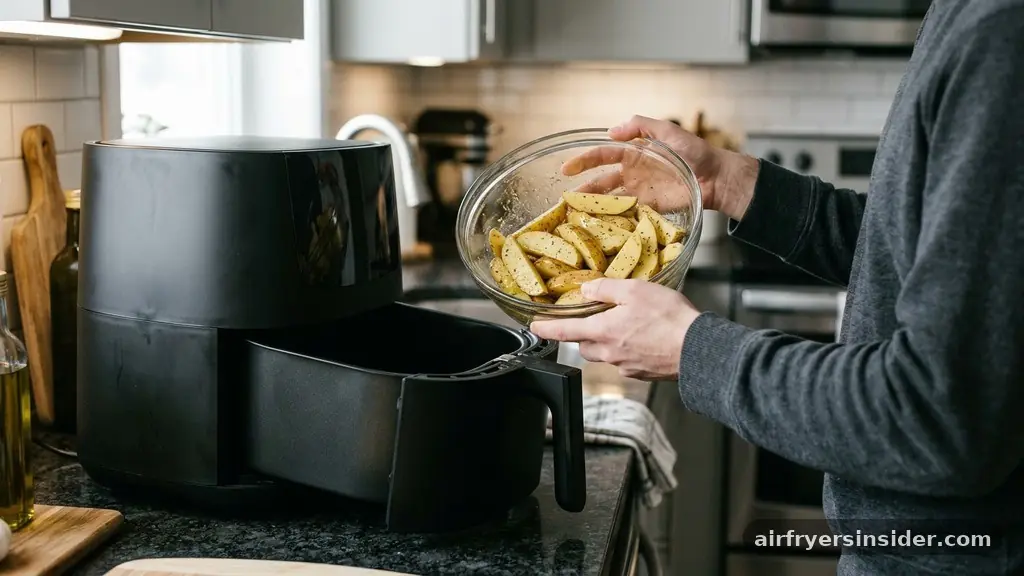
You should avoid using a standard glass bowl. Even if it is oven-safe, the shape of a bowl is not ideal for air circulation, which is necessary for proper cooking. If you must use a container, choose a flat, shallow, oven-safe dish that allows air to move freely.
How do I know if my container is safe for the air fryer?
Check the bottom of the container for an oven-safe symbol or manufacturer markings that explicitly state the temperature limit. If you cannot find these indicators, or if the item is not clearly marketed for high-heat oven use, it is best to assume it is not safe for an air fryer.
The decision to use glass in your air fryer should be approached with extreme caution. While it is technically possible to use oven-safe glass, the risks associated with thermal shock and restricted airflow often outweigh the convenience. Prioritizing the safety of your kitchen and the longevity of your appliance means choosing materials like silicone or metal whenever possible.
If you do choose to use glass, always verify that it is oven-safe, avoid extreme temperature swings, and ensure there is plenty of room for air to circulate around your dish. By following these guidelines, you can enjoy your favorite recipes while keeping your cooking process safe and efficient. If you have questions about specific dishes or techniques, feel free to reach out for more tips on maximizing your air fryer’s potential without unnecessary risks.
Meta Description: Wondering if you can put glass in air fryer? Learn the safety risks of thermal shock, which materials are best, and how to protect your kitchen.


