

Many home cooks often ask whether they can use tin foil in their air fryer to save on cleanup time and simplify their meal prep. While it is technically possible to use aluminum foil in most modern air frying appliances, you must follow specific safety protocols to prevent damage to your machine or potential fire hazards.
The primary concern revolves around how the material interacts with the intense convection heating and rapid airflow within the basket. By understanding the proper placement and limitations of this common kitchen item, you can enjoy the convenience of easier cleanup without compromising the performance of your device or the safety of your food.
Understanding the Mechanics of Air Fryer Heat
An air fryer is essentially a compact, powerful convection oven. It works by using a heating element located at the top of the unit, paired with a high-speed fan that forces hot air to circulate around the food.
This rapid air circulation is what creates that signature crispy exterior on everything from frozen fries to chicken wings. When you place a barrier like aluminum foil into the basket, you are fundamentally changing the dynamics of this airflow.
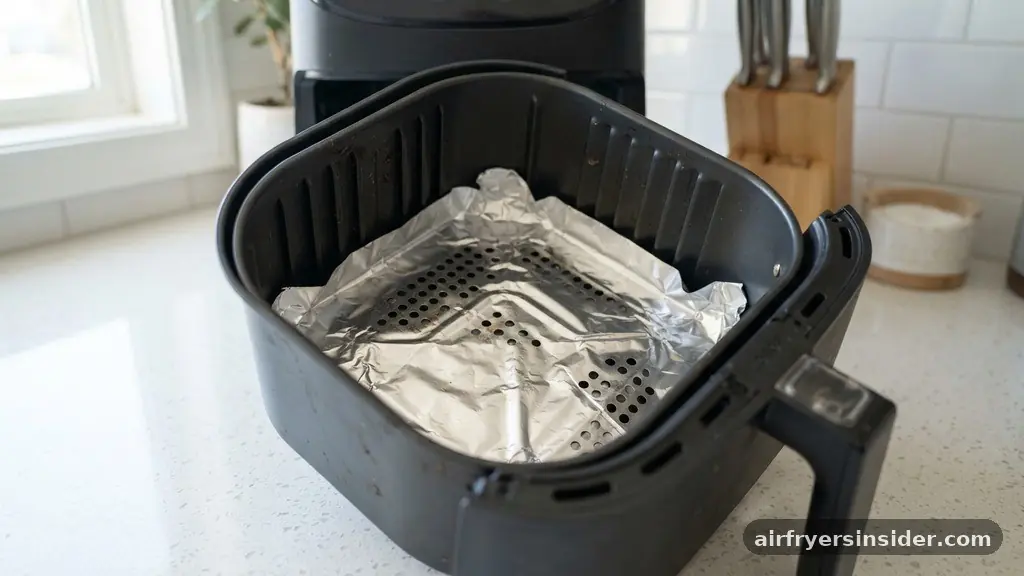
If you cover the entire bottom of the basket with foil, you effectively block the vents that allow air to circulate beneath the food. This creates an airflow obstruction that can lead to uneven cooking, as the bottom of your ingredients won’t receive the same level of heat as the top.
Furthermore, if the foil is not properly weighted down by food, the powerful fan can easily pick it up and blow it toward the heating element. This is a significant fire hazard because the foil can make direct contact with the hot coils, potentially causing sparks or smoke.
Safe Placement Techniques for Foil
If you decide to use aluminum foil, you must always ensure it is securely held in place by the weight of your food. Never preheat your air fryer with just a sheet of foil inside, as the fan will likely lift it before you have a chance to add your ingredients.
Instead, place your food directly onto the foil as you arrange it in the basket. It is also vital to keep the foil within the boundaries of the basket, avoiding any overhang that could interfere with the sides or the upper mechanics of the unit.
Another critical rule is to leave enough space around the edges of the foil for air to move. By not lining the entire surface area, you allow the convective currents to continue working effectively.
Use the foil primarily to catch drips or to make removing small items like meatballs or vegetables easier, rather than trying to create a full seal. When you treat the foil as a small accessory rather than a floor liner, you keep the cooking process efficient while still keeping your basket cleaner.
The Risks of Airflow Obstruction
When you inadvertently block the airflow in your appliance, you force the fan to work harder, which can impact the longevity of the motor. Additionally, the heat reflection caused by the foil can sometimes cause the bottom of the basket to become hotter than the manufacturer intended.
This localized overheating might damage the non-stick coating of your air fryer basket over time. If you notice your food is burning on the top but remains raw or soggy on the bottom, it is a clear indicator that your foil placement is hindering the convection process.
Beyond the mechanical risks, there is also the issue of food quality. Air frying relies on moisture evaporation to create crispiness. If the foil prevents proper drainage of fats or juices, your food may end up steaming in its own liquid rather than roasting.
This is particularly noticeable when cooking fatty meats like bacon or sausages. For these items, it is often better to use a dedicated rack or simply let the grease drip into the designated collection area of the basket, rather than trapping the liquid with a foil barrier.
Comparing Foil and Parchment Paper
Many users find themselves choosing between aluminum foil and parchment paper for their daily cooking tasks. Each material has distinct characteristics regarding heat resistance and usability. While foil is highly malleable and can be shaped to fit almost any space, parchment paper is generally easier to handle and often comes in pre-cut, perforated versions specifically designed for air fryers.
| Feature | Aluminum Foil | Parchment Paper |
|---|---|---|
| Heat Resistance | Extremely High | Moderate |
| Versatility | High (can be molded) | Low (flat) |
| Airflow Impact | High (if not perforated) | Low (if perforated) |
| Best Use | Wrapping/Heavy foods | Baking/Non-stick needs |
The advantage of using perforated parchment paper is that it allows heat to pass through, maintaining the integrity of the air circulation. Aluminum foil does not inherently allow this unless you manually poke holes in it, which is a tedious extra step. However, if you are cooking something that might tear paper or requires a tight wrap, such as a foil-packet meal, then aluminum remains the superior choice.
Handling Acidic Foods and Chemical Leaching
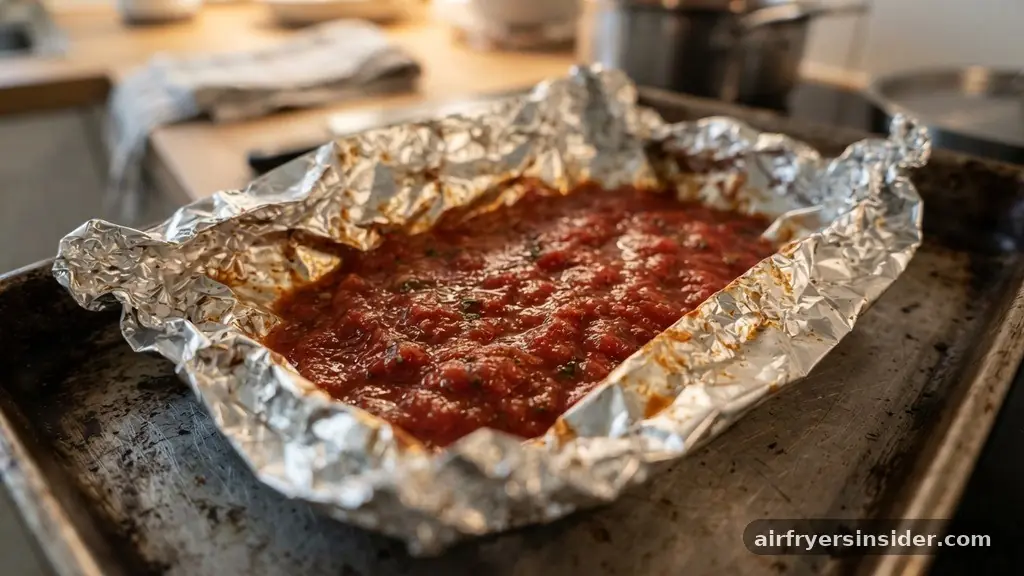
One of the less discussed aspects of using foil in high-heat environments is the potential for chemical leaching. When you cook highly acidic foods, such as tomato sauce, citrus-based marinades, or vinegar-heavy glazes, the acid can react with the aluminum. While the risk of significant aluminum ingestion is generally low, this reaction can impart a metallic taste to your food and potentially degrade the integrity of the foil itself, causing it to break apart into small, sharp fragments.
To avoid this, steer clear of using foil as a direct contact surface for acidic ingredients. If you must use a liner for a dish involving tomatoes or lemon juice, silicone liners are a much safer and more durable alternative.
These are designed to withstand high temperatures without reacting to food chemistry. If you do not have a silicone option, it is better to cook the acidic dish in a heat-safe glass or ceramic container that fits inside your air fryer basket.
Specific Considerations for Popular Brands
Different air fryer models have slightly different internal geometries, which can affect how they handle liners. Owners of a Ninja Foodi, for example, often have a larger basket that allows for more airflow, making it slightly more forgiving if you use a piece of foil. Conversely, smaller units like some early Cosori models have more compact baskets where the heating element is closer to the food, increasing the risk of the foil getting caught in the fan.
If you own an Instant Vortex, you might notice that the air circulation is quite aggressive. In these units, you must be extra vigilant about securing your foil. Always ensure that the foil is tucked firmly under the food or folded over the edges of a heat-safe tray.
Regardless of the brand, always consult your specific user manual. Manufacturers include these guidelines for a reason, and ignoring them can sometimes void your warranty if damage occurs due to improper accessory use.
Silicone Liners as a Modern Alternative
As the popularity of air frying has exploded, so has the market for accessories. Silicone liners have become the gold standard for those who want to avoid the constant use of foil.
These liners are heat-resistant, reusable, and typically feature ridges that elevate the food slightly, allowing air to circulate underneath even when the liner is in place. This design solves the primary problem associated with foil: the obstruction of airflow.
Investing in a set of silicone liners is a one-time purchase that pays for itself quickly. They are dishwasher safe, non-toxic, and eliminate the need for single-use materials.
While foil is great for specific tasks like wrapping a burrito or creating a quick packet for steamed vegetables, a silicone basket liner is far superior for daily roasting and frying. They maintain the non-stick coating of your air fryer basket far better than foil, which can occasionally scratch the delicate interior surface when being removed or repositioned.
Addressing the “Perforated” Requirement
If you are determined to use paper or foil liners, look for options that are explicitly labeled as perforated. These small holes are not just for show; they are engineered to maintain the convective patterns necessary for the “air fry” function to work.
If you choose to use standard, non-perforated aluminum foil, you must understand that you are essentially turning your air fryer into a standard oven for that specific cooking cycle. This means you may need to increase your cooking time slightly or flip your food halfway through to ensure even browning.
The Role of Thermal Conductivity
Aluminum is known for its excellent thermal conductivity, which is why it is used in everything from baking sheets to soda cans. When you place foil in the air fryer, it heats up extremely quickly.
While this can help crisp the bottom of your food, it can also lead to overcooking if you are not careful. If you are preparing delicate items like fish or soft vegetables, the intense heat transferred through the foil can cause the bottom of the food to burn before the center is cooked through.
To manage this, consider the thickness of the food you are cooking. If you are preparing a thick steak, the conductivity of the foil is a benefit, as it helps sear the underside.
If you are roasting thin asparagus or breaded mushrooms, the conductivity might be a disadvantage. In those cases, you might prefer a less conductive surface, such as parchment paper, or simply cooking the item directly on the basket grate.
FAQ Section
Is it safe to use aluminum foil in an air fryer?
Yes, it is generally safe as long as you follow strict precautions. You must ensure the foil is properly weighted down by food so the fan cannot lift it, and you should never block the entire bottom of the basket to ensure air can still circulate.
Why should I avoid using foil with acidic foods?
Acidic ingredients like tomato sauce, citrus, or vinegar can react with aluminum foil during the cooking process. This reaction can cause the foil to deteriorate and may leave a metallic, unpleasant taste on your food, making it less than ideal for dishes with high acidity levels.
Can I use foil to cover the heating element?
Absolutely not. You must never place foil or any other material near the heating element. Doing so creates a severe fire hazard, as the material can ignite or cause a short circuit. Always keep all liners and food items well below the top of the basket.
Are silicone liners better than aluminum foil?
In most cases, yes. Silicone liners are designed specifically for air fryers, are reusable, and often feature ridges that allow for better airflow compared to a flat sheet of foil. They are also easier to clean and do not pose the same risk of being blown into the heating element.
Final Thoughts on Air Fryer Maintenance
Using aluminum foil in your air fryer is a convenient trick, provided you respect the physics of your appliance. Always prioritize safety by ensuring your liner is weighed down and never obstructs the vital airflow that makes air frying effective.
While foil is a handy tool for quick cleanup or specific cooking techniques, consider incorporating silicone liners or perforated parchment paper into your routine for better results and a longer lifespan for your machine. By being mindful of how you manipulate the airflow and heat distribution within your air fryer, you can keep your kitchen safe and your meals perfectly crispy every single time you cook.
Meta Description: Learn if you can use tin foil in your air fryer safely. Get expert tips on preventing fire hazards, maintaining airflow, and choosing the best liners.


