

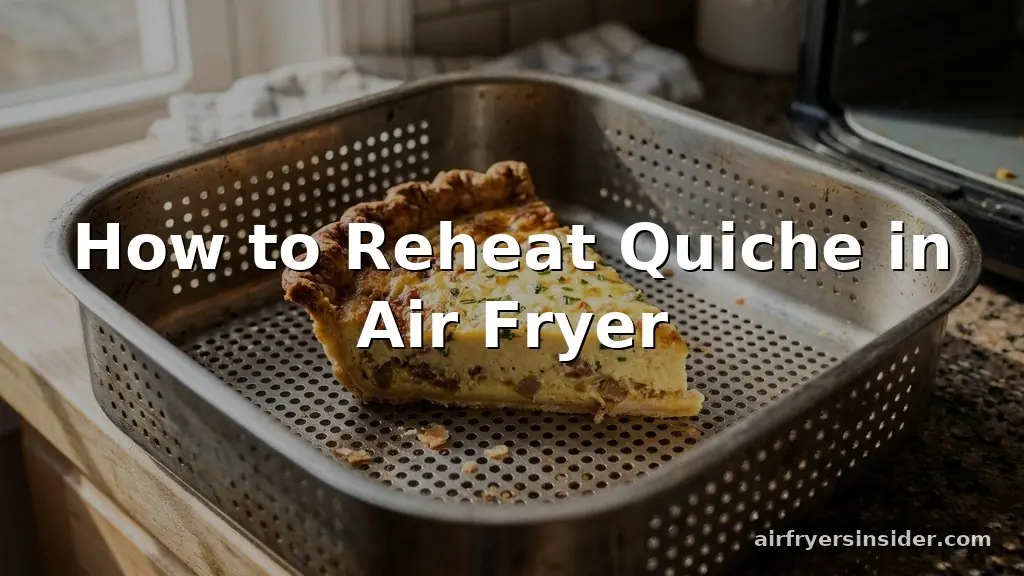
If you have ever stared at a slice of leftover quiche, dreading the rubbery texture that comes from a microwave, you are in luck. Learning how to reheat quiche in air fryer settings is the secret to keeping that pastry base crisp and the egg custard perfectly creamy.
Unlike traditional ovens that take forever to heat up, or microwaves that often turn food into a soggy mess, the air fryer uses rapid air circulation to restore your meal to its original glory. By following a few simple adjustments, you can enjoy a quick, delicious breakfast or brunch without sacrificing quality.
Understanding the Mechanics of Air Fryer Reheating
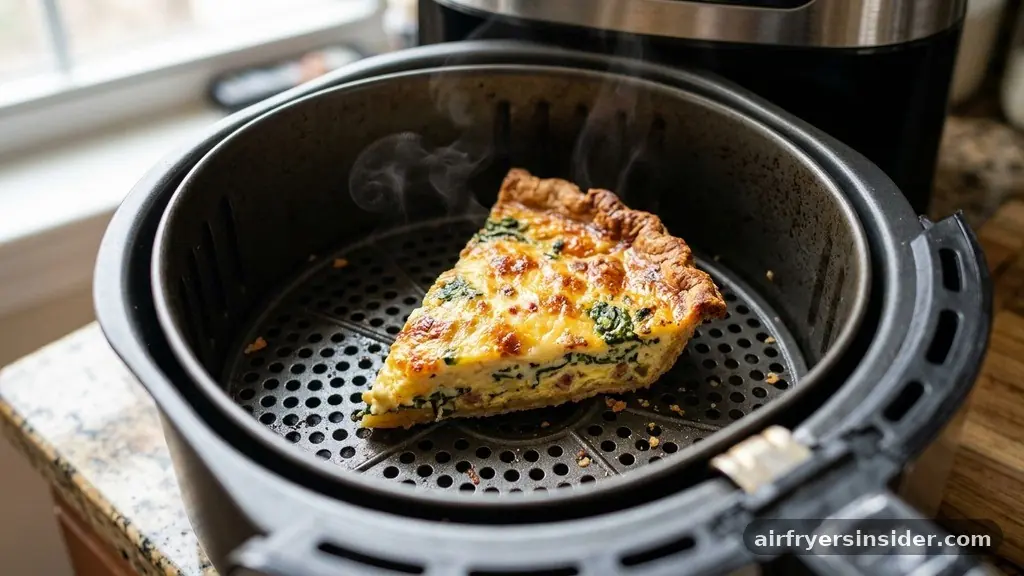
The primary reason an air fryer succeeds where a microwave fails is its reliance on convection heat. When you place your dish inside, a heating element warms the air, while a powerful fan forces that hot air to circulate around the food.
This movement is essential for dehydrating the surface of the pastry just enough to ensure a crispy crust, while the interior warms through evenly. Because quiche is primarily made of egg custard, which is sensitive to high heat, controlling this airflow is the key to maintaining a silky texture without drying out the filling.
When you use an air fryer, you are essentially mimicking a high-end oven but in a more compact, efficient space. The thermal conductivity of your air fryer basket plays a role here as well. Metal baskets transfer heat quickly, which helps in crisping the bottom of the slice.
However, if the heat is too intense, the edges will burn before the middle is warm. This is why temperature management is far more important than raw power when dealing with delicate egg-based dishes. Mastering this balance ensures your leftover quiche tastes just as fresh as the day it was baked.
Preparing Your Leftover Quiche for the Best Results
Before you even think about turning on the machine, you need to assess the condition of your meal. If your quiche has been sitting in the refrigerator for more than two days, ensure it has been stored in an airtight container to prevent it from absorbing other fridge odors. Cold quiche is much easier to handle than room-temperature slices, as the fats in the pastry are solidified, making the crust less likely to crumble when you move it into the basket.
If you are dealing with a whole quiche rather than a single slice, you may need to reduce the temperature slightly to ensure the center warms up before the top browns too much. For those reheating individual slices, consider letting them sit on the counter for about ten minutes while the machine preheats.
This slight temperature adjustment prevents the outer layer from overcooking while the center remains icy. Always remove any plastic wrap or original packaging before placing the food in the air fryer, as these materials are not designed to withstand the rapid air circulation of the device.
Optimizing Temperature and Time Settings
The ideal reheating time is a moving target that depends on the thickness of your slice and the specific model of your air fryer. For most standard units, such as a Ninja Foodi or Cosori, a temperature of 300°F to 325°F is the sweet spot.
You want to avoid high temperatures like 400°F, which will scorch the top of the egg custard and leave the center cold. A lower, steady heat allows the warmth to penetrate the dense proteins of the egg without causing them to tighten and become rubbery.
Reheating time typically ranges from four to eight minutes for a single slice. If you are reheating multiple slices, you must ensure they are not touching, as this blocks the airflow and leads to uneven cooking.
Use a food thermometer to check the center of your slice; you are looking for an internal temperature of at least 165°F to satisfy food safety guidelines. If you find the top is browning too quickly, you can create a loose tent with a small piece of aluminum foil to shield the custard while the base continues to heat.
The Role of Parchment Paper and Foil
Using accessories effectively can make the process of reheating quiche in an air fryer much cleaner and more successful. Parchment paper is an excellent tool for preventing the pastry base from sticking to the bottom of the air fryer basket, especially if the crust has become slightly soft in the fridge.
Simply cut a piece of parchment to fit the bottom of your basket, leaving enough room around the sides for the air to flow freely. Never cover the entire bottom of the basket, as this will completely obstruct the ventilation and ruin the texture.
Aluminum foil serves a different purpose during the reheating process. If you notice that your crust is already perfect but the filling is still cold, a small piece of foil placed over the top of the slice acts as a heat shield.
This allows you to continue heating the dish without burning the top layer of cheese or vegetables. This technique is particularly useful for quiches that are heavily topped with ingredients like tomatoes or bacon, which tend to crisp up or burn faster than the custard base itself.
Addressing Common Pitfalls and Troubleshooting
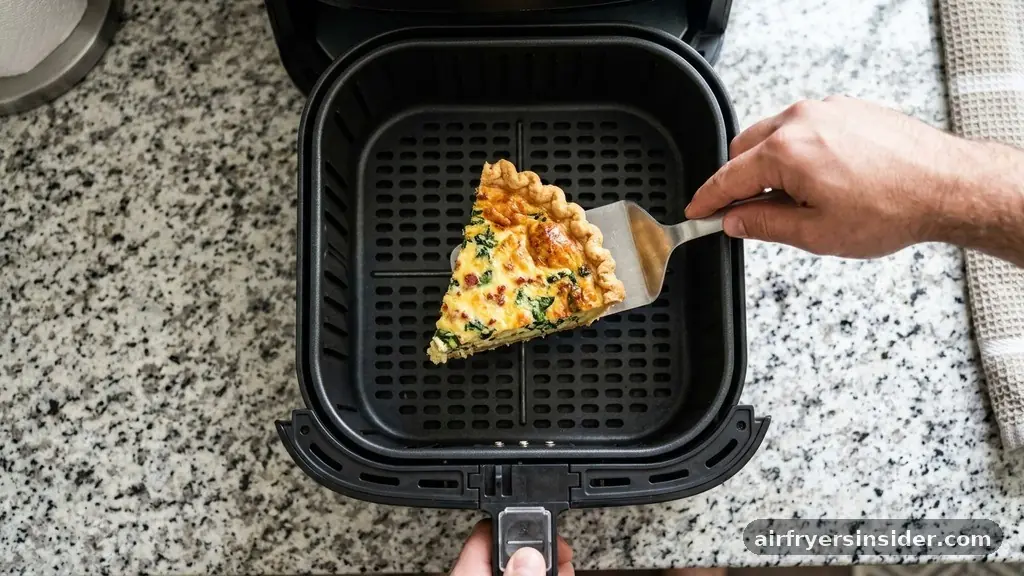
Many people struggle with a soggy crust when they attempt to reheat their leftovers, usually because they are trying to rush the process. If you pull your slice out and the bottom is still damp, it often means the air fryer was not preheated properly. Always run your unit for two or three minutes before placing the food inside.
This ensures that the moment the quiche hits the basket, the crisping process begins immediately. Furthermore, avoid overcrowding the basket; even a small amount of space between slices allows for the necessary air movement.
Another common issue is the “rubbery egg” effect. This happens when the quiche is exposed to heat for too long or at a temperature that is simply too high. If your specific air fryer runs hot, lean toward the lower end of the temperature range.
It is always better to check the food a minute early than to overcook it. If you find that your slices are drying out, a tiny spritz of water or a light brush of butter on the crust can help rehydrate the exterior without adding too much moisture to the custard.
Comparing Methods for Reheating Leftovers
It is helpful to weigh your options when deciding how to bring your meal back to life. While the air fryer is a top contender, other methods have their own merits depending on your time constraints and the equipment you have on hand.
| Method | Time Required | Texture Outcome |
|---|---|---|
| Air Fryer | 5-8 minutes | Crispy crust, warm center |
| Oven | 15-20 minutes | Uniform, but slow |
| Microwave | 1-2 minutes | Often soggy or rubbery |
The oven remains a reliable choice for reheating an entire quiche, as it provides the most consistent heat for a large, dense item. However, the air fryer is vastly superior for individual slices, as it delivers that fresh-from-the-bakery crunch that a microwave simply cannot replicate.
The microwave is truly the last resort, only useful if you are in a massive hurry and do not mind a softer, less structured texture. By choosing the air fryer, you are opting for a balance of speed and quality that preserves the integrity of your meal.
Topical Gaps: Specialized Quiche Types
A frequent question involves how to handle different styles of quiche, such as crustless versions or those with dense, vegetable-heavy fillings. Crustless quiche, often called a frittata, behaves differently in an air fryer because it lacks the protective pastry base.
Without the crust to shield the bottom, these slices can dry out significantly faster. For crustless varieties, reduce your reheating time by about two minutes and consider using a small, oven-safe dish inside the air fryer to hold the shape of the slice together.
For quiches packed with high-moisture vegetables like spinach or mushrooms, the reheating process might release extra liquid. If you notice the bottom of your slice looks wet after heating, let it rest on a wire rack for one minute before serving. This allows the excess steam to escape rather than being reabsorbed into the crust.
If you are working with a very deep-dish quiche, you may need to slice it thinner to ensure the middle warms through without the exterior becoming overdone. Always adapt your technique to the specific ingredients of your quiche.
Kitchen Safety and Food Hygiene
Following proper food safety guidelines is non-negotiable when dealing with egg-based dishes. Bacteria thrive in the “danger zone,” which is between 40°F and 140°F. When you pull your quiche out of the fridge, try to move it into the air fryer as efficiently as possible to minimize the time it spends at room temperature.
Once the quiche is heated, ensure it reaches an internal temperature of 165°F. Using a digital food thermometer is the only way to be certain that you have eliminated potential pathogens.
Never reheat the same slice of quiche more than once. Every time you fluctuate the temperature of an egg-based dish, you increase the risk of bacterial growth and significantly degrade the quality of the custard. If you have a large leftover quiche, only remove and reheat the amount you plan to eat immediately.
Keep the remainder stored in the refrigerator until the next time you are ready to enjoy it. These simple habits protect your health while ensuring that every meal you serve is safe and enjoyable.
Essential Tips for the Best Experience
To truly master the art of reheating, keep these quick pointers in mind for your next meal:
- Always preheat your air fryer to ensure the heating element is ready to work immediately.
- Use a piece of parchment paper to prevent sticking and make cleanup easier.
- Keep slices spaced apart so the air circulation remains unobstructed.
- Shield the top with aluminum foil if you notice it browning too quickly.
- Check the internal temperature with a food thermometer to guarantee it is hot enough to eat.
- Let the slice rest for a minute after removing it from the basket to allow the texture to set.
These minor adjustments to your workflow will result in a much higher success rate. You will find that after a few attempts, you will intuitively know exactly how long your specific air fryer needs to perfect a slice of quiche.
The goal is to create a seamless routine where you can enjoy your favorite leftovers without the stress of wondering if they will turn out soggy or burnt. Consistent practice leads to better culinary results every single time.
Frequently Asked Questions
Can I reheat a quiche in the air fryer if it is still frozen?
It is not recommended to reheat frozen quiche directly. The exterior will likely burn before the center thaws and warms through. It is best to let the quiche thaw in the refrigerator overnight before reheating it in the air fryer to ensure an even temperature.
Is it safe to use aluminum foil in my air fryer?
Yes, you can use aluminum foil in an air fryer, provided you do not block the air circulation. Use a small piece to cover the top of the quiche if it is browning too fast, but ensure the airflow can still reach the bottom and sides of the basket.
How do I know if my quiche is reheated enough?
The most reliable way to check is by using a food thermometer. Insert it into the center of the quiche; it should register at least 165°F. Visually, the edges should look crisp, and the custard should be warm throughout without showing signs of bubbling or separating.
Can I reheat a store-bought quiche in the air fryer?
Absolutely. Store-bought quiches often have a slightly different crust composition, so keep a close eye on them during the first few minutes. They often heat faster than homemade versions, so start checking the progress at the four-minute mark to avoid overcooking the delicate pastry or filling.
Conclusion
Bringing your leftovers back to life doesn’t have to be a gamble with texture or taste. By using an air fryer, you harness the power of rapid convection to keep the pastry base perfectly crisp while ensuring the egg custard warms through evenly. Remember to prioritize consistent temperature, avoid overcrowding the basket, and always verify that your food has reached a safe internal temperature.
These small steps transform a simple reheated meal into a delicious, satisfying experience that mirrors the quality of a fresh bake. If you have any favorite ingredients or tips you’ve discovered while reheating your own quiche, feel free to experiment and share what works best for your specific kitchen setup. Enjoy your next perfectly warmed brunch slice.
Meta Description: Learn the best techniques for how to reheat quiche in air fryer to ensure a crispy crust and a perfectly warm, creamy center every time.


