

Mastering the art of cooking scrapple in an air fryer transforms this traditional Pennsylvania Dutch breakfast meat into a quick, convenient meal without the mess of stovetop splattering. By utilizing the intense, circulating heat of convection technology, you can achieve that elusive crispy texture on the outside while maintaining a tender, savory interior.
This method is far superior to traditional pan-frying for those who want consistent results every single time. Whether you are a lifelong fan of this regional classic or a newcomer curious about its unique flavor profile, learning the proper technique ensures your slices turn out perfectly golden brown and delicious.
Understanding the Basics of Scrapple
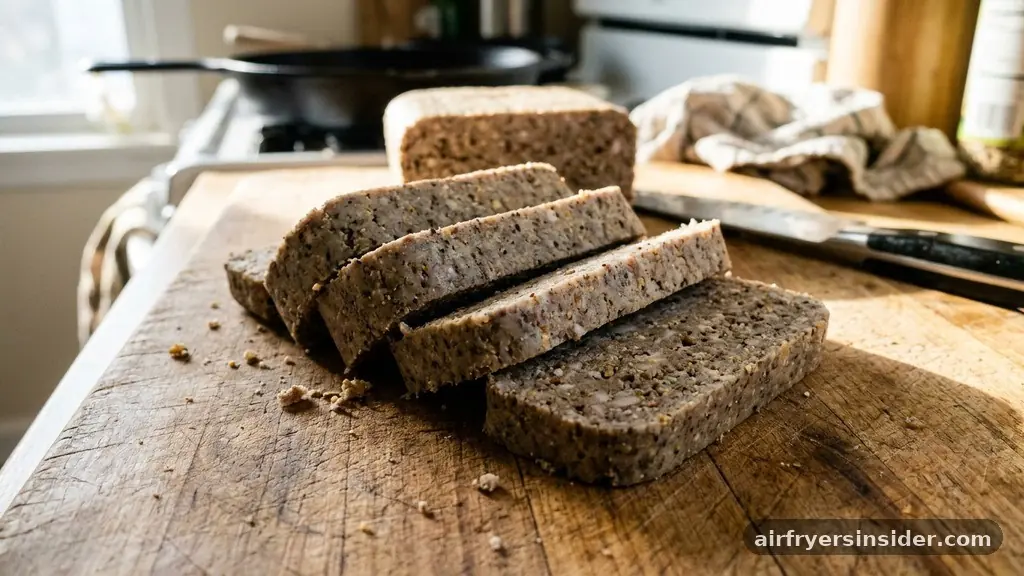
Scrapple is a quintessential component of Pennsylvania Dutch cuisine, traditionally crafted from pork trimmings, cornmeal, and buckwheat flour or wheat flour. The mixture is seasoned with a blend of spices—typically sage, thyme, and black pepper—then boiled, molded into a loaf, and chilled until firm.
When you decide on cooking scrapple in an air fryer, you are essentially reheating and searing a pre-cooked product that relies on its inherent fat content to crisp up. Because it contains a significant amount of starch from the cornmeal, it reacts beautifully to the dry, high-heat environment of an air fryer.
The key to success lies in understanding the composition of the meat. Unlike raw bacon or sausage, scrapple is already cooked and gelatinized, meaning your primary goal is to develop a robust crust. The Maillard reaction, which is the chemical process that gives browned food its distinctive flavor, occurs rapidly when the surface moisture is removed.
By placing slices into the air fryer, you strip away that surface moisture and allow the fats to render and fry the outer edges. This creates a satisfying crunch that contrasts perfectly with the soft, creamy center that defines high-quality scrapple.
Preparing Your Slices for the Air Fryer
Preparation is the most critical step in ensuring your breakfast meat doesn’t fall apart during the cooking process. You should aim for a slice thickness of about 1/2 inch. If your slices are too thin, they may become overly brittle and crumble; if they are too thick, the center will remain lukewarm while the exterior burns.
Before you even think about putting them in the basket, ensure the block of scrapple is cold. A chilled block is much easier to slice cleanly, which helps keep the structural integrity of each piece intact when it hits the hot air.
You might be tempted to load up the basket, but spacing is vital. Arrange your slices in a single layer, ensuring that no pieces overlap. This allows the hot air to circulate freely around every side of the meat, which is the core principle of convection cooking.
If you crowd the basket, you will end up with steamed, mushy scrapple instead of the crispy, golden brown slices you are aiming for. Using a light coating of cooking spray on both sides of the slices can also help initiate the browning process, especially if the particular brand of scrapple you purchased has a lower fat content.
Mastering the Preheat and Temperature Settings
Many home cooks skip the preheat phase, but for the best results, it is non-negotiable. Preheating your air fryer for three to five minutes at 400 degrees Fahrenheit ensures that the Maillard reaction begins the exact moment the food touches the basket.
This initial blast of heat is essential for sealing the exterior and preventing the meat from sticking to the non-stick basket. If the appliance isn’t hot enough, the scrapple will sit and slowly absorb its own rendered fat, leading to a greasy result rather than a crispy one.
Once the unit is preheated, set your temperature to 375 or 400 degrees Fahrenheit. While 400 degrees offers the fastest results, 375 degrees is often safer for beginners who are worried about burning the edges before the middle warms through. Monitor the cooking time closely, as air fryers vary significantly in power and airflow efficiency.
A typical session lasts between 12 to 15 minutes, but you should always flip the slices halfway through. This ensures that both sides receive equal exposure to the heating element, resulting in a uniform, appetizing color across the entire slice.
Why Convection Cooking Outperforms the Skillet
Traditional preparation often involves a heavy cast iron skillet, which is undeniably effective but notoriously labor-intensive. When you pan-fry, you have to stand over the stove, constantly flipping and managing the heat to prevent burning. Furthermore, the fat splatter can make a significant mess of your stovetop.
Cooking scrapple in an air fryer eliminates these frustrations entirely. The closed environment of the air fryer traps the heat, while the basket design allows rendered fat to drip away from the food, resulting in a slightly lighter final product.
Beyond the cleanliness factor, convection cooking provides a more consistent texture. In a pan, hot spots can lead to uneven cooking, where one half of the slice is charred while the other is barely warmed. The forced air circulation in an air fryer ensures that heat is applied evenly to all surfaces.
This technological advantage means you get that signature crispy texture on every edge, regardless of how many slices you are preparing. It is a more efficient, predictable way to enjoy a savory breakfast staple without the constant vigilance required by a traditional frying pan.
Essential Tools for the Perfect Batch
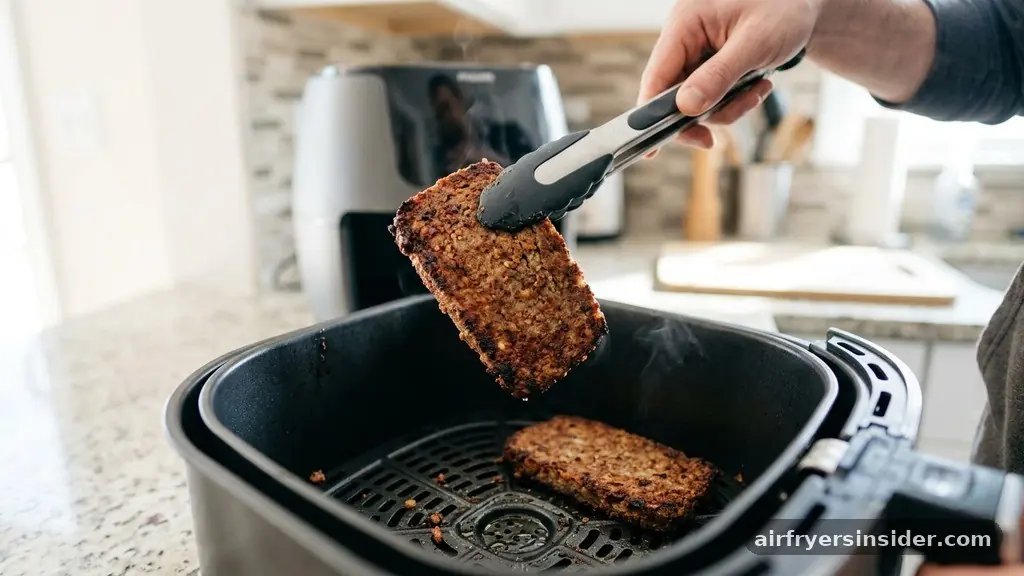
While the air fryer is the primary tool, a few accessories can make the process even smoother. A pair of silicone-tipped tongs is essential for flipping the slices without breaking them.
Because the structure of the meat softens as it heats, metal tools can sometimes tear the surface. Additionally, using a food thermometer is the only way to be absolutely certain of the internal temperature, which should reach at least 165 degrees Fahrenheit to ensure safety and optimal texture.
You should also consider whether to use liners. While many people use parchment paper for easy cleanup, it can sometimes obstruct the airflow if it isn’t weighed down by the food. If you choose to use parchment, make sure it is specifically designed for air fryers and has perforations to allow air to pass through.
If you prefer not to use liners, a quick wipe of the basket with a paper towel while it is still warm makes cleanup a breeze. Below is a quick breakdown of how common cooking methods compare for this particular dish.
| Cooking Method | Crispiness Level | Effort Required | Mess Factor |
|---|---|---|---|
| Air Fryer | High | Low | Minimal |
| Cast Iron Skillet | Very High | High | High |
| Oven Baking | Medium | Low | Low |
Troubleshooting Common Cooking Issues
Even with the best intentions, you might run into minor issues when learning how to cook scrapple in an air fryer. If your slices are sticking, it is almost always due to not preheating the unit or forgetting to use a light coat of cooking spray.
If you find the meat is falling apart, your slices might be too thin or you are trying to flip them too early. Let the meat cook for at least 6-7 minutes before attempting the first flip; this allows the crust to set, making it much easier to handle.
Another common issue is uneven browning. If you notice one side is much darker than the other, check your air fryer’s heating element placement. Most air fryers have a heating element at the top, which means the top side of your food will always brown faster.
If this happens, you can reduce the temperature for the second half of the cooking time. If the center remains cold, your slices are likely cut too thick, or your air fryer is overloaded. Adjusting your slice thickness to be more uniform is usually the quickest fix for internal temperature inconsistencies.
Comparing Scrapple to Similar Breakfast Meats
Many people who enjoy scrapple are also fans of livermush, a similar product found primarily in the Southern United States. Both are essentially cornmeal-based meat loaves, and the techniques used for one apply perfectly to the other.
When you are cooking these items, the fat content is your best friend. Because they are often quite dense, the air fryer is actually the ideal appliance for them because it forces heat into the center more effectively than a skillet would.
If you are accustomed to cooking traditional breakfast meats like sausage patties or bacon, you will notice that scrapple behaves differently. It doesn’t shrink as much as bacon, and it doesn’t release nearly as much liquid as raw sausage. This makes it a very “friendly” food for the air fryer.
You don’t have to worry about the basket filling with grease, which is a major benefit for those who are conscious of excess fat. The savory breakfast experience is elevated by the fact that you can achieve a restaurant-quality crunch in under 20 minutes, right in your own kitchen.
Addressing Common Topical Gaps
One question that often arises is whether you can cook frozen scrapple directly in the air fryer. The answer is yes, but you must adjust your expectations.
You will need to increase the cooking time by about 3 to 5 minutes, and you should start at a slightly lower temperature—around 350 degrees Fahrenheit—to ensure the inside thaws and warms before the outside gets too dark. Do not try to separate frozen slices; let them cook for a few minutes until they soften, then use your tongs to gently separate them.
Another gap in the current knowledge base is how to handle reheating leftovers. If you have already cooked scrapple and want to reheat it the next day, the air fryer is again the best tool. Simply pop the slices in at 350 degrees for 3 to 4 minutes.
They will regain their original crispy texture without becoming dry or rubbery, which is a common complaint when using a microwave. This makes it an incredibly versatile item to keep in your refrigerator for quick, protein-rich snacks throughout the week.
Serving Suggestions and Flavor Pairings
A crispy, perfectly air-fried slice of scrapple is a versatile canvas for various side dishes. Most traditionalists serve it with a drizzle of maple syrup or a dollop of apple butter to contrast the savory, salty, and earthy notes of the meat.
If you prefer a savory approach, topping your slice with a poached or fried egg creates a rich, indulgent breakfast experience. The runny yolk acts as a sauce that complements the crispy exterior of the meat.
Consider adding a side of fresh fruit or a simple green salad to balance the density of the scrapple. Because this breakfast meat is quite rich, you want side dishes that offer acidity or freshness to cleanse the palate.
A light vinaigrette or some sliced tomatoes can provide that necessary contrast. Experimenting with different condiments like hot sauce or a spicy mustard can also bring out the herbal notes in the meat, such as the sage and thyme that are traditional in most recipes.
Frequently Asked Questions
How long does it take to cook scrapple in an air fryer?
Generally, it takes between 12 and 15 minutes at 400 degrees Fahrenheit. The exact time depends on your specific model and the thickness of your slices. Always aim for a golden brown exterior and ensure the center is hot throughout before serving.
Should I use oil or cooking spray when air frying?
Using a light coating of cooking spray is recommended. While scrapple contains its own fat, a thin layer of oil helps initiate the browning process quickly, ensuring you get that signature crispy texture without the meat sticking to the basket surface during the cooking process.
Can I cook multiple layers of scrapple at once?
No, you should never layer your slices. For the best results, place them in a single, even layer with plenty of space between them. This allows the hot air to circulate properly, which is necessary to achieve a uniform, crispy finish on all sides.
Is it safe to reheat previously cooked scrapple?
Yes, reheating is perfectly safe and easy. Place the cooked slices in the air fryer at 350 degrees Fahrenheit for 3 to 4 minutes. This method revives the crispy texture much better than a microwave, which tends to make the meat soft or rubbery.
Conclusion
Mastering the process of cooking scrapple in an air fryer is a game-changer for those who appreciate this regional delicacy but prefer to avoid the mess of traditional frying. By focusing on proper slice thickness, ensuring the unit is preheated, and maintaining a single layer in the basket, you can enjoy a perfect, crispy breakfast with minimal cleanup. The efficiency of convection cooking ensures that every slice achieves that golden brown, savory finish that makes this dish so iconic.
Whether you pair it with sweet syrup or a classic fried egg, your air fryer will consistently deliver a superior result. We invite you to try this method next time you are craving a hearty, traditional breakfast and share your favorite topping combinations with fellow food enthusiasts.
Meta Description: Learn how to cook scrapple in air fryer for the perfect crispy texture. Follow our guide for prep tips, temperature settings, and easy cleanup methods.


