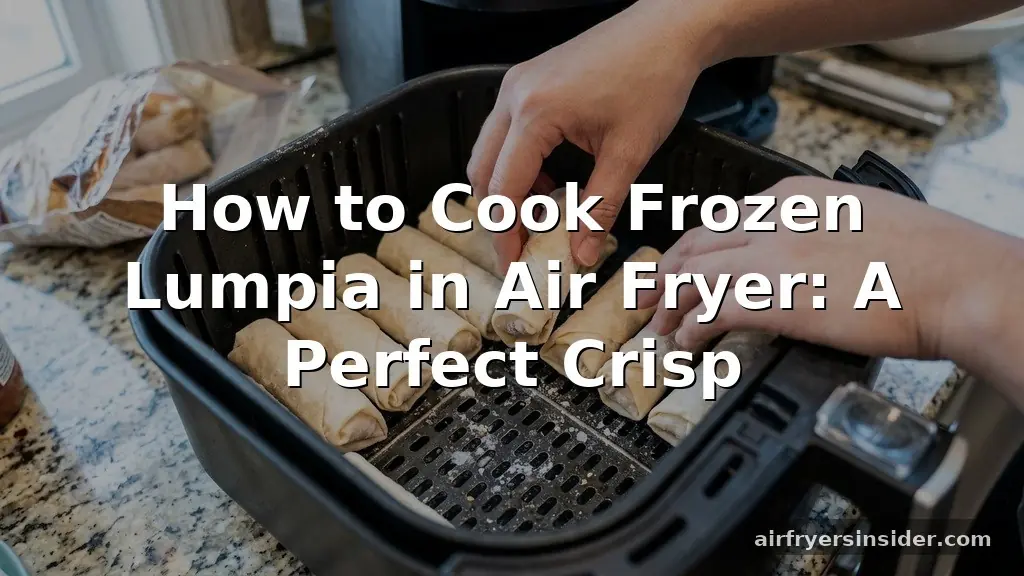
Achieving the perfect crunch on Filipino lumpia doesn’t always require a vat of hot oil. When you learn how to cook frozen lumpia in air fryer appliances, you unlock a convenient method that delivers that signature golden-brown exterior without the lingering smell of heavy frying.
These delicate Filipino spring rolls, often known as shanghai rolls, are essentially built for the rapid, circulating heat of a modern air fryer. By focusing on proper heat distribution and light oil application, you can enjoy this beloved snack with a fraction of the mess typically associated with traditional deep-frying.
Understanding the Mechanics of Air Frying Lumpia
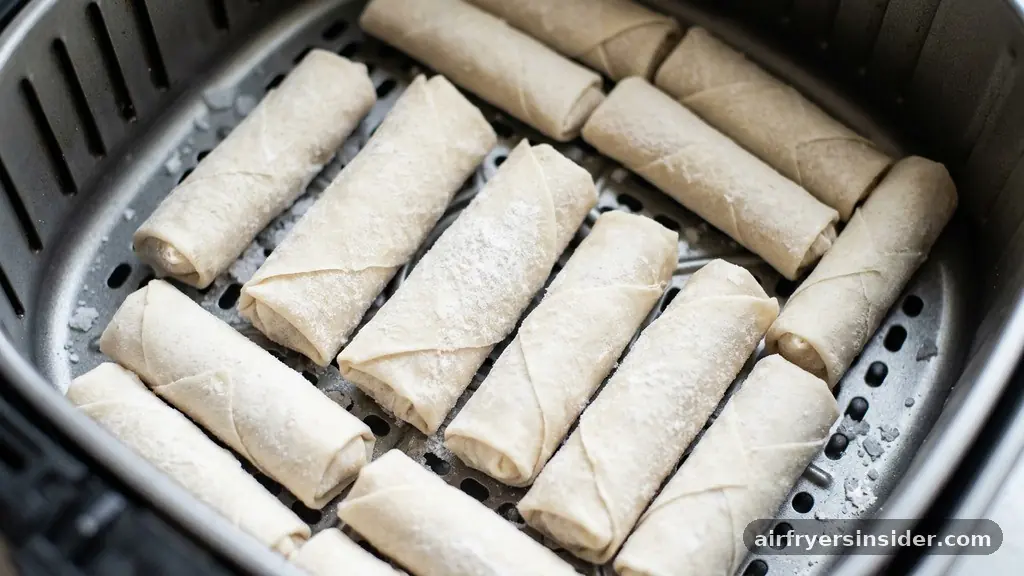
Air fryers operate as miniature convection ovens, using a powerful fan to circulate hot air at high speeds around your food. This process is ideal for frozen lumpia because it mimics the effect of deep frying by dehydrating the outer wrapper while sealing in the savory meat or vegetable filling. Unlike traditional ovens that might leave the bottoms of your rolls soggy, the air fryer basket allows air to flow underneath the food, provided you don’t overcrowd the tray.
When you prepare frozen lumpia, the goal is to reach a state of even browning while ensuring the center is fully heated. The convection effect is particularly effective at turning thin pastry wrappers into a brittle, satisfying shell.
By utilizing this technology, you are essentially creating a healthier, faster, and more manageable version of the classic street food. It is all about managing moisture and airflow to ensure that the wrapper becomes crispy before the filling has a chance to dry out or burst.
Preparing Your Air Fryer for Success
Before you even place your frozen rolls inside, your setup matters. Most models benefit significantly from preheating, even if the manufacturer says it is optional.
Preheating ensures the cooking chamber starts at the target temperature, which is vital for the initial “shock” that crisps the wrapper. If you toss frozen items into a cold machine, the pastry can absorb moisture as it thaws, leading to a chewy or greasy texture rather than the desired snap.
You should also look at your air fryer basket setup. Lining the basket with parchment paper can make cleanup easier, but it can also block airflow if the paper isn’t perforated.
If you choose to use liners, ensure there is plenty of room around each piece of lumpia for the air to circulate. A single, well-spaced layer is the gold standard for achieving uniform results every single time you cook.
The Importance of Oil Selection and Application
While the air fryer is marketed as a way to cook without fat, a light coating of oil is essential for the best texture when dealing with frozen spring rolls. Without a thin layer of fat on the exterior, the wrapper may appear pale or taste slightly floury. Using a high-smoke-point oil ensures that your snack won’t taste burnt or acrid after the cooking process.
| Oil Type | Smoke Point | Best Use |
|---|---|---|
| Avocado Oil | 520°F | High-heat crisping |
| Canola Oil | 400°F | Neutral flavor profile |
| Olive Oil | 375°F | Light, aromatic finish |
When applying the oil, use a high-quality cooking oil spray. Avoid aerosol sprays that contain lecithin, as these can sometimes leave a sticky residue on the non-stick coating of your air fryer basket.
A quick, light mist over the top of the rolls is sufficient. You don’t need them to be dripping; you just need to ensure the surface is lightly coated to facilitate heat transfer and the Maillard reaction that leads to that beautiful golden-brown color.
Optimal Cooking Times and Temperatures
Finding the right balance of heat and time is the most critical aspect of the process. Generally, you want to set your device between 375°F and 400°F.
If you go too low, the lumpia will take too long to crisp, which can result in the filling becoming dry or the wrapper turning tough. If you go too high, the outside will darken and potentially burn before the center of the roll is steaming hot.
Most frozen lumpia will require approximately 10 to 14 minutes, depending on the thickness of the filling and the brand. Because every air fryer has a different fan strength and heating element proximity, your first batch should always be treated as a test run.
Start on the lower end of the time spectrum, check the color, and add time in one-minute increments if needed. Consistency is built through observation rather than strictly following a timer.
Mastering the Halfway Flip
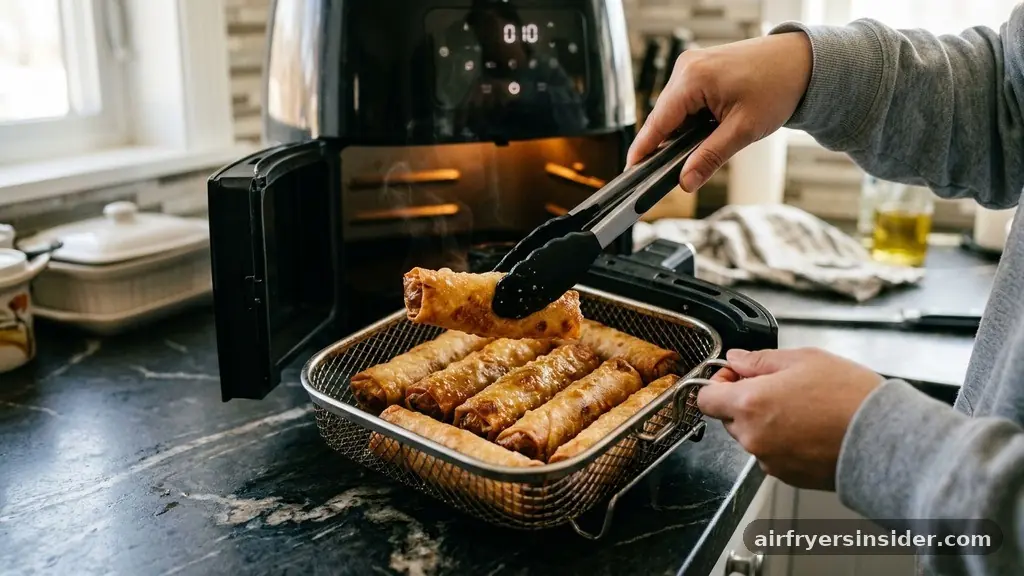
To ensure uniform browning, you must rotate your rolls during the cooking process. This is often referred to as the halfway flip.
Even with the powerful fans in modern kitchen appliances, the side of the lumpia facing up will always receive more direct heat than the side resting against the basket. Skipping this step usually results in a perfectly browned top and a pale, soggy underside.
Using a pair of silicone-tipped tongs is the best way to handle the rolls without tearing the delicate wrappers. Be gentle during the flip, as the wrappers become quite fragile as they crisp up.
If you notice any rolls sticking to the basket, gently nudge them with the tongs to release them before flipping. This simple intervention ensures that every inch of the wrapper reaches that perfect level of crispiness.
Checking for Doneness and Ensuring Safety
Safety is paramount when cooking frozen food items that contain ground meat. While the thin wrapper of a lumpia cooks quickly, the center must reach a safe internal temperature to be consumed. While most store-bought frozen lumpia are pre-cooked or designed to be cooked quickly, you should ensure that the center is piping hot.
If you are concerned about the internal temperature, you can use an instant-read thermometer to check a sample roll. However, because lumpia are small and thin, a visual check is often sufficient.
Look for a deep golden-brown hue and listen for a slight crackle when you move them with your tongs. If the wrapper looks blistered or feels firm to the touch, it is a good indicator that the moisture has been driven out of the pastry and the contents are thoroughly heated.
Common Troubleshooting Tips for Perfect Results
Even with the best intentions, you might run into minor issues during your cooking session. If your lumpia are coming out too pale, it is usually because you didn’t use enough oil or the temperature was too low. If they are bursting open, the filling may have expanded too quickly, which can happen if the temperature is set excessively high at the start.
Consider these adjustments:
- If the rolls are browning too fast but remain cold inside, lower the temperature by 25 degrees and add two minutes to the total cook time.
- If the lumpia are sticking to the basket, ensure you are using a light spritz of oil on the rack before placing the food down.
- If you are cooking a large batch, do not stack them; cook in multiple rounds to maintain the airflow necessary for crispiness.
- If the ends of the lumpia are burning, you can carefully tuck them inward or rotate the rolls more frequently to prevent localized charring.
The Role of Dipping Sauces
No experience with Filipino spring rolls is truly complete without the right accompaniment. A traditional vinegar-soy dipping sauce provides the necessary acidity and saltiness to cut through the richness of the fried wrapper. The contrast between the crunchy, oily pastry and the sharp, tangy sauce is what makes this dish so addictive.
You can customize your sauce by adding minced garlic, sliced chili peppers, or even a touch of sugar to balance the vinegar. Because the air-fried version of this snack is slightly less oily than the deep-fried version, you might find that you don’t need a sauce that is quite as acidic as you would for a deep-fried batch. Experimenting with different ratios of soy sauce to cane vinegar will help you find the flavor profile that best complements your specific recipe or brand of frozen lumpia.
Addressing Topical Gaps in Air Frying
Many home cooks wonder if they can achieve the same “shattered” texture in an air fryer as they can in a deep fryer. The truth is, while the air fryer is excellent, it produces a slightly different type of crunch—more of a crisp pastry texture than the airy, bubbly crust of deep-fried dough.
To bridge this gap, ensure your lumpia are completely dry before putting them in the basket. Any surface moisture will turn into steam, which softens the wrapper before it has a chance to crisp.
Another common question involves the use of frozen food in small batches. If you are only cooking two or three pieces, the air fryer will heat up much faster and finish the job in significantly less time.
Always adjust your timer when cooking smaller quantities, as the concentrated heat can overcook a small amount of food very quickly. By keeping a close watch during the last few minutes, you avoid the risk of turning your snack into a burnt, unpalatable mess.
FAQ: Common Queries Answered
How long should I cook frozen lumpia in the air fryer?
Most frozen lumpia require 10 to 14 minutes at 375°F or 400°F. Since every air fryer varies, start checking for a golden-brown color around the 8-minute mark and flip them halfway through to ensure even cooking on both sides.
Do I need to thaw the lumpia before air frying?
No, you can cook them straight from frozen. In fact, keeping them frozen until the moment they go into the basket helps the wrapper maintain its structure and prevents the filling from making the pastry soggy before the heat hits it.
Is it possible to get the same crunch as deep frying?
You can achieve a very satisfying, crispy texture in an air fryer, though it is slightly different from the bubbly, oil-saturated crust of deep frying. Using a light spritz of oil is the secret to getting as close as possible to the traditional texture.
How do I prevent the wrappers from breaking during cooking?
Handle them gently with silicone-tipped tongs and avoid overcrowding the basket. If the rolls are packed too tightly, they can stick together, and attempting to pry them apart once they start to cook will often cause the delicate wrappers to tear.
Cooking your favorite Filipino snacks at home doesn’t have to be a chore involving hot oil splatters and complex cleanup. By mastering how to cook frozen lumpia in air fryer, you gain a reliable, repeatable method for enjoying a crispy, delicious treat whenever the craving strikes. Remember that the key to success lies in the details: light oil application, proper spacing, and the all-important halfway flip.
Start with a small batch to calibrate your specific machine’s performance, and you will soon be churning out perfectly browned, piping-hot rolls that rival any traditional preparation. Once you have the timing down, you can focus on perfecting your signature dipping sauce and sharing your creations with friends and family. Enjoy the crunch and the convenience of this modern approach to a classic favorite.
Meta Description: Learn how to cook frozen lumpia in air fryer to achieve a perfect, crispy finish every time. Follow our simple steps for the best results and taste.