

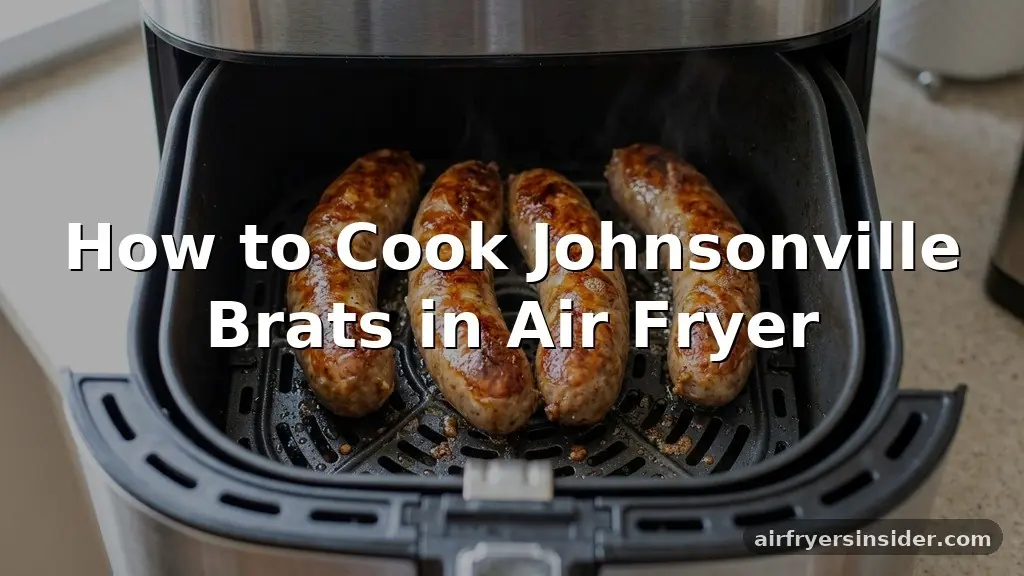
Learning how to cook Johnsonville brats in air fryer units is a total game-changer for anyone who loves that classic, smoky backyard flavor without firing up the grill. You get that signature snap and succulent center in a fraction of the time, making it the perfect solution for busy weeknights or unexpected guests.
By mastering the right temperature and timing, you can transform these sausages into a meal that rivals anything found at a ballpark. Whether you are craving original links or zesty cheddar brats, this method ensures perfectly cooked results every single time you hit the start button.
Why the Air Fryer is Perfect for Brats
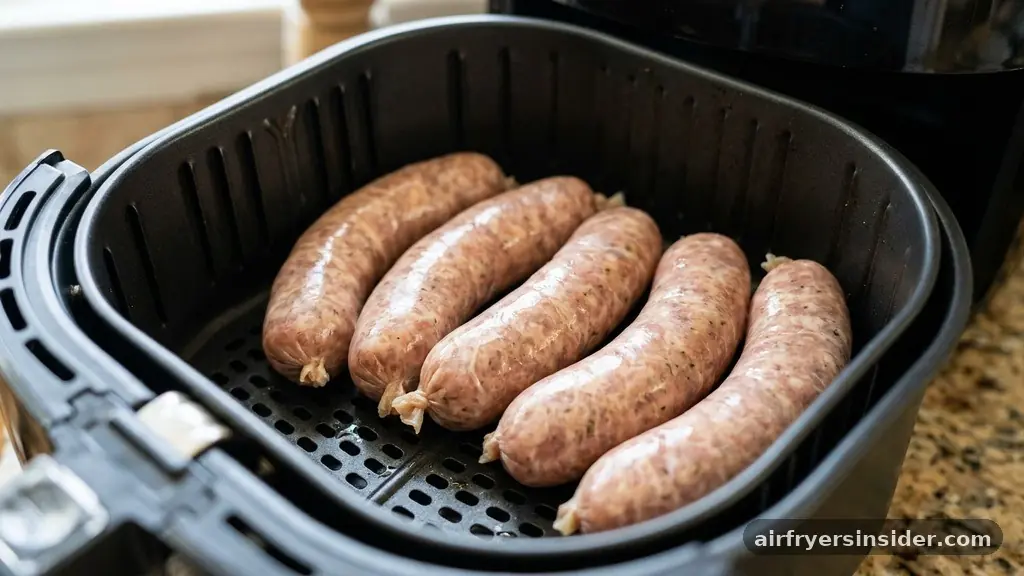
Using an air fryer to prepare sausage links is remarkably efficient because of the way the appliance functions. Unlike a traditional oven, which relies on stagnant heat, an air fryer uses rapid air technology to circulate high-temperature air around the food.
This constant movement mimics the effect of a convection oven, but on a much smaller, more intense scale. When you cook Johnsonville brats this way, the hot air hits the casing from every angle simultaneously, which is why you get that desirable crispy skin without needing to drown the meat in oil.
Because the unit is smaller than a standard oven, it reaches the desired temperature almost instantly. You aren’t wasting energy heating up a massive appliance just to cook a few links.
This efficiency means your cooking time is significantly reduced. You’ll find that the fat rendered from the pork sausage drips away into the basket rather than allowing the meat to stew in its own grease, which is a major benefit for those looking to keep their meal slightly lighter.
The consistent airflow also helps in achieving a beautiful golden brown exterior. On a grill, you have to constantly manage flare-ups from dripping fat, which can lead to burnt casings and uneven cooking. In the air fryer, the process is controlled and predictable.
You get consistent results, meaning you don’t have to stand over the appliance with a set of kitchen tongs for twenty minutes worrying about charred spots. It’s a set-it-and-forget-it approach that yields professional-quality results for home cooks of any skill level.
Preparing Your Equipment and Ingredients
Before you begin, ensure your air fryer is clean. Leftover grease from previous meals can smoke at high temperatures, so a quick wipe-down of the basket is always a smart move.
You don’t necessarily need fancy accessories, but having a pair of high-quality silicone-tipped kitchen tongs will save your non-stick coating from scratches. If you want to make cleanup even faster, you can use a sheet of parchment paper designed for air fryers, though you should ensure the paper is weighed down by the sausages so it doesn’t fly up into the heating element.
Regarding the brats themselves, keep them refrigerated until the very last second. Room-temperature meat can sometimes lose its structural integrity if it gets too soft before hitting the heat. You don’t need to pierce the casings with a fork, as this often lets the precious juices escape, leading to dry meat.
Instead, trust the air fryer to cook them gently. If you are using cheddar brats, be slightly more careful; the cheese inside can get extremely hot and may leak if the casing splits, so keep your temperature settings moderate.
Finally, consider your workspace. While the air fryer does the heavy lifting, having a plate or cutting board ready for the resting time is essential.
You want to move the finished sausages directly from the basket to a resting surface rather than letting them sit in the hot basket, which would continue to cook them via residual heat. Proper preparation ensures that the transition from package to plate is seamless, safe, and organized.
Determining the Right Cooking Temperature
The debate over the best temperature for cooking Johnsonville brats in air fryer models usually settles between 350 and 400 degrees Fahrenheit. Setting your device to 375°F is often the “sweet spot” for most home appliances. This temperature is high enough to render the fat and crisp the casing, yet low enough to ensure the center reaches the proper internal temperature without burning the outside prematurely.
If you prefer an extra-crispy exterior, you can start at 350°F for the first ten minutes and then bump the temperature up to 400°F for the final three minutes. This “finish strong” technique is excellent for achieving that deep, mahogany color. However, if you are working with a powerful model like a Ninja Foodi or a high-wattage Cosori, you might find that 350°F is plenty, as these machines move air very aggressively.
Always check your user manual if you are unsure about your specific unit’s power. Some smaller air fryers have heating elements very close to the basket, which can char the top of the sausage quickly. In those instances, a lower temperature for a slightly longer duration is safer.
Remember that the goal is an even, golden exterior and a juicy, cooked-through interior. If you find the outside is browning too fast, don’t hesitate to drop the heat by 25 degrees.
Managing Cooking Time for Optimal Results
The total time required depends largely on whether you are using raw or pre-cooked links. For standard raw brats, you are looking at approximately 12 to 16 minutes. Pre-cooked varieties, on the other hand, only need about 6 to 8 minutes just to warm through and get a nice sear on the outside.
| Brat Type | Temp (F) | Time (Min) |
|---|---|---|
| Raw Brats | 375°F | 14-16 |
| Pre-cooked | 375°F | 6-8 |
| Cheddar/Stuffed | 360°F | 12-14 |
It is critical to follow the process of turning halfway through the cook time. Even with advanced rapid air technology, the bottom of the sausage won’t get as crispy as the top unless you flip them.
Use your kitchen tongs to give them a quarter-turn or a full flip at the halfway mark. This ensures that the heat distribution is balanced, leading to an even browning across the entire circumference of the bratwurst.
Don’t rely solely on the timer, though. Every air fryer performs differently based on how full the basket is and the specific airflow pattern of the unit. Use the timer as a guideline, but always rely on your visual cues—the casing should look taut, browned, and slightly blistered—to determine when they are truly ready.
Ensuring Food Safety and Doneness
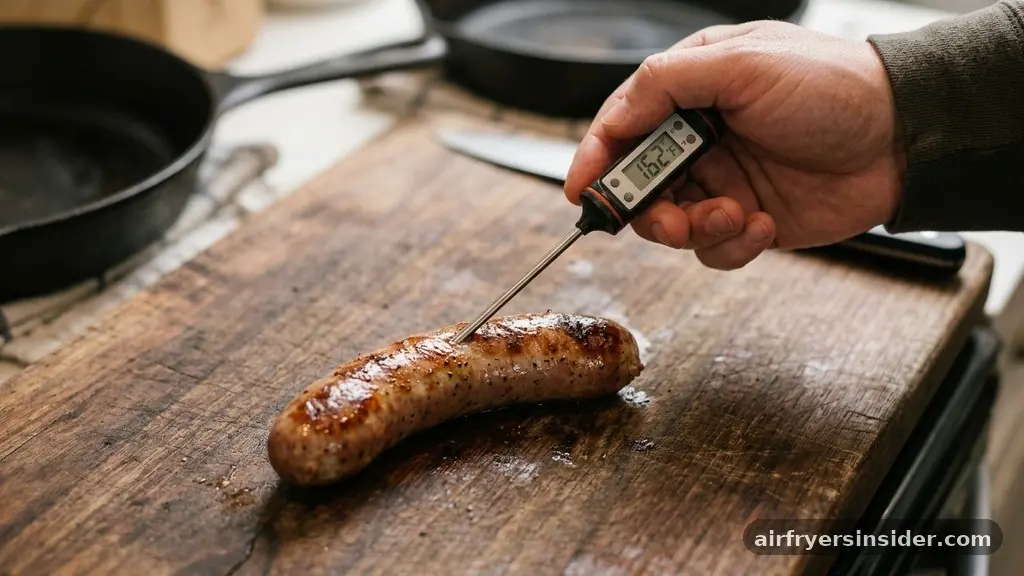
When dealing with pork, food safety is paramount. According to USDA guidelines, ground pork products should be cooked to an internal temperature of at least 160°F.
While visual cues like color are helpful, they are not foolproof. The only way to guarantee that your sausages are safe to eat is by using a reliable meat thermometer.
Insert the probe into the center of the thickest part of the sausage. If you are cooking multiple links, check at least two of them, especially if you have a crowded basket.
A digital instant-read thermometer is your best friend here. It eliminates the guesswork and prevents you from slicing into the meat prematurely, which would cause all those flavorful juices to leak out onto the cutting board.
Keep in mind that the temperature will rise slightly after you remove the sausages from the air fryer. This is due to residual heat. If your thermometer reads 158°F, it will likely hit that 160°F mark while the meat rests.
This is perfectly acceptable. However, if you are well below that, pop them back in for another two minutes. Never compromise on safety; it is always better to have a slightly darker casing than to serve undercooked pork.
Addressing Common Challenges
One of the most frequent issues home cooks face is the casing splitting. While a small split is usually fine, a large rupture can cause the sausage to dry out.
This often happens because the air fryer is set to too high a temperature, causing the fat to expand faster than the casing can handle. If you notice your brats are splitting, reduce your heat settings for the next batch.
Another challenge is smoke. If your air fryer starts smoking, it is almost always due to the grease at the bottom of the basket hitting the heating element. To prevent this, you can place a small amount of water or a slice of bread in the bottom of the drawer (beneath the basket tray) to catch the drippings.
Alternatively, ensure you are not overloading the basket. When sausages are packed too tightly, the air cannot flow properly, leading to uneven cooking and extra moisture buildup.
If you find your sausages are pale despite being cooked, it might be that they were too cold when they went in. If you have the time, letting them sit out for ten minutes before cooking can help.
You can also lightly brush them with a tiny bit of oil, though Johnsonville brats are usually fatty enough that they don’t require extra fat. If you are using a preheated air fryer, the initial burst of heat will help start the browning process immediately, which often results in a much better final color.
The Importance of Resting Time
Just like a steak, sausages benefit greatly from a short resting time once they come out of the air fryer. Allowing them to sit for three to five minutes allows the internal juices to redistribute throughout the meat. If you bite into a brat the second it leaves the machine, you are likely to get a burst of steam and hot fat, and the meat itself may feel slightly dry.
During this resting period, the residual heat continues to cook the center gently. This is why you should pull them when they reach about 158°F rather than waiting for them to hit 160°F inside the unit.
If you are worried about them getting cold, you can tent them loosely with a piece of aluminum foil. Do not wrap them tightly, or the steam will soften that beautiful crispy skin you worked so hard to achieve.
Use this time to prepare your buns, toast your bread, or assemble your condiments. By the time you have your mustard, sauerkraut, and onions ready, the sausages will be at the perfect temperature to enjoy.
This patience pays off with a much more juicy texture that makes every bite satisfying. It’s a small step that separates a rushed meal from a truly enjoyable dining experience.
Comparing Precooked vs Raw Brats
Understanding the difference between precooked vs raw sausages is key to success in the air fryer. Precooked links are essentially “heat and eat” items.
They are already fully cooked during the manufacturing process, so your primary goal in the air fryer is simply to warm them through, achieve a nice texture, and get some color on the outside. Because they are already dense, they warm up very quickly and are less likely to shrink significantly.
Raw brats require more attention. They contain more moisture and fat that needs to be rendered out. When you cook raw links, you are essentially poaching them in their own fat inside the casing.
This is why the cooking time for raw sausages is nearly double that of pre-cooked ones. You have to be more patient and ensure that the heat has enough time to penetrate the center without burning the exterior.
Many people prefer raw brats because they feel the flavor is fresher and the texture is superior. However, pre-cooked brats are a massive time-saver.
If you have a Ninja Foodi or Instant Vortex with a “reheat” or “air fry” function, you can have pre-cooked brats on the table in under ten minutes. Neither is objectively “better,” but knowing which one you have in your fridge will dictate how you set your timer and temperature.
Topical Gaps and Pro Tips
One common question that often goes unanswered is how to handle different types of brats, specifically those with cheese or other fillings. When cooking cheddar brats, the cheese inside can turn into molten lava.
If you notice the casing starting to bulge, it is a sign that the cheese is expanding. Lowering the temperature by 10-15 degrees for the final few minutes of the cycle can prevent a major blowout.
Another gap involves the use of oil spray. Many people wonder if they need to spray the basket. Generally, you do not need to add extra oil to the sausages themselves, as they are quite fatty.
However, if you are using a brand that is lower in fat, a very light spritz of high-smoke-point oil (like avocado or grapeseed) can help the browning process. Avoid aerosol sprays with propellants like soy lecithin, as these can build up a sticky, gummy residue on your air fryer basket over time.
Lastly, don’t ignore the importance of air circulation. If you have a basket-style fryer, don’t stack the sausages. They should be in a single layer with enough space around them for the air to move.
If you are cooking for a crowd, it is much better to do two smaller batches than one overcrowded batch. The quality difference is significant; the second batch will be crispier, more evenly browned, and will cook faster because the air can reach every surface of the meat.
FAQ
Do I need to poke holes in the casings before air frying?
It is generally better not to poke holes in the casings. Piercing them allows the natural juices to escape, which can lead to a drier sausage. Modern air fryers are efficient enough to cook the meat thoroughly without the need to vent the casing for heat penetration.
Can I cook frozen Johnsonville brats directly in the air fryer?
Yes, you can, but you will need to adjust your settings. Increase the cooking time by about 5 to 7 minutes and lower the temperature to 350°F initially to ensure the center thaws and cooks before the outside burns. Always check the internal temperature with a thermometer.
How do I stop the air fryer from smoking when cooking brats?
Smoke is usually caused by grease hitting the heating element. To prevent this, add a tablespoon of water or a slice of bread to the bottom of the air fryer drawer, underneath the basket. This absorbs the rendered fat and prevents it from burning and creating smoke.
Should I preheat my air fryer for sausages?
Preheating is not strictly mandatory, but it is highly recommended. A preheated air fryer ensures that the cooking process begins immediately at the correct temperature, which helps in achieving that signature crispy skin and even browning that you want for the best possible texture.
Conclusion
Mastering the art of cooking Johnsonville brats in air fryer units is a straightforward way to enjoy a classic meal with minimal cleanup. By focusing on proper temperature control, flipping your links halfway through, and using a meat thermometer to ensure safety, you can achieve that perfect, juicy result every single time. The air fryer’s ability to circulate heat makes it an ideal tool for rendering fat and crisping the casing without the hassle of a grill.
Whether you are serving them at a family dinner or a quick weekend lunch, these tips will help you get the most out of your appliance. Grab your favorite pack of brats and give this method a try tonight for a delicious, stress-free meal.
Meta Description: Learn how to cook Johnsonville brats in air fryer perfectly. Get tips on temperature, timing, and achieving that golden, crispy skin every time.


