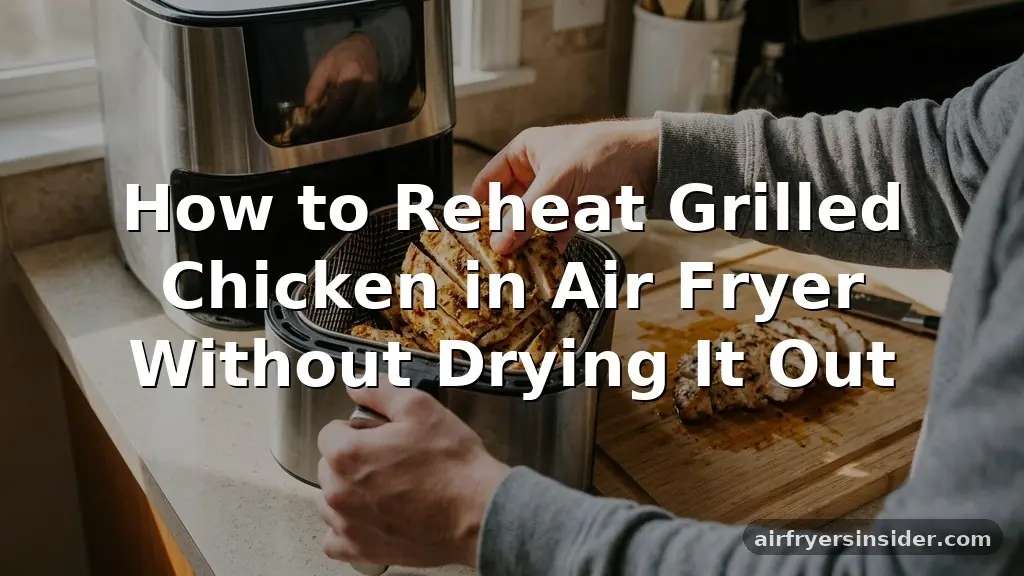
Mastering the art of reheating grilled chicken in air fryer appliances is a quick way to restore that fresh-off-the-grill texture without the rubbery results often caused by a microwave. Many home cooks struggle with lean cuts like chicken breast becoming tough or stringy after a second round of heat, but the rapid air circulation in your device can actually preserve the quality of your leftovers.
By managing temperature and hydration correctly, you can enjoy juicy, flavorful poultry that tastes just as good as the day it was prepared. This approach saves time and reduces food waste while ensuring your meal remains safe and delicious.
Why the Air Fryer Excels at Reheating Poultry
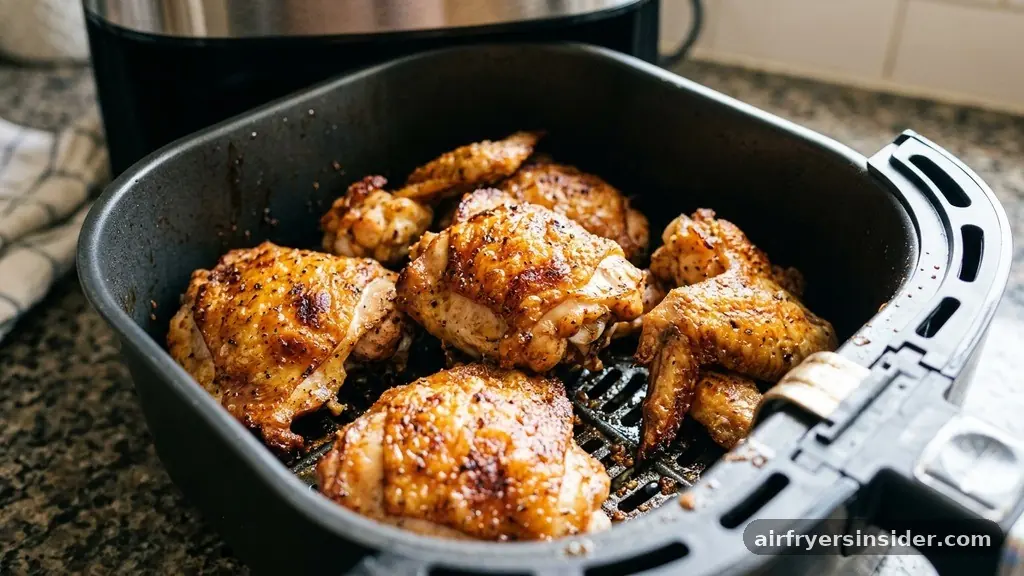
The secret to why an air fryer works so well for leftovers lies in its core design as a high-powered convection oven. Unlike a microwave, which uses electromagnetic radiation to excite water molecules often leading to uneven, soggy, or rubbery meat, an air fryer uses intense, circulating dry heat.
This environment mimics the original cooking process, allowing the exterior to crisp up while the interior warms through steadily. When you focus on how to reheat grilled chicken in air fryer setups, you are essentially leveraging the same thermal conductivity that made the meat great in the first place.
The rapid airflow ensures that the surface of the chicken doesn’t just sit in a pool of its own steam. Instead, moisture is evaporated from the surface just enough to create a pleasant texture, while the structure of the meat stays intact. This is particularly effective for chicken wings and skin-on thighs, where maintaining that crispy skin is a priority.
Because the heat is directed and intense, the process is significantly faster than using a conventional oven, which might take twenty minutes just to reach the proper internal temperature. By using a basket-style air fryer, you gain control over the heat distribution, making it the superior tool for busy weeknight meal prep.
Essential Preparation for Optimal Moisture Retention
Before you even turn on your machine, you need to prepare the meat to prevent it from becoming dry chicken. Cold chicken straight from the refrigerator will take much longer to heat through, increasing the risk of the exterior overcooking before the center is safe.
If possible, let your leftovers sit on the counter for about ten minutes to take the chill off. This small step significantly improves the final texture of the poultry.
Another critical step involves adding a small amount of fat or liquid to the surface. A light coating of olive oil or a quick spritz with a food-grade spray helps conduct heat evenly and adds a protective layer that keeps the fibers from drying out during the cycle. If you are reheating thicker cuts like a full chicken breast, consider slicing the meat into smaller, uniform strips or chunks.
This reduces the time needed for the heat to penetrate the core, which is the single most effective way to maintain the juiciness of the protein. You aren’t just warming the meat; you are refreshing it, so treat the preparation as a vital part of the cooking process.
Managing Temperature and Timing for Best Results
The biggest mistake most people make is setting the air fryer to the same temperature they would use for cooking raw food. When reheating leftovers, you want a moderate heat that warms the chicken gently without scorching the outside.
A setting between 320°F and 350°F is usually the sweet spot. Anything higher than 375°F risks drying out the edges before the middle reaches a safe temperature.
Consistency is key, and every air fryer model—whether it is a compact basket-style air fryer or a larger Ninja Foodi unit—will have slight variations in power. Start with a shorter window, such as four minutes, and check the progress. If the chicken still feels cold in the center, give it another two minutes.
Using an instant-read thermometer is the only way to be 100% certain about food safety. The USDA recommends an internal temperature of 165°F for reheated poultry. While this might seem high for a piece of meat that was already cooked, it is the standard for safety, and if you follow the low-and-slow method, you can hit this mark without sacrificing the quality of the meal.
Addressing Topical Gaps: Common Reheating Challenges
One frequent concern involves how to keep chicken moist when reheating in the air fryer, especially when dealing with lean white meat. Many users find that even with careful temperature control, the chicken loses too much moisture. A pro tip here is to place a small, heat-proof ramekin with a tablespoon of water or chicken broth at the bottom of the basket or on a rack.
The steam generated during the cycle creates a humid environment that prevents the meat from dehydrating. This simple hack is a game-changer for those who prefer their leftovers to mimic the texture of freshly poached or roasted poultry.
Another common gap in knowledge is how to handle different cuts. Should you treat a wing the same as a breast? Generally, no.
Small, fatty pieces like wings or thighs are more forgiving and can handle higher heat for a shorter duration to achieve crispy skin. Larger, leaner pieces require more finesse. Below is a quick reference table to help you adjust your approach based on the cut of meat you are working with.
| Cut Type | Recommended Temp | Estimated Time | Key Tip |
|---|---|---|---|
| Chicken Breast | 325°F | 5-7 Minutes | Slice into strips first |
| Chicken Thighs | 350°F | 6-8 Minutes | Skin side up |
| Chicken Wings | 375°F | 4-6 Minutes | Flip halfway |
The Role of Accessories in the Reheating Process
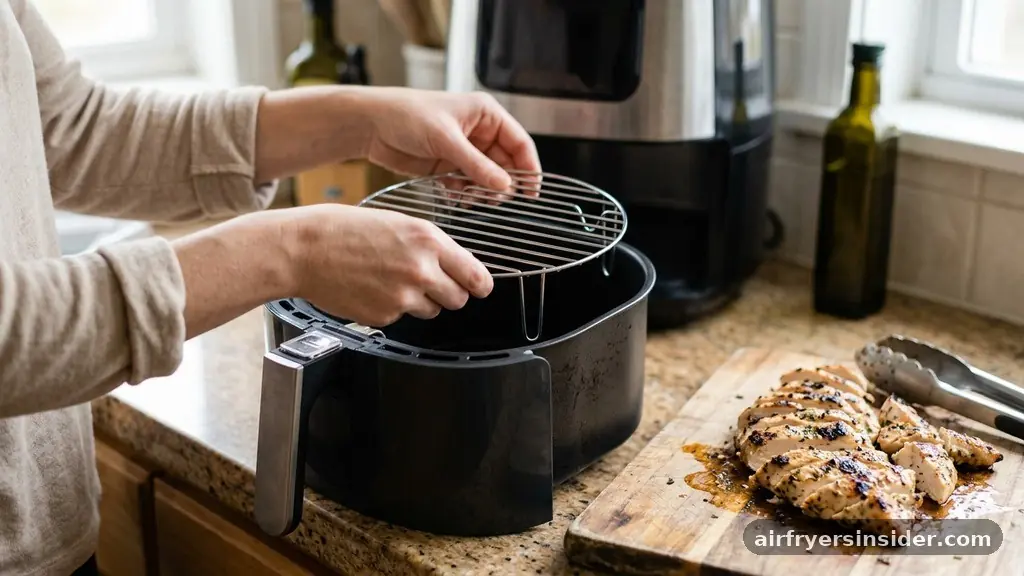
While the standard basket is often enough, using accessories can elevate your results. A metal rack, for example, allows air to circulate underneath the chicken, ensuring the bottom doesn’t become soggy or stick to the basket.
If you are dealing with smaller pieces that might fall through the grate, a piece of parchment paper can be used, though be careful not to block the airflow entirely. Aluminum foil is another tool, but use it sparingly; if you wrap the chicken entirely in foil, you are essentially steaming it, which defeats the purpose of the air fryer’s convection capabilities.
If you are using a Ninja Foodi or a similar multi-cooker, make sure you are using the dedicated air crisp function rather than a pressure cooking setting. The goal is to maintain the dry, hot air environment.
Always ensure that your accessories are food-grade and rated for the high temperatures your air fryer reaches. Keeping your equipment clean is also part of the process; leftover burnt bits from previous meals can create smoke and alter the flavor of your chicken during the reheating cycle.
Ensuring Food Safety and Quality
When reheating leftovers, food safety must always remain the priority. Bacteria can grow rapidly in the “danger zone” between 40°F and 140°F. Never leave your chicken out on the counter for more than two hours after the initial meal.
If you plan to reheat it later in the week, ensure it was stored in an airtight container in the refrigerator. When you take it out, check for any signs of spoilage, such as an off smell or a slimy texture. If in doubt, throw it out.
Using a kitchen thermometer is the final insurance policy. Insert the probe into the thickest part of the chicken, avoiding the bone, which can provide a false reading. Once your thermometer hits 165°F, the chicken is safe to consume.
Remember that the quality of your reheated meal is directly tied to how you stored it initially. If the chicken was wrapped tightly and kept in a high-quality container, it will retain more of its original moisture, making the reheating process much more successful than if it was left exposed to refrigerator air.
Creative Ways to Use Reheated Chicken
Sometimes, despite your best efforts, the texture of reheated chicken changes slightly. Instead of eating it as a standalone piece, consider transforming it into a new dish. Reheated grilled chicken is perfect for:
- Tossing into a fresh salad for a protein-packed lunch.
- Mixing with a bit of mayonnaise or Greek yogurt for a quick chicken salad wrap.
- Adding to a stir-fry during the last two minutes of cooking.
- Layering into a quesadilla where the melting cheese compensates for any slight dryness.
- Using as a topping for a homemade flatbread or pizza.
By repurposing the meat, you remove the pressure to make the chicken taste exactly like it did on the grill. You are simply adding a flavorful, pre-cooked protein to a new culinary creation. This is a common strategy used by professional chefs to manage inventory and ensure that “leftovers” are viewed as a versatile ingredient rather than a subpar version of the original meal.
Troubleshooting Common Reheating Issues
Even with the best techniques, things can go wrong. If you find your chicken is still coming out dry, you might be overcooking it. Try reducing the temperature by 25 degrees and extending the time slightly.
If it’s coming out unevenly, ensure you aren’t overcrowding the basket. Air needs to move freely around every piece of meat. If you have a large amount of chicken, it is better to reheat it in two smaller batches rather than one large, crowded pile.
If the surface is burning before the inside is warm, you are likely using too high a temperature. Lower the heat and consider a light brush of sauce or marinade midway through the process to add moisture back to the surface.
Conversely, if the skin isn’t getting crispy, you might need to increase the heat for the final minute of the cycle. This “blast” of high heat at the end can help crisp up the skin without drying out the interior.
Mastering the Technique for Long-Term Success
Developing a consistent routine for how to reheat grilled chicken in air fryer appliances will eventually become second nature. You will start to intuitively know how long your specific chicken cuts need, whether you are dealing with thin breast slices or bone-in thighs.
The key is to pay attention to the relationship between the meat’s thickness and the airflow of your specific machine. Over time, you will find that you rarely have to rely on the microwave, which often ruins the texture of good protein.
As you gain more experience, you might start experimenting with different seasonings or glazes during the reheating process. A quick brush of BBQ sauce or a sprinkle of fresh herbs can revitalize the flavor profile of the chicken, making it feel like a brand-new dish.
Remember that the goal is not just to warm the meat, but to respect the quality of the ingredients you started with. With the right approach, your leftovers can be just as satisfying as the main event.
Frequently Asked Questions
Is it safe to reheat grilled chicken in an air fryer?
Yes, it is perfectly safe as long as you ensure the chicken reaches an internal temperature of 165°F. Using a digital kitchen thermometer is the best way to verify that the meat has been heated thoroughly throughout, which eliminates the risk of foodborne illness.
How do I prevent the chicken from getting tough when reheating?
To keep chicken moist, avoid high temperatures that evaporate too much liquid. Use a lower heat setting, such as 325°F or 350°F, and consider adding a tiny splash of water or broth to the bottom of the air fryer basket to create a gentle, humid cooking environment.
Can I reheat frozen grilled chicken directly in the air fryer?
While possible, it is not recommended for the best texture. It is much better to thaw the chicken in the refrigerator overnight first. If you must reheat from frozen, use a much lower temperature for a longer period to ensure the center warms without burning the exterior.
How long does it take to reheat chicken in an air fryer?
Most chicken pieces will reheat in 4 to 8 minutes depending on their thickness and the air fryer’s power. It is best to start checking at the 4-minute mark. Always rely on an internal temperature check rather than just the clock to guarantee safety and quality.
Conclusion
Mastering the process of reheating grilled chicken in air fryer units is a practical skill that transforms your leftovers from a potential disappointment into a delicious, convenient meal. By prioritizing gentle temperatures, ensuring proper air circulation, and checking internal temperatures with a thermometer, you maintain the moisture and flavor that make grilled poultry so appealing. Whether you are prepping for a busy week or simply trying to reduce food waste, these techniques provide a reliable path to high-quality results.
Experiment with these methods, adjust for your specific appliance, and enjoy the ease of having perfectly warmed protein ready whenever you need it. If you find a technique that works particularly well for your favorite cut of meat, stick with it and feel confident in your ability to refresh your meals with professional-grade consistency.
Meta Description: Learn how to reheat grilled chicken in an air fryer without drying it out. Follow these expert tips for juicy, crispy, and safe leftovers every time.