Learning how to cook ahi tuna in air fryer settings might seem counterintuitive to those who prefer the traditional cast-iron sear, but this method offers surprising control over the final result. When you master the balance of high heat and short timing, you can achieve a perfect restaurant-quality crust while keeping the interior cool and buttery.
This approach is ideal for busy weeknights when you want a healthy, protein-packed meal without filling your kitchen with smoke. By focusing on the right preparation and timing, you will transform a premium cut of yellowfin tuna into a centerpiece dish that feels both sophisticated and effortless to prepare.
Understanding the Mechanics of Air Fryer Fish
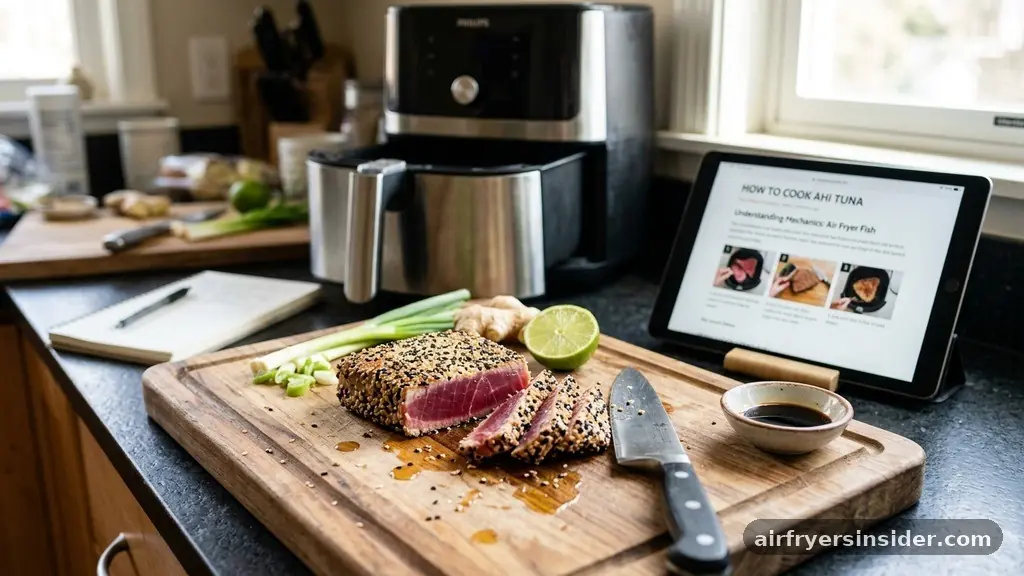
The air fryer is essentially a high-powered convection oven that uses intense air circulation to cook food rapidly. When dealing with delicate proteins like tuna, this rapid movement of hot air acts similarly to a convection roast, but it can be aggressive if you aren’t careful.
The goal when cooking ahi tuna in an air fryer is to create a Maillard reaction on the surface while leaving the center raw or medium-rare. Because the device forces heat into the center faster than a standard oven, the window between perfect and overcooked is very narrow.
To get the best results, your air fryer must be preheated. Most models reach their maximum searing temperature within three to five minutes. Skipping this step means the fish will slowly bake rather than sear, leading to a dry, chalky texture throughout the steak.
Once you have a preheated chamber, the air circulation will hit the surface of the tuna immediately, sealing in the juices and creating that desirable texture. Remember that consistent air flow is the secret to success, so avoid overcrowding the basket.
Selecting and Preparing Your Tuna Steak
Quality is paramount when working with ahi or yellowfin tuna, especially since you are aiming for a medium-rare finish. Always look for sashimi-grade tuna at your local fish market or grocery store.
This ensures the fish has been handled correctly and is safe to consume when the center remains undercooked. Look for steaks that are at least one inch thick; thinner cuts will overcook in the air fryer before you can develop a decent crust.
Before you even think about seasoning, pat the fish completely dry with paper towels. Moisture is the enemy of a good sear. If the surface is damp, the tuna will steam instead of searing.
Once dry, brush the steak lightly with a high-smoke-point oil. Avocado oil is an excellent choice here because it handles the high temperatures of the air fryer without burning or imparting a bitter flavor. If you only have olive oil, use it sparingly, but be aware that it has a lower smoke point and might create more smoke in your kitchen.
Creating the Perfect Crust and Flavor Profile
The crust is what defines a great ahi tuna dish. Since the cooking time is so short, the flavor must come from the exterior coating. A classic combination involves a mixture of toasted sesame seeds, cracked black pepper, and a pinch of salt.
You can also incorporate dry aromatics like garlic powder or ground ginger to add depth without burning the surface. Press these seasonings firmly into the dry, oiled surface of the tuna so they adhere during the cooking process.
If you enjoy a more complex flavor, consider a quick marinade before coating the steak. A mixture of soy sauce, a drop of toasted sesame oil, and a hint of honey or maple syrup can penetrate the outer layers of the fish. However, keep the marinade time short—no more than 15 to 20 minutes.
If you leave the fish in an acidic marinade for too long, the texture of the tuna will break down and become mushy. Always pat the fish dry again after marinating if you intend to add a seed crust, otherwise, the crust will slide off in the air fryer basket.
Optimizing Air Fryer Settings for Tuna
When you are ready to cook, set your air fryer to its highest possible temperature, usually around 400°F (200°C). This high heat is necessary to achieve the sear before the internal temperature rises too far.
While some home cooks prefer to use aluminum foil to keep the basket clean, it is generally better to place the tuna directly on the air fryer rack or basket. This allows for maximum air circulation around the bottom of the steak, ensuring an even crust on all sides.
The total searing time should be very brief. For a standard one-inch thick tuna steak, two to three minutes per side is usually sufficient for a medium-rare finish. If you prefer your tuna completely rare, stick to the two-minute mark.
You should use a sturdy fish spatula to flip the steak carefully halfway through. Because the fish is delicate, handle it gently to prevent it from flaking apart before it hits your plate.
The Role of Internal Temperature and Carryover Cooking
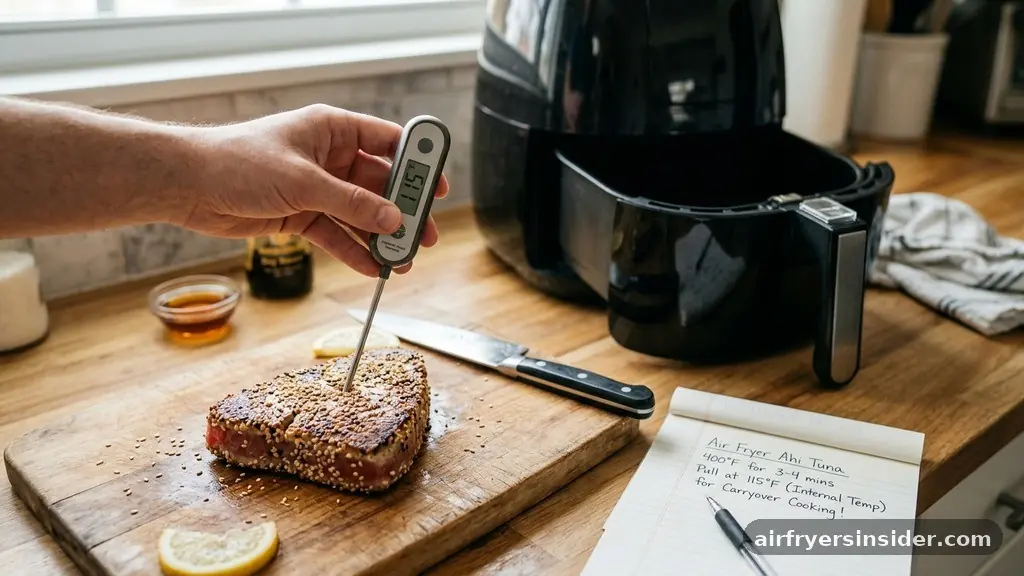
Achieving the perfect medium-rare result requires more than just a timer; it requires a reliable kitchen thermometer. While many experienced chefs cook by touch, using a probe thermometer is the only way to guarantee food safety and consistency.
You want the internal temperature to reach approximately 115°F to 120°F for a beautiful, vibrant pink center. Keep in mind that the fish will continue to cook for a minute or two after you pull it out of the air fryer, a process known as carryover cooking.
If you pull the tuna out at exactly 120°F, it may climb to 125°F or 130°F while resting, which might push it into the medium category. Aiming for an internal temperature of about 110°F to 115°F is often the “sweet spot” for most home cooks.
Always insert the thermometer into the thickest part of the steak to get an accurate reading. This small piece of equipment eliminates the guesswork and ensures you aren’t overcooking an expensive piece of protein.
Addressing Common Challenges and Topical Gaps
Many home cooks struggle with the fish sticking to the air fryer basket or the crust falling off. To prevent sticking, ensure the basket is lightly greased before placing the fish inside. If you are using a Ninja Foodi or a similar model with a ceramic-coated basket, the non-stick properties are generally excellent, but a quick spray of avocado oil never hurts.
Another common issue is the “fishy” smell that can permeate the kitchen. This usually happens when the oil hits its smoke point or if the fish is not perfectly fresh.
Common Troubleshooting Issues
- Crust burning: Lower the temperature by 25 degrees if your crust contains sugar or delicate herbs that char too quickly.
- Fish sticking: Ensure the air fryer is preheated and the basket is properly oiled before the tuna enters the heat.
- Uneven cooking: Do not crowd the basket; leave at least two inches of space around the steak to allow for proper air circulation.
- Soggy crust: Always ensure the fish is bone-dry before applying your oil and seasonings.
Another gap in many recipes is the lack of guidance on resting time. Just like a ribeye steak, tuna needs to rest.
Resting allows the muscle fibers to relax and the juices to redistribute throughout the steak. Even though the cooking time is short, giving the tuna three minutes on a cutting board before slicing will result in a much more tender and flavorful bite.
Comparing Traditional Searing vs. Air Frying
It is helpful to look at how air frying stacks up against the classic pan-sear method. While both can yield delicious results, the equipment choice changes the workflow significantly.
| Feature | Stovetop Sear | Air Fryer Method |
|---|---|---|
| Smoke Levels | High | Low to Moderate |
| Crust Evenness | Excellent (Bottom only) | Good (All-around) |
| Hands-on Time | Constant monitoring | “Set and forget” |
| Cleanup | Splattered oil | Minimal |
As the table shows, the air fryer is the clear winner for convenience and cleanliness. However, the stovetop method remains the gold standard for a deep, dark crust on a single side.
If you are preparing a large quantity of tuna, the air fryer might require multiple batches, whereas a large cast-iron skillet can handle several steaks at once. Choose your method based on your available time and how much cleanup you are willing to tackle afterward.
Serving Suggestions and Flavor Pairings
Once your ahi tuna is perfectly cooked, the way you serve it can elevate the entire meal. Because the fish has a rich, meaty texture, it pairs beautifully with acidic or bright accompaniments that cut through the density. A simple cucumber salad with rice vinegar, or a refreshing slaw made with shredded cabbage and lime juice, provides a perfect contrast to the savory sesame crust.
For a heartier meal, serve the tuna slices over a bed of warm jasmine rice or quinoa. You can also drizzle the finished steak with a reduction of soy sauce and ginger, or a spicy mayo made with sriracha and a touch of lime.
If you want to keep things light, a side of steamed bok choy or snap peas rounds out the plate without overwhelming the delicate flavor of the fish. The goal is to let the tuna remain the star of the show, using sides to enhance rather than compete with its natural profile.
Maintaining Your Equipment for Better Results
Consistent performance from your air fryer depends on how well you maintain it. Residue from previous meals, especially those involving fatty meats or sugary glazes, can cause smoke and uneven heating.
After every use, once the unit has cooled, wipe down the heating element if accessible and ensure the basket or rack is thoroughly cleaned. A buildup of carbonized food particles can alter the flavor of your delicate tuna, giving it an off-putting, burnt taste.
If you find that your air fryer is consistently undercooking or overcooking, consider calibrating your expectations by checking the actual temperature. Many air fryers run hotter or cooler than the dial suggests. You can use an inexpensive oven thermometer to see if your 400°F setting is actually reaching that heat.
This simple check can save you from ruining an expensive piece of yellowfin tuna. By keeping your machine clean and understanding its unique quirks, you ensure that every attempt at cooking ahi tuna in an air fryer yields consistent, professional-quality results.
FAQ
Is ahi tuna safe to eat medium-rare?
Yes, sashimi-grade ahi tuna is intended to be served rare or medium-rare. When you purchase high-quality, fresh fish from a reputable source, the interior does not need to be cooked through to be safe. Always prioritize sourcing to ensure the best quality for raw or lightly seared preparations.
Can I use frozen tuna steaks in the air fryer?
You can, but you must thaw them completely first. If you try to air fry frozen tuna, the exterior will burn while the interior remains icy. Thaw the steaks in the refrigerator overnight, then pat them completely dry with paper towels before applying your oil and seasonings for the best results.
Do I need to flip the tuna steak halfway through?
While the air fryer circulates heat, flipping the tuna is recommended to ensure both sides develop a consistent crust. Because the cooking time is very short, flipping halfway through the process helps you monitor the color of the crust and ensures the steak cooks evenly from both sides.
How do I prevent the tuna from drying out?
The key to preventing dry tuna is strict temperature and time management. Use a high heat setting for a very short duration to sear the outside while leaving the center cool. Using a kitchen thermometer to pull the fish at 115°F internal temperature will guarantee a moist, buttery texture every time.
Conclusion
Mastering the art of cooking ahi tuna in air fryer settings is a rewarding skill that brings restaurant-quality seafood into your home kitchen. By prioritizing fresh, high-quality fish, keeping the surface dry, and utilizing the precision of a kitchen thermometer, you can reliably achieve that perfect medium-rare finish. The air fryer provides a unique combination of speed and consistency that makes this dish accessible even on busy evenings.
As you experiment with different crusts and seasonings, you will find that this method quickly becomes one of your favorite ways to enjoy such a premium protein. Start with your favorite spice blend tonight and discover how simple it is to elevate your next dinner with this efficient, modern technique.