Mastering the art of cooking Italian sausage links in air fryer units transforms a standard weeknight meal into a restaurant-quality experience. The high-speed convection environment of modern countertop appliances ensures that every link achieves a perfect, crispy exterior while remaining remarkably juicy on the inside.
By understanding the relationship between heat intensity and internal moisture, you can consistently produce succulent results without the hassle of stovetop splatters or uneven grilling. Whether you are prepping for a quick family dinner or looking to add savory protein to a pasta dish, this method offers the most reliable way to achieve that sought-after golden brown finish with minimal effort.
The Mechanics of Air Frying Sausages
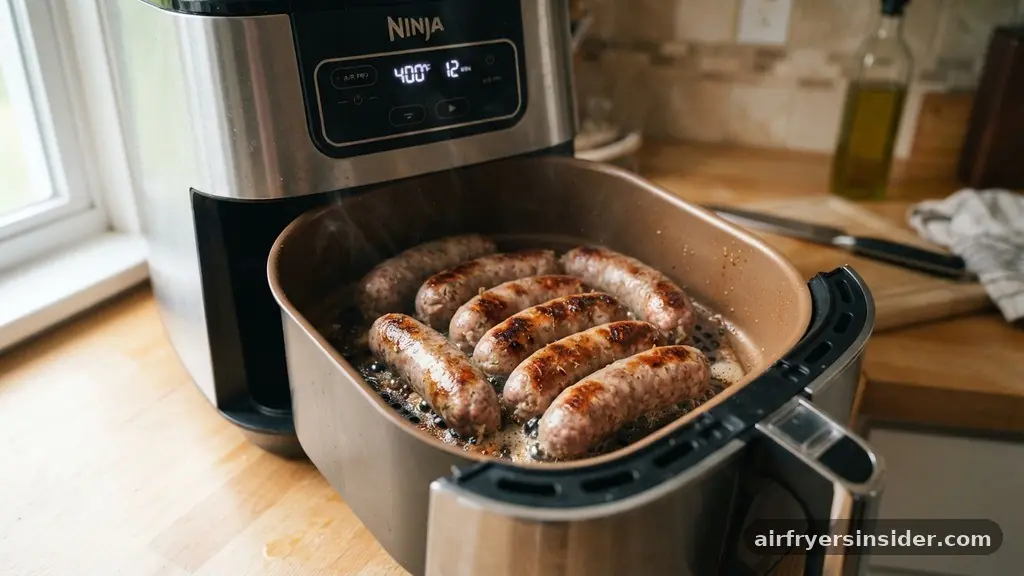
When you decide on cooking Italian sausage links in air fryer baskets, you are essentially utilizing a compact convection oven. The magic lies in the powerful fan that forces hot air to circulate rapidly around the food.
Unlike traditional frying, which submerges the meat in oil, air frying relies on the rendered fat within the pork sausage itself to crisp up the casing. This process creates a Maillard reaction on the surface, which is responsible for the deep, complex flavors and the appealing color we associate with well-cooked links.
Because the air circulation is so efficient, the cooking time is often significantly shorter than in a conventional oven. You do not need to worry about the bottom of the sausage sitting in a pool of grease, as the perforations in the air fryer basket allow excess fat to drip away from the meat.
This not only results in a lighter final product but also makes the entire cooking process cleaner and more efficient. The key is to avoid overcrowding the basket, as this restricts airflow and can lead to uneven cooking or steamed, rather than roasted, skins.
Optimal Temperature and Timing Settings
Setting the right environment is crucial for success. Most culinary experts recommend a temperature range between 375 and 400 degrees Fahrenheit.
At 400 degrees Fahrenheit, the high heat promotes rapid browning, which is ideal if you prefer a snappy, charred casing. If you are working with thicker sausages or prefer a slightly gentler approach, dropping the heat to 375 degrees Fahrenheit allows the center to reach the required internal temperature without the risk of burning the outer skin.
Temperature and Timing Reference
| Sausage Thickness | Temperature | Estimated Time |
|---|---|---|
| Standard Links | 380°F | 12-14 Minutes |
| Thick/Jumbo Links | 375°F | 15-18 Minutes |
| Pre-cooked Links | 400°F | 8-10 Minutes |
Regardless of the settings chosen, always remember that individual appliances like the Ninja Foodi, Cosori, or Instant Vortex vary in power. The first time you attempt this, start checking your meat a few minutes before the timer hits zero. Monitoring the progress is the best way to ensure you hit the sweet spot of perfectly rendered fat and a crisp, savory exterior.
The Debate Over Pricking the Casing
One of the most common questions regarding pork sausage preparation is whether you should poke holes in the casing before cooking. Many home cooks swear by pricking the skin with a fork to prevent the links from bursting under pressure. While this does release steam and prevents the sausage from splitting open, it also allows precious juices to escape, which can lead to a drier final product.
If you choose to use a fork to puncture the skin, do so sparingly. A single, tiny hole in each link is usually sufficient to release internal pressure without compromising the moisture content.
However, if you are using high-quality sausages with natural casings, you might find that the air fryer handles them perfectly fine without any intervention. If your primary goal is to keep the juices locked inside, try cooking at a slightly lower temperature for a longer duration, which allows the heat to penetrate the center more gradually, reducing the chance of a blowout.
Achieving Even Browning and Texture
To get that professional, uniform golden brown color, you must pay attention to how you arrange the links in the basket. The air circulation requires space to move freely.
If the sausages are touching or stacked on top of each other, the sides that are touching will remain pale and soft. Aim to place them in a single layer with at least a quarter-inch of space between each link.
Midway through the cycle, use a pair of tongs to flip the sausages. This simple step ensures that both sides receive direct heat and airflow, preventing one side from becoming darker than the other.
If you notice the sausages are browning too quickly before the center is cooked, you can lower the temperature by 25 degrees for the remainder of the time. This technique, sometimes referred to as finishing, helps you achieve the perfect balance between a crisp exterior and a tender, fully cooked interior.
Food Safety and Internal Temperature
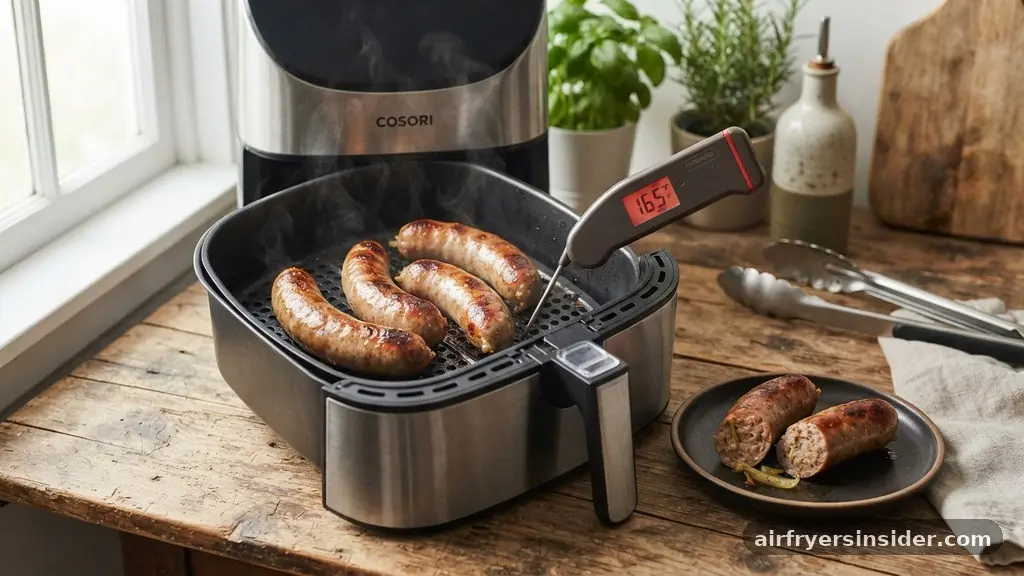
Ensuring food safety is non-negotiable when dealing with raw pork products. The most accurate way to verify that your sausages are safe to eat is by using a reliable meat thermometer.
You are looking for an internal temperature of at least 160 degrees Fahrenheit. Relying on visual cues like color or juice clarity is not as precise as using a calibrated digital probe.
Why Temperature Matters
- Prevents health risks associated with undercooked pork.
- Ensures the fat has rendered properly for better flavor.
- Helps you avoid overcooking, which makes the meat rubbery.
- Allows for consistent results regardless of the sausage brand.
Trichinosis prevention is a critical aspect of home cooking, and while modern pork production has significantly reduced these risks, maintaining the correct internal temperature remains the standard practice for safety. Once the meat reaches 160 degrees Fahrenheit, pull it out immediately to take advantage of carryover cooking, where the residual heat will naturally bring the temperature up a few more degrees while the meat rests.
Strategic Use of Liners and Cleanup
Managing the mess is often the biggest deterrent to cooking at home. Using parchment paper or aluminum foil can make cleanup significantly easier, but you must use them correctly.
If you use parchment paper, ensure it is specifically designed for air frying and that the weight of the sausages holds it down. If the paper is too light, the fan can blow it into the heating element, which is a fire hazard.
Aluminum foil is a sturdier alternative for lining the bottom of the basket. However, be aware that foil can deflect the airflow, which might interfere with the browning process.
If you want to keep your basket pristine without sacrificing the crispness, consider placing the foil only on the very bottom of the drawer, leaving the sides of the basket open for maximum air movement. Alternatively, investing in a silicone air fryer liner can provide a non-stick surface that is easy to wash and safe for high-heat applications.
Common Mistakes to Avoid
Even experienced cooks can fall into traps when learning how to cook Italian sausage links in air fryer models. One frequent error is failing to preheat the unit.
While many air fryers reach temperature quickly, starting with a cold basket means the sausages spend extra time in a lukewarm environment, which can make the fat render out slowly and result in a greasy texture. Preheating for three to five minutes ensures the cooking process starts instantly, searing the casing from the first second.
Another common pitfall is adding extra oil. Italian sausages are naturally fatty, and this fat will render out during the cooking process. Adding additional oil is unnecessary and can lead to excessive smoke.
If you are worried about the sausages sticking, a light mist of avocado or high-smoke-point oil is all that is ever required. Finally, never ignore the resting period. Giving the sausages three to five minutes to rest after removing them from the air fryer allows the juices to redistribute, ensuring that every bite is as savory as the first.
Handling Different Sausage Varieties
Not all Italian sausages are created equal. You might encounter sweet, mild, or hot varieties, and each can react slightly differently to heat.
Hot Italian sausages often contain a higher ratio of chili flakes and fat, which can influence how quickly they brown. Similarly, sausages with cheese or vegetable inclusions require more careful temperature management, as the internal fillings can overheat or melt out if the temperature is set too high.
If you are cooking pre-cooked links, the process is much faster. In this case, you are essentially just reheating and crisping the skin. You can bump the temperature up to 400 degrees Fahrenheit and reduce the time to under ten minutes.
Always check the packaging for specific instructions if you are unsure, as some pre-cooked sausages have different moisture levels that affect how they crisp up. Understanding the specific composition of your sausage will help you adjust your technique for the best possible outcome.
Addressing Frequently Asked Questions
How long does it take to cook Italian sausage links in an air fryer?
Most standard-sized Italian sausage links take between 12 and 14 minutes at 380 degrees Fahrenheit. However, always verify the internal temperature with a meat thermometer to ensure they have reached 160 degrees Fahrenheit, as the exact time can vary based on the thickness of the meat and the specific air fryer model.
Should I poke holes in the sausage before air frying?
It is optional, but generally not necessary if you are careful with your temperature settings. Poking a small hole with a fork can prevent the casing from bursting, but it also allows moisture to escape. If you choose to do it, a single, tiny prick per link is more than enough to release steam.
Can I cook frozen Italian sausage links in the air fryer?
Yes, you can, but you will need to adjust your approach. Cook the frozen links at a lower temperature, around 350 degrees Fahrenheit, for the first few minutes to ensure the center thaws and cooks through before the exterior burns. Increase the temperature to 400 degrees Fahrenheit for the last few minutes to get a nice, golden brown finish.
Why is my air fryer smoking while cooking sausages?
Smoking is usually caused by rendered fat hitting the heating element. To prevent this, ensure your basket is clean before starting. If the sausages are particularly fatty, you can add a tablespoon of water or a slice of bread to the bottom of the basket (under the rack) to soak up the grease and prevent it from burning.
Final Thoughts on Perfect Results
Achieving consistently delicious results when cooking Italian sausage links in air fryer appliances is a matter of balancing heat and airflow. By respecting the internal temperature requirements and ensuring your links have enough space to crisp properly, you eliminate the guesswork often associated with pan-frying or oven roasting. This method is not just about speed; it is about achieving that perfect snap of the casing and the deep, savory flavor that makes Italian sausage a staple in so many kitchens.
Take the time to experiment with your specific appliance, as every machine has its own personality. Once you find the exact timing that works for your preferred level of browning, you will find yourself reaching for the air fryer every time you need a quick, protein-packed meal.
Whether you serve them in a bun with peppers and onions or slice them into a hearty pasta dish, you now have the tools to make them perfectly every single time. Happy cooking, and enjoy the delicious results of your newfound air frying expertise.
Meta Description: Learn how to cook Italian sausage links in air fryer to achieve a perfect, crispy casing and juicy interior every time with this professional method.