
Determining whether you can have an air fryer in a dorm room often comes down to the fine print in your specific residence life handbook. While these gadgets are incredibly convenient for quick meals, university housing policies are notoriously strict regarding high-wattage heating devices. Most campuses categorize air fryers as potential fire hazards due to their reliance on high-heat internal coils.
Before you unbox a new appliance, checking your school’s official list of prohibited cooking appliances is essential to avoid fines or confiscation. Understanding the electrical limitations of your building will help you decide if a compact alternative is worth the risk or if you should stick to microwave-safe options.
Understanding University Housing Policy and Appliance Restrictions
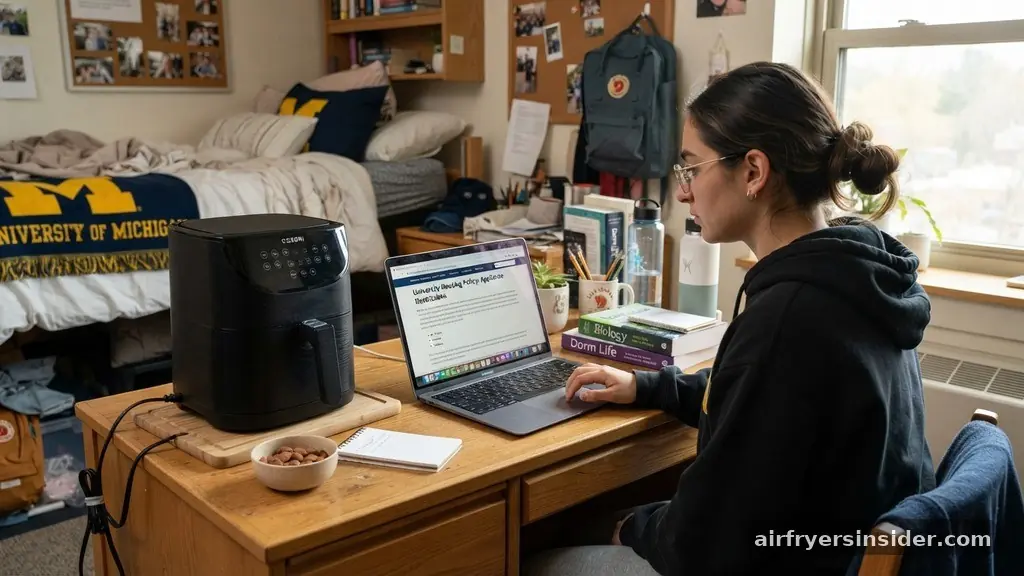
The first step in answering whether you can have an air fryer in a dorm room is consulting your specific residence life handbook. Most universities maintain a rigorous set of rules designed to protect aging infrastructure and prevent accidental fires. Because dorms often feature older electrical wiring, administrators are hyper-vigilant about the total load placed on a single circuit.
An air fryer, which operates by circulating hot air at high temperatures, is classified as a high-wattage appliance. This classification frequently lands it on the prohibited items list alongside hot plates, toaster ovens, and space heaters.
When you look at your university’s guidelines, pay close attention to the language used regarding “open heating elements.” Even if an air fryer has an enclosed design, the internal mechanism still functions as an intense heat source that can easily ignite nearby materials if the unit malfunctions or is placed too close to bedding or curtains.
The campus fire marshal often dictates these policies, and their primary goal is to minimize the potential for a catastrophic event. Violating these rules doesn’t just put your security deposit at risk; it creates a genuine danger for everyone living on your floor.
The Role of Fire Safety Regulations in Dorms
Dorm room fire safety is the cornerstone of why many colleges restrict personal appliances. A typical dorm room is not equipped with the advanced ventilation or commercial-grade fire suppression system found in a real apartment or a house.
When you introduce a device that generates significant heat and smoke, you are potentially triggering the sensitive smoke detector in your room. Even if you aren’t burning food, the intense heat output can cause the unit to cycle on and off, creating a situation that housing staff will inevitably investigate.
Beyond the smoke alarm, consider the physical layout of your space. Most dorms have limited counter space, meaning an air fryer might end up sitting on a desk near papers, books, or fabric-covered furniture. This proximity to flammable items turns a convenient cooking tool into a significant fire hazard.
If a fire were to start, the limited egress routes in a standard dormitory building make the situation escalate quickly. University staff, including your resident assistant, are trained to spot these devices during room inspections, and they are usually obligated to report them immediately.
Electrical Capacity and Circuit Breaker Overload
Even if your school doesn’t explicitly ban air fryers, you must consider the electrical capacity of your room. Older dorms are notorious for having weak power grids that were designed long before students brought laptops, mini-fridges, gaming consoles, and air fryers to campus.
Plugging a high-wattage appliance into a standard wall outlet alongside a refrigerator or a power strip can easily lead to a circuit breaker overload. This not only causes the power in your room to cut out, but it can also trip the breaker for the entire hallway, inconveniencing your neighbors.
Many students mistakenly believe that using a heavy-duty power strip will solve the problem, but this is a major misunderstanding of power strip safety. High-draw appliances should always be plugged directly into a wall outlet, and even then, they may exceed the amperage the circuit is designed to handle. If you are determined to use a smaller appliance, you must check the wattage requirements on the label.
A mini air fryer might draw less power than a full-sized model, but it still represents a substantial load compared to a lamp or a phone charger. Always prioritize the integrity of your room’s electrical system over the convenience of a crispy snack.
Identifying Acceptable Compact Kitchen Appliances
If you find that your university strictly forbids air fryers, you are not entirely out of options for preparing food. Most colleges allow compact kitchen appliances that do not feature open heating elements or excessive wattage.
These items are typically approved because they are designed with built-in safety features like automatic shut-off and lower temperature thresholds. Understanding the distinction between a prohibited heating device and a permitted low-wattage tool is the key to eating well on campus without violating housing policies.
Commonly Permitted Alternatives
* Microwave ovens: Usually permitted if they fall under a specific wattage limit.
* Electric kettles: Often allowed, especially if they have an automatic shut-off feature.
* Single-cup coffee makers: Generally acceptable as they don’t produce sustained heat.
* Blenders: Used for smoothies and shakes, posing no fire risk.
When selecting these items, always look for UL certification to ensure the product has passed independent safety testing. If you aren’t sure if an item is allowed, check the latest version of your residence life handbook or ask your RA before purchasing it. It is much better to have a slightly less convenient meal-prep setup than to have your favorite appliance confiscated during a random room check.
The Risks of Ignoring Housing Rules
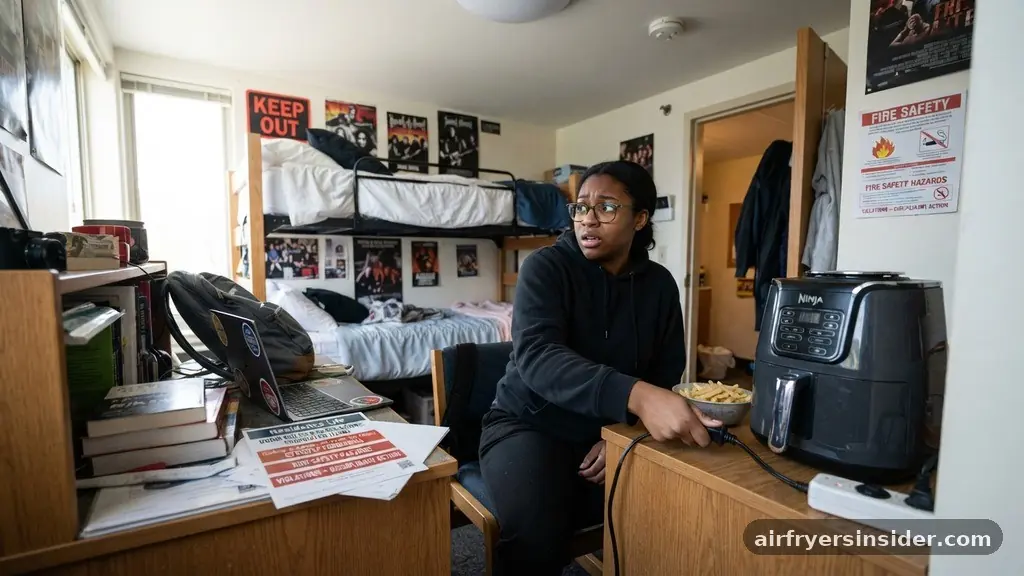
Ignoring the prohibited cooking appliances list is a gamble that rarely pays off. Students who choose to hide an air fryer in a closet often find themselves in hot water when a roommate complains or when a maintenance worker enters the room to fix a leaking pipe or check a light fixture.
Most universities have a “three strikes” policy or immediate confiscation rules for fire safety violations. If an appliance is confiscated, you may not get it back until the end of the semester, or it may be destroyed entirely by housing staff.
Furthermore, if an appliance causes a fire, you could face severe disciplinary action, including eviction from student housing or academic probation. The cost of replacing your belongings and the potential damage to university property could result in massive fines that far outweigh the benefit of having an air fryer.
It is also important to consider that your university housing policy is a binding contract. By signing your housing agreement, you have committed to following the safety guidelines laid out for the protection of the entire student body.
Comparing Cooking Options in Student Housing
To help you visualize how different appliances stack up, the following table compares common cooking tools based on safety and typical campus approval.
| Appliance | Fire Risk | Likelihood of Approval |
|---|---|---|
| Air Fryer | High | Low |
| Microwave | Low | High |
| Electric Kettle | Low | High |
| Toaster Oven | Very High | Very Low |
As shown in the table, appliances that rely on exposed heat coils or high-wattage air circulation are almost universally banned. Microwaves and kettles, which operate through different thermal mechanisms, are generally viewed as safer for the dormitory environment.
If you are struggling to find ways to cook, consider utilizing the dormitory kitchenettes that many schools provide. These communal spaces are equipped with proper ventilation and fire-safe cooking stations, allowing you to use appliances that aren’t permitted in your individual bedroom.
Addressing Topical Gaps: Ventilation and Safety Features
One common question that remains unaddressed in many discussions is whether you can mitigate the risks of an air fryer by improving dorm room ventilation. While opening a window might seem like a logical step to prevent a smoke detector from going off, it does not solve the underlying issue of heat buildup or electrical load.
Most dorm windows are small and do not provide sufficient airflow to dissipate the intense heat generated by an air fryer. Furthermore, relying on an open window is not a valid safety precaution in the eyes of a campus fire marshal.
Another gap in common advice is the importance of the automatic shut-off feature. While some modern air fryers include this, it is not a “get out of jail free” card. Even with this feature, the device still generates enough external heat to melt plastic surfaces or scorch nearby fabrics if the housing is poorly designed.
Always prioritize units that have been rigorously tested and carry the appropriate safety labels. If you must use an appliance, ensure it is placed on a heat-resistant surface, far away from any curtains, posters, or bedding.
How to Safely Use Permitted Appliances
If you decide to bring a permitted appliance like a microwave or a small kettle, you still need to practice good dorm room fire safety. Never leave these devices unattended while they are running. Even a microwave can catch fire if food is left in for too long, and a kettle can melt if it runs dry without an automatic shut-off.
Keep your workspace clean and free of clutter. A pile of papers next to an electric kettle is a recipe for disaster.
Additionally, always inspect your cords for fraying or damage. If a cord looks worn, stop using the appliance immediately and replace it. Never daisy-chain power strips or plug multiple high-wattage devices into the same outlet.
By maintaining a clean and organized space, you reduce the likelihood of an accident and show your RA that you are a responsible resident who takes safety seriously. These small habits protect your belongings and keep your dorm room a safe place to study and sleep.
Communicating with Residence Life
If you truly believe that you need an air fryer for dietary reasons—such as strict medical requirements that cannot be met by the dining hall—you should reach out to your residence life office directly. Some universities offer exemptions for students with specific needs, provided they can prove the appliance is necessary and will be used in a safe, designated area. Do not assume you are exempt; instead, ask for the formal process to request an accommodation.
Having an open conversation with your RA can also be helpful. They are human beings who understand the struggle of dorm food, and they might be able to point you toward resources or communal kitchens you didn’t know existed.
They would much rather help you find a safe way to eat than have to report you for a policy violation. Being transparent and proactive is always better than being caught in a lie or a dangerous situation.
Conclusion
Navigating the rules regarding cooking on campus can be frustrating, but the restrictions are there for a reason. While you might wonder if you can have an air fryer in a dorm room, the answer is usually a firm no due to fire safety and electrical limitations. Instead of risking your housing status or the safety of your floor, explore the permitted alternatives like microwaves or communal kitchens.
By respecting the university housing policy and focusing on safe, approved appliances, you can ensure your college experience remains focused on your studies rather than fire safety violations. Always check with your specific school’s rules before buying, and prioritize the safety of your living environment above all else. For any further questions, your residence hall handbook is your most reliable resource.