Learning how to bake a cake in an air fryer might seem unconventional at first, but it is actually one of the most efficient ways to prepare small-batch desserts. Because an air fryer functions essentially as a miniature, high-powered convection oven, it circulates hot air rapidly around your pan, creating a perfectly golden crust and a tender interior.
Whether you are craving a quick chocolate treat or a small birthday sponge, mastering this appliance allows you to avoid heating up your entire kitchen. You will find that with the right adjustments to temperature and time, you can achieve professional-looking results without needing a traditional oven.
Understanding the Physics of Air Fryer Baking
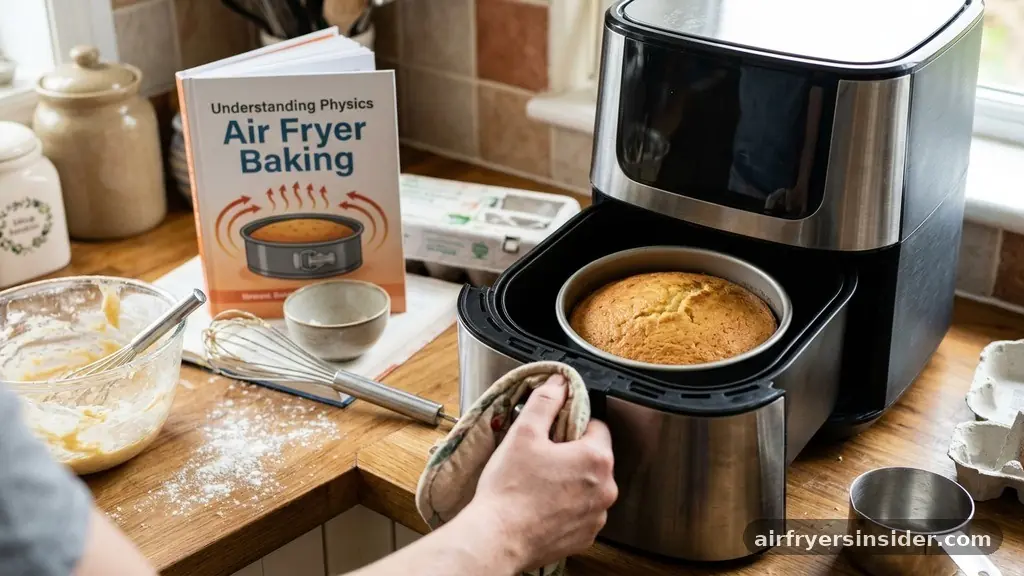
The fundamental reason an air fryer works for baking is its enclosed cooking space. Unlike a large conventional oven, which has significant empty volume, the air fryer is compact.
This small environment means the heating element is much closer to the food, and the powerful convection fan forces heat into the center of the cake batter faster than standard radiant heat. When you understand that an air fryer is just a high-velocity convection oven, it becomes easier to adapt your favorite recipes.
Because the heat is so intense and directed, you must account for the proximity of the heating element to your cake. If you place your batter too close to the top, the surface will burn before the center has a chance to rise and set. This is why using the correct size pan is non-negotiable.
The air circulation is what gives the cake its lift, so you should never crowd the basket to the point where you block the airflow. If the air cannot move, you end up with uneven spots, dense layers, or a cake that is cooked on the outside but raw in the middle.
Selecting the Right Bakeware for Your Needs
Selecting the right bakeware is the most critical step in ensuring your dessert turns out perfectly. Most standard cake pans are designed for large ovens, so you will likely need to invest in smaller, specialized equipment.
A round cake pan that measures six or seven inches is usually the maximum size for a standard air fryer basket. You should prioritize materials that conduct heat evenly, such as aluminum or heavy-duty steel.
If you do not have a dedicated pan, you can use a variety of heat-resistant alternatives. Silicone molds are particularly popular because they are flexible, making it very easy to remove the finished product without breaking it.
Ramekins are also excellent if you want to make individual servings, which often bake much faster than a single large cake. Before you begin, always measure your basket diameter to ensure your container fits comfortably with at least an inch of space on all sides to allow for proper heat distribution.
| Bakeware Material | Best For | Heat Conductivity |
|---|---|---|
| Aluminum | Standard cakes, even browning | High |
| Silicone | Easy release, individual portions | Moderate |
| Ceramic (Ramekins) | Single servings, moist texture | Low (slow heating) |
Preparing Your Batter for Optimal Results
When you decide to use a boxed mix or a from-scratch recipe, the chemistry remains the same, but the handling changes slightly. Because the air fryer environment is so dry, you want to ensure your cake batter has enough moisture to withstand the rapid airflow. Some bakers find that adding an extra tablespoon of liquid or a small amount of oil helps keep the final product from drying out too quickly.
Do not overfill your pan. In a traditional oven, you might fill a pan two-thirds of the way, but in an air fryer, you should stick to the halfway mark. Because the fan is so powerful, the batter needs room to rise without hitting the top of the basket or creating a mess.
If you are using a boxed mix, follow the instructions on the package for the ingredients, but be prepared to check the progress much earlier than the box suggests. The high-speed fan can sometimes cause the top of the cake to form a crust before the leavening agents have fully expanded the interior.
The Importance of Preheating and Temperature Adjustment
Many people skip preheating, but it is vital when baking. By running your air fryer for three to five minutes before you insert the cake, you ensure that the internal temperature is stable the moment the batter hits the heat.
This initial burst of heat is necessary for the rise. If you put the cake in a cold basket, the batter will spread and flatten before it begins to cook properly.
Temperature adjustment is the secret weapon of the air fryer baker. Because the fan moves heat so aggressively, you should generally lower the temperature by 25 to 50 degrees Fahrenheit compared to what a traditional recipe calls for. For example, if a recipe says to bake at 350 degrees, try 325 degrees in your air fryer.
This slower, more controlled heat allows the center of the cake to reach the proper internal temperature without scorching the exterior. Always keep an eye on your air fryer during the last few minutes of the estimated baking time.
Managing Airflow and Structural Integrity
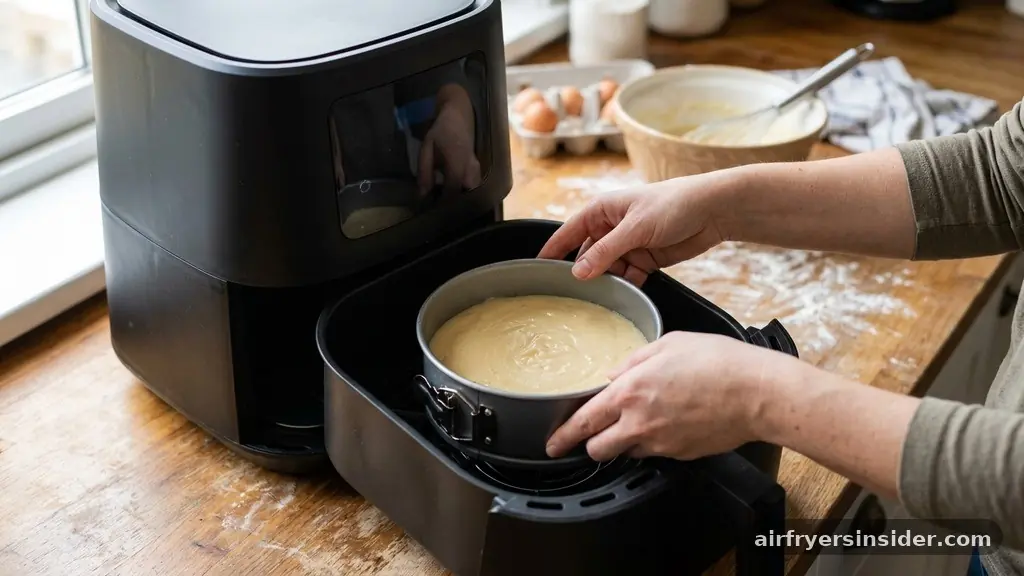
The convection fan is the heart of your air fryer, but it can also be a nuisance if you are not careful. If you are using a piece of parchment paper to line your pan—which is highly recommended for easy removal—make sure it is trimmed to fit the base exactly. If the paper is too large, the fan will catch the edges and blow them up onto the top of your cake, potentially ruining the surface or causing a fire hazard if it touches the heating element.
If you find that your cake is browning too quickly on top, you can create a shield using aluminum foil. Once the cake has set and achieved the desired color, gently place a small piece of foil over the top of the pan.
This allows the cake to continue baking through the sides and bottom without turning the top into a burnt, bitter crust. This technique is especially useful for dense cakes like fruit cakes or pound cakes that require a longer bake time at a lower temperature.
Essential Tips for Success in Small-Batch Baking
Success in the kitchen often comes down to small, consistent habits. One of the most essential tips for success is to avoid opening the basket too frequently. Every time you pull the tray out, you lose heat, and the temperature inside the unit drops significantly.
Unlike a conventional oven, which has a large thermal mass, an air fryer loses its heat almost instantly. Only check your cake when you are nearing the end of the calculated baking time.
Another tip involves the placement of your pan. If your air fryer has a rack, use it to elevate the pan slightly off the bottom of the basket.
This allows the air to circulate underneath the cake, ensuring the bottom cooks just as evenly as the top. If your unit is a basket-style model, you might need to place the pan directly on the bottom, but ensure that the basket is clean so that there is no residual grease that could cause smoking during the longer baking process.
- Use a toothpick test to verify doneness by inserting it into the center.
- Always grease your pan thoroughly with butter or non-stick spray.
- Consider using a small piece of parchment paper at the bottom of the pan.
- Ensure your air fryer is on a stable, heat-resistant surface.
- Let the cake cool in the pan for at least 10 minutes before flipping.
- Avoid using excessive amounts of liquid flavorings that might thin the batter.
Addressing Common Topical Gaps in Air Fryer Baking
A common question that often goes unanswered is how to handle “runny” or “soupy” cakes that refuse to set. This usually happens when the air fryer is set to a temperature that is too high, causing the outside to seal off while the center remains liquid. The solution is to drop the temperature significantly and extend the time.
If you suspect your cake is done, the toothpick test should come out with only a few moist crumbs attached. If it is completely clean, you may have overbaked it.
Another gap is the “convection oven” confusion. People often ask if they can treat their air fryer exactly like a convection oven. While they are similar, the air fryer’s fan is much more localized.
You should not assume that a recipe designed for a large convection oven will work perfectly without adjustments. You must be prepared to monitor the cake more closely. If you are using a recipe that calls for a convection setting, you are already halfway there, but you must account for the smaller capacity of the air fryer by reducing the volume of your batter.
The Role of the Heating Element and Airflow
The placement of the heating element is the primary variable you must manage. In most air fryers, the coil is located at the very top. This means the top of your cake is the “front line” for heat.
If you use a pan that is too tall, the top of the cake will be inches away from the red-hot coil, while the bottom remains relatively cool. This leads to an uneven bake where the top is dry and the bottom is underdone.
To mitigate this, try using shallower pans. A wide, shallow pan allows the heat to distribute more evenly across the surface area. If you only have a tall pan, you may need to reduce your temperature even further to compensate for the proximity to the heating element.
Remember that the goal is to create a consistent flow of air that wraps around the entire pan, not just the top. When the airflow is unobstructed, the heat transfer becomes much more efficient, leading to a consistent rise and a moist crumb.
Troubleshooting and Finalizing Your Baking Process
If you find that the cake is consistently raw in the middle, you are likely dealing with a temperature that is too high. It is a common mistake to think that because air fryers are “fast,” they should be used at high temperatures for baking.
Baking is a science of gradual heat penetration. If the outside of the cake is dark brown but the center is still liquid, you have essentially “flash-fried” the exterior.
When the cake is ready, you will notice that the edges have pulled away slightly from the sides of the pan and the top springs back when touched. Once you remove it from the air fryer, let it sit on a wire rack for a few minutes. This allows the internal structure to stabilize.
If you try to remove it from the pan too quickly, the steam trapped inside can make the cake fragile, causing it to crumble or collapse. Patience during the cooling phase is just as important as the baking process itself.
FAQ
Can I bake a cake in an air fryer successfully?
Yes, you can absolutely bake a cake in an air fryer. It acts as a powerful convection oven, which is excellent for small batches. Just ensure you use a heat-resistant pan that fits your basket and adjust your temperature down by about 25 to 50 degrees Fahrenheit.
What is the best setting to use when baking a cake?
Most air fryers do not have a specific “bake” button, so you should use the standard air fry setting. The key is to lower the temperature to around 325 degrees Fahrenheit and use a timer to monitor the cake closely, as air fryers cook much faster than traditional ovens.
Can I use a regular cake tin in an air fryer?
You can use a regular cake tin as long as it fits inside the basket with at least an inch of space around the sides for airflow. Ensure the tin is made of metal or silicone that can handle the high heat and direct air circulation of the fryer.
How do I know when the cake is finished?
Use the toothpick test to determine if the cake is ready. Insert a wooden toothpick into the center of the cake; if it comes out with a few moist crumbs, it is perfect. If it is completely wet, keep baking. If it comes out dry, it is overdone.
Conclusion
Mastering the art of baking a cake in an air fryer opens up a world of convenience for those who want a quick, delicious dessert without the hassle of a full-sized oven. By focusing on proper pan size, moderate temperatures, and ensuring adequate airflow, you can produce cakes with a beautiful, moist crumb and an even rise. It is all about respecting the intensity of the convection fan and adjusting your technique to suit the compact environment.
Start with a simple boxed mix to get a feel for your specific appliance’s power, then move on to your favorite recipes as you gain confidence. Feel free to experiment with different pans and timing adjustments, and enjoy the process of creating small-batch treats whenever the craving hits.
Meta Description: Learn how to bake a cake in an air fryer with this detailed guide. Discover the best bakeware, temperature adjustments, and tips for a perfect moist crumb.