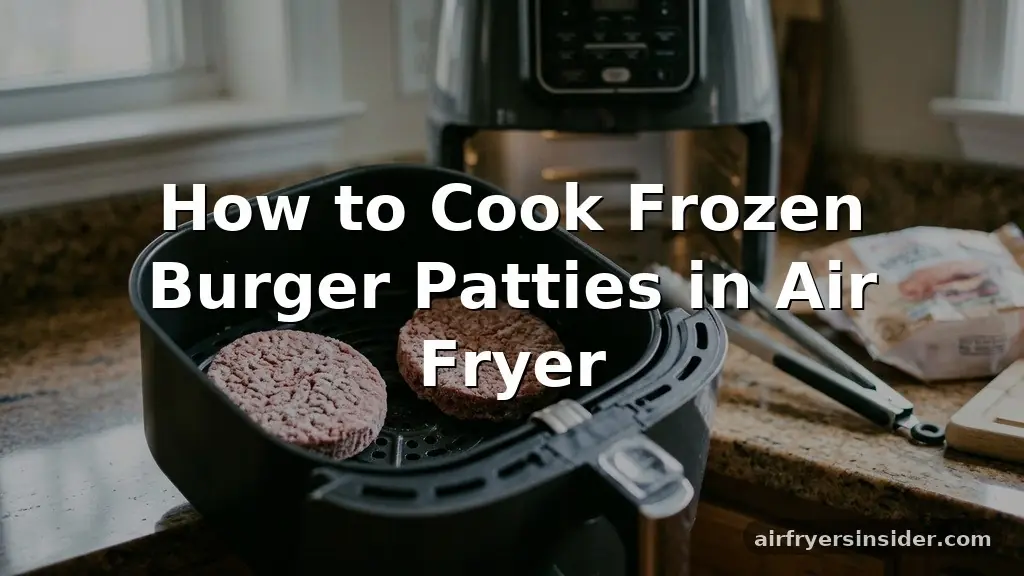
Learning how to cook frozen burger patties in an air fryer transforms a last-minute dinner scramble into a reliable, high-quality meal. While many rely on the grill or a stovetop skillet, the air fryer offers a unique advantage by utilizing rapid convection cooking to mimic the texture of a traditional sear.
You can achieve a juicy center and perfectly developed crust without the constant monitoring required by outdoor cooking methods. By understanding the basics of temperature management and timing, you will find that preparing frozen beef patties becomes one of the most efficient ways to get a satisfying, restaurant-style burger onto your plate in under twenty minutes.
The Mechanics of Convection Cooking for Beef
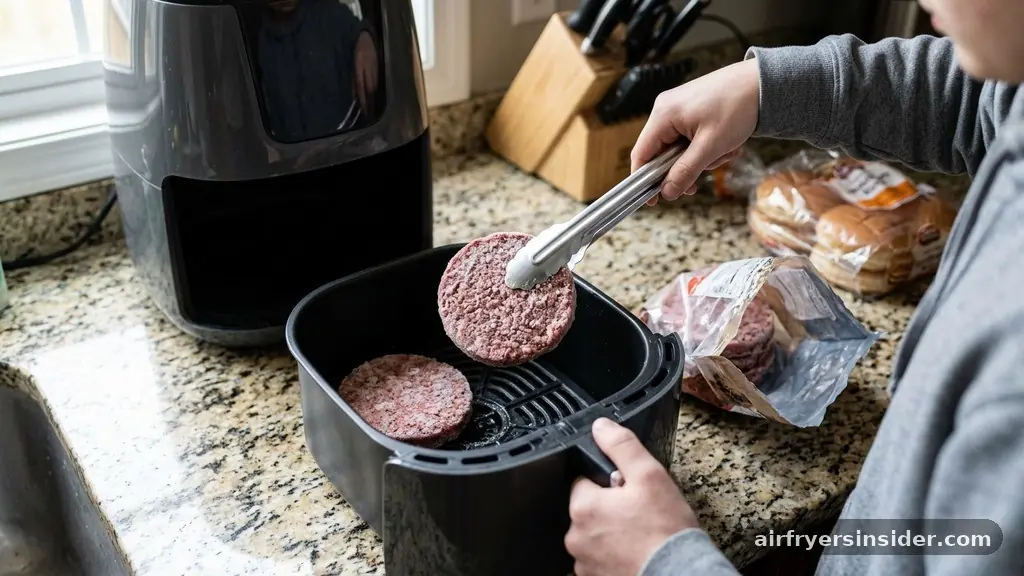
The air fryer functions as a compact, high-powered convection oven. It forces hot air to circulate at high speeds around the food, which is the primary reason it excels at creating crispy edges on frozen meat.
Unlike a conventional oven that relies on radiant heat, the air fryer’s rapid air circulation ensures that the surface of the beef patty dehydrates slightly, facilitating the Maillard reaction. This chemical process is essential for browning and flavor development, turning a simple frozen disc into a savory, aromatic burger.
Because you are starting with frozen food, the heat must penetrate the icy core before the exterior burns. This is where the air fryer’s efficiency truly shines. By maintaining a consistent environment, you reduce the risk of uneven cooking.
The key is to avoid overcrowding the basket. If you pack too many patties in at once, you obstruct the airflow, which forces the meat to steam rather than sear. For the best results, ensure there is at least an inch of space between each patty, allowing the hot air to envelop the entire surface area of the meat.
Setting the Ideal Temperature and Time
When determining the settings for your air fryer, consistency is your best friend. Most culinary experts recommend a temperature of 375 to 400 degrees Fahrenheit.
If you set the air fryer to 400 degrees, you will achieve a more pronounced crust in a shorter amount of time, which is ideal if you prefer a well-done finish. If you prefer a slightly more tender interior, dropping the temperature to 375 degrees Fahrenheit allows for a more gradual heat transfer, preventing the outside from becoming too dark while the center remains icy.
Cooking time generally ranges from 12 to 16 minutes, depending on the thickness of the patty and the wattage of your specific model. Thinner patties might reach the desired internal temperature in just 10 minutes, while thick, quarter-pound or third-pound patties will almost certainly require the full 16-minute window.
It is helpful to treat these times as a baseline rather than a rigid rule. Always rely on a meat thermometer to verify the state of the meat rather than just relying on the clock, as variations in appliance performance are common.
Ensuring Food Safety and Proper Internal Temperature
Adhering to USDA guidelines is paramount when cooking ground beef. To avoid any risk of foodborne illness, the internal temperature of the beef patty must reach at least 160 degrees Fahrenheit.
Because ground beef is processed, bacteria that might be present on the surface of whole cuts are mixed throughout the meat, making it necessary to cook the center thoroughly. Using a reliable meat thermometer is the only way to be absolutely certain that your meal is safe to consume.
Insert the thermometer probe into the thickest part of the patty, making sure not to hit the air fryer basket or bone-in areas if you are cooking other items. If the temperature reads below 160 degrees Fahrenheit, simply return the patties to the basket for another minute or two.
Remember that carryover cooking will occur once you remove the burgers from the air fryer. This means the temperature will continue to rise slightly as the meat rests, so if you pull them out at 158 degrees, they will likely reach the target temperature within a few minutes of sitting on your plate.
The Role of Seasoning and Preparation
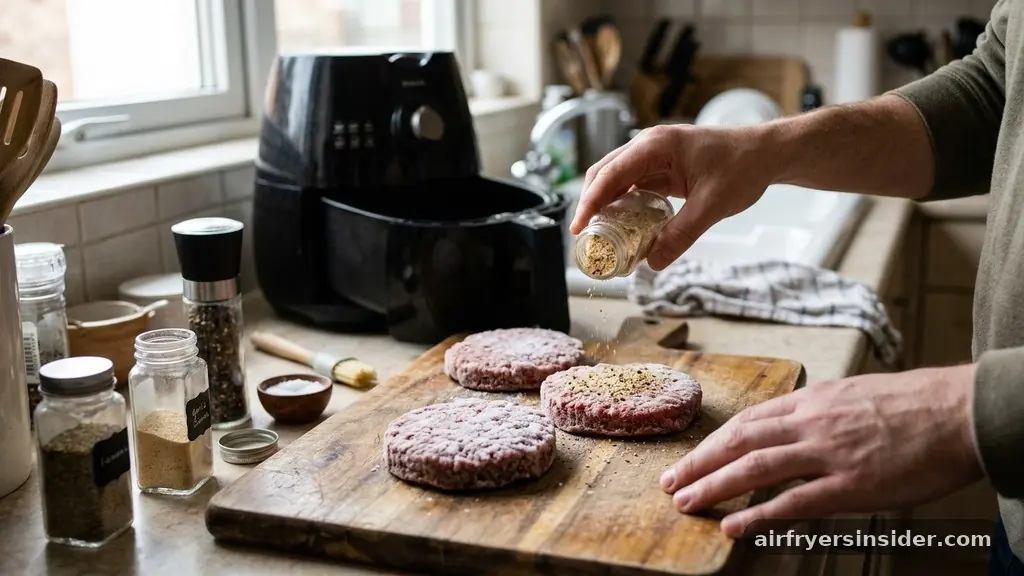
One common misconception is that frozen patties come pre-seasoned and ready to go. While some brands are seasoned, many are plain, requiring you to add your own flavor profile. Since the patties are frozen, traditional dry rubs may not adhere well initially.
Wait until the patties have cooked for about 5 minutes; at this point, the surface will have thawed enough to accept seasoning. A simple blend of salt, black pepper, and garlic powder is usually sufficient to elevate the flavor of high-quality ground beef.
If you are concerned about sticking, you can use a small amount of oil spray on the basket surface before placing the patties. However, keep in mind that most frozen beef patties contain enough fat to prevent them from adhering to the basket.
If you find that your particular air fryer basket is prone to sticking, a piece of parchment paper can be used. Just ensure the paper is weighed down by the patty so it does not fly up into the heating element, which can pose a fire hazard.
Addressing Common Concerns with Frozen Patties
Many home cooks wonder if they should thaw the meat first. The beauty of the air fryer is that it is specifically designed to handle frozen food safely. You do not need to thaw the patties, as the high-heat convection process handles the transition from frozen to cooked efficiently.
In fact, thawing can sometimes lead to a mushy texture. Keeping them frozen until the moment they hit the basket helps maintain the structural integrity of the patty, ensuring it doesn’t fall apart during the cooking process.
Another question often asked is whether you need to flip the burgers. While some air fryers have enough airflow to cook both sides simultaneously, most benefit from a quick flip halfway through. Using kitchen tongs, turn the patties over at the 7 or 8-minute mark.
This ensures that both sides develop that desirable, crispy texture and that the meat cooks evenly. If you have a model that features a rotating paddle or a specific rack, you might find you can skip this step, but for standard basket-style air fryers, a flip is recommended.
Managing Grease and Splatter
Cooking beef results in rendered fat. In an air fryer, this fat can drip into the bottom of the basket and, in some cases, cause smoke if it hits the heating element.
To manage this, many cooks place a slice of bread or a small amount of water at the very bottom of the air fryer, underneath the basket tray, to catch the drippings. This simple trick can make cleanup much easier and prevent the kitchen from becoming smoky.
If you are worried about grease splatter, consider using a splatter guard designed for air fryers. Alternatively, do not overfill the basket, as crowding can cause grease to bubble over more aggressively. If you are cooking multiple batches, be sure to empty the bottom of the basket between rounds.
Accumulated fat from the first batch can easily burn during the second, leading to a bitter taste and unnecessary smoke. Keeping the interior of the machine clean is part of the process of maintaining consistent results.
Comparing Cooking Methods
To help you decide whether the air fryer is the right choice for your next burger night, consider how it stacks up against traditional methods. The following table provides a quick look at how the air fryer compares to grilling and pan-frying.
| Feature | Air Fryer | Grill | Pan-Frying |
|---|---|---|---|
| Speed | Fast (12-16 min) | Moderate | Moderate |
| Clean-up | Easy (Basket) | Difficult | Moderate |
| Texture | Crispy edges | Charred/Smoky | Uniform sear |
| Ease of Use | Very High | Low/Moderate | Moderate |
As shown in the table, the air fryer is superior for speed and ease of cleanup. While a grill provides a distinct smoky flavor that the air fryer cannot replicate, the air fryer offers a level of convenience that makes it the clear winner for weeknight meals or when weather conditions prevent outdoor grilling.
Tips for Achieving the Perfect Burger
* Preheating: Although not always strictly necessary, preheating your air fryer for 3 minutes can help the Maillard reaction begin immediately upon contact.
* Resting Time: Always let your burger rest for 2 to 3 minutes after removing it from the air fryer. This allows the juices to redistribute throughout the meat.
* Toasting Buns: You can use the final two minutes of the burger cooking time to toast your buns directly in the air fryer basket if space permits.
* Cheese Placement: Add your cheese during the last minute of cooking.
The residual heat and fan will melt it perfectly without blowing it off the patty.
* Check the Wattage: Higher-wattage air fryers will cook faster. If your unit is over 1700 watts, start checking for doneness a minute or two earlier than the recommended time.
Frequently Asked Questions
Do I need to defrost frozen burger patties before air frying?
No, you do not need to defrost them. Cooking directly from frozen is one of the main benefits of using an air fryer. Simply place the frozen patties into the preheated basket and adjust your cooking time to account for the extra time needed to thaw and cook through.
What is the best temperature for cooking frozen burgers?
Setting your air fryer to 400 degrees Fahrenheit is generally considered the best temperature. This high heat ensures that the surface of the patty browns and develops a crispy texture quickly, which helps lock in the juices while the center cooks through to a safe internal temperature.
How do I know when the burgers are done?
The most reliable way to check for doneness is to use a meat thermometer. According to USDA guidelines, ground beef should reach an internal temperature of 160 degrees Fahrenheit. Do not rely solely on the color of the meat or the cooking time, as these can be misleading indicators.
Why are my burgers smoking in the air fryer?
Smoking is usually caused by rendered fat hitting the heating element at the top of the unit or burning in the bottom tray. To prevent this, ensure the basket is clean, avoid overfilling it, and consider placing a small amount of water or a slice of bread in the bottom tray.
Conclusion
Mastering the process of cooking frozen burger patties in an air fryer is a practical skill that saves time without sacrificing flavor. By prioritizing food safety, using a meat thermometer to track the internal temperature, and managing the airflow within your basket, you can produce consistent, juicy results that rival traditional cooking methods. Whether you are looking for a quick weeknight dinner or a simple way to feed a crowd, this technique provides a reliable solution.
Experiment with different seasonings and cooking times to find the perfect balance for your specific appliance, and don’t hesitate to enjoy the convenience of this modern kitchen staple. Your next burger night will be more efficient than ever, leaving you more time to enjoy your meal.
meta description: Learn how to cook frozen burger patties in air fryer with this guide, covering temperature settings, internal temperature safety, and expert tips.