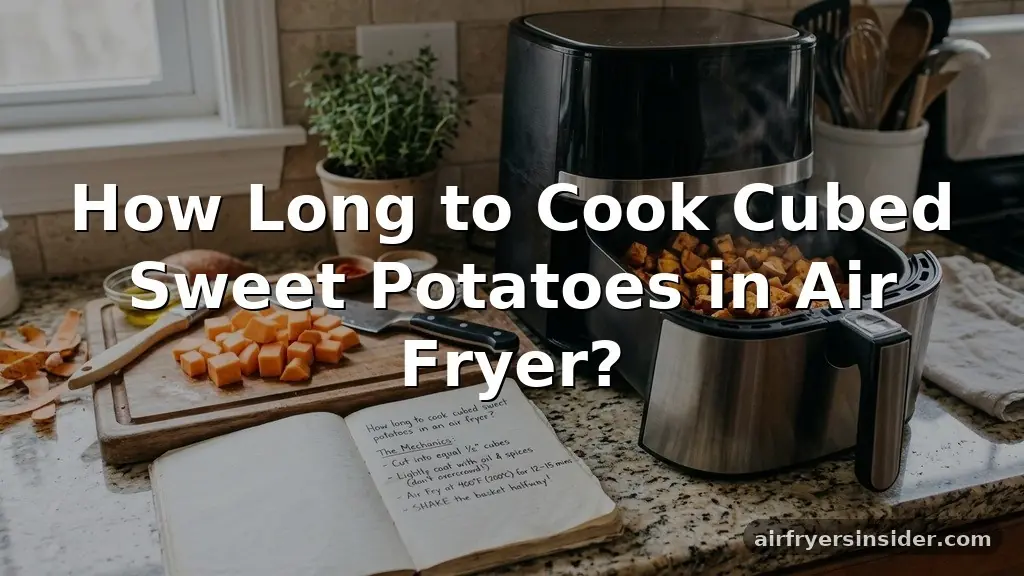
Determining exactly how long to cook cubed sweet potatoes in air fryer is the secret to moving from mushy, uneven results to perfectly caramelized edges. Most home cooks struggle because they rely on guesswork rather than the physics of hot air convection, leading to either burnt exteriors or raw, starchy centers.
By mastering the balance between heat intensity and moisture control, you can produce a restaurant-quality side dish in a fraction of the time required by a traditional oven. This breakdown provides the precise timing and techniques needed to ensure your next batch of roasted vegetables achieves that elusive, golden-brown crunch.
Understanding the Mechanics of Air Frying Sweet Potatoes
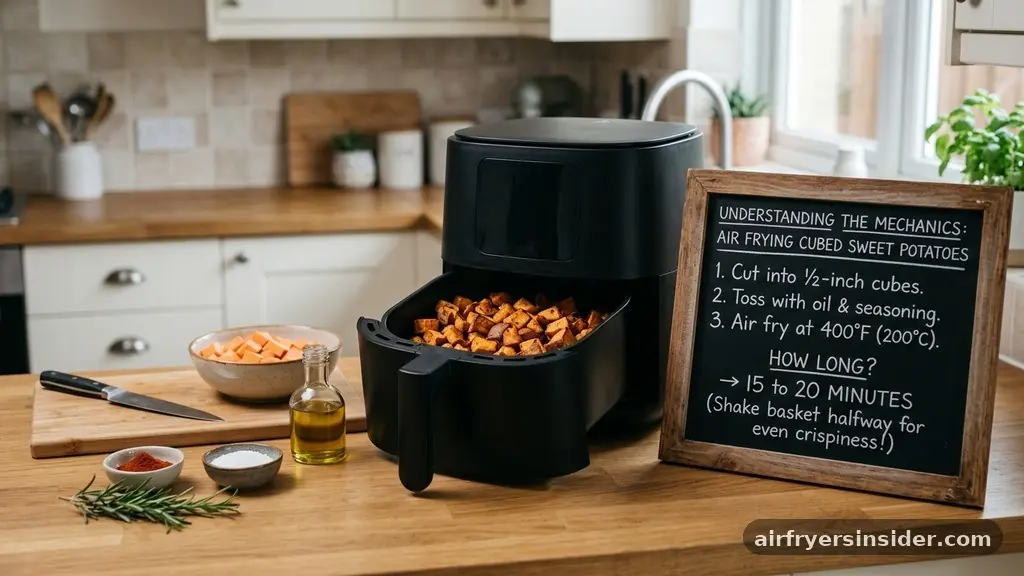
The air fryer works by circulating superheated air at high speeds, which mimics the effects of deep frying but with significantly less fat. When you decide how long to cook cubed sweet potatoes in air fryer, you aren’t just heating the vegetable; you are triggering the Maillard reaction.
This chemical reaction between amino acids and reducing sugars gives browned food its distinctive flavor and color. Because sweet potatoes are dense and high in natural sugars, they require a specific approach to ensure the exterior caramelizes before the center turns into mush.
Unlike conventional ovens, which rely on radiant heat, an air fryer’s efficacy depends on air circulation. If the basket is too crowded, the moist air gets trapped, effectively steaming the potatoes rather than roasting them. You need to provide enough space between each cube for the hot air to pass through.
Understanding the relationship between the air fryer temperature and the density of the vegetable is critical. If your cubes are cut too large, they will take longer to cook, potentially drying out the outer layer while the middle remains undercooked. If they are too small, they risk burning before the starch has fully broken down.
The Importance of Uniform Cutting
One of the most frequent mistakes in home cooking is failing to prioritize uniform cutting. When you have a mix of small slivers and large chunks, the smaller pieces will inevitably burn while the larger ones remain raw.
Aim for cubes that are roughly three-quarters of an inch to one inch in size. This dimension is the “sweet spot” for most air fryer models, allowing for a balanced cooking time that yields a tender interior and a crisp shell.
When you prepare your sweet potatoes, treat the process with precision. Use a sharp chef’s knife and a stable cutting board to ensure clean, consistent edges. If you find yourself with uneven pieces, separate them during the cooking process.
You can pull the smaller pieces out of the basket a few minutes early to prevent them from becoming overly charred. Consistency in size isn’t just about aesthetics; it is the fundamental rule for even heat distribution. When every cube shares the same surface-area-to-volume ratio, the cooking time becomes predictable and repeatable, which is the hallmark of a seasoned cook.
Optimal Temperature and Timing for Perfection
When asked how long to cook cubed sweet potatoes in air fryer, the industry standard for most kitchens is 400 degrees Fahrenheit for approximately 15 to 20 minutes. This high heat is essential for achieving crispiness.
If you drop the temperature too low, you lose the ability to create that firm crust, and the potatoes may become oily. Conversely, exceeding 400 degrees often leads to the sugars burning too quickly, resulting in a bitter, charred exterior.
Recommended Cooking Guidelines
| Cube Size | Temperature | Estimated Time |
|---|---|---|
| 1/2 Inch | 400°F | 12-14 Minutes |
| 3/4 Inch | 400°F | 15-18 Minutes |
| 1 Inch | 400°F | 20-22 Minutes |
The timing listed above assumes you are using a standard basket-style air fryer. If you are using a large oven-style air fryer with multiple racks, you may need to add an extra two to three minutes, as the air distribution is often less concentrated.
Always keep an eye on the basket toward the 12-minute mark. Because air fryer brands vary in wattage and fan speed, your first attempt should involve a “check-in” approach rather than relying solely on a timer.
Preparation Tips for Crispy Results
Achieving that signature crunch requires more than just high heat; it starts with how you prep the sweet potato cubes. Moisture is the enemy of crispiness. After washing and peeling your potatoes, make sure to pat them completely dry with paper towels.
Any excess surface moisture will turn to steam inside the air fryer, which is exactly what you want to avoid. Once dry, toss the cubes in a bowl with a high-smoke-point oil.
Avocado oil is an excellent choice for air frying because it can withstand the high temperatures of the appliance without breaking down or smoking. Olive oil is also a popular option, though it has a slightly lower smoke point; if you use it, stick to the 375-380 degree range to prevent burning. Ensure every cube is lightly coated. You don’t need to drown them in oil; a thin, even layer is sufficient to conduct heat and help the seasoning adhere.
A common mistake is adding the salt too early. Salt draws moisture out of vegetables through osmosis; if you salt the potatoes before they hit the heat, they will release water and steam themselves in the basket. Season just before you start the machine.
Mastering the Basket Shake
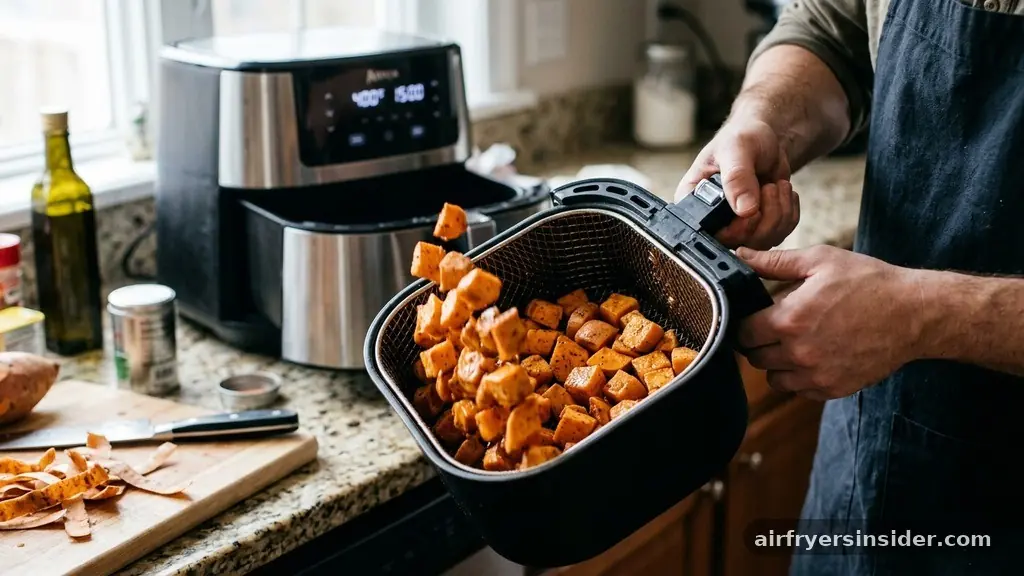
The basket shake is not merely a suggestion; it is a mandatory step in the process. Because the air fryer forces air downward, the cubes at the bottom of the pile will not receive the same heat exposure as those on top.
By shaking the basket every five to seven minutes, you redistribute the cubes, ensuring that all sides are exposed to the hot air. This rotation is what creates an even, golden-brown finish across the entire batch.
If your air fryer is packed tightly, a simple shake might not be enough. In these cases, use a pair of silicone-tipped tongs to manually turn the cubes.
It takes a few extra seconds, but it prevents the “soggy spot” phenomenon where cubes touch and trap moisture. If you find that the potatoes are sticking to the bottom of the basket, you might need to use a small amount of parchment paper specifically designed for air fryers—just ensure you don’t block the airflow holes, as this will defeat the purpose of the convection heat.
Seasoning and Flavor Profiles
Once you have mastered the technique, you can experiment with various seasoning and flavor profiles. The natural sweetness of the potato pairs beautifully with both savory and sweet spices. For a classic savory side, stick to the basics: a pinch of sea salt, freshly cracked black pepper, and garlic powder. This simple trio highlights the earthy sweetness of the vegetable without masking it.
If you want to venture further, consider these options:
- Smoked Paprika: Adds a deep, woodsy flavor that pairs perfectly with the caramelized sugars.
- Cinnamon and Nutmeg: Use these for a dessert-adjacent dish, but be careful with the heat—the sugars in the spices can burn quickly.
- Cayenne or Chili Powder: Provides a nice kick that cuts through the starchiness of the potato.
- Dried Rosemary or Thyme: Herb-forward profiles work exceptionally well for holiday-style side dishes.
When working with sweet and spiced options, add the spices during the last two minutes of cooking. Many dried herbs and sugar-based seasonings have a low burn threshold. By adding them near the end, you get the aromatic benefits without the bitterness of scorched spices.
Common Troubleshooting and Solutions
Even with the best technique, common troubleshooting scenarios arise. If your potatoes are burning on the outside but are still raw in the middle, your air fryer temperature is likely too high for the size of your cubes.
Drop the heat to 375 degrees and extend the cooking time. This gives the heat more time to penetrate the center of the cube without scorching the exterior.
Conversely, if the potatoes are limp and lack color, you likely have too many cubes in the basket. The air fryer needs room to breathe. Remove a portion of the potatoes and cook in two smaller batches.
Another potential issue is the oil quantity. If the cubes look dry and chalky, they aren’t getting enough conductive heat. A light misting of oil mid-way through the cooking process can fix this.
Finally, check if your potatoes are fork-tender. A fork should slide through the center of a cube with very little resistance.
If you meet resistance, keep them in for another two minutes. Don’t rely solely on the timer; rely on the texture.
Answering Topical Gaps in Air Fryer Cooking
Many users ask if preheating is necessary when learning how long to cook cubed sweet potatoes in air fryer. While most modern air fryers reach temperature almost instantly, preheating for three minutes can lead to a more consistent start, especially if you are cooking a large batch. Another common gap is the question of peeling.
You do not have to peel sweet potatoes; the skin adds texture and extra fiber. Just ensure you wash them thoroughly to remove any dirt.
Another frequent question concerns the use of parchment paper. While it makes cleanup easier, it can sometimes inhibit the browning process if it covers too much surface area. If you use it, ensure there is plenty of space around the edges of the basket for air to circulate.
Lastly, many people wonder if they can cook frozen sweet potato cubes. You can, but you must increase the cooking time by about 25% and expect a slightly softer texture, as the ice crystals will release significant moisture as they thaw.
FAQ
How can I tell if my sweet potato cubes are fully cooked?
The best way to check is with a fork. When you pierce a cube, it should be soft and yield easily. If there is a hard, starchy center, it needs more time. Also, look for a deep golden-brown color on the edges, which indicates the sugars have caramelized.
Do I need to soak the sweet potatoes in water before air frying?
Soaking is common for regular white potatoes to remove starch and improve crispiness, but it is less critical for sweet potatoes. Because sweet potatoes have a different sugar and starch composition, simple drying with a paper towel is usually enough to achieve a great texture without the extra step.
Can I stack the sweet potatoes in the basket?
Avoid stacking them at all costs. Air fryers rely on the circulation of hot air to cook food. If you stack the cubes, the air cannot reach the middle layers, resulting in steamed, mushy potatoes rather than roasted, crispy ones. Always cook in a single layer for the best results.
Is it necessary to peel the sweet potatoes?
Peeling is entirely optional. The skin of a sweet potato is thin, nutritious, and adds a nice rustic texture when roasted. If you prefer a smoother, softer bite, peel them before cubing. If you enjoy a bit of chew and earthiness, leave the skin on after a good scrub.
Final Thoughts on Perfect Air-Fried Potatoes
Mastering the process of how long to cook cubed sweet potatoes in air fryer is a game-changer for your weeknight meal prep. By focusing on uniform size, proper oil coating, and consistent air circulation, you ensure that every batch comes out with that perfect balance of a crunchy, caramelized exterior and a fluffy, tender interior. Remember that the first time you try a new batch, it is always wise to keep a close watch on the basket, as every air fryer model has its own unique heating characteristics.
Once you become comfortable with the timing, don’t be afraid to experiment with different seasoning profiles to see what fits your palate. Whether you prefer a simple savory approach with garlic and salt or something with a bit more heat, this method provides the reliability you need.
Start with the suggested 400-degree setting, maintain your basket-shaking routine, and you’ll find yourself reaching for the air fryer more often than the oven. Happy cooking, and enjoy the perfect side dish.
Meta Description: Learn exactly how long to cook cubed sweet potatoes in air fryer for perfect, crispy results every time. Master temperatures, timing, and seasonings today.