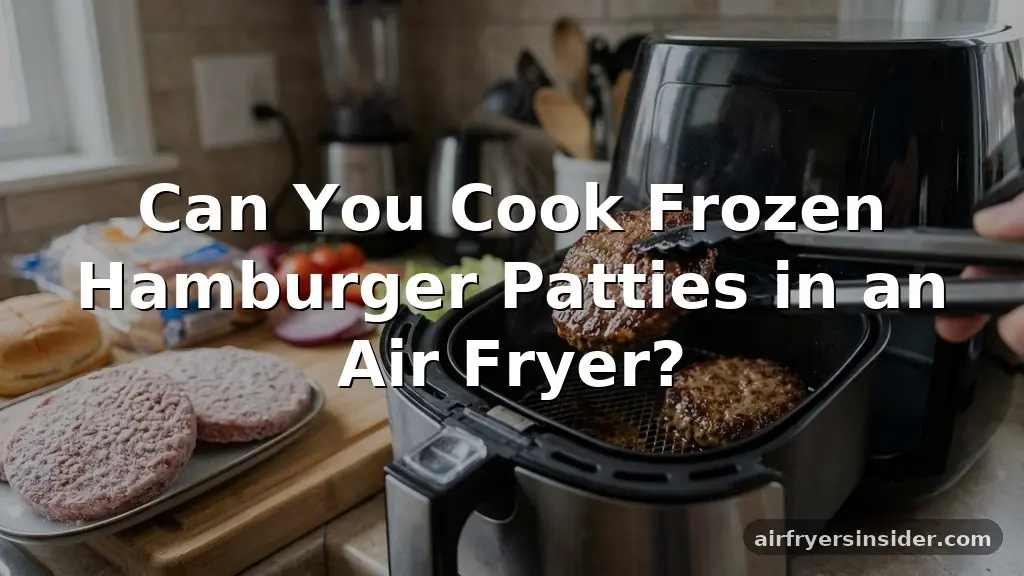
Many home cooks find themselves in a pinch when dinner time arrives and the freezer holds nothing but a stash of frozen beef patties. If you are wondering whether you can cook frozen hamburger patties in an air fryer, the answer is a resounding yes. In fact, using this countertop appliance is often more efficient than firing up a grill or heating a large oven.
By leveraging high-speed convection heat, the air fryer delivers a juicy interior and a crisp exterior in a fraction of the time required by traditional methods, making it a reliable solution for busy weeknights.
Why Air Frying Frozen Patties Works So Well 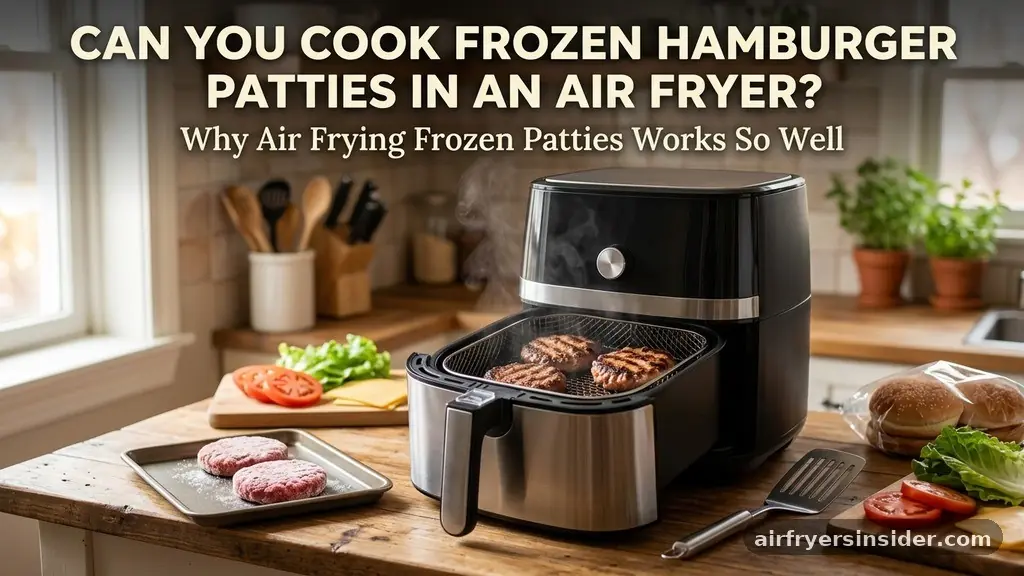
The magic of the air fryer lies in its ability to circulate hot air rapidly around the food. When you place a frozen patty into the basket, the device immediately begins the process of thawing and cooking simultaneously.
Unlike a skillet, which relies on direct contact, the air fryer surrounds the beef patty with intense, consistent heat. This environment is perfect for achieving a decent Maillard reaction, that desirable browning on the surface of the meat that creates deep, savory flavors.
Because the air fryer uses a perforated basket, moisture is allowed to escape rather than being trapped against the meat. This prevents the burger from steaming in its own liquid, which is a common issue when cooking frozen meat in a pan. The rendered fat drips away from the patty into the bottom of the basket, leading to a burger that feels lighter and less greasy than one fried in a pan.
This method is incredibly consistent, provided you understand the basic mechanics of your specific machine.
Preparing the Air Fryer for Success
Before you toss your frozen patties into the basket, you should consider the state of your appliance. While many modern air fryers claim they don’t require preheating, doing so for about three to five minutes can significantly improve the texture of your meat. A hot basket ensures that the searing process starts the moment the burger makes contact, helping to lock in juices rather than letting them leak out slowly as the temperature climbs.
You may also want to use a small sheet of parchment paper designed for air fryers. This is not strictly necessary, but it makes cleanup much easier by catching any bits of meat or seasoning that might fall through the grate. If you choose to use parchment, ensure it is weighted down by the patty so it doesn’t fly up into the heating element, which is a common fire hazard in smaller or more powerful units.
A quick spritz of oil spray on the basket can also prevent sticking, especially if your patties are lean.
Managing Cooking Times and Temperatures
The ideal cooking time for frozen burgers varies based on the thickness of the patty and the heat setting of your machine. Most home cooks find that setting the temperature to 375 or 400 degrees Fahrenheit provides the perfect balance. At 375 degrees, you can expect a slightly more even cook, while 400 degrees is better for those who prefer a darker, crunchier crust.
| Patty Thickness | Estimated Time (Minutes) | Temperature |
|---|---|---|
| Thin (Quarter-pound) | 10-12 | 375°F |
| Thick (Half-pound) | 14-18 | 375°F |
| Extra Thick | 18-22 | 350°F |
You must account for the fact that every air fryer model has different air circulation patterns. If you have a basket-style air fryer, the airflow is generally more concentrated. If you use a countertop oven style, you might need to add a minute or two to the total time.
Always rely on a food thermometer to check the progress rather than just following the clock.
Ensuring Food Safety and Proper Internal Temperature
When dealing with frozen ground beef, food safety is paramount. According to USDA guidelines, ground beef must reach an internal temperature of 160 degrees Fahrenheit to be considered safe for consumption. Since the outside of a frozen patty will cook much faster than the center, there is a risk of having a charred exterior with a raw middle if you don’t manage the heat correctly.
Using a reliable digital thermometer is the only way to be certain. Insert the probe into the thickest part of the patty, ideally through the side, to get an accurate reading of the core. If you notice your burgers are browning too quickly before the center is cooked, lower the temperature by 25 degrees and add a few minutes to the total duration.
This gentle heat approach ensures that the heat penetrates the frozen core without burning the outer layers of the meat.
Seasoning Strategies for Frozen Meat 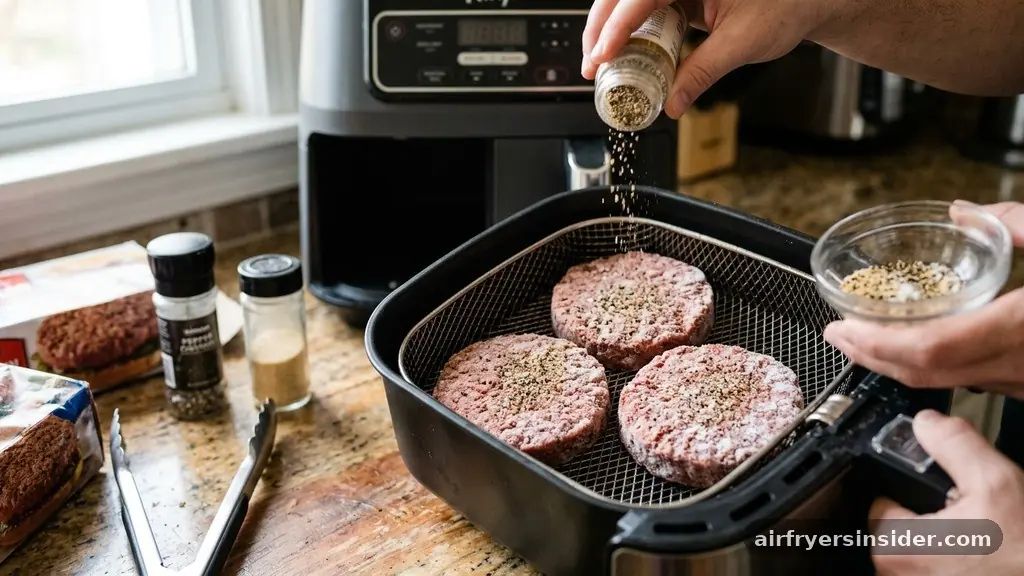
One challenge with starting from frozen is that traditional seasoning rubs often bounce off the icy surface. To get the best flavor, you should apply your seasoning once the surface of the patty has started to thaw, usually after the first three to five minutes of cooking. Pull the basket out, give the patties a quick flip, and then apply your salt, pepper, or steak rub.
The moisture on the surface of the thawing patty will act as a glue for your spices. If you prefer to season before cooking, you can apply a light coat of oil to the frozen surface first, which helps the dry spices adhere. Avoid overly sugary rubs until the very last minute of cooking, as the high heat of the air fryer can cause sugar to burn and turn bitter before the meat is finished.
The Importance of the Flip
Halfway through the process, you must flip the patties.
This is essential for even cooking and ensuring that both sides of the burger get that appealing texture. When you open the basket, you will likely see a significant amount of grease splatter at the bottom. This is a good thing, as it means the fat is being removed from your meal, but be careful when handling the basket to avoid hot oil spills.
Flipping also provides a perfect opportunity to drain any excess liquid that has pooled on the surface of the burger. If you are planning to add cheese, do so during the final minute of cooking. Simply place the slice on top of the patty and let the residual heat of the air fryer melt it.
The air circulation is so strong that you should ensure your cheese slice is firmly placed, or it might be blown off the patty and into the heating element.
Addressing Topical Gaps
A common concern among home cooks is whether the smoke generated by the rendered fat will trigger alarms. Because the fat drips into the hot bottom tray, it can occasionally smoke if the grease starts to burn.
To mitigate this, you can place a slice of bread or a small amount of water in the very bottom of the drawer, underneath the basket tray. This catches the drippings and prevents them from hitting the high-heat metal directly, which significantly reduces smoke.
Another frequent question involves whether you should thaw the meat first. While you can thaw it, the beauty of the air fryer is that it handles frozen food perfectly. Thawing ahead of time often leads to a mushy texture if not done correctly, whereas the “straight-from-frozen” method keeps the structure of the patty intact.
You do not need to worry about the loss of quality; modern freezing techniques for commercial patties are designed to hold their shape well under high-heat cooking methods.
Resting and Serving
Once your burgers have reached the target temperature, take them out of the air fryer and let them sit. A short resting time of about three to five minutes allows the juices to redistribute throughout the meat. If you cut into the burger immediately after pulling it from the intense heat, the juices will run out onto your plate, leaving you with a dry, disappointing bite.
During this resting period, you can toast your buns in the same air fryer if there is space, or simply prepare your toppings. Because the burger will be quite hot, the resting period also makes it safer to handle. Remember that the meat will continue to cook slightly even after it is removed from the heat, which is why pulling it off the heat when it hits 155-158 degrees is often sufficient, as carry-over cooking will bring it up to the safe 160-degree threshold.
Troubleshooting Common Issues
If you find that your burgers are consistently coming out uneven, check your basket capacity.
Overcrowding is the enemy of the air fryer. If the patties are touching or stacked, the air cannot flow between them, and they will steam rather than crisp. Each patty should have at least an inch of space around it to ensure the hot air can reach all surfaces.
* If the patties are too small, they will cook faster than expected.
* If the meat is too lean, it might dry out before the center is cooked.
* If the burgers are sticking to the rack, use a silicone-coated basket or parchment paper.
* If the smoke alarm keeps going off, ensure you are cleaning the bottom of the air fryer regularly.
By following these simple adjustments, you can troubleshoot almost any issue that arises. The air fryer is a remarkably forgiving tool, and once you calibrate the time and temperature for your specific machine, you will find that it becomes your go-to method for preparing quick, consistent, and delicious burgers without the mess of a stovetop.
Frequently Asked Questions Do I need to thaw the patties before putting them in the air fryer?
No, you do not need to thaw them. The air fryer is specifically designed to handle frozen food efficiently.
Cooking from frozen saves time and helps the patty maintain its shape, provided you adjust the cooking time to ensure the center reaches the proper internal temperature.
What is the best temperature for air frying frozen burgers?
For most standard frozen beef patties, 375 degrees Fahrenheit is the sweet spot. It provides enough heat to create a crust while ensuring the center cooks through safely. If you prefer a darker, more intense sear, you can bump the heat up to 400 degrees for a shorter duration.
How do I prevent smoke when cooking burgers in an air fryer?
Smoke is usually caused by rendered fat hitting the hot bottom of the unit.
You can minimize this by placing a small amount of water or a slice of bread in the bottom tray to soak up the grease, or simply ensure the unit is cleaned after every use.
Can I add cheese to the burgers while they are still in the air fryer?
Yes, but wait until the final minute of cooking. Place the cheese slice on top of the patty and let the heat melt it. Ensure the slice is centered and perhaps slightly pressed down, as the powerful fan in the air fryer can sometimes blow lightweight cheese off the meat.
Conclusion
Knowing that you can cook frozen hamburger patties in an air fryer opens up a world of convenience for your weekly meal rotation.
By focusing on proper temperature management, utilizing a reliable thermometer to ensure food safety, and giving the meat adequate space to circulate air, you can achieve professional results in your own kitchen. It is a clean, efficient, and highly effective way to prepare a quick meal that rivals traditional grilling. If you have been hesitant to use your appliance for frozen proteins, now is the time to start.
Experiment with your seasoning blends and enjoy the simplicity of a perfectly cooked burger that comes together in less than twenty minutes. Happy cooking, and feel free to reach out if you have more questions about mastering your air fryer.
Meta Description: Learn how to perfectly cook frozen hamburger patties in an air fryer. Discover ideal temperatures, cooking times, and essential food safety tips today.