
Finding yourself with a bag of cold, limp fries is a common disappointment, but mastering the art of reheating McDonald’s fries in air fryer units can actually restore that fresh-from-the-fryer experience. Many people assume leftover fast food is destined for the trash or a sad, mushy fate in the microwave, yet the science of convection cooking offers a much better path.
By understanding how to manage heat and airflow, you can reclaim that signature crunch without needing a commercial deep fryer. This approach transforms those sad, cold potato sticks back into a satisfying snack, ensuring you never have to waste a good serving of golden fries again.
Why the Air Fryer Is the Superior Choice
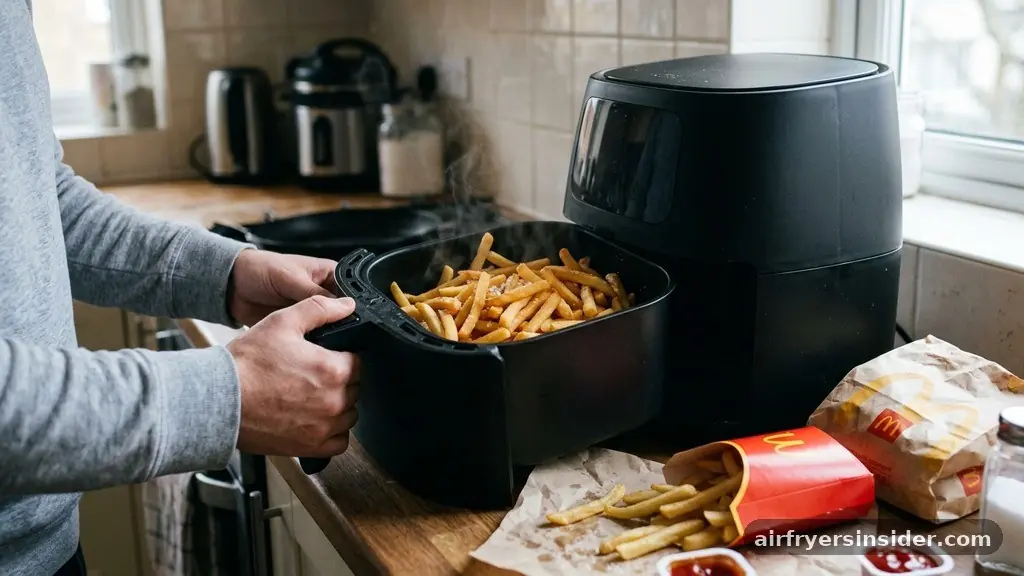
When you consider the physics of reheating food, the air fryer stands out as the most effective kitchen appliance for restoring texture. Unlike a microwave, which excites water molecules and creates steam that ruins the exterior of your fries, an air fryer uses rapid air circulation to dry out the surface.
This process is essential for achieving a crispy texture because it removes the excess moisture that accumulates while the fries sit at room temperature. The convection heating environment mimics the initial cooking method, essentially re-frying the exterior without the need for additional oil.
Most people struggle with leftover french fries because they lose their structural integrity as they cool. The potato starch undergoes retrogradation, leading to a firm, often waxy consistency that feels unpleasant. By applying dry, intense heat, you effectively melt the fats already present in the fry while evaporating the surface-level moisture.
This dual action is what differentiates a successful reheat from a soggy, greasy mess. When you use your device correctly, you aren’t just warming the food; you are essentially re-establishing the golden brown exterior that defines a high-quality fry.
Preparing Your Fries for the Reheating Cycle
Before you even turn on your machine, how you handle the fries matters significantly. If you are starting with a clump of fries straight from the refrigerator, you need to break them apart gently. Using kitchen tongs or your fingers to separate them ensures that every single fry is exposed to the hot air.
If you leave them stuck together, the centers will remain cold while the outer pieces become overcooked or burnt. This is a common pitfall that leads to uneven food quality, so taking thirty seconds to spread them out is a vital step in the process.
You should also consider the condition of the fries before they go into the basket. If they have been sitting out for more than a few hours, the oil content may have oxidized slightly, which can affect the flavor. However, the heat of the air fryer generally masks this by refreshing the salt seasoning.
If your fries are extremely dry, you can lightly spritz them with a tiny amount of neutral oil, though usually, the residual fat from the original cooking process is sufficient. Keeping the fries in a single layer is the most important rule here, as stacking them will prevent the air from circulating properly around each piece.
Optimizing Temperature and Timing
Getting the temperature right is the difference between a crispy delight and a charred disappointment. Most experts recommend setting your air fryer to 350 to 375 degrees Fahrenheit.
This range is high enough to induce the Maillard reaction—the chemical process that creates browning and flavor—without incinerating the delicate potato structure. If you go too high, you risk burning the edges before the center reaches an appropriate internal temperature, leading to a bitter taste that ruins the experience.
Timing is equally critical and often depends on the specific model of your air fryer, such as a Ninja Foodi or a Cosori. Generally, you should aim for a reheating time of three to five minutes. Because air fryers are powerful, the food changes state quickly.
It is better to check the fries at the three-minute mark and add more time if necessary rather than setting a timer for ten minutes and walking away. Over-reheating will cause the fries to lose too much moisture, turning them into hard, potato-flavored toothpicks that are impossible to enjoy.
| Appliance Type | Recommended Temp | Estimated Time |
|---|---|---|
| Air Fryer (Standard) | 360°F | 3-5 Minutes |
| Convection Oven | 400°F | 8-10 Minutes |
| Microwave | N/A | Not Recommended |
Managing Moisture Evaporation and Airflow
The secret to success lies in controlling moisture evaporation. During the initial cooking at the restaurant, the fries are flash-frozen and then deep-fried, creating a barrier of starch that holds the interior fluffy. When they cool, this barrier breaks down.
Your goal in the air fryer is to force that moisture out of the outer layer as quickly as possible. Rapid air circulation is the mechanism that achieves this, whisking away the humid air that would otherwise turn the fries into a soggy mess. This is why you should never crowd the basket; the air needs a clear path to move around every surface of the potato.
If you find that your air fryer basket has a solid floor, consider using an air fryer rack to elevate the fries. This allows air to flow underneath the product, ensuring that the bottom of the fry gets just as crispy as the top.
Many modern appliances come with these accessories, and they are game-changers for reheating items that rely on a crunch. If you don’t have a rack, simply shaking the basket halfway through the cycle acts as a substitute, redistributing the fries so that the heat hits them from all angles.
Addressing Common Topical Gaps
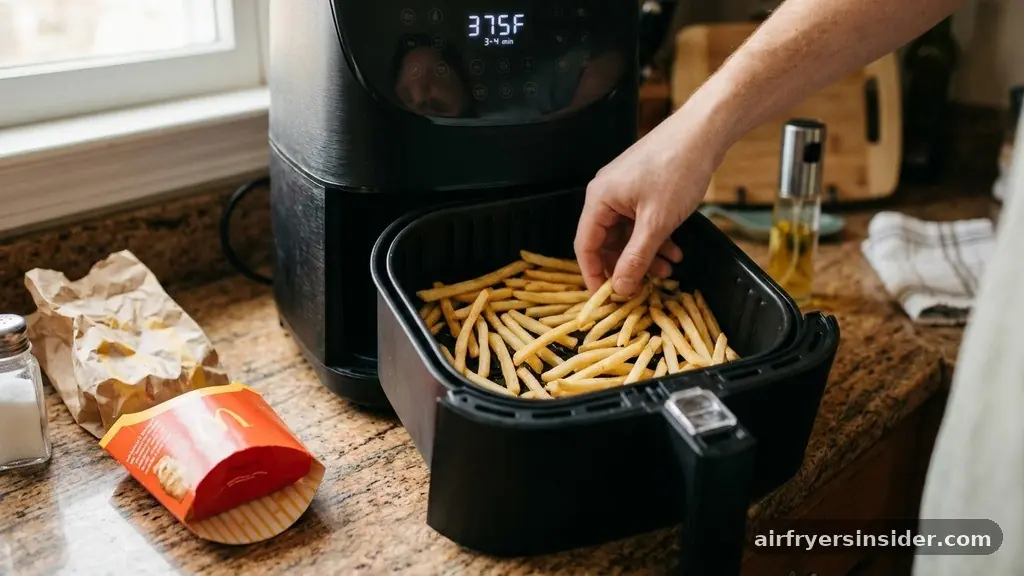
Many readers often ask if they should season the fries again after reheating. The answer depends on your palate, but often the salt seasoning from the original purchase is sufficient. However, because the reheating process can slightly dull the flavor intensity, a very light dusting of fine sea salt or even a pinch of smoked paprika can revitalize them.
Another common question involves the use of oil sprays. While many people believe they need to add oil to make them crispy, the fries are already saturated with frying oil. Adding more is usually unnecessary and can make the finished product feel heavy or greasy on the tongue.
Another gap in common knowledge involves the “reheat” button found on many modern units. While convenient, this setting is often calibrated for thicker items like pizza or chicken. For something as small and delicate as a french fry, a manual setting is almost always superior.
By choosing the temperature and time yourself, you maintain granular control over the crispiness. Do not trust the pre-programmed buttons to know the specific needs of a thin-cut potato strip. Always rely on visual cues, such as the color shifting to a vibrant golden brown, rather than a digital timer alone.
The Role of Equipment in Reheating Quality
Different brands of air fryers perform slightly differently due to the placement of the heating element and the power of the fan. A Ninja Foodi, for example, often has a more aggressive fan speed than a basic, budget-friendly model. This means you might need to adjust your time downward by thirty seconds to prevent over-drying.
A Cosori unit might have a different basket geometry, which changes how much space you have to spread out your food. Understanding your specific kitchen appliance is part of the mastery required to achieve consistent results.
If you are using a basket-style air fryer, remember that the metal itself acts as a heat sink. If you preheat the unit for two minutes before adding the fries, you get an immediate sear that helps lock in the texture. Placing cold food into a cold air fryer forces the fries to sit in the basket while the machine warms up, which encourages further moisture migration and sogginess.
Always preheat. Even a short two-minute burst of heat will significantly improve the final outcome, providing that initial blast of energy needed to restore the fry’s structure.
Why Microwaves Fail at This Task
It is important to understand why the microwave is the enemy of the perfect fry. Microwaves work by vibrating water molecules, which generates internal heat. This is excellent for soups or leftovers with high water content, but it is catastrophic for fried foods.
Because the microwave heats from the inside out, the moisture inside the fry is driven toward the surface. Once it hits the surface, it has nowhere to go but into the crust, turning your crispy exterior into a soft, chewy, or even slimy coating.
There is no way to bypass this physical limitation. Even if you use a crisping tray, you are fighting against the fundamental way the appliance operates.
The air fryer succeeds precisely because it does the opposite: it applies heat to the surface, causing moisture to evaporate into the air rather than into the crust. If you are in a situation where you only have access to a microwave, you are better off eating the fries cold or using a dry pan on the stove, as the microwave will consistently produce the least desirable result.
Strategic Steps for Success
To ensure you get the best possible outcome every time you decide to reheat your food, follow this reliable sequence. First, ensure your air fryer is clean. Any leftover debris from previous meals can burn and impart an off-flavor to your fries.
Second, preheat the unit to 360 degrees Fahrenheit. While it is heating, arrange your fries on a plate and check for any clumps.
Once the unit is ready, place the fries in the basket in a single layer. Do not dump them in a pile.
* Preheat the air fryer to 360°F for two minutes.
* Remove any dipping sauces that might be clinging to the fries.
* Arrange the fries in a single, even layer in the basket.
* Cook for three minutes, then pause to shake the basket.
* Check the texture and cook for an additional one to two minutes if needed.
* Remove immediately with kitchen tongs to prevent residual heat from softening them.
This process is straightforward, yet each step serves a specific purpose in maintaining the integrity of the potato. By shaking the basket, you ensure that the rapid air circulation touches every surface. By using tongs, you avoid crushing the fries, which are more fragile when hot.
Maintaining Food Quality Over Time
The ultimate goal of using an air fryer is to bring the fries back to a state that is nearly indistinguishable from their original condition. However, you must be realistic about the limitations. If the fries have been refrigerated for more than 24 hours, the starch structure may have degraded too much for a full recovery.
In these cases, the fries might still be warm and crisp, but they will lack the creamy interior that defines a fresh McDonald’s fry. This is why you should always aim to reheat your leftovers within the first 12 to 18 hours of purchase.
Furthermore, consider the environment in which you store the leftovers. If you keep them in an airtight container, they will retain more moisture, which is actually helpful for the reheating process. If they are left in the open air, they will dehydrate, becoming tough and chewy before you even begin the reheating cycle.
Proper storage is the precursor to a successful reheat. If you know you are going to have leftovers, put them in a sealed container as soon as they reach room temperature. This small habit preserves the quality of the potato starch, giving your air fryer the best chance of success.
Frequently Asked Questions
Is it necessary to add extra oil when reheating fries?
No, you do not need to add extra oil. McDonald’s fries already contain a high amount of fat from their initial deep-frying process. Adding more oil will only make them greasy and heavy rather than crispy, so rely on the existing fat content to achieve that golden finish.
Can I reheat other fast food items alongside the fries?
You can, but be careful with timing. If you are reheating chicken nuggets, they will likely take longer than fries. It is best to cook items with similar density and size together, or stagger them so that the faster-cooking items are added to the basket toward the end of the cycle.
What should I do if my fries are still soggy after reheating?
If they remain soggy, your air fryer likely wasn’t hot enough or the basket was too crowded. Ensure you are using a single layer and that the air can flow freely. If the basket is packed, the air cannot move, and the moisture will remain trapped, preventing any crisping.
How can I tell when the fries are perfectly done?
The best indicator is the visual change to a deep golden brown and the sound of the crust. If you pull one out with tongs, it should feel firm to the touch rather than limp. They should be hot all the way through, but not shriveled or excessively dark.
Final Thoughts on Perfecting Your Leftovers
Mastering the technique for reheating McDonald’s fries in air fryer units is a simple way to reduce food waste and enjoy your meals to the fullest. By focusing on temperature control, proper airflow, and avoiding the pitfalls of overcrowding, you can consistently achieve that satisfying crunch that makes fast-food fries so iconic. Remember that the quality of your result is largely determined by how well you prepare the basket and how closely you monitor the cooking time.
With these strategies in mind, you can turn a mediocre leftover snack into something that feels fresh and delicious again. Don’t let your next order go to waste; keep your air fryer ready and enjoy your fries exactly how they were meant to be eaten.