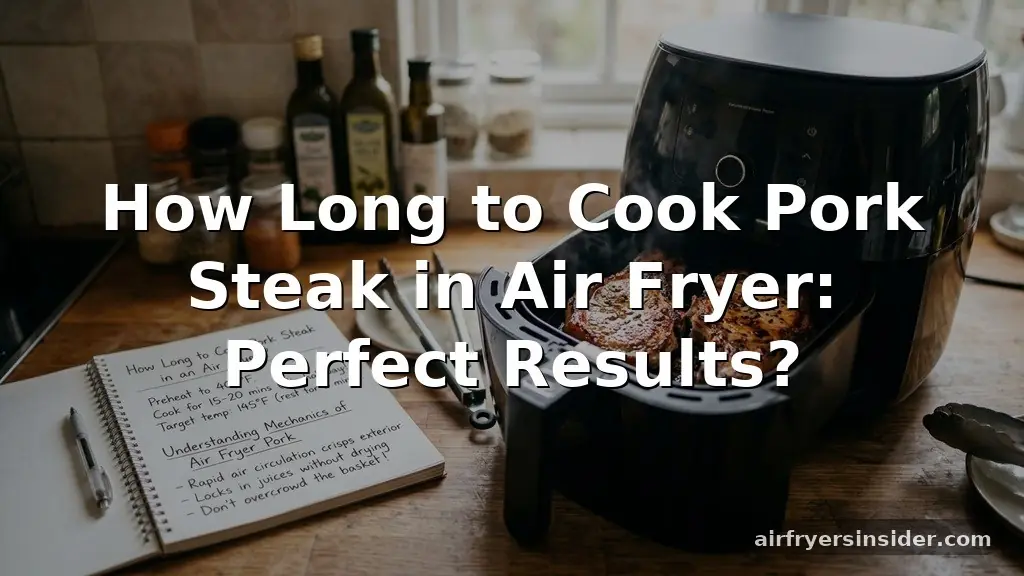
Figuring out exactly how long to cook pork steak in air fryer models can be the difference between a tough, dry piece of meat and a succulent, restaurant-quality meal. Because air fryers rely on powerful convection currents to circulate heat, they are exceptionally efficient at rendering fat and creating a crisp exterior.
Whether you are working with a thin pork loin steak or a thicker, marbled pork shoulder steak, mastering the timing is essential. By focusing on internal temperature rather than just the clock, you ensure a safe and delicious result every single time you fire up your appliance for a quick weeknight dinner.
Understanding the Mechanics of Air Fryer Pork
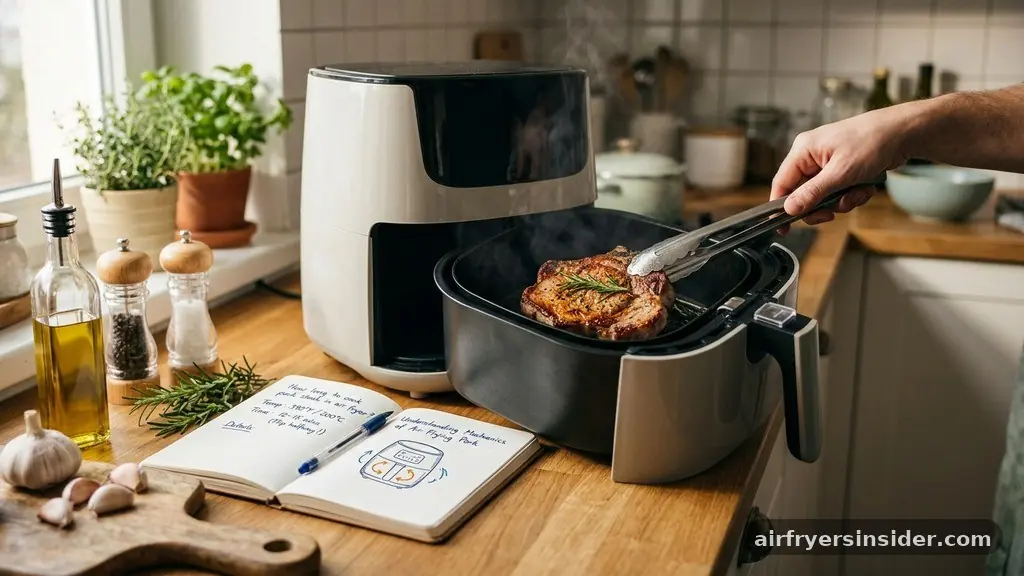
Air fryers are essentially compact, high-powered convection ovens. When you place a pork steak inside the air fryer basket, the fan forces hot air to circulate rapidly around the surface of the meat.
This rapid movement of air facilitates the Maillard reaction, which is the chemical process responsible for browning and developing complex, savory flavors on the exterior of the steak. Unlike traditional pan-frying, which requires a significant amount of oil to conduct heat evenly, the air fryer uses the fat already present in the pork to achieve a golden, crusty finish.
The primary advantage of this cooking method is speed. Because the heating element is located very close to the food, the thermal transfer is incredibly efficient. However, this intensity can also lead to overcooking if you are not careful.
Understanding that pork shoulder steak requires a slightly longer cooking time than a lean pork loin steak is the first step in avoiding dry, chewy results. Always keep in mind that the density of the cut dictates how quickly the center reaches the desired level of doneness.
Preparation and Seasoning for Maximum Flavor
Before you even consider how long to cook pork steak in air fryer baskets, proper preparation is vital. Start by taking your pork steaks out of the refrigerator about 20 minutes before cooking. Bringing the meat closer to room temperature allows for more even cooking throughout the thickness of the cut.
Pat the surface of the steaks completely dry with a paper towel. Moisture is the enemy of a good sear; if the surface is wet, the air fryer will steam the meat instead of browning it.
Once dry, lightly coat the steaks with a small amount of olive oil. This acts as a binder for your seasoning and helps conduct heat. A high-quality dry rub can transform a simple cut of meat into a centerpiece.
Consider a blend of smoked paprika, garlic powder, brown sugar, and a touch of cayenne for a balance of sweet and savory. Apply the seasoning generously to both sides, pressing it gently into the meat so it doesn’t blow off during the high-speed air circulation.
Determining the Right Temperature
Most home cooks find that cooking pork steaks between 375 and 400 degrees Fahrenheit yields the best balance of exterior crispness and interior tenderness. If you prefer a deep, dark crust and are cooking a thicker cut, 400 degrees Fahrenheit is often the sweet spot. However, if you are working with thinner, boneless cuts that might dry out quickly, dropping the temperature to 375 degrees Fahrenheit provides a slightly more gentle environment.
Consistency is key when using an air fryer. Many models benefit from a brief preheat period, even if the manufacturer claims it isn’t strictly necessary.
Running the unit empty for three minutes at your target temperature ensures that the basket is hot the moment the meat hits it, which immediately begins the searing process. This initial heat shock is essential for locking in juices and preventing the gray, boiled appearance that sometimes happens in underpowered cooking appliances.
The Importance of Internal Temperature and Safety
Relying solely on a timer is a recipe for inconsistency. According to USDA guidelines, pork should reach an internal temperature of 145 degrees Fahrenheit to be considered safe for consumption.
When checking your pork, use a digital meat thermometer inserted into the thickest part of the steak, avoiding any bone. This is the only way to guarantee that you aren’t serving undercooked meat or, conversely, turning a perfectly good steak into shoe leather.
Keep in mind that carryover cooking is real. When you remove your pork steaks from the air fryer, the internal temperature will continue to climb by about 3 to 5 degrees as the residual heat dissipates.
If you pull the meat out exactly at 145 degrees, you might find it hits 150 degrees after a few minutes of resting. Aiming to pull the steaks when they hit 140 degrees is a pro tip for ensuring the final product remains at that perfect, juicy medium-well stage.
Timing Differences Between Cuts
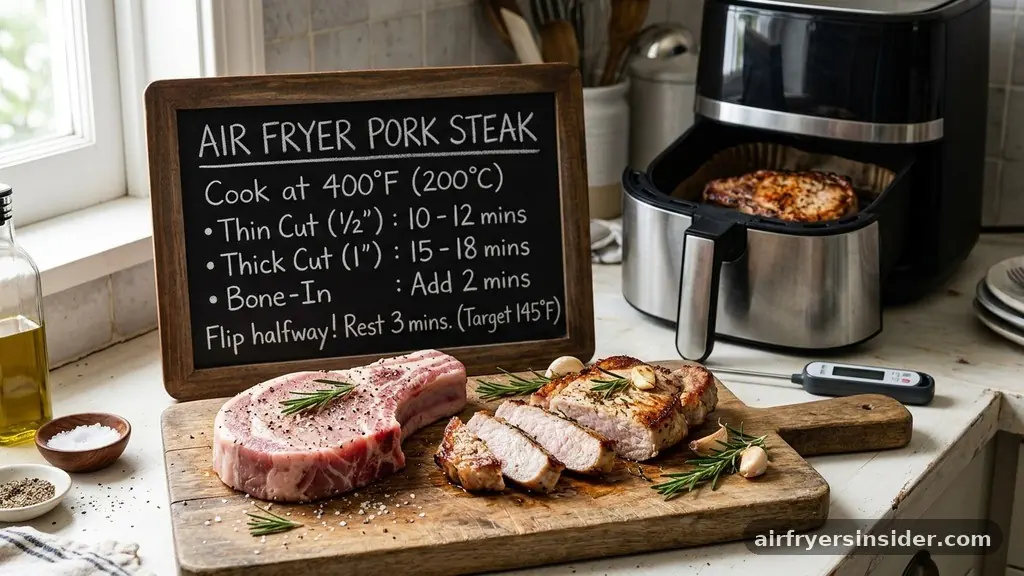
The specific type of pork you choose significantly alters the cooking time. A thick, bone-in pork shoulder steak has a higher fat content and more connective tissue, which requires more time to break down properly. Conversely, a thin, boneless pork loin steak is extremely lean and can go from perfect to overcooked in a matter of seconds.
| Cut Type | Estimated Time (Minutes) | Recommended Temp |
|---|---|---|
| Thin Boneless Loin | 8–10 Minutes | 375°F |
| Thick Bone-in Shoulder | 14–18 Minutes | 400°F |
| Medium Cut Chops | 10–12 Minutes | 385°F |
Use the table above as a general guideline, but always prioritize the reading from your meat thermometer. Air fryer models vary wildly in wattage and airflow efficiency, so your first batch should be treated as a test run. If you find the exterior is browning too fast while the center is still cold, reduce the heat and increase the time.
Techniques for a Perfect Flip
Flipping your steaks is essential for even cooking. Because the heating element is typically at the top of the air fryer, the side facing up will always receive more direct radiant heat.
Use a pair of long-handled metal or silicone tongs to flip the steaks halfway through the cooking time. This ensures that both sides develop that desirable Maillard reaction crust.
When you flip the meat, take a moment to look at the progress. If the edges look like they are drying out, you can lightly brush them with a bit more olive oil or a splash of marinade.
Avoid opening the basket too frequently, as this causes the temperature to drop significantly and forces the air fryer to work harder to recover. One flip at the midpoint is usually sufficient to achieve a professional result.
Addressing Common Cooking Gaps
Many home cooks struggle with the “gray zone” of pork preparation. One common issue is the accumulation of juices at the bottom of the air fryer basket.
If you are cooking multiple steaks, ensure they are in a single layer with enough space for air to circulate. If the steaks are touching, the sides will steam rather than sear, leading to a pale, unappetizing texture.
Another gap in knowledge involves the use of marinades. While marinades add incredible flavor, they can burn easily in the high-heat environment of an air fryer, especially if they contain high sugar content. If you use a wet marinade, pat the steaks dry before applying your dry rub or simply accept that the exterior will be darker.
If you want a wet glaze, wait until the final two minutes of cooking to brush it on. This prevents the sugars from carbonizing into a bitter, burnt mess before the meat is actually cooked through.
The Crucial Step of Resting Time
Never skip the resting period. After you remove the pork steaks from the air fryer, transfer them to a plate or cutting board and tent them loosely with aluminum foil.
Let the meat rest for at least 5 to 7 minutes before slicing. Resting allows the muscle fibers, which have tightened up due to the heat, to relax and reabsorb the juices that have been pushed toward the center during the cooking process.
If you cut into the steak immediately, all those flavorful juices will run out onto the board, leaving you with a dry, disappointing meal. Resting is arguably just as important as the cooking time itself for achieving that juicy texture everyone craves. Use this time to prepare a simple side dish, like a quick salad or steamed vegetables, which pairs perfectly with the rich, savory profile of air-fried pork.
Essential Tips for Success
To consistently achieve the best results, keep a few best practices in mind. These small adjustments can make a massive difference in the quality of your home-cooked meals:
- Always preheat your air fryer for at least three minutes to ensure an even start.
- Ensure your pork steaks are similar in thickness so they cook at the same rate.
- Don’t overcrowd the basket; air circulation is the secret to the crisp exterior.
- Use a digital thermometer to check for that 145-degree internal temperature.
- Invest in a good pair of tongs to make flipping safe and easy.
- Let the meat rest for several minutes after cooking to retain maximum moisture.
Following these steps will help you master the process of cooking pork steak in an air fryer with confidence. Once you understand the relationship between heat, time, and thickness, you can experiment with different spice blends and marinades to create a variety of flavors. Whether you prefer a simple salt-and-pepper seasoning or a complex, spicy rub, the air fryer is a versatile tool that delivers delicious results with minimal cleanup.
Frequently Asked Questions
Is it better to cook pork steak at 350 or 400 degrees?
It depends on your goal. 400 degrees Fahrenheit is ideal for achieving a crispy, browned crust on thicker cuts. However, 350 to 375 degrees is better for thinner, leaner cuts to ensure the inside cooks through without drying out the exterior too quickly.
How do I know when the pork is fully cooked?
The only reliable way to know is by using a meat thermometer. According to USDA guidelines, pork should reach an internal temperature of 145 degrees Fahrenheit. Insert the probe into the thickest part of the steak, ensuring you avoid the bone for an accurate reading.
Do I need to use oil when air frying pork?
While not strictly necessary, a light coating of olive oil or avocado oil is highly recommended. It helps the seasoning adhere to the meat, promotes a better Maillard reaction for browning, and prevents the pork from sticking to the air fryer basket during the cooking process.
Can I cook frozen pork steaks directly in the air fryer?
While you can, it is not ideal for the best texture. If you must use frozen meat, lower the temperature by about 25 degrees and increase the cooking time by 50 percent. This allows the center to thaw and cook before the exterior becomes burnt or overly dried.
Final Thoughts on Air Fried Pork
Mastering the technique for how long to cook pork steak in air fryer units is a rewarding skill that simplifies your kitchen routine. By focusing on the internal temperature of your meat and allowing it time to rest, you can consistently serve meals that are tender, juicy, and packed with flavor. The combination of high-speed convection and precise seasoning makes this method a superior alternative to traditional stovetop methods.
As you become more comfortable with your specific appliance, you will find that it becomes an indispensable tool for preparing protein-rich dinners in a fraction of the usual time. Experiment with your favorite spices and enjoy the convenience of perfectly cooked pork steaks.
Meta Description: Learn exactly how long to cook pork steak in air fryer for juicy, tender results. Follow our tips on temperature, timing, and internal safety.