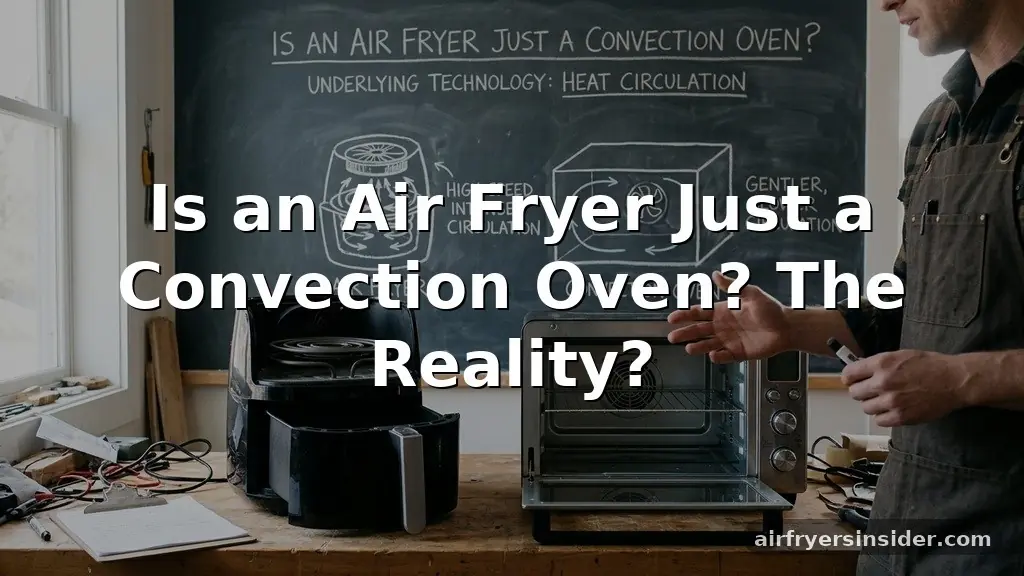
Many home cooks find themselves wondering if an air fryer is just a convection oven in disguise, especially since both appliances rely on circulating hot air to cook food. While the underlying technology is indeed similar, the physical design and performance capabilities differ enough to change how you approach your daily meal preparation.
You might be surprised to learn that while they share the same basic physics, the intensity of the airflow and the size of the cooking chamber create distinct culinary results. Understanding these nuances will help you decide if you need both gadgets on your counter or if one versatile machine can handle all your kitchen tasks.
The Underlying Technology of Heat Circulation
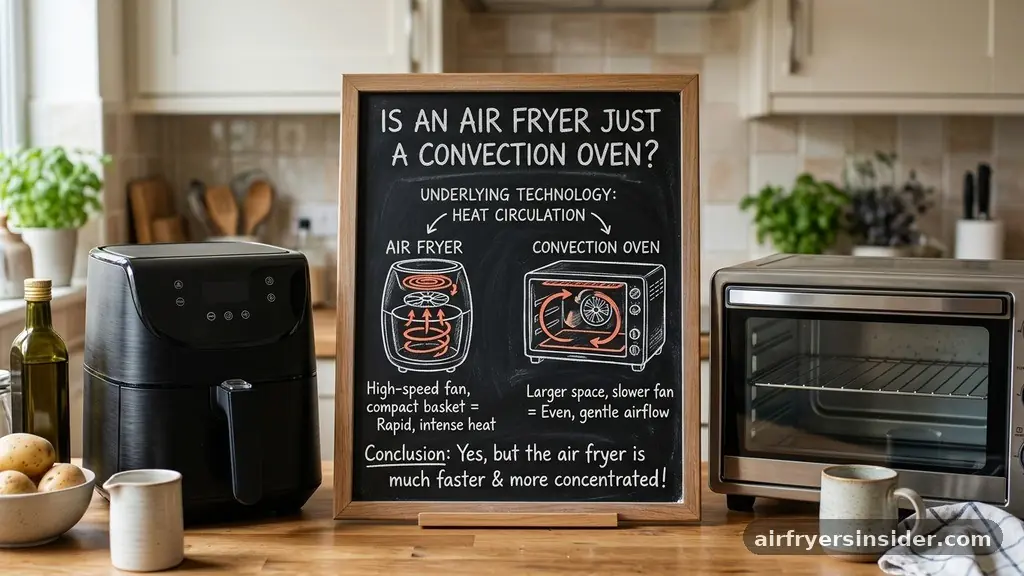
At their core, both air fryers and convection ovens operate on the principle of forced convection. In a standard oven, heat usually radiates from the bottom or top elements, relying on natural air movement to cook the food.
A convection oven adds a fan to the mix, which helps distribute that heat more evenly, reducing cold spots and speeding up the cooking process. An air fryer takes this concept and turns the volume up, using a significantly more powerful fan to move air in a tighter, more concentrated space.
When you look at the mechanics, both machines use a heating element and a fan to circulate hot air around the food. The primary difference lies in the fan-to-chamber ratio. In a traditional convection oven, the fan is moving air across a relatively large volume.
This means the air loses some of its velocity before it reaches the food. In an air fryer, the fan is positioned closer to the food basket, and the chamber is smaller, creating a high-velocity environment that mimics the effect of deep frying. This rapid movement of air is what gives air-fried food its characteristic crispiness.
Mechanical and Operational Differences
While it is technically accurate to call an air fryer a compact convection oven, the operational differences are substantial enough to affect your cooking. An air fryer is designed as a closed system where air is forced through a perforated basket.
This allows the hot air to hit the food from all angles simultaneously, including the bottom, which is often a struggle for standard ovens. Because the air is forced through the food rather than just around it, the moisture on the surface of the food evaporates much faster, leading to a Maillard reaction that creates a golden-brown crust.
Convection ovens, by contrast, are designed for versatility. They are usually larger, allowing you to cook a whole turkey or bake multiple trays of cookies at once. The airflow in an oven is gentler, which is actually a benefit for delicate pastries or baked goods that might blow around or dry out too quickly in the intense environment of an air fryer.
If you try to bake a soufflé in an air fryer, the high-speed air might prevent it from rising correctly. Therefore, the mechanical design of each appliance dictates its ideal use case in your kitchen.
The Intensity of Airflow and Heat Distribution
The most significant differentiator between these two appliances is the speed and density of the air movement. In an air fryer, the air is typically pushed at a much higher velocity. This intense airflow is the secret to achieving “fried” textures without submerging food in oil.
Because the chamber is so small, the heat recovery time—how quickly the oven returns to temperature after you open the door—is incredibly fast. This is why air fryers can often preheat in under three minutes, while a full-sized convection oven might take ten or fifteen.
When you consider the physics, the air fryer acts as a high-performance, miniaturized convection system. The proximity of the heating element to the food basket ensures that the energy transfer is highly efficient. In a large convection oven, you lose a significant amount of heat to the walls of the oven and the surrounding air.
The air fryer minimizes this loss by concentrating the heat exactly where it is needed. This efficiency is why many people find that their air fryer produces crispier results for items like frozen fries, chicken wings, or roasted vegetables compared to their standard oven.
Practical Considerations for Home Cooks
When deciding between the two, you should consider the volume of food you typically prepare. If you are cooking for a family of four or more, a standard convection oven is almost always the better choice because of its capacity.
Trying to air fry a large batch of vegetables in a small basket often leads to overcrowding, which traps steam and results in soggy food rather than crispy perfection. You would have to cook in multiple small batches, which ultimately takes more time than just roasting the whole tray in the oven.
However, for smaller households or quick weeknight meals, the air fryer shines. Its ability to heat up instantly and cook food in record time makes it perfect for reheating leftovers, roasting a small portion of broccoli, or cooking a couple of salmon fillets. The ease of cleaning is another practical factor.
Most air fryer baskets are dishwasher safe and small enough to fit easily in the sink, whereas cleaning a full-sized oven rack or the entire oven interior is a much bigger chore. You have to weigh the convenience of the air fryer against the sheer utility of the oven.
Comparing Cooking Performance

To understand how these machines stack up in real-world scenarios, it helps to look at specific cooking tasks. The following table highlights how the performance differs across common kitchen activities.
| Task | Air Fryer Performance | Convection Oven Performance |
|---|---|---|
| Frozen Foods | Excellent; very crispy and fast. | Good; takes longer, less crisp. |
| Baking Cookies | Difficult; can blow dough around. | Excellent; steady, even heat. |
| Roasting Vegetables | Fast; very high-heat char. | Better for large, flat trays. |
| Reheating Pizza | Perfect; restores crisp crust. | Okay; can dry out the toppings. |
As the table demonstrates, neither appliance is universally better. The air fryer excels at tasks that benefit from high-velocity air and small-space efficiency, while the convection oven is the superior choice for tasks that require space, stability, and consistent, gentle heat.
If you are baking delicate items, the oven is your best friend. If you want a quick, crispy snack without turning on the main oven, the air fryer is the clear winner.
Addressing Common Misconceptions
A common myth is that air fryers are magically healthier because they “fry” food without oil. In reality, they are just baking with very hot, fast-moving air. While you do use less oil than deep-frying, you are essentially just roasting.
Another misconception is that you cannot use a convection oven to do what an air fryer does. If your convection oven has a high-speed fan setting and you use a perforated pan or a wire rack to elevate your food, you can achieve results that are remarkably similar to an air fryer.
Many people also worry about the health implications of using these appliances. Because they don’t involve deep-frying, you aren’t consuming the excess fat associated with traditional fried foods. However, the health value of your meal is ultimately determined by the ingredients you choose, not just the appliance.
Whether you use an air fryer or a convection oven, you are still cooking with dry heat. The key to healthy cooking is focusing on whole ingredients and light seasoning, regardless of which machine sits on your counter.
Topical Gaps: Is One Replacing the Other?
A frequently asked question concerns whether it is time to get rid of the convection oven entirely in favor of an air fryer. The answer is almost certainly no. While air fryers are popular, they cannot replicate the large-scale roasting, baking, or broiling capacity of a standard oven.
You cannot fit a whole chicken, a large casserole dish, or multiple sheet pans in most air fryers. The convection oven remains the workhorse of the kitchen, while the air fryer serves as a specialized tool for specific, high-speed cooking tasks.
Another gap in the conversation is the issue of power consumption. Because air fryers are smaller and have shorter preheat times, they are often more energy-efficient for short cooking tasks. If you only need to roast a single potato, running a massive convection oven is an inefficient use of electricity.
However, if you are planning to cook a large meal, the energy cost of running the oven is amortized over the total amount of food. Using the right tool for the size of the job is the most effective way to save energy in the kitchen.
Determining Value for Your Kitchen
When deciding between the two, you must evaluate your lifestyle. If you frequently cook frozen appetizers, reheat leftovers, or prepare quick snacks for one or two people, the air fryer will likely become your most-used appliance.
It saves time and energy, and the results are often superior for those specific types of food. The investment is relatively low compared to a full kitchen renovation or a new range, making it an accessible upgrade for most home cooks.
Conversely, if you enjoy baking bread, roasting large cuts of meat, or hosting dinner parties, the air fryer will likely gather dust on your counter. A high-quality convection oven is a staple for a reason. Many modern ranges now come with a built-in convection setting that mimics the performance of an air fryer quite well.
Before you buy a standalone unit, check if your current oven has a convection mode and try using a wire rack to promote better airflow. You might find that you already have the technology you need.
Strategies for Maximizing Your Appliances
Ultimately, the best approach is to learn the strengths of the equipment you have. If you own an air fryer, try using it for more than just frozen fries. It is excellent for roasting nuts, toasting bread, or even making crispy chickpeas.
The secret is to avoid overcrowding the basket, which is the most common mistake home cooks make. Give your food space to breathe so the air can circulate freely around every piece.
If you are using a convection oven, treat it as a multi-purpose tool. Use the convection setting for roasting and baking, but switch it off if you are making something that needs to rise without the interference of moving air, like a delicate sponge cake.
By understanding how to control the airflow and temperature, you can get the best results from either machine. Whether you choose to invest in an air fryer or stick with your trusty convection oven, you have all the tools necessary to create delicious, crispy, and perfectly cooked meals at home.
FAQ
Can you use a convection oven to achieve the same results as an air fryer?
Yes, you can often replicate air fryer results in a convection oven by using a wire rack to elevate your food and ensuring the fan setting is on high. While the air velocity may be lower, the fundamental cooking method is the same.
Why does food get crispier in an air fryer than in an oven?
Food gets crispier in an air fryer because the small cooking chamber and powerful fan create a high-velocity environment. This forces hot air through the food, rapidly evaporating surface moisture and creating a crunch that is harder to achieve in a large oven.
Is an air fryer a replacement for a microwave?
An air fryer is not a direct replacement for a microwave because it cannot perform tasks like steaming or rapid liquid heating. However, it is a much better tool for reheating leftovers that you want to remain crispy, such as pizza or fried chicken.
Should I buy an air fryer if I already have a convection oven?
You should consider an air fryer if you frequently cook small portions and want to save time on preheating. If you mostly cook large family-sized meals or do a lot of baking, your existing convection oven is likely sufficient for your needs.
Conclusion
Deciding if an air fryer is just a convection oven boils down to how you prefer to cook. While they share the same fundamental technology, their physical design creates different environments that excel at different tasks. An air fryer is a compact, high-velocity machine perfect for quick, crispy results, while a convection oven provides the space and versatility needed for larger, more complex dishes.
By understanding the intensity of the airflow and the capacity of each unit, you can make an informed decision that suits your cooking habits. Whether you choose to embrace the speed of an air fryer or rely on the steady performance of a convection oven, both tools offer excellent ways to prepare your favorite meals. Start experimenting with your existing setup today to see what works best for your kitchen.