
Determining how long to cook pork steaks in air fryer setups ensures you achieve that elusive balance of a seared, caramelized exterior and tender, succulent meat. Because air fryers rely on powerful convection cooking to circulate heat, they often outperform traditional ovens for smaller cuts of pork.
Getting the timing right prevents the common pitfall of dried-out meat, allowing you to enjoy a restaurant-quality meal at home with minimal cleanup. Whether you are using thick-cut pork shoulder steaks or leaner loin varieties, understanding the nuances of heat distribution and internal temperature is the secret to success in your kitchen.
Understanding Air Fryer Mechanics for Pork
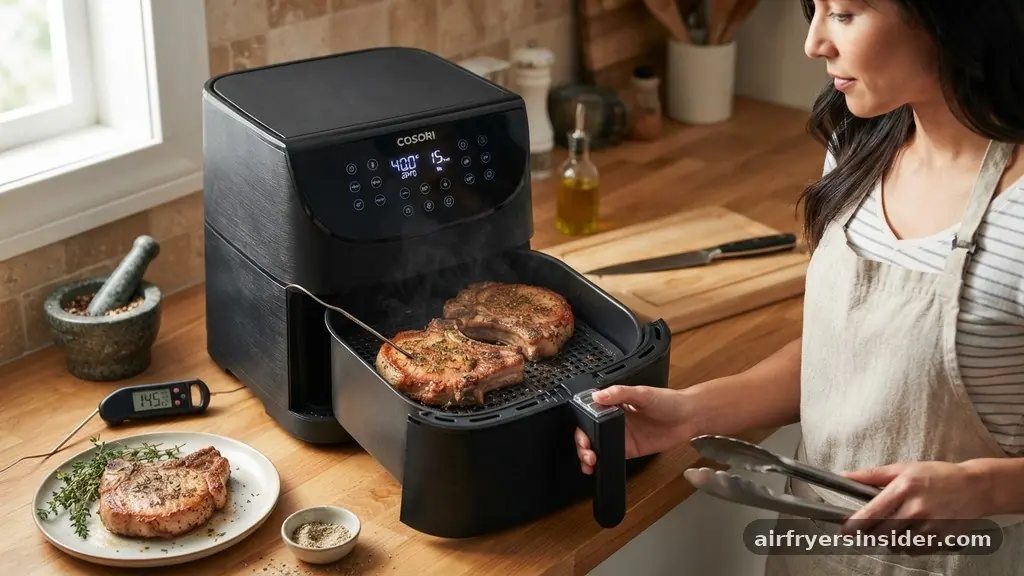
The air fryer functions as a compact convection oven, using a heating element and a high-speed fan to blast hot air around your food. When you place pork steaks inside, this intense circulation promotes the Maillard reaction, which is the chemical process responsible for the browning and deep flavor development on the surface of the meat. Unlike a standard oven, where heat might be uneven or stagnant, the air fryer creates a consistent environment that works exceptionally well for cuts like pork shoulder steaks.
Achieving success depends heavily on the airflow within the chamber. If you overcrowd the air fryer basket, the hot air cannot reach every surface of the meat, leading to steamed edges rather than the desired crispy finish.
Always arrange your steaks in a single layer, ensuring there is enough room for the air to swirl underneath and around each piece. This placement is critical for ensuring that the edges become golden brown while the center remains juicy and flavorful.
Determining the Ideal Temperature Settings
Most home cooks find that cooking pork steaks at 375 degrees Fahrenheit or 400 degrees Fahrenheit yields the best results. A higher temperature is generally preferred for thinner cuts because it allows for a quick sear before the center overcooks. If you are working with thicker, bone-in pork shoulder steaks, dropping the temperature slightly to 360 or 375 degrees Fahrenheit can help ensure the interior reaches a safe temperature without burning the outside.
Temperature settings play a vital role in juice retention. If the heat is too low, the pork will take too long to cook, resulting in moisture loss through evaporation.
If the heat is too high, the exterior might char before the internal temperature rises sufficiently. By starting at 380 degrees Fahrenheit, you create a middle ground that accommodates most steak thicknesses, giving you a reliable baseline to adjust based on the specific power of your air fryer model.
Preparation and Seasoning Techniques
Before you even think about the cook time, your preparation determines the quality of the final product. Start by patting the pork steaks dry with paper towels; moisture on the surface of the meat acts as a barrier to browning.
Once dry, brush the steaks lightly with olive oil. The oil serves as a conductor for the heat and helps your dry rub adhere to the meat, creating a crust that locks in flavor.
Your choice of seasoning can significantly impact the outcome. A simple dry rub consisting of salt, pepper, garlic powder, and paprika works wonders, but don’t be afraid to experiment with brown sugar or smoked spices for a deeper flavor profile.
Remember that sugar-based rubs can burn quickly, so keep a closer eye on the steaks if you choose a sweet blend. Applying the seasoning evenly across both sides ensures every bite is flavorful.
The Importance of Preheating
Many users skip the preheating step, but it is essential for consistent cooking. Preheating your air fryer for three to five minutes ensures the unit is at the target temperature the moment the meat hits the basket. Without preheating, the first few minutes of the cooking cycle are spent bringing the chamber up to heat, which can lead to longer cook times and unpredictable texture.
By placing the steaks into a hot environment, you initiate the searing process immediately. This jumpstart helps create that attractive, crispy exterior that defines a great air-fryer-cooked steak. If your air fryer doesn’t have a dedicated preheat button, simply running it empty at your target temperature for a few minutes before adding the food is an easy way to achieve the same effect.
Managing Cook Time and Flipping
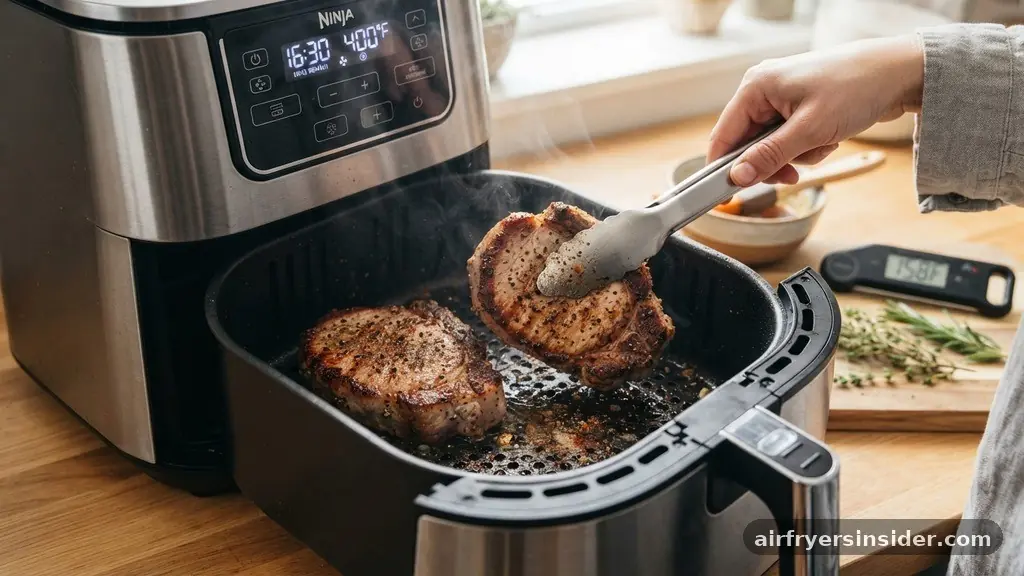
Monitoring the cook time is the most common point of confusion for beginners. For a standard one-inch thick pork steak, you are typically looking at a total time of 12 to 16 minutes at 380 degrees Fahrenheit.
However, this is just an estimate. The density of the meat, the presence of bone, and the specific wattage of your air fryer will shift this window significantly.
Flipping the steaks halfway through the cooking process is mandatory for even heat exposure. Use tongs to turn the meat after about six to eight minutes.
This flip allows both sides to benefit from the direct convection air, ensuring the golden brown color is uniform. If you notice one side browning much faster than the other, you may need to adjust your flip timing or rotate the basket halfway through the cycle.
Ensuring Food Safety and Internal Temperature
Adhering to USDA guidelines is the only way to guarantee your pork is safe to eat. The official recommendation for pork is an internal temperature of 145 degrees Fahrenheit, followed by a resting period. Using a reliable meat thermometer is the only accurate way to verify this; you should insert the probe into the thickest part of the steak, avoiding any bone if present.
Relying on color or texture alone is a recipe for disaster. Pork can look cooked on the outside while remaining underdone near the center, especially with thicker cuts.
Once your thermometer reads 140 to 145 degrees Fahrenheit, you can confidently remove the steaks from the air fryer. The temperature will continue to rise slightly as the meat rests, which is a natural part of the cooking process known as carryover cooking.
| Steak Thickness | Est. Time (380°F) | Internal Target |
|---|---|---|
| 0.5 inch | 8-10 minutes | 145°F |
| 1.0 inch | 12-16 minutes | 145°F |
| 1.5 inch | 18-22 minutes | 145°F |
Addressing Common Cooking Gaps
One common issue is the difference between pork loin steaks and pork shoulder steaks. Loin steaks are much leaner and can dry out if cooked for even a minute too long.
If you are cooking loin cuts, it is better to lean toward the lower end of the time spectrum. Shoulder steaks, conversely, have more fat and connective tissue, which benefit from a slightly longer cook time to render the fat and soften the fibers.
Another gap involves the use of breading. If you are making breaded pork steaks, the air fryer is excellent, but you must ensure the breading is fully set before adding the meat.
Using a light spray of oil over the breading helps it achieve that deep, crispy finish that mimics deep-frying. If you don’t use enough oil, the breading may remain powdery or dry, which is a common complaint among those new to air frying.
Resting Time and Serving
Resting is the final, non-negotiable step in the process. Once you pull the steaks from the air fryer basket, transfer them to a plate or cutting board and cover them loosely with foil.
Letting the meat sit for five to ten minutes allows the juices to redistribute throughout the muscle fibers. If you cut into the steak immediately, you will lose all that moisture to the plate, resulting in a dry, lackluster dining experience.
During this resting phase, the internal temperature will climb by about 5 degrees due to carryover cooking. This is why pulling the meat at 140 degrees Fahrenheit is often safer than waiting until it hits 145 degrees in the air fryer. By the time you serve it, the steak will be perfectly cooked, tender, and brimming with natural juices.
Troubleshooting Air Fryer Issues
If your pork steaks consistently come out too dark on the outside but raw in the middle, you are likely using a temperature that is too high. Try lowering the heat by 25 degrees and extending the time slightly. This allows the heat to penetrate the center of the steak before the surface sugars have a chance to char.
If your steaks are coming out pale and rubbery, you are likely overcrowding the air fryer basket. Air fryers rely on space; if the pieces are touching or stacked, the machine effectively turns into a steamer.
Reduce the number of steaks per batch, even if it means cooking in two rounds. The difference in texture will be immediately noticeable, providing you with that crispy, professional-grade finish you expect.
FAQ
How do I know when the pork is fully cooked?
You should use a digital meat thermometer to check the thickest part of the steak. According to USDA guidelines, pork is safe to consume once it reaches an internal temperature of 145 degrees Fahrenheit. Always check the center, avoiding the bone for an accurate reading.
Can I cook frozen pork steaks directly in the air fryer?
Yes, but you will need to increase the cooking time by about 50 percent. Start at a lower temperature, around 350 degrees Fahrenheit, to allow the center to thaw and cook through without burning the exterior. Always verify the internal temperature with a thermometer before serving.
Why does my pork steak turn out dry?
Dryness usually results from overcooking or failing to let the meat rest. Ensure you are not exceeding the target internal temperature of 145 degrees Fahrenheit and always allow the steaks to sit for at least five to ten minutes before slicing to keep the juices locked in.
Do I need to turn the pork steaks during cooking?
Yes, flipping the steaks halfway through the cooking cycle is essential for even heat distribution. Because air fryers circulate air from the top or sides, flipping ensures both sides develop a consistent golden brown crust and cook at the same rate, preventing one side from remaining underdone.
The key to perfect air-fried pork lies in respecting the science of heat and timing. By maintaining a single layer in your air fryer basket, monitoring your internal temperature with a thermometer, and never skipping the crucial resting phase, you can consistently produce tender, flavorful results. Whether you prefer a simple seasoning or a complex dry rub, these steps provide the foundation for a delicious meal.
Start with a conservative time estimate, keep a close watch on your thermometer, and you will quickly master the art of cooking pork steaks in your air fryer. Enjoy the process of perfecting your technique and share these tips with others looking to improve their home cooking efficiency.