

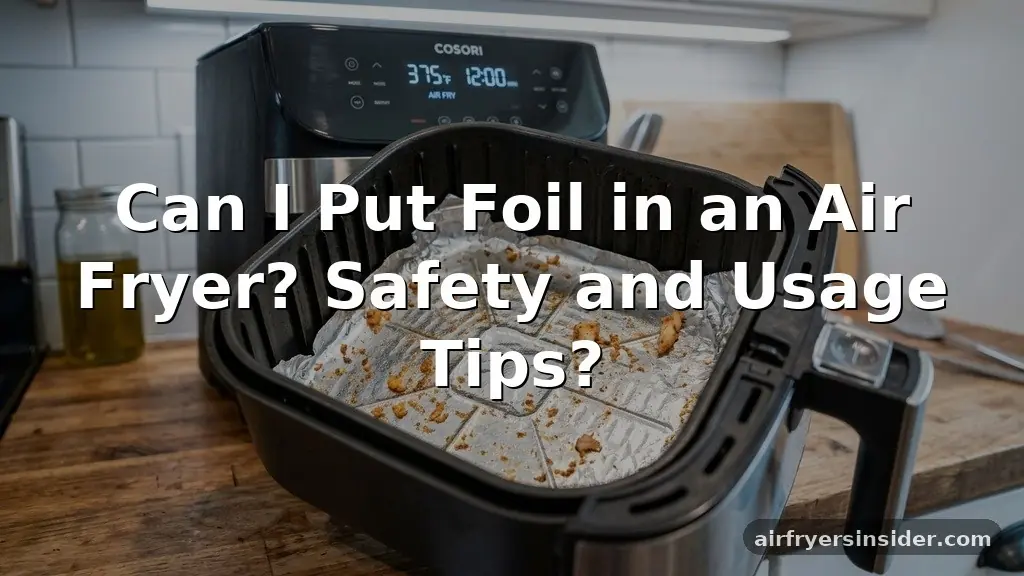
Deciding whether you can put foil in an air fryer is a common question for home cooks looking to minimize cleanup and simplify meal prep. While many people use aluminum foil to line their air fryer basket, doing so incorrectly can interfere with the appliance’s performance and potentially lead to uneven cooking.
Understanding the mechanics of your air fryer is key to using liners safely without compromising the convection heating process. By following a few simple guidelines regarding placement and airflow, you can successfully use foil to keep your appliance clean while maintaining the crisp results you expect from high-speed air circulation.
Understanding Air Fryer Mechanics and Airflow
An air fryer functions primarily as a high-powered countertop convection oven. The core mechanism involves a heating element located near the top of the unit and a powerful convection fan that forces superheated air downward and around the food.
This rapid movement of air is what creates the Maillard reaction, resulting in the crispy exterior that makes air-fried food so popular. When you introduce any barrier into the basket, you are essentially altering the intended path of this air.
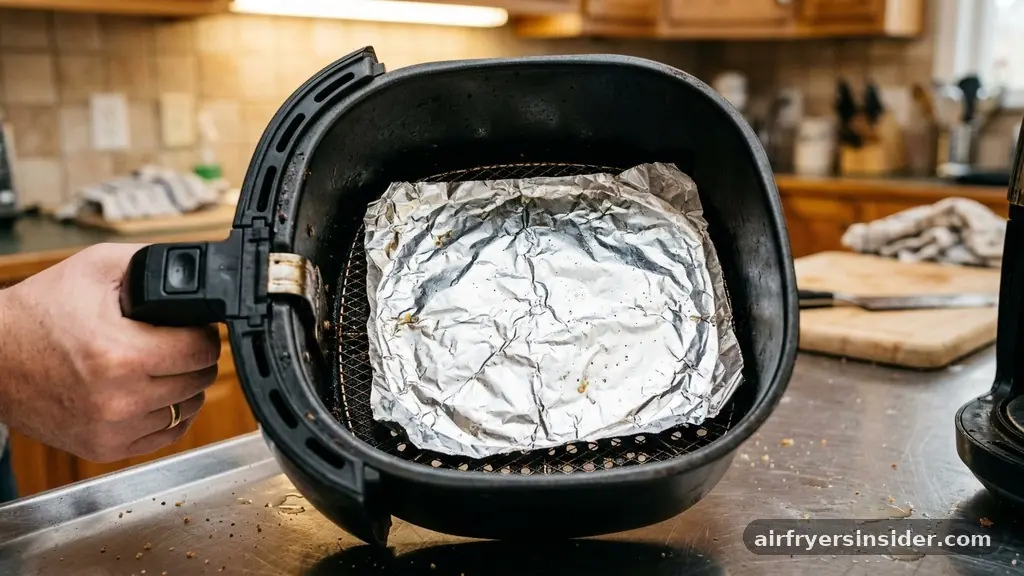
If you block the vents or the holes in the bottom of the basket, you prevent the air from circulating beneath the food. This creates a “dead zone” where heat cannot reach, leading to soggy bottoms or unevenly cooked meals. Because the air needs to move freely to ensure consistent results, placing a large, unperforated sheet of aluminum foil at the base of the basket is generally discouraged unless it is sized perfectly to allow airflow around the edges.
The Risks of Blocking the Convection Fan
The most significant danger when using foil in an air fryer is the risk of it becoming airborne. Because the convection fan is quite powerful, lightweight materials like aluminum foil can be lifted off the surface of the basket if they are not weighed down by food. If a piece of foil detaches, it can be sucked up toward the heating element.
This scenario is hazardous for several reasons. First, a loose piece of foil can cause a short circuit or damage the internal components of the machine. Second, if the foil comes into direct contact with the heating element, it poses a fire risk.
Always ensure that the weight of your ingredients is sufficient to hold the foil firmly in place throughout the entire cooking cycle. Never place an empty sheet of foil in the basket while the unit is running or during the preheating phase.
When to Use Aluminum Foil Safely
You can safely use aluminum foil in an air fryer if you follow specific placement techniques that prioritize safety and efficiency. The goal is to use the foil as a tool for convenience without obstructing the essential airflow that defines air frying. To use it correctly, you should always shape the foil to fit the basket snugly.
Fold the edges of the foil upward to create a small tray or boat. This technique helps contain juices, marinades, or grease, preventing them from dripping onto the bottom of the basket or the heating element. By keeping the foil contained within the footprint of your food, you ensure that the air can still circulate around the sides of the basket, maintaining the efficiency of the convection process.
Comparing Liners: Foil, Parchment, and Silicone
Choosing the right accessory depends on what you are cooking and your specific needs for cleanup. While foil is excellent for containing grease and preventing messes with fatty meats, other materials offer different advantages.
| Material | Best Use Case | Pros | Cons |
|---|---|---|---|
| Aluminum Foil | High-heat, fatty foods | Heat resistant, easy to mold | Can block airflow, potential for tearing |
| Parchment Paper | Baking, delicate foods | Non-stick, easy to clean | Not suitable for very high temperatures |
| Silicone Liners | Frequent, daily usage | Reusable, dishwasher safe | Can trap moisture, requires thorough cleaning |
Each of these options serves a different purpose. For instance, perforated parchment paper is specifically designed for air fryers because it features holes that allow air to pass through freely.
If you are baking cookies or roasting vegetables, parchment is often superior to foil. However, for items like bacon or marinated chicken wings, foil is often more effective at managing grease accumulation.
Addressing Concerns About Aluminum Exposure
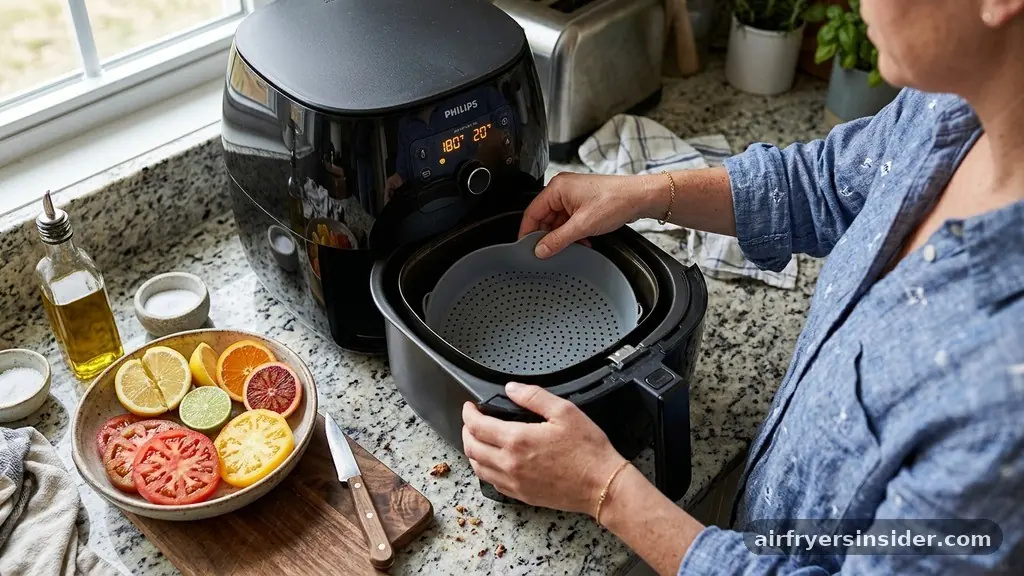
A frequent concern regarding the use of aluminum foil is the potential for aluminum exposure or chemical leaching. Research suggests that when acidic foods—such as those containing tomatoes, vinegar, or citrus—come into direct contact with aluminum at high temperatures, some aluminum may migrate into the food.
While the amounts are typically considered safe by food safety experts, those who are particularly cautious may prefer to avoid using foil with highly acidic ingredients. If you want to avoid this entirely, consider using silicone liners or parchment paper, which are inert materials that do not react with food acidity. Always prioritize high-quality, food-grade foil and avoid reusing pieces that have become brittle or torn, as small metallic fragments could potentially end up in your meal.
Best Practices for Cooking with Foil
To get the best results, consistency is key. Always check your manufacturer guidelines before introducing any third-party accessories into your air fryer.
Some brands explicitly warn against the use of foil, while others provide specific instructions on how to do it safely. If your manual says no, it is best to respect that advice to keep your warranty intact and your kitchen safe.
When you do decide to use foil, remember these essential tips:
- Always weigh the foil down with food so it cannot fly into the heating element.
- Ensure the foil does not extend up the sides of the basket, as this can block the side vents.
- Never line the bottom of the air fryer drawer itself; only place the foil inside the removable basket.
- Avoid wrapping food too tightly in foil if you want it to crisp up, as the foil will trap steam.
- If you need to cook acidic foods, choose parchment paper instead of foil to prevent any potential reaction.
The Impact of Foil on Cooking Times
Introducing a liner can slightly change your cooking times. Because foil acts as a heat barrier, it may slow down the cooking process slightly, especially at the bottom of the food. You might find that you need to extend your cooking time by a minute or two or increase the temperature slightly to achieve the same level of crispness.
It is also important to consider fat drainage. One of the main benefits of air frying is that excess fat drips away from the food through the holes in the basket. When you use a solid sheet of foil, you are essentially creating a pan.
This means your food might cook in its own juices or rendered fat. While this can lead to delicious, tender results for certain dishes, it will prevent the “fry-like” texture you might be aiming for with items like frozen fries or chicken tenders.
Topical Gaps: Cleaning and Maintenance
Many users ask if using foil helps with the longevity of the air fryer. While it certainly reduces the amount of grease accumulation on the basket’s non-stick coating, it can also lead to issues if not managed properly. Grease can pool on the foil, and if you are not careful when removing the basket, that hot liquid can spill, causing burns or a mess inside the unit.
Furthermore, relying on foil too heavily can lead to a false sense of cleanliness. Even if the basket looks clean, grease vapor can still travel through the unit and settle on the heating element or the fan.
Regular deep cleaning of the entire appliance—not just the basket—is essential for maintaining performance. Use a soft brush or cloth to wipe down the interior once it has fully cooled, and never use abrasive scouring pads that could damage the interior finish.
FAQ: Common Questions About Air Fryer Liners
Can I use foil in an air fryer for every meal?
While you can use foil often, it is not ideal for every meal. It is best suited for messy or fatty foods that require containment. For items that need air circulation on all sides to become crispy, it is better to cook directly on the basket surface or use a perforated liner.
Is it safe to cover the bottom of the air fryer with foil?
You should never cover the bottom of the air fryer drawer or the basket base with a large, solid sheet of foil. This blocks the airflow, which is the most critical component of the air frying process, and can lead to uneven cooking or overheating of the device.
Does using foil make the food less crispy?
Yes, using solid foil can reduce crispiness because it prevents air from hitting the bottom of the food. If you want to maintain a crispy texture, ensure you use only enough foil to contain the food, or switch to perforated parchment paper which allows air to pass through.
Can I wrap food in foil packets inside the air fryer?
Yes, making foil packets for fish or vegetables is a great way to steam food inside the air fryer. This method works well for delicate items that you want to keep moist. Just ensure the packet is small enough to allow air to move around it inside the basket.
Conclusion
Using aluminum foil in an air fryer is a practical way to manage cleanup and simplify your cooking routine, provided you prioritize safety and airflow. By ensuring the foil is properly weighted, avoiding the obstruction of vents, and choosing the right material for the specific dish you are preparing, you can enjoy the benefits of this convenient accessory without sacrificing the quality of your meals. Always consult your specific manufacturer guidelines, and remember that for many recipes, skipping the liner entirely or opting for perforated parchment paper might yield superior results.
With these considerations in mind, you can confidently navigate the use of accessories to get the most out of your kitchen appliance. Happy cooking, and enjoy experimenting with your favorite air-fried recipes.


