


Deciding whether you can put glass in an air fryer is a common dilemma for home cooks looking to expand their culinary repertoire beyond simple frozen snacks. While the air fryer is essentially a high-powered convection oven, its compact size and rapid heating cycles create a unique environment that differs significantly from a standard kitchen oven.
Many users wonder if their favorite baking dishes are suitable for this countertop appliance, but the answer is not a simple yes or no. The safety of your glassware depends entirely on the material composition, the manufacturer’s specific ratings, and your understanding of how thermal stress affects glass integrity during the cooking process.
Understanding the Mechanics of Air Fryer Heat
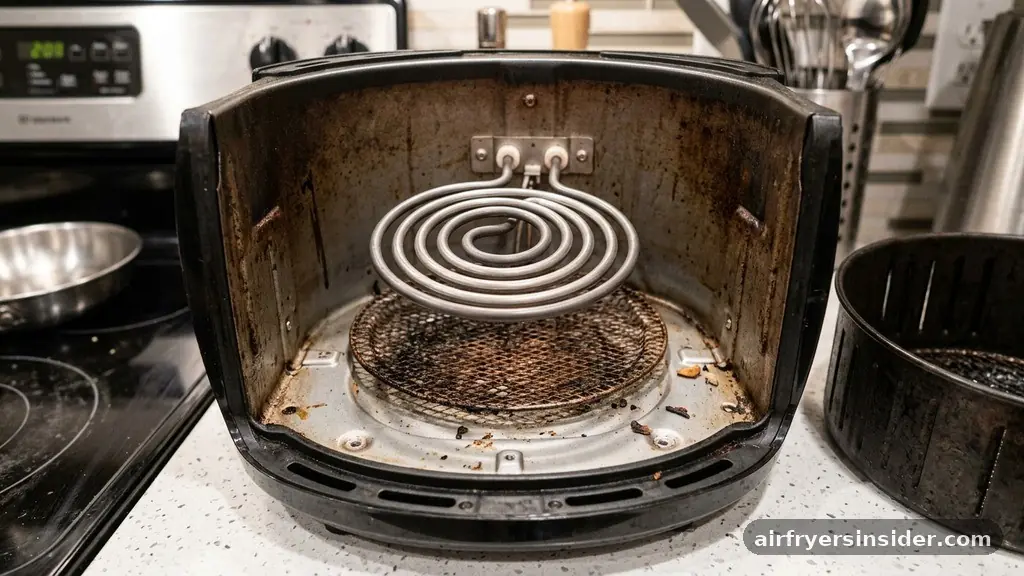
To determine if a glass container is suitable for your appliance, you must first grasp the mechanics of how an air fryer functions. Unlike a conventional oven that relies on radiant heat from heating elements, an air fryer uses a powerful fan to circulate hot air at high speeds.
This process, known as convection cooking, ensures that heat is distributed evenly and rapidly around the food. Because the heating element is situated very close to the air fryer basket, the intensity of the heat is much more concentrated than in a full-sized oven.
This rapid heat transfer is beneficial for crisping food, but it poses a challenge for materials like glass. When you place a cooking vessel inside, the air fryer forces hot air to wrap around the container almost instantly. If the glass is not designed to handle these rapid temperature changes, it can undergo significant stress.
This is why standard glassware, which might be perfectly fine in a microwave or a slow-moving oven, can become a hazard in an air fryer. The goal is to ensure the material can withstand the intense, forced-air environment without succumbing to structural failure.
The Critical Role of Borosilicate Glass and Thermal Shock
The most important factor when choosing glassware for your appliance is the chemical composition of the material. Not all glass is created equal. Borosilicate glass is widely considered the gold standard for high-heat applications because of its low coefficient of thermal expansion.
This means that when the glass is exposed to heat, it expands very little compared to other types, making it highly resistant to thermal shock. Thermal shock occurs when a material experiences a sudden temperature shift—such as moving a cold dish into a hot air fryer or pulling a hot dish out into a cool kitchen—causing the material to crack or shatter.
Many older or cheaper glass containers are made of tempered glass or soda-lime glass. While tempered glass is stronger than standard glass, it is still susceptible to breaking if the temperature gradient is too steep. If you are determined to use glass, you must verify that the item is labeled as oven-safe.
Even then, you should exercise extreme caution. A piece of glassware that is designated as microwave-safe is almost never suitable for an air fryer, as microwave-safe glass is designed to handle the agitation of water molecules, not the high-intensity dry heat of a convection fan.
Evaluating Manufacturer Guidelines and Safety Ratings
Before you place any dish into your machine, you must consult the manufacturer guidelines provided for both the air fryer and the glass container. Most air fryer manufacturers provide specific instructions regarding the use of accessories.
If the manual explicitly states that you should only use metal or silicone accessories, you should strictly follow that advice. Ignoring these recommendations is a primary cause of kitchen accidents, as the appliance is calibrated to work with specific materials that reflect or absorb heat in a predictable manner.
When checking the glass container, look for the “oven-safe” stamp on the bottom. However, keep in mind that “oven-safe” is a broad term. Most manufacturers certify glass for use in ovens up to a certain temperature, often 400°F or 450°F.
Because air fryers can reach these temperatures very quickly, the glass might technically be “safe,” but the rapid temperature changes inherent in the air frying process could still push the material to its breaking point. Always lean toward caution; if you have even a slight doubt about the quality or rating of your bakeware, it is safer to use a dedicated air fryer accessory instead.
The Danger of Rapid Temperature Changes
One of the most dangerous scenarios occurs when a cook takes a cold glass dish directly from the refrigerator and places it into a preheated air fryer. This creates a massive, instantaneous temperature differential. Even high-quality heat-resistant glass has limits.
When the outer surface of the glass heats up rapidly while the inner core remains cool, the material experiences internal tension. This is the definition of thermal shock. The resulting pressure can cause the glass to explode or shatter into dangerous shards inside the cooking chamber.
To mitigate this risk, you should always allow your glass dishes to reach room temperature before placing them in the air fryer. Furthermore, avoid placing a hot glass dish onto a cold surface, such as a granite countertop or a wet trivet, immediately after removing it from the appliance.
This sudden cooling effect is just as likely to cause the glass to shatter as the initial heating process. Using a silicone trivet or a wooden cutting board to hold your hot glass dishes is a smart safety measure that helps dissipate heat more gradually, protecting both your countertop and the structural integrity of your glassware.
Air Circulation and Rack Height Considerations
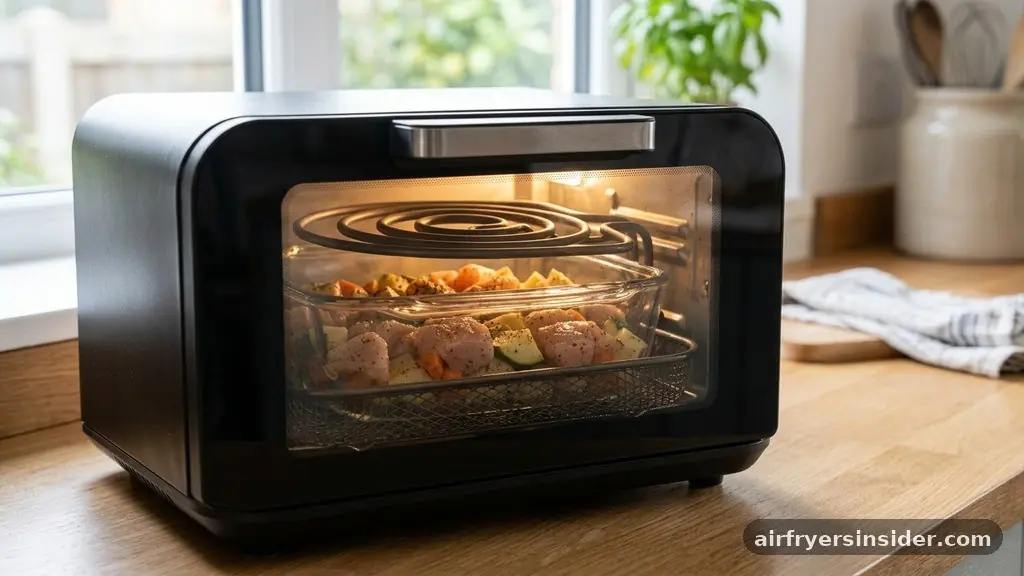
A common mistake when using glass in an air fryer is failing to account for the impact on air circulation. Air fryers rely on the free movement of air around the food to cook it evenly. When you place a large glass bowl or dish inside the basket, you are essentially creating a barrier that disrupts this flow.
If the bowl is too large, it may block the air from reaching the bottom of the food, leading to uneven cooking or raw spots. Additionally, if the glass container is too tall, it might be positioned too close to the heating element at the top of the unit.
The rack height is another crucial variable. If your air fryer comes with a rack, using it to elevate your glass dish can improve airflow, but you must ensure that there is enough clearance between the top of the dish and the heating element.
If the glass is too close to the source of the heat, it can suffer from concentrated thermal radiation, which increases the likelihood of cracking. Ideally, you want at least two inches of space around all sides of your container to ensure the convection currents can do their job effectively without causing the glass to overheat.
Comparing Common Cooking Materials for Air Fryers
When deciding what to use, it is helpful to compare the pros and cons of different materials. While many users want to use glass for its visibility and aesthetic appeal, other materials are often better suited for the harsh environment of an air fryer.
| Material | Suitability for Air Fryer | Pros | Cons |
|---|---|---|---|
| Borosilicate Glass | Moderate | Non-porous, easy to clean | Risk of thermal shock |
| Stainless Steel | High | Durable, heat-conductive | Cannot see the food |
| Silicone | High | Flexible, heat-resistant | Can be flimsy when full |
| Aluminum | High | Excellent heat transfer | Can react with acidic food |
As indicated in the table, while high-quality glass is an option, it is not the most “forgiving” material. Stainless steel or aluminum bakeware will heat up faster and more evenly, leading to better results with less risk of breakage. If you choose to use glass, you are prioritizing the ability to monitor the browning of your food over the speed and durability benefits of metal or silicone.
Identifying the Best Practices for Successful Cooking
If you decide to proceed with using glass, there are several best practices to follow to ensure your experience remains safe. First, always select bakeware compatibility as your priority. Only use dishes that are explicitly marked as oven-safe, and preferably those made of borosilicate glass.
Second, avoid overcrowding the basket. If the air cannot move, the food will not cook properly, and the glass will absorb more heat than it would if the air were flowing freely.
Third, treat your glass with extreme care. Any existing nicks, scratches, or microscopic cracks can act as “stress concentrators,” which will eventually lead to the glass shattering under the thermal pressure of the air fryer.
- Ensure the glass is labeled as oven-safe by the manufacturer.
- Allow refrigerated dishes to reach room temperature before cooking.
- Use only tempered or borosilicate glass varieties.
- Maintain at least two inches of clearance around the dish for airflow.
- Avoid placing hot glass on cold or damp surfaces after removal.
- Inspect the glass for any chips or cracks before each use.
Following these steps will significantly reduce the risk of accidents while allowing you to bake items like casseroles or small cakes in your appliance. Remember that the non-porous material of glass is excellent for preventing flavor transfer, but it does not offer the same thermal safety margin as metal.
Addressing Topical Gaps: Common Misconceptions
A frequent gap in knowledge involves the confusion between microwave-safe and oven-safe labels. Many consumers assume that if a glass container can withstand the microwave, it can withstand the air fryer. This is a dangerous misconception.
Microwave-safe glass is designed to survive the internal heating of food, but it is not necessarily rated for the external, high-temperature convection environment of an air fryer. Another common question is whether you can use standard Pyrex in an air fryer. Older Pyrex was made of borosilicate, but much of the modern consumer-grade Pyrex is made of tempered soda-lime glass, which is more prone to shattering under rapid, uneven heat.
If you are unsure about the age or composition of your Pyrex, it is best to avoid using it in the air fryer entirely. Furthermore, many people ask about using glass lids. It is generally recommended to avoid using glass lids in an air fryer.
Lids can become projectiles if the pressure inside the container builds up, or they may shatter due to the uneven heat distribution caused by the convection fan. Always cook in an open container unless you have a specific, manufacturer-approved lid designed for that appliance.
FAQ: Common Questions Regarding Glass in Air Fryers
Can I put a standard Pyrex dish in my air fryer?
It is generally discouraged. While some high-quality glass is oven-safe, the rapid temperature fluctuations in an air fryer can cause standard tempered glass to shatter. If you must use glass, ensure it is specifically rated for high-heat convection and check for any existing chips or cracks first.
Is there a way to tell if my glass is safe for the air fryer?
Look for the “oven-safe” symbol or stamp on the bottom of the dish. If it only says “microwave-safe,” do not use it in an air fryer. Furthermore, ensure the glass is made of borosilicate material, which is significantly more resistant to thermal shock than standard tempered glassware.
Does using a glass bowl affect how my food cooks in the air fryer?
Yes, glass is a less efficient conductor of heat than metal. Your food may take longer to cook, and the edges might not crisp as effectively as they would in a metal basket. Always monitor your food closely, as the glass will retain heat longer than metal after removal.
What happens if the glass breaks inside the air fryer?
If glass breaks, immediately turn off the unit and unplug it. Do not attempt to touch the glass until it has cooled completely. You must remove every single shard from the heating element, fan, and basket assembly. If any glass remains, it could become a fire hazard or contaminate future meals.
Conclusion: Balancing Convenience and Safety
Deciding whether you can put glass in an air fryer requires a careful balance between the desire for convenience and the necessity of kitchen safety. While it is technically possible to use high-quality, oven-safe glassware, it is not the most recommended method for most air frying tasks. The intensity of the convection heat and the risk of thermal shock make metal or silicone alternatives superior choices for most home cooks.
By understanding the properties of materials like borosilicate glass and respecting the limitations of your appliance, you can enjoy the versatility of your air fryer without risking your equipment or your safety. Always prioritize the manufacturer’s guidance and err on the side of caution when in doubt. If you choose to use glass, ensure it is in perfect condition, preheated properly, and kept away from the heating elements to ensure a successful and safe cooking experience.


