

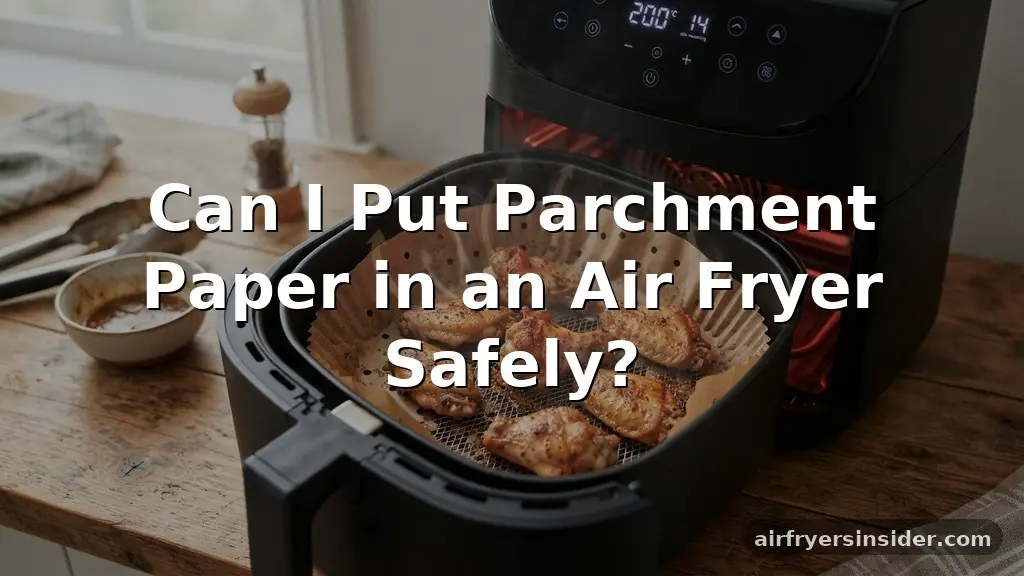
Many home cooks wonder if they can put parchment paper in an air fryer to simplify cleanup and prevent food from sticking. While it is a common shortcut, using the wrong materials in such a high-powered appliance can lead to serious kitchen mishaps. Understanding the mechanics of how air fryers work, particularly the intense movement of hot air, is essential before you place any paper inside the basket.
By learning how to use these liners correctly, you can keep your appliance clean while maintaining the crispy texture you love. This article breaks down the safety protocols and best practices for using parchment in your kitchen.
Understanding Air Fryer Mechanics and Heat Circulation
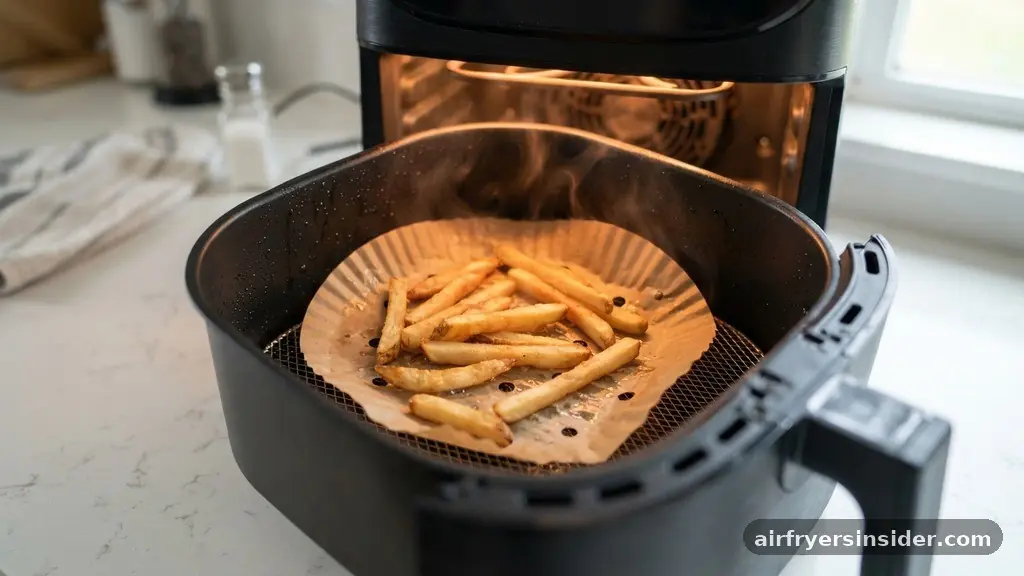
An air fryer functions essentially as a powerful countertop convection oven. It uses a high-speed convection fan to circulate superheated air around the food, which sits in a perforated basket.
This rapid movement of air is what creates the Maillard reaction—that crispy, golden-brown exterior on fries, wings, and vegetables. When you place a barrier, such as a sheet of parchment paper, at the bottom of that basket, you are physically altering the intended airflow pattern.
The heating element sits directly above the food in most basket-style air fryers. If the parchment paper is not weighed down by food, the suction created by the fan can lift the paper toward the heating element. This is the primary reason why people experience issues.
If the paper touches the hot element, it can ignite, creating a significant fire hazard. You must ensure that the weight of the food is sufficient to hold the paper in place at all times during the cooking cycle.
Furthermore, the design of the appliance relies on air passing through the holes in the basket to reach the underside of your food. If you cover the entire base of the basket with a solid sheet of paper, you effectively block the vents. This results in uneven cooking.
Your food might be crispy on top but remain soggy or undercooked on the bottom. To maintain consistent results, you need to balance the convenience of a liner with the functional requirement for proper air circulation.
The Risks Associated with Combustible Materials
Parchment paper is generally oven-safe, typically rated for temperatures up to 425°F or 450°F. However, the environment inside an air fryer is more volatile than a standard oven.
Because the heating element is located much closer to the food, the risk of scorching or ignition is higher. If the paper overlaps the edges of your food or is left in the basket during the preheating phase, it can easily curl up and make contact with the heating coils.
A kitchen fire is the most severe consequence of improper paper usage. If the paper catches fire, the fan will immediately blow embers throughout the chamber and potentially out of the ventilation ports.
This is a terrifying scenario that can lead to significant property damage. Never assume that because a product is labeled “oven-safe” it is automatically safe for every type of convection appliance.
Always check the smoke point of the paper you are using. While most baking papers are treated to withstand heat, they are still essentially wood pulp products. If you are cooking fatty foods like bacon or sausages, the grease can pool on the paper.
If that grease reaches its own smoke point, or if the paper begins to char, you create a dangerous situation. Always prioritize safety by using pre-cut, perforated liners that are specifically designed for these appliances, rather than cutting your own sheets which might create loose, dangerous edges.
Why Perforated Parchment Paper is the Better Choice
If you are determined to use liners, choosing perforated parchment paper is the most responsible decision you can make. These specialized sheets come with tiny, strategic ventilation holes pre-punched into the surface. These holes allow the hot air to pass through the liner and circulate under your food, which is critical for achieving that signature air-fried texture.
When you use solid, un-perforated sheets, you are essentially turning your air fryer into a steamer or a pan-fryer rather than an air fryer. The moisture released from the food gets trapped between the paper and the bottom of the basket, leading to steamed, soft textures instead of crispy ones. Perforations solve this by allowing moisture to escape, ensuring that the convection fan can do its job effectively.
Additionally, perforated sheets are usually sized to fit standard basket dimensions. This prevents the paper from curling up the sides of the basket, which is a major contributor to accidental contact with the heating element.
By keeping the paper flat and strictly at the bottom, you minimize the risk of fire while still protecting the non-stick coating of your basket. It is a small investment that pays off in both food quality and appliance longevity.
Comparing Common Air Fryer Liners
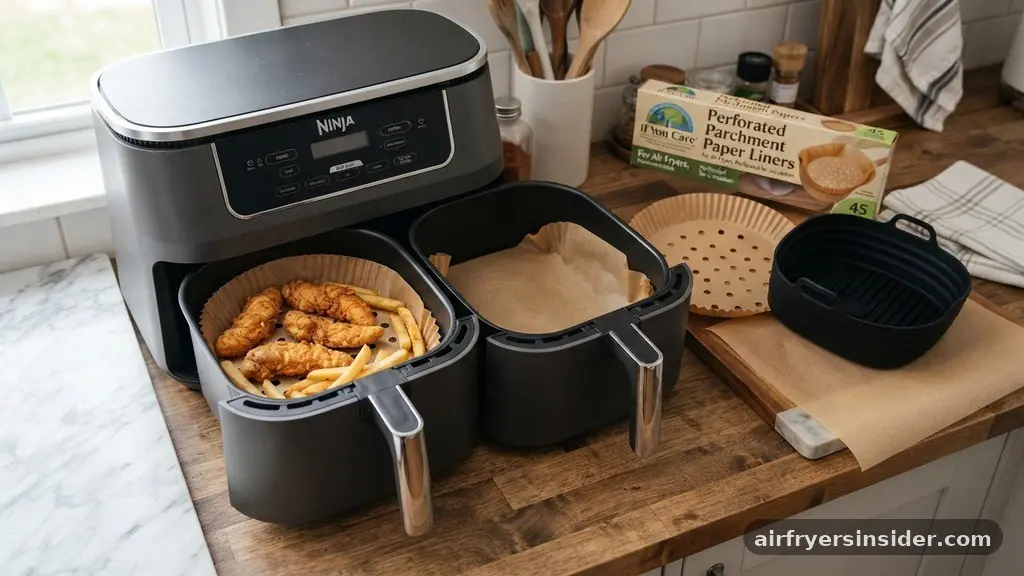
When deciding how to protect your air fryer, you have several options beyond standard parchment. Each material behaves differently under the intense heat and airflow of an air fryer.
| Material Type | Pros | Cons |
|---|---|---|
| Perforated Parchment | Easy cleanup, maintains airflow, disposable. | Must be weighed down, adds to waste. |
| Silicone Liners | Reusable, eco-friendly, heat resistant. | Can trap grease, harder to clean thoroughly. |
| Aluminum Foil | Versatile, heat-conductive, disposable. | Can react with acidic foods, blocks airflow. |
Each of these alternatives has a specific use case. Silicone liners are excellent for frequent users who want to reduce waste, but they require careful washing to ensure the grease traps are fully cleared.
Aluminum foil is often avoided in air fryers because it can be blown around easily and may cause sparks if it touches the heating element, though some cooks use it for specific recipes like baked potatoes or foil packets. Ultimately, parchment remains the most popular choice for its balance of cost, ease of use, and disposability.
Addressing Topical Gaps: Common Misconceptions
Many users ask if they can simply use regular baking parchment paper from the grocery store. While you technically can, it is often a poor fit. Standard rolls are designed for square or rectangular baking pans.
When you cut this paper, you often leave jagged edges or oversized pieces that are prone to flapping around in the wind caused by the fan. This is where the risk of a fire hazard becomes very real.
Another gap in common knowledge is the issue of preheating. Many recipes call for preheating the air fryer, but you should never place an empty piece of parchment paper inside during this phase.
Without the weight of food, the fan will almost certainly lift the paper into the heating element. Always wait until you have your food ready to go before inserting the liner.
Finally, there is the question of the non-stick coating on your basket. People often use liners to prevent scratching, which is a valid concern. However, if you are using metal utensils, you are damaging the basket regardless of whether you use a liner.
A liner does not replace the need for silicone or wooden tongs. Use the liner to manage grease and cleanup, but don’t rely on it to compensate for poor maintenance habits or improper tool usage.
Best Practices for Safe Operation
To ensure you are using parchment paper safely, follow these fundamental rules. First, always ensure the paper is completely covered by your food.
If you are cooking only a few small items, a large sheet of paper will likely blow around. In those instances, it is better to skip the liner entirely or use a smaller, specifically sized insert.
Second, avoid using parchment paper when cooking foods that are extremely lightweight, such as loose herbs, spinach, or thin slices of vegetables that might fly around. These foods lack the mass to hold the paper down. If the paper begins to flutter, it is a sign that the airflow is too strong for the current setup, and you should stop the cycle immediately to remove the liner.
Third, keep an eye on your cooking spray usage. While a little oil is fine, excessive cooking spray can cause the paper to become saturated with oil.
This makes the paper more flammable and can lead to increased smoke production. Use oil sparingly, and if you notice the paper turning dark brown or black, you are likely cooking at too high a temperature for the paper to handle.
The Role of the Grease Trap
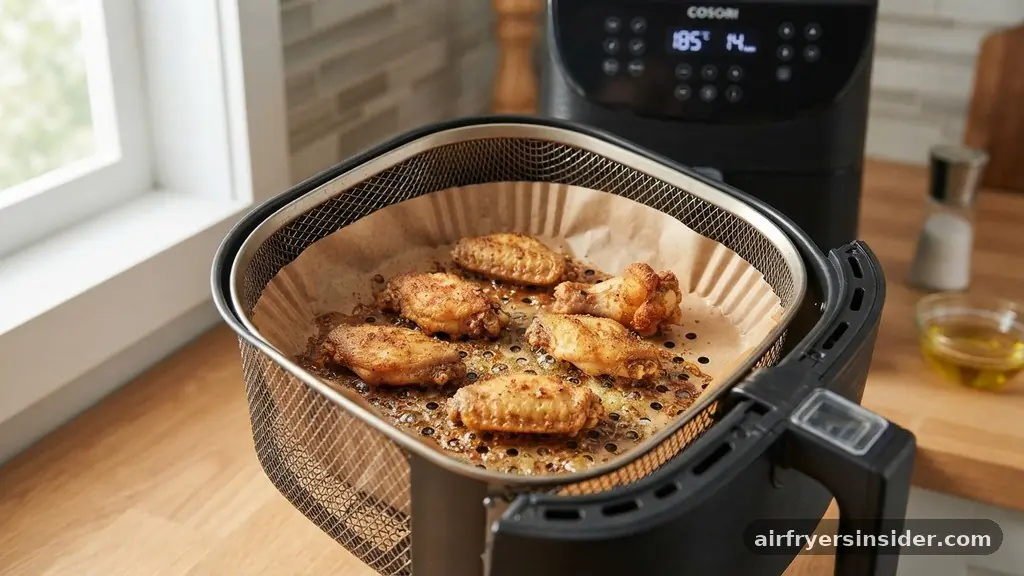
A significant benefit of using parchment paper is that it acts as a secondary grease trap. In many air fryers, the bottom of the basket can become a nightmare to clean, especially if grease has baked on at high temperatures. Paper liners capture the rendered fat from proteins like chicken wings, bacon, or sausages, making the cleanup process as simple as lifting the paper and discarding it.
However, you must be careful not to let the grease pool too deeply. If you are cooking a large batch of fatty food, the paper might reach its absorption limit. If the grease starts to leak over the sides of the paper, it will end up on the basket anyway, defeating the purpose of the liner.
Always select a liner that fits your specific basket style. If you have a square basket, use square liners. If you have a round one, use round liners.
Leaving large gaps where grease can leak through to the bottom of the basket is a common mistake that necessitates a deep clean anyway. By matching the liner to the geometry of your air fryer, you maximize the effectiveness of the grease capture.
When to Avoid Using Parchment Paper
There are specific scenarios where you should strictly avoid using paper liners. If you are cooking at very high temperatures, such as 400°F or above for an extended period, the paper is much more likely to char or ignite. Recipes that require long, slow cooking times are also risky because the paper remains exposed to heat for too long, potentially becoming brittle and fragile.
Additionally, if your air fryer has a unique design where the heating element is exceptionally close to the basket, skip the paper. Some compact, high-performance models are designed with very little clearance. In these machines, any obstruction at the bottom of the basket can disrupt the airflow so significantly that the internal temperature spikes, leading to burnt food and potential damage to the appliance’s safety sensors.
Always consult your manufacturer’s manual. Some brands explicitly state that you should not use parchment paper or aluminum foil. If your specific model warns against it, follow that advice.
The engineers who designed the unit know the placement of the heating elements and the airflow dynamics better than anyone else. Ignoring these warnings can void your warranty and jeopardize your safety.
Maintenance and Cleaning Beyond Liners
While liners make life easier, they do not replace the need for regular maintenance. Even with a liner, small particles of food and oil vapor will inevitably reach the heating element and the fan assembly. Over time, this buildup can cause smoke during operation, even if you are using a liner.
Make sure to wipe down the interior of your air fryer regularly. Use a damp cloth to clean the walls and the area around the heating element once it has completely cooled down.
Keeping the ventilation holes clear is just as important as keeping the basket clean. If the airflow is restricted by gunk, the machine has to work much harder, which shortens its lifespan.
Remember that liners are a convenience, not a necessity. If you find that using them makes you nervous or results in unevenly cooked food, it is perfectly acceptable to cook directly on the basket.
A good quality brush and some warm, soapy water are usually all you need to keep your air fryer in top condition. Don’t let the quest for an easy cleanup override the safety and performance of your appliance.
Frequently Asked Questions
Is it better to use parchment paper or aluminum foil in an air fryer?
Parchment paper is generally preferred because it is less likely to cause sparks and is specifically designed for high-heat baking. Aluminum foil can be dangerous if it makes contact with the heating element and often disrupts airflow more severely than perforated parchment paper.
What can I use if I don’t have air fryer liners?
You do not need a liner to cook effectively. Many users prefer cooking directly on the basket’s surface. If you want to prevent sticking, simply brush the basket with a small amount of high-smoke-point oil or use a light coating of cooking spray before adding your food.
Which paper is best for an air fryer?
The best choice is pre-cut, perforated parchment paper that matches the shape of your specific air fryer basket. The perforations are essential for maintaining proper airflow, which ensures your food cooks evenly and remains crispy, while the pre-cut shape prevents dangerous curling.
Are there any foods I should never cook with a liner?
Avoid using liners when cooking very lightweight foods like spinach, kale, or thin herb sprigs, as these can easily blow into the heating element. Also, refrain from using liners if you are cooking at extremely high temperatures that exceed the paper’s rated heat resistance.
Conclusion
Using parchment paper in your air fryer can be a convenient way to keep your appliance clean, provided you follow essential safety guidelines. The most important takeaway is to always use perforated liners that are properly weighed down by your food to prevent them from flying into the heating element. By respecting the airflow dynamics of your machine and avoiding the temptation to use oversized or non-perforated sheets, you can enjoy the benefits of easier cleanup without compromising the quality of your meals.
Always prioritize the manufacturer’s instructions for your specific model, and remember that when in doubt, it is safer to skip the liner and rely on proper cleaning of the basket itself. If you found these tips helpful for your cooking routine, share them with a friend who is also trying to master their air fryer.


