Many home cooks wonder if they can roast garlic in an air fryer to achieve that deep, mellow sweetness without turning on a large oven. The short answer is yes, and it is often much faster than traditional methods.
By utilizing the intense convection heat of your appliance, you can transform a raw, sharp whole garlic bulb into a creamy, spreadable delicacy in a fraction of the time. This simple kitchen hack is perfect for those looking to enhance their favorite recipes without heating up the entire house, providing a rich, savory spread that fits perfectly into a healthy Mediterranean diet.
Why Use an Air Fryer for Roasting Garlic
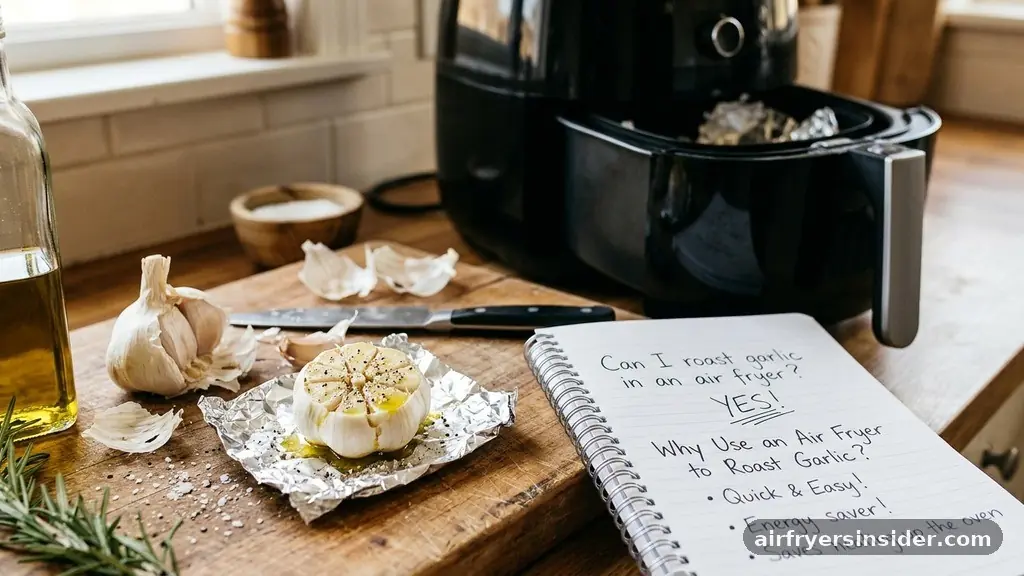
Roasting garlic in an air fryer is a game-changer for anyone who values efficiency and flavor. Traditional oven roasting often takes forty-five minutes to an hour, whereas an air fryer significantly cuts down that cook time.
Because the air fryer basket is smaller and uses a powerful fan, it circulates heat much more effectively around the bulb. This rapid movement of hot air accelerates the Maillard reaction, which is the chemical process responsible for the browning and development of complex, nutty flavors.
Beyond speed, you gain better control over the texture of the finished product. You can easily check on your garlic without worrying about heat loss from opening a large oven door. The result is consistently soft cloves that have reached the perfect stage of caramelization.
Whether you are preparing a small batch for a quick dinner or roasting several bulbs for meal prep, the air fryer offers a level of precision that is hard to replicate elsewhere. It is an ideal tool for those who want to incorporate more roasted garlic into their daily cooking routine with minimal fuss.
Selecting and Preparing Your Garlic
To get the best results, start with high-quality, firm bulbs. Avoid any bulbs that feel soft, show signs of sprouting, or have papery skins that are falling off.
The fresher the garlic, the more moisture it contains, which helps ensure the cloves become buttery and sweet rather than dry and woody. When selecting your produce, look for heavy bulbs with tight, dry skins.
Preparation is straightforward but critical for success. You will need to slice off the very top of the whole garlic bulb to expose the individual cloves inside. This step is essential because it allows the heat to penetrate the center of the cloves and allows you to squeeze the soft, roasted garlic out easily once it is finished.
Peel away the outermost layers of papery skin, but try to keep the bulb intact so the cloves do not fall apart during the cooking process. A little bit of mess is normal, but keeping the structure together makes the final product easier to handle.
The Role of Fats and Aromatics
While garlic is delicious on its own, adding a small amount of fat is necessary to facilitate the roasting process. Extra virgin olive oil is the gold standard here, as it complements the flavor profile of the garlic perfectly.
Drizzling a teaspoon or so of oil over the exposed cloves ensures that they don’t dry out while they soften. The oil also helps conduct heat, ensuring even cooking throughout the bulb.
You can also experiment with additional aromatics if you want to elevate the final flavor. A pinch of sea salt, a sprig of fresh thyme, or a cracked peppercorn can infuse the oil as it drips down into the cloves. Some cooks even place the bulb on a small bed of herbs to scent the garlic while it roasts.
Because the air fryer creates a concentrated environment, these subtle additions have a profound impact on the final taste of your soft cloves. Remember that a little goes a long way, so keep the additions simple to ensure the natural, sweet garlic flavor remains the star.
Managing Temperatures and Cooking Times
Finding the right roasting temperature is the key to avoiding burnt, bitter garlic. Most air fryers run quite hot, so it is best to err on the side of caution. A temperature between 350°F and 375°F is usually the sweet spot.
If the heat is too high, the outside of the bulb will burn before the interior has a chance to soften into a spreadable paste. If the heat is too low, the garlic may simply dry out and become tough.
Recommended Air Fryer Settings
| Setting | Temperature | Time |
|---|---|---|
| Low and Slow | 350°F | 25-30 minutes |
| Quick Roast | 375°F | 18-22 minutes |
The exact cook time will vary based on the size of your garlic bulb and the specific model of your air fryer. Always start checking the progress around the 15-minute mark.
You are looking for the skin to turn a light golden brown and for the cloves to feel soft when pressed gently with a pair of tongs. If you find the top is browning too quickly, you can cover it loosely with a small piece of aluminum foil to protect it while the rest of the bulb continues to cook.
Wrapping Options: Foil vs. Parchment Paper
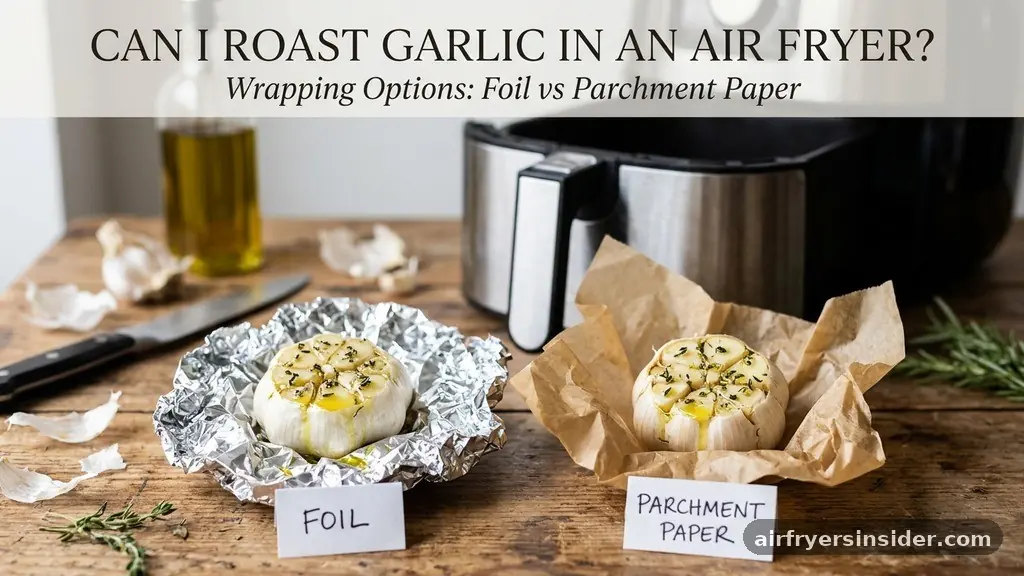
Many people ask whether they should use aluminum foil or parchment paper when roasting garlic in an air fryer. Foil is the traditional choice because it creates a tight, heat-conductive packet that steams the garlic in its own juices.
This results in an incredibly soft, almost butter-like texture that is perfect for spreading. However, some prefer to avoid direct contact with aluminum.
Parchment paper is a viable alternative if you are concerned about foil, though it does not seal as tightly. If you use parchment, you may need to fold it carefully around the bulb to create a pouch that traps the moisture. Regardless of which material you choose, the goal is to create an environment where the garlic can roast in its own steam.
Without some form of covering, the intense fan of the air fryer might dry out the exposed tops of the cloves before the base is fully cooked. Experiment with both to see which texture you prefer for your specific culinary needs.
Troubleshooting Common Issues
Even with a simple process, a few things can occasionally go wrong. One common issue is the garlic drying out.
This usually happens if the bulb was not wrapped securely or if the temperature was set too high. If your garlic comes out dry, try adding a bit more olive oil before roasting or lowering the heat by 25 degrees next time.
Another issue is the garlic having a sharp, raw taste despite being cooked. This typically means the cloves didn’t reach the internal temperature required to break down the pungent sulfur compounds. If you find your garlic is still a bit firm, simply pop it back into the air fryer for another five minutes.
Conversely, if your garlic tastes bitter, it may have scorched. Ensure the tops are not touching the heating element directly and consider wrapping the bulb more securely to prevent the exposed edges from turning black. Consistency in your preparation will eventually lead to perfect results every time.
Utilizing Roasted Garlic in Your Diet
Once you have mastered the art of roasting, you will find endless ways to use these soft cloves. The most popular method is to mash them into a savory spread for crusty bread or crackers. You can also incorporate them into mashed potatoes, stir them into pasta sauces, or blend them into dressings for a rich, deep flavor that raw garlic simply cannot provide.
Because roasting mellows the sharp, pungent aroma, you can use much larger quantities than you would with raw cloves. It is a fantastic way to add depth to soups and stews without overwhelming the other ingredients. Many people who follow a Mediterranean diet rely on roasted garlic as a flavor base for vegetables, lentils, and lean proteins.
It is also a heart-healthy choice, as it encourages the use of herbs and olive oil instead of heavy creams or excessive salt. Keeping a stash of roasted garlic in your refrigerator—stored in a small jar covered in olive oil—means you are always seconds away from adding a gourmet touch to your meals.
Addressing Frequently Asked Questions
Is it better to roast garlic in the oven or an air fryer?
The air fryer is generally better for small batches because it is faster and more energy-efficient. However, if you are roasting a large quantity of bulbs at once, a traditional oven is more practical as it offers more space and consistent heat for multiple items.
What do doctors say about air fryers?
Air fryers are considered a healthy cooking tool because they allow for browning and crisping with significantly less oil than deep frying. By reducing oil intake, they can help lower overall calorie and fat consumption, which is beneficial for heart health and weight management.
What meat shouldn’t be cooked in an air fryer?
Avoid cooking meats that are extremely fatty, such as thick-cut bacon, which can cause smoke and grease splatters. Also, avoid large, bone-in roasts that might burn on the outside while remaining undercooked in the center due to the intense, localized heat of the air fryer.
How long does garlic take in the air fryer?
On average, a whole bulb of garlic takes between 18 and 30 minutes in an air fryer at 350°F to 375°F. The exact time depends on the size of the bulb and the specific wattage of your appliance. Always check for soft, golden cloves.
Maximizing Your Kitchen Efficiency
Mastering the air fryer for simple tasks like roasting garlic is part of a larger strategy for efficient, healthy cooking. By understanding how your equipment works, you can save time without sacrificing the quality of your meals. Here are a few quick tips to keep in mind:
- Always preheat your air fryer for a few minutes to ensure even cooking from the very first second.
- Don’t overcrowd the basket; if you are roasting multiple bulbs, give them space for air to circulate.
- Use high-quality olive oil to enhance the flavor and promote better browning.
- Store your roasted garlic in an airtight container in the fridge for up to one week.
- Use a fork to easily press the cloves out of the skin once they have cooled slightly.
Integrating these habits into your routine makes healthy cooking feel less like a chore and more like a creative outlet. Experimenting with different roasting times and temperatures will help you find the specific method that works best for your personal taste preferences. Whether you are a seasoned chef or a home cook just starting out, learning to use your air fryer to its full potential is a valuable skill that pays off in every meal you prepare.
Refining Your Roasting Technique
The beauty of cooking is that it is a continuous learning process. As you get more comfortable with the air fryer, you will naturally begin to adapt your techniques to suit your lifestyle.
You might find that you prefer a slightly charred exterior for a more intense smokiness, or perhaps you favor a very gentle, slow roast that results in an almost jam-like consistency. These variations are the hallmark of a cook who understands their ingredients and their tools.
When you roast garlic in an air fryer, you are engaging in a culinary technique that honors the ingredient while embracing modern convenience. You are taking a basic, pungent bulb and turning it into a versatile, sweet, and complex component that can anchor a wide array of dishes. Take the time to observe how the skin changes, how the aroma fills your kitchen, and how the texture transforms.
These sensory cues are far more reliable than any timer. By paying attention to these details, you will find that you can consistently produce restaurant-quality results in your own home. Enjoy the process of creating something delicious and share the results with those you love.
Meta Description: Learn if you can roast garlic in an air fryer for a quick, healthy, and delicious result. Discover tips for perfect caramelization and savory flavor.