

Deciding whether you can cook a pot pie in an air fryer is a common dilemma for anyone looking to save time without sacrificing the quality of their meal. The good news is that these powerful countertop appliances are excellent at turning a frozen convenience item into a restaurant-quality dish. By leveraging intense heat and rapid air movement, you can achieve a result that often surpasses traditional oven methods.
Understanding the nuances of how to safely and effectively heat these savory pastries will ensure your crust stays flaky while the filling remains perfectly hot. Here is how you can master the process for the best possible results.
The Mechanics of Air Fryer Pot Pie Success
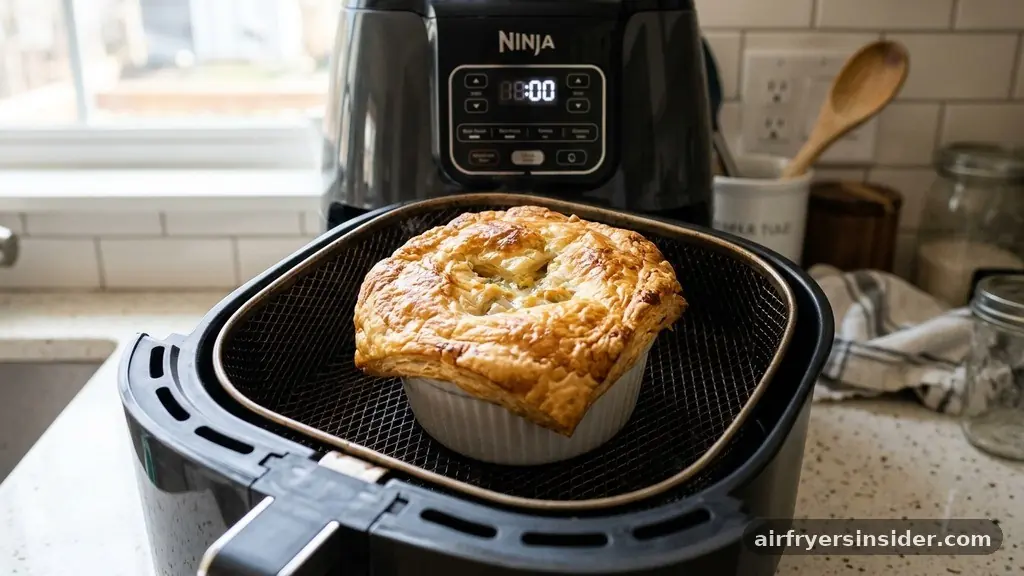
When you consider the question of whether you can cook a pot pie in an air fryer, it is helpful to understand the underlying technology. An air fryer is essentially a high-powered convection oven. It uses a heating element combined with a powerful convection fan to circulate hot air at high speeds around the food.
This environment is ideal for pastry, as it mimics the effect of a professional bakery oven. Unlike a standard oven, which may have cold spots or require a longer preheat time, the air fryer focuses heat directly on the surface of the food.
This concentrated convection heat is exactly what you need to achieve a golden brown crust. Because air fryers are compact, they reach the target temperature much faster than a full-sized wall oven.
This efficiency means that the moisture within the pastry crust is quickly sealed in, preventing the soggy bottom that sometimes occurs when cooking frozen meals in a microwave. The result is a crisp, flaky texture that contrasts beautifully with the creamy, savory interior of the pie.
Preparation and Essential Safety Protocols
Before you begin, you must address the issue of food safety. Using an air fryer for a pot pie requires careful attention to the internal temperature to ensure any meat or gravy-based fillings are heated through completely.
You should always use a meat thermometer to verify that the center of the pie has reached a safe temperature, typically 165 degrees Fahrenheit. This is especially important when dealing with dense fillings that can remain cold in the middle while the exterior browns too quickly.
Regarding the container, many frozen pot pies come in their own foil tray. While some modern air fryers can handle aluminum foil, you must check your manufacturer’s guidelines first.
If your specific model warns against foil, remove the pie from the tray and transfer it to a parchment-lined basket or a small, heat-safe ceramic dish. Never place loose aluminum foil in the basket if it can be caught by the fan, as this poses a fire hazard and can damage the heating element.
Choosing the Right Air Fryer Settings
Achieving the perfect balance of a cooked center and a crispy exterior relies heavily on your choice of air fryer temperatures. For most standard-sized pot pies, a temperature between 320 and 350 degrees Fahrenheit is ideal.
If you set the heat too high, the pastry crust will burn before the filling is hot. If you set it too low, the crust may become tough or dry before the middle reaches the required temperature.
Preheating your air fryer for three to five minutes before inserting the pie can make a significant difference in the final outcome. Just like a conventional oven, having a stable temperature from the very start ensures consistent browning. If you are cooking a frozen pot pie that is particularly large or deep-dish, you might need to lower the temperature slightly and extend the cooking time to ensure the heat penetrates deep into the center without scorching the top.
Addressing Topical Gaps: Foil Trays and Air Circulation
One of the most common points of confusion is how to handle the foil tray that comes with many commercial pot pies. Many users wonder if the foil blocks the convection heat from reaching the bottom of the pie.
The answer is yes, it does create a barrier. If you want a perfectly crisp bottom crust, it is often better to remove the pie from the foil tray halfway through the cooking process.
Once the edges of the crust have hardened, you can carefully slide the pie out of the tray and place it directly on the basket grate. This allows the hot air to circulate underneath the pastry, resulting in a more uniform texture.
However, be extremely careful when handling the hot pie. If it is too fragile, it is safer to leave it in the tray for the entire duration, even if it means the bottom crust is slightly softer.
Comparing Cooking Methods for Frozen Pies
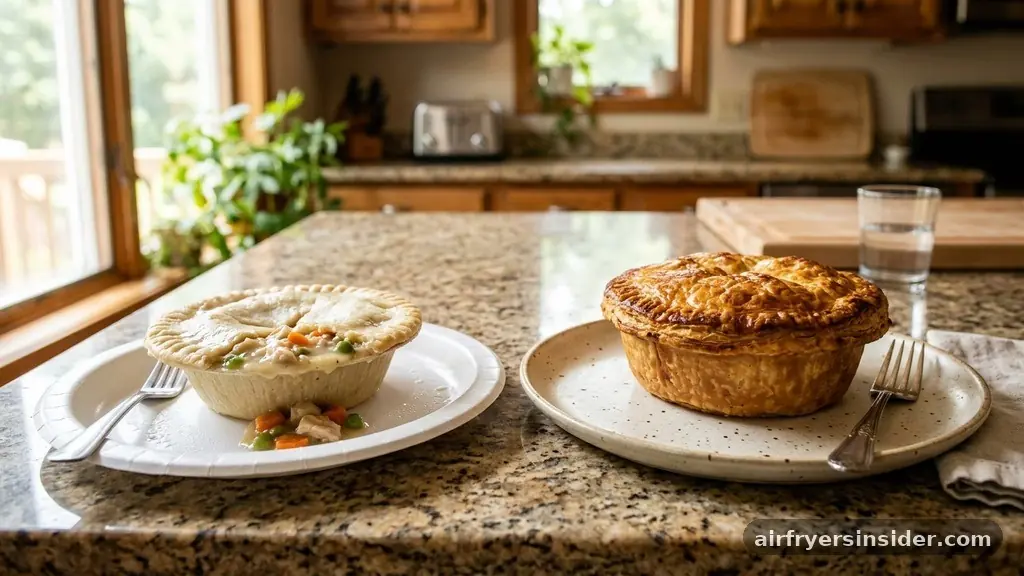
To help you decide the best approach, consider how different cooking methods stack up against each other. The following table illustrates the typical performance metrics for various appliances when heating a standard frozen pot pie.
| Method | Cooking Time | Crust Quality | Consistency |
|---|---|---|---|
| Conventional Oven | 45-60 Minutes | Good | Uniform |
| Microwave | 5-8 Minutes | Soggy | Variable |
| Air Fryer | 20-30 Minutes | Excellent | Crispy |
As shown, the air fryer offers a middle ground that provides the speed of a microwave with the quality of a conventional oven. This makes it an incredibly efficient tool for quick weeknight dinners when you want something satisfying without the long wait time.
Managing Different Air Fryer Models
The specific type of air fryer you own can influence your success. A basket-style air fryer is generally the most common, but it can be restrictive regarding the size of the pie you can fit.
If you are using a basket-style unit, ensure there is at least an inch of space around the sides of the pie to allow for proper air circulation. If the pie is packed too tightly against the walls, the air cannot move efficiently, and you will end up with uneven cooking.
A toaster oven air fryer, on the other hand, provides more horizontal space, which is often better for larger pies or multiple small hand pies. These units usually have a wider rack, which allows for more even heat distribution.
Regardless of the model, the wattage of your machine plays a role. Higher wattage machines cook faster, so if your air fryer is a powerful model, check the progress of your pie a few minutes earlier than the recipe suggests to prevent overcooking.
Common Mistakes to Avoid
Even with the right equipment, there are pitfalls that can ruin a perfectly good meal. One of the most frequent errors is failing to account for the depth of the pie. A deep-dish pie will always require more time than a thin, individual-sized serving.
If you notice the top is browning too quickly, you can create a small tent of aluminum foil to place over the top of the pie for the final few minutes of cooking. This shields the pastry while allowing the convective heat to finish warming the filling.
Another mistake is overloading the air fryer. If you are trying to heat multiple pot pies at once, ensure they are not touching. Airflow is the secret ingredient in air frying.
If the pies are touching, the sides that are blocked will remain doughy and pale. If you cannot fit them comfortably without crowding, it is better to cook them in batches.
Tips for Enhancing the Final Result
To elevate your pot pie experience, consider a few simple modifications. Before placing the pie in the air fryer, you can lightly brush the top crust with a small amount of egg wash or melted butter.
This encourages the Maillard reaction, leading to a deeper, more professional golden brown finish. You can also sprinkle a tiny amount of sea salt or dried herbs like thyme or rosemary on the crust for added flavor.
If you are reheating leftovers, the air fryer is arguably the best tool for the job. To prevent the crust from drying out, you can lightly mist the pie with water or a tiny amount of oil before putting it back into the basket.
This helps rehydrate the pastry and brings it back to its original, freshly baked state. Always remember that reheating times will be significantly shorter than the initial cook time, often taking only about 8 to 12 minutes.
Developing a Consistent Workflow
Establishing a routine will help you get the best results every time you use your air fryer. Start by checking the packaging instructions for the suggested oven temperature.
You can usually use that same temperature for your air fryer, but reduce the total cooking time by about 20 to 30 percent. Begin checking for doneness at the lower end of that reduced time.
Keep a log of how your specific model handles different brands of frozen pot pies. Some crusts are thicker or contain more fat, which changes how they brown.
By keeping track of your timing and temperature settings, you will eventually develop a perfect system for your favorite brands. This consistency is the key to turning a convenience meal into a reliable, high-quality dinner option that you can count on when you are short on time.
Frequently Asked Questions
Is it safe to use a foil tray in an air fryer?
Most manufacturers allow the use of the original foil tray provided with the pot pie, provided it fits securely in the basket. However, always verify your specific air fryer manual. If the tray feels flimsy or could be lifted by the fan, transfer the pie to a safer dish.
How do I know when the pot pie is finished cooking?
Use a meat thermometer inserted into the center of the pie filling. It should read at least 165 degrees Fahrenheit. Additionally, the crust should appear visibly golden brown and flaky, and the filling should be bubbling slightly around the edges of the pastry.
Can I cook a frozen pot pie without thawing it first?
Yes, you can cook a frozen pot pie directly from the freezer in an air fryer. In fact, it is often better to do so, as thawing can sometimes lead to a soggy crust. Simply increase the cooking time slightly to account for the frozen center.
What should I do if the crust is browning too fast?
If the top of your pot pie reaches a deep golden brown color before the center is fully hot, place a small piece of aluminum foil loosely over the top. This acts as a shield, preventing further browning while the convection heat continues to warm the filling.
Final Takeaways
Cooking a pot pie in an air fryer is a highly effective way to achieve a crispy, golden crust and a perfectly heated interior. By focusing on proper preheating, monitoring internal temperatures for safety, and managing air circulation, you can transform a simple frozen meal into a satisfying dinner. Whether you are using a standard basket-style unit or a larger toaster oven model, the secret lies in balancing the intense convection heat with careful temperature management.
With these techniques, you no longer have to settle for the soft, unappealing crusts often produced by microwave heating. Start experimenting with your favorite pot pie varieties today and enjoy the convenience of your air fryer.
Meta Description: Learn how to cook a pot pie in an air fryer for a crispy, golden crust. Get tips on temperatures, safety, and achieving the perfect texture every time.


