

Many home cooks find themselves staring at a bag of icy poultry, wondering if they can cook frozen chicken wings in an air fryer without ruining dinner. The short answer is yes, you absolutely can, and it is often more efficient than traditional oven roasting.
By utilizing the intense heat and rapid air circulation of an air fryer, you can bypass the time-consuming thawing process while still achieving a result that mimics deep-frying. This method is a lifesaver for busy weeknights when you need a high-protein meal quickly but forgot to move the meat to the refrigerator the night before.
Understanding the mechanics of your appliance is the first step toward success. Air fryers work by circulating superheated air around the food, which is essentially a compact form of convection cooking.
When dealing with frozen items, the goal is to safely transition the meat from a solid, frozen state to a fully cooked, safe internal temperature while rendering enough fat to ensure crispy skin. This article explores the precise techniques, safety protocols, and adjustments needed to master this convenient kitchen task.
The Science of Air Frying Frozen Poultry
When you decide to cook frozen chicken wings in an air fryer, you are relying on the physics of rapid heat transfer. Unlike a standard oven that relies on radiant heat from heating elements, an air fryer uses a high-speed fan to blast hot air directly onto the surface of the food.
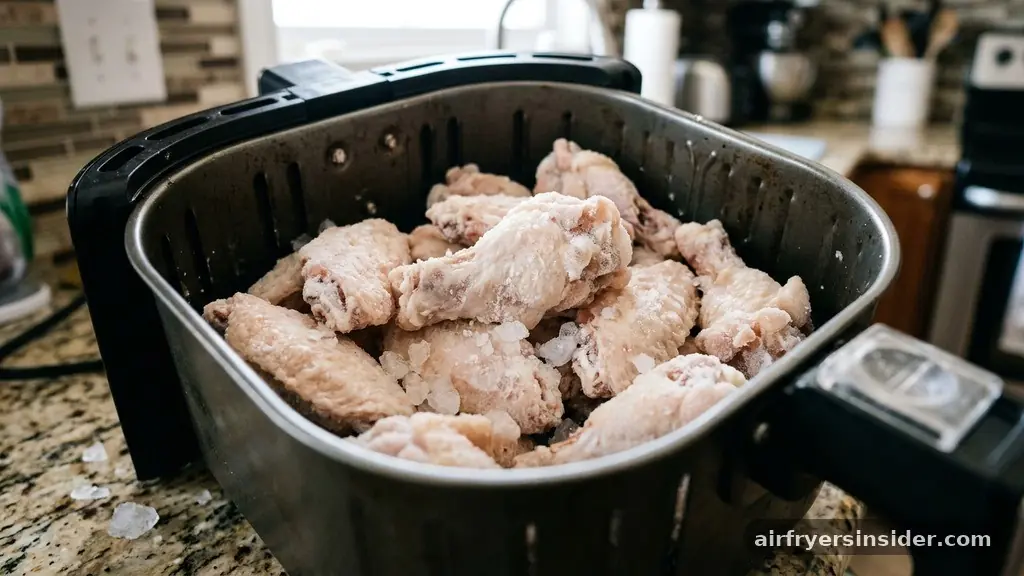
This process is particularly effective for frozen items because the moving air helps to evaporate surface moisture almost immediately, which is crucial for achieving that coveted crunch. If there is too much ice buildup on the wings, the initial stage of cooking will essentially involve steaming rather than frying.
To mitigate excess moisture, it is helpful to understand the role of lipid rendering. As the skin heats up, the fat underneath begins to liquefy. In a conventional oven, this fat might pool at the bottom of a pan, making the wings soggy.
In an air fryer, the basket design and the constant airflow help this fat drip away from the meat, allowing the skin to fry in its own rendered oils. This is why properly spaced wings turn out much better than those piled high in a crowded basket. The efficiency of this process depends on the appliance’s ability to maintain a consistent temperature throughout the cooking cycle.
Ensuring Food Safety and Proper Internal Temperature
Food safety is the most critical aspect of working with raw poultry, whether it is fresh or frozen. According to USDA guidelines, you must ensure that all chicken reaches an internal temperature of 165 degrees Fahrenheit to ensure the destruction of pathogens like salmonella. When cooking from frozen, there is a risk that the exterior will cook and brown before the center is fully thawed and heated, leading to a dangerous situation where the meat is undercooked near the bone.
Using a reliable meat thermometer is non-negotiable for this cooking method. You should insert the probe into the thickest part of the wing, avoiding direct contact with the bone, as the bone often heats faster than the surrounding muscle tissue. Because frozen wings take longer to reach the target temperature than thawed ones, you should always err on the side of caution.
If you are unsure about the doneness, it is better to add an extra five minutes of cooking time than to risk foodborne illness. Always wash your hands and any surfaces that came into contact with the raw poultry to prevent cross-contamination.
Optimizing Basket Capacity and Airflow
One of the most common mistakes when learning how to cook frozen chicken wings in an air fryer is overcrowding the basket. Air circulation is the engine of the entire process; if the air cannot reach every surface of the wing, you will end up with unevenly cooked, rubbery skin. A crowded basket traps moisture, which prevents the wings from browning and results in a texture that is closer to boiled chicken than fried.
If you have a smaller unit, it is significantly better to cook in batches rather than cramming everything in at once. The wings should ideally be arranged in a single layer, or at least in a way that allows enough space for the hot air to whip around them.
If you are cooking a large quantity, consider using a rack insert if your model supports it, which can help increase the surface area. Remember that the sides of the wings, specifically the flats, need as much exposure to the heat as the drumettes to achieve an even, golden-brown finish across the entire batch.
The Importance of Preheating and Initial Cooking Phases
While some air fryer models claim they don’t need to be preheated, doing so is highly beneficial when dealing with frozen ingredients. Preheating ensures that the moment the wings hit the basket, the cooking process begins immediately, which helps to sear the surface and lock in moisture. Without preheating, the wings will sit in the basket as the temperature slowly climbs, which can lead to them releasing too much moisture and becoming tough.
Start your air fryer at a lower temperature—around 350 degrees Fahrenheit—for the first ten to fifteen minutes. This phase is essentially the thawing and initial heating stage. Once the wings have thawed and the skin has begun to warm up, you can increase the heat to 400 degrees Fahrenheit for the final stretch.
This dual-temperature approach mimics a professional frying technique where the food is cooked through at a moderate temperature before being finished at a higher heat to crisp the exterior. This method prevents the seasoning from burning while ensuring the interior reaches a safe temperature.
Managing Seasoning Application on Frozen Meat
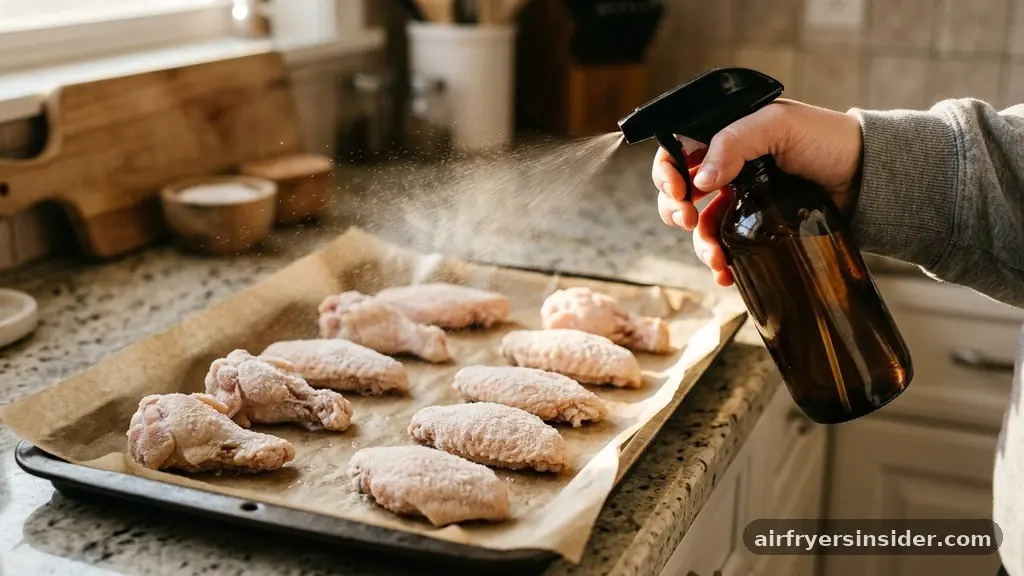
Applying seasoning to frozen wings presents a unique challenge because the surface is often covered in a thin layer of frost or ice. If you apply a dry rub immediately, the spices will simply slide off as the ice melts. To solve this, you have two options: apply the seasoning after the first ten minutes of cooking, or use a light coating of oil spray to help the spices adhere to the surface.
Using an oil spray is generally recommended because it helps facilitate the browning process and ensures the dry rub sticks to the skin. Stick to high-smoke-point oils like avocado or grapeseed oil, as they can withstand the high temperatures required for air frying without smoking or imparting a burnt flavor.
Once the wings have thawed slightly during the initial cooking phase, you can remove the basket, give them a quick spray of oil, and sprinkle your preferred blend of salt, pepper, garlic powder, and paprika. This ensures the seasoning is evenly distributed and has a chance to toast slightly during the final high-heat stage.
The Shake Method for Even Results
The shake method is a fundamental technique for anyone cooking frozen chicken wings in an air fryer. Because the air flows from the top down or from the sides, the bottom parts of the wings often don’t receive as much direct heat as the tops. Shaking the basket every few minutes ensures that every wing is rotated and exposed to the heat from different angles, which is the secret to achieving consistent color and texture.
Step-by-Step Shake Technique
- Set your timer to alert you every 5-7 minutes during the cooking process.
- Remove the basket carefully to avoid losing too much heat.
- Give the basket a firm, vigorous shake to redistribute the wings.
- Use tongs to turn over any wings that remain stuck together or in the same position.
- Return the basket to the unit promptly to maintain the internal temperature.
This simple physical agitation prevents hot spots and ensures that the rendering process is uniform across the entire batch. If you have a very full basket, shaking might not be enough, and you will need to use tongs to manually flip each piece. While this takes a little more effort, the result is a much higher quality of skin that is crispy on all sides rather than just the top.
Addressing Topical Gaps: Common Pitfalls
Many people ask if they can cook frozen chicken wings in an air fryer with sauce already applied. The answer is generally no; you should avoid adding sticky, sugar-based sauces like barbecue or teriyaki until the very end. The high heat of an air fryer will cause the sugars in these sauces to caramelize too quickly and eventually burn, creating a bitter taste and a charred, messy basket that is difficult to clean.
Another common gap in knowledge involves the type of wings being used. Pre-breaded frozen wings often contain their own fats and seasonings, which means they might cook faster or require a lower temperature to avoid burning the breading. Always check the packaging instructions if you are using pre-packaged, pre-seasoned products.
If you are using plain, raw poultry, you have much more control over the final profile. Below is a comparison of cooking variables to help you adjust your approach based on the type of wing you are preparing.
| Wing Type | Recommended Temp | Cooking Time | Seasoning Timing |
|---|---|---|---|
| Plain/Raw | 350°F then 400°F | 25-30 Minutes | Mid-cycle |
| Pre-breaded | 375°F | 18-22 Minutes | N/A (Pre-seasoned) |
| Glazed/Sauced | 400°F | Final 3 Minutes | After cooking |
Carryover Cooking and Resting
Even after the timer dings and the wings look perfect, it is important to factor in carryover cooking. Because the air fryer is a high-heat environment, the exterior of the wings will hold a significant amount of residual heat. If you pull them out exactly at 165 degrees, they might continue to rise in temperature for a few minutes, which is fine, but you should let them rest for at least three to five minutes before serving.
Resting is not just about the temperature; it is also about texture. When you take the wings out, the steam trapped inside needs a moment to stabilize. If you bite into them immediately, the skin might feel slightly soft, but after resting, the moisture redistributes and the skin firms up, becoming even crispier.
This is also the perfect time to toss the wings in your favorite sauce if you haven’t already. The residual heat will help the sauce cling to the wings, creating a perfect, glossy coating that doesn’t slide off.
Essential Tools for the Best Results
To truly master the process of cooking frozen chicken wings in an air fryer, you need more than just the appliance itself. Investing in a few simple tools will significantly improve your results and make the process safer. A digital food-grade thermometer is perhaps the most important tool in your kitchen, as it removes all guesswork regarding whether the meat is safe to eat.
Additionally, a pair of long, silicone-tipped tongs will help you manage the wings without scratching the non-stick coating of your air fryer basket. Parchment paper liners designed for air fryers can also be a helpful addition, especially if you are worried about cleanup, though you must ensure they are weighed down by the food so they don’t fly up into the heating element.
Finally, a high-quality oil mister is essential for achieving that professional, golden-brown finish. By gathering these tools, you transform a potentially frustrating experiment into a reliable, repeatable cooking method that you can turn to whenever a craving for crispy wings strikes.
Frequently Asked Questions
How long does it take to cook frozen wings in an air fryer?
Generally, it takes between 25 and 30 minutes to cook frozen wings in an air fryer. You should start at a lower temperature to thaw the meat and then finish at a higher temperature to crisp the skin, ensuring the internal temperature reaches 165 degrees Fahrenheit.
Do I need to thaw the wings before air frying?
No, you do not need to thaw the wings. One of the main benefits of using an air fryer is its ability to cook food directly from a frozen state. However, you must adjust your cooking time and temperature to account for the initial moisture release.
Can I put sauce on frozen wings before cooking?
It is not recommended to add sauce before cooking. Sauces, especially those containing sugar, will burn long before the chicken is fully cooked. Always cook the wings until they are crispy and fully heated, then toss them in your chosen sauce during the final minutes or after removing them.
How do I know if the wings are fully cooked?
The only reliable way to check for doneness is to use a food-grade thermometer. Insert it into the thickest part of the wing, avoiding the bone. The wings are safe to eat once they reach an internal temperature of 165 degrees Fahrenheit throughout.
Conclusion
Cooking frozen chicken wings in an air fryer is a reliable and efficient way to enjoy a classic comfort food without the hassle of deep-frying or the long wait times of a conventional oven. By prioritizing food safety, managing your basket space to ensure proper airflow, and using a thermometer to verify internal temperatures, you can achieve results that are both safe and delicious. The combination of a lower-temperature thaw and a high-temperature crisping phase is the secret to success, allowing you to bypass the microwave or the refrigerator thawing process entirely.
With the right technique and a little patience, you will find that your air fryer is the perfect tool for perfectly crispy wings, every single time. Next time you find yourself with a frozen bag of poultry, don’t hesitate to put your appliance to work and enjoy a restaurant-quality meal at home.


