

Knowing whether you can cook frozen chicken breast in an air fryer is a common dilemma for busy home cooks who often forget to pull meat from the freezer in time for dinner. The short answer is yes, you absolutely can safely prepare this protein directly from its frozen state.
Because air fryers essentially act as powerful, compact convection ovens, they circulate heat efficiently enough to bring poultry to a safe temperature without requiring a lengthy thaw. By following specific techniques regarding timing and seasoning, you can achieve a juicy, flavorful result that rivals fresh chicken while saving significant time in the kitchen.
Understanding the Safety Mechanics of Air Frying Frozen Poultry
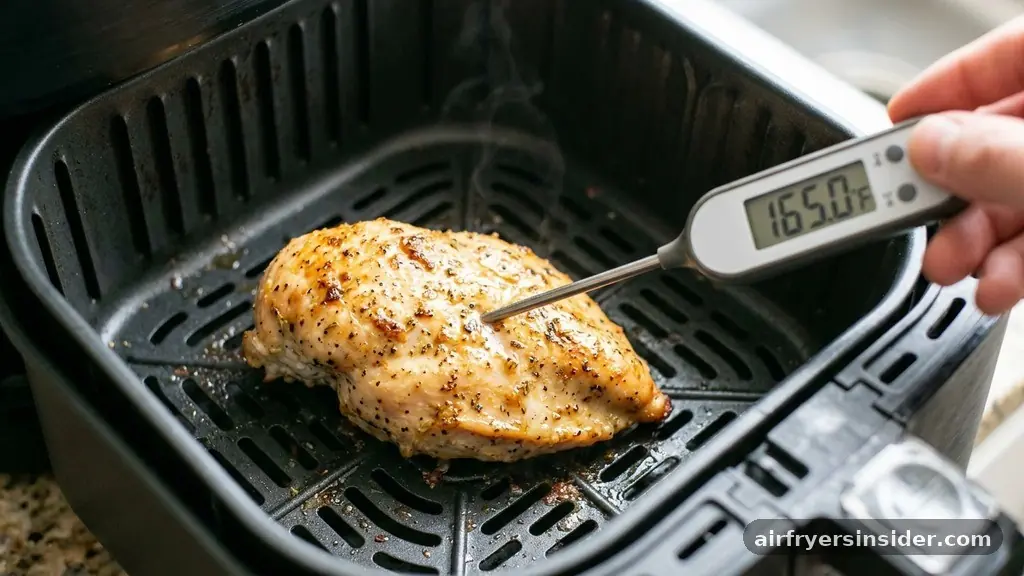
When you decide to cook frozen chicken breast in an air fryer, the primary concern for any home cook should be food safety. The USDA guidelines emphasize that frozen foods must reach an internal temperature of 165 degrees Fahrenheit to ensure that any potential pathogens, such as salmonella, are destroyed.
Unlike a traditional oven that might take an hour to reach this point, an air fryer uses high-speed hot air circulation to blast the exterior of the meat with intense heat. This process creates a thermal gradient that moves from the outside in, eventually reaching the core of the frozen block.
However, the rapid cooking nature of this appliance can sometimes lead to an uneven finish if you aren’t careful. The outside might look perfectly golden brown while the center remains icy, which is why monitoring the internal temperature is non-negotiable. You must use a reliable meat thermometer inserted into the thickest part of the breast to verify that the center has hit the required safety threshold.
If the reading is below 165 degrees, you should continue cooking in short, three-minute intervals until the poultry is fully cooked. Relying solely on visual cues or timer settings is risky when dealing with frozen items, as the starting temperature of the meat can vary based on freezer settings.
The Role of Convection Cooking in Frozen Preparations
The magic behind the air fryer’s ability to handle frozen goods lies in its convection cooking technology. Conventional ovens often struggle with frozen items because the air movement is slower and less concentrated.
In contrast, an air fryer uses a powerful fan to drive superheated air around the chicken breast, which strips away the cold surface layer and promotes faster heat transfer. This convection effect is particularly useful for poultry because it helps render the surface moisture quickly, allowing for a better texture even when starting from a frozen state.
Because the air is constantly moving, the heat penetration is more uniform than you might expect for a solid block of ice-encased meat. When you place frozen chicken in the basket, the circulating air acts like a high-velocity heat exchange system. It is important, however, not to overcrowd the basket.
If the pieces are touching or stacked, the air cannot flow between them, which creates cold spots where bacteria could potentially survive. For the best results, arrange the breasts in a single layer with enough space around each piece to allow the hot air to do its work effectively.
Seasoning Strategies for Frozen Meat
One of the biggest challenges when preparing frozen chicken is getting seasoning to stick. If you apply a dry rub or spices directly to a frozen, icy surface, the moisture will simply cause the spices to slide off as the ice melts. To combat this, you should start the cooking process for a few minutes until the surface begins to thaw slightly.
Once the surface is tacky, you can open the basket, brush the chicken with a light coating of olive oil, and then apply your seasoning blend. This technique ensures that the flavors adhere properly rather than ending up at the bottom of the air fryer drawer.
When selecting seasonings, keep in mind that the high heat of the air fryer can burn delicate herbs or sugar-based rubs if they are exposed for too long. Stick to robust spices like garlic powder, onion powder, smoked paprika, or dried oregano, which can withstand the high-temperature environment. If you want a more complex flavor profile, you can also use a pre-mixed dry rub, but be cautious with added salts, as they can sometimes draw out too much moisture from the meat during the longer cooking time required for frozen portions.
Managing Cooking Time and Temperature Settings
Determining the right cooking time is the most frequent point of confusion for home cooks. Since you are essentially defrosting and cooking simultaneously, you cannot use the same timing as you would for fresh poultry.
Generally, you should set your air fryer to a medium-high heat, typically around 375 to 400 degrees Fahrenheit. Cooking at a lower temperature, such as 350 degrees, might take too long and result in a rubbery texture, while an extremely high heat might char the outside before the inside is safe to eat.
The following table provides a general guideline for adjusting your cooking expectations based on the density of the chicken:
| Chicken State | Estimated Time | Temperature |
|---|---|---|
| Fresh Breast | 12–15 Minutes | 380°F |
| Frozen Breast | 20–25 Minutes | 380°F |
| Thin Frozen Cutlet | 15–18 Minutes | 380°F |
Keep in mind that these numbers are estimates. The actual cooking time will depend on the specific wattage of your air fryer and the thickness of the chicken breasts.
Larger, thicker breasts will naturally require more time than smaller, thin cutlets. Always lean toward caution by checking the internal temperature early and adding time only as needed.
Addressing Common Topical Gaps
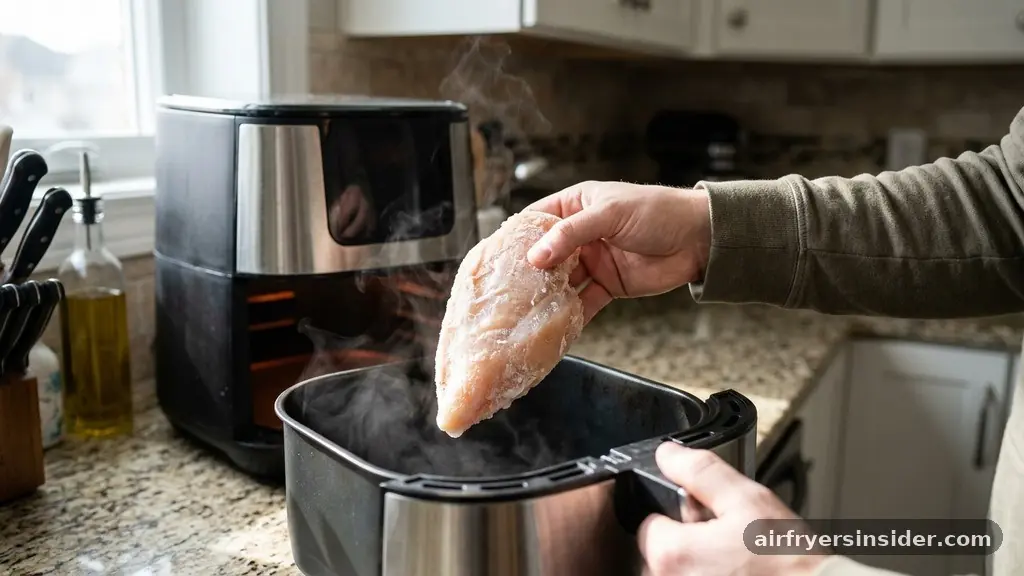
Many people ask if they need to preheat their air fryer when working with frozen meat. While many models reach temperature quickly, preheating is actually quite beneficial in this context.
Starting with a hot chamber ensures that the cooking process begins immediately, which helps prevent the chicken from sitting in a “lukewarm” zone where bacteria could potentially proliferate. Think of it as giving your machine a head start so it can tackle the icy exterior of the chicken with maximum efficiency from the very first second.
Another common gap involves the use of liquids. Some users wonder if they should add water or broth to the basket to prevent drying out. You should generally avoid adding liquid to the bottom of an air fryer basket, as this can turn the environment into a steamer rather than an air fryer.
Steaming will prevent your chicken from developing a nice, golden brown exterior. Instead, rely on a small amount of oil to maintain moisture. If you find the chicken is getting too dry, it is likely that you have overcooked it, rather than a lack of ambient moisture in the cooking chamber.
The Importance of Carryover Cooking
When you pull your chicken out of the air fryer, it is tempting to slice into it immediately to see if it is done. You should resist this urge. The principle of carryover cooking is vital here.
Even after you remove the meat from the heat, the internal temperature will continue to rise for several minutes as the heat from the outer edges migrates toward the center. Letting the chicken rest on a cutting board for at least five minutes allows the juices to redistribute throughout the muscle fibers.
If you cut into the chicken immediately, all those precious juices will run out onto the board, leaving you with dry, stringy meat. Furthermore, resting provides a safety buffer.
If your thermometer shows 160 degrees when you pull it out, that five-minute rest period is often enough for the internal temperature to climb to the safe 165-degree mark. This simple step is the difference between a mediocre meal and a restaurant-quality result, especially when you are starting with the disadvantage of frozen meat.
Common Mistakes to Avoid
Even with the convenience of an air fryer, there are several pitfalls that can ruin your meal. One of the most significant errors is failing to separate the chicken pieces. If you have a bag of individually frozen breasts that are stuck together, do not try to cook them as a single block.
You must ensure they are separated so that hot air can circulate on all sides. If they are frozen solid in a single lump, the center will remain raw while the exterior becomes burnt and inedible.
Another mistake is neglecting to flip the chicken halfway through the cycle. Because the heating element in an air fryer is usually located at the top, the side facing up will cook significantly faster than the side facing down. Flipping the chicken ensures that both sides develop that desirable golden brown color and cook at an even rate.
Finally, avoid using high-sugar glazes or heavy BBQ sauces at the start of the cooking process. These sauces will burn and create smoke long before the chicken is cooked through. Always save your sauces for the last two or three minutes of cooking time.
Benefits of Air Frying for Busy Households
The primary advantage of using an air fryer for frozen protein is the incredible time savings. For many families, forgetting to defrost meat is the biggest barrier to cooking a healthy dinner at home.
Instead of resorting to takeout or processed convenience foods, you can have a nutritious, high-protein meal on the table in under 30 minutes. This efficiency makes it easier to stick to meal prep goals and maintain healthy eating habits even during the busiest work weeks.
Beyond the speed, air frying is a healthier alternative to deep-frying. You get the crispy skin and satisfying texture of fried chicken while using only a fraction of the oil.
This method is particularly forgiving for boneless skinless chicken breasts, which can easily become dry and unappealing if cooked incorrectly in a pan or a large oven. The controlled environment of an air fryer seals in moisture, provided you don’t overcook it, making it a reliable tool for consistent results.
FAQ Section
Is it safe to cook frozen chicken breast in an air fryer?
Yes, it is perfectly safe as long as you use a meat thermometer. You must ensure the internal temperature reaches 165 degrees Fahrenheit to meet USDA guidelines and eliminate any risk of food poisoning. Always verify the temperature in the thickest part of the meat before serving.
Do I need to defrost the chicken before putting it in the air fryer?
You do not need to defrost it, which is the main advantage of this method. Cooking from frozen is a common and safe practice. Simply adjust your cooking time to account for the extra time required to thaw the meat while it cooks in the hot air.
How do I make sure the chicken doesn’t dry out?
To keep the chicken juicy, avoid overcooking it by checking the temperature frequently toward the end of the cycle. Brushing the chicken with a little olive oil once it has slightly thawed in the basket will also help retain moisture and improve the texture of the exterior.
Can I add seasoning to frozen chicken?
You can, but it won’t stick well if the chicken is completely frozen and icy. It is best to cook the chicken for about 5 to 7 minutes first. Once the surface is slightly thawed and tacky, open the basket, brush with oil, and add your favorite seasonings.
Final Thoughts on Frozen Poultry Techniques
Successfully preparing frozen chicken breast in an air fryer is a skill that every home cook should master. By focusing on safe handling, using a meat thermometer to track the internal temperature, and allowing for proper carryover cooking, you can turn a forgotten freezer staple into a delicious, healthy meal. Remember that the key is consistent air circulation, which means avoiding overcrowding and flipping your pieces halfway through the process.
With these simple adjustments, you will find that your air fryer is an indispensable tool for those nights when you haven’t had time to plan ahead. Start experimenting with different spice rubs and cooking times to find the perfect balance for your specific appliance, and you’ll never worry about a forgotten defrosting session again.
Meta Description: Learn how to safely cook frozen chicken breast in an air fryer with these expert tips on timing, temperature, and seasoning for perfect results.


