

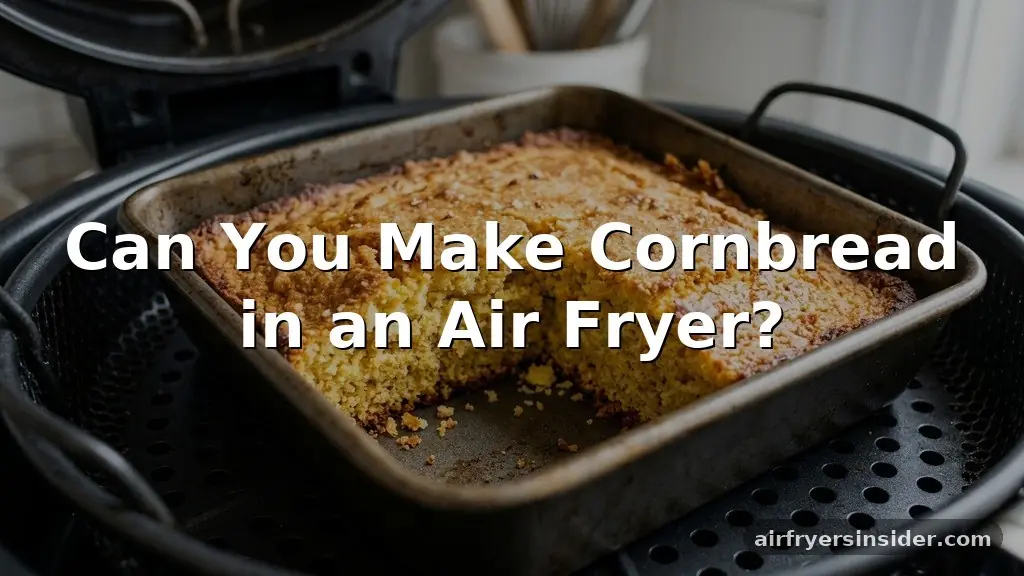
Discovering whether you can make cornbread in an air fryer is a game-changer for home cooks who want that perfect golden crust without heating up their entire oven. Many people assume these countertop appliances are strictly for frozen snacks or chicken wings, but they are actually powerful convection ovens that excel at baking small-batch items.
By understanding how to manage heat distribution and moisture, you can consistently achieve a moist, flavorful result that rivals traditional oven-baked versions. This approach saves time, energy, and keeps your kitchen cool during warmer months, making it a highly efficient method for preparing your favorite side dish.
Understanding the Mechanics of Convection Baking
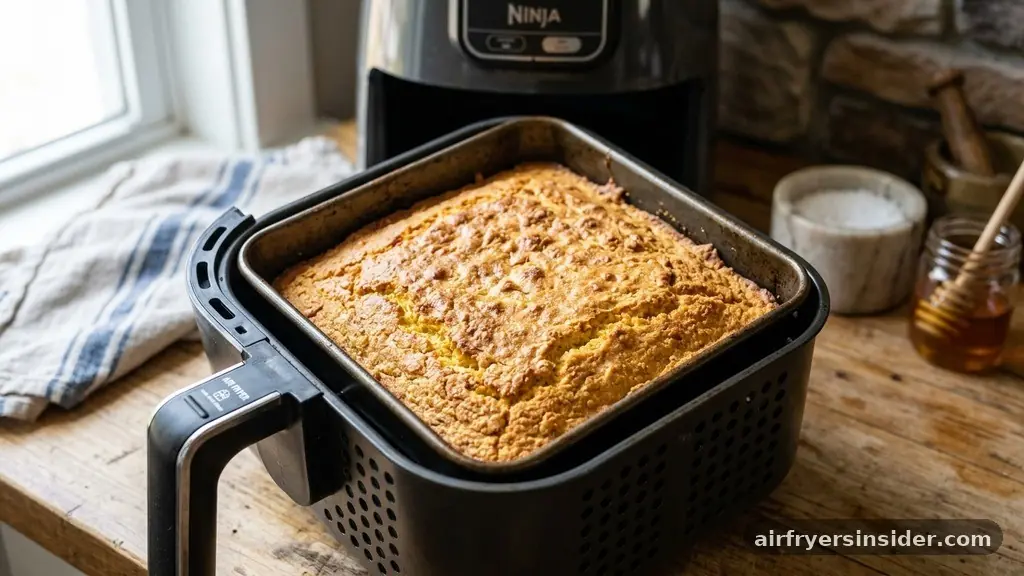
The core function of your air fryer relies on rapid air circulation, which is essentially the same principle as a high-end convection oven. When you prepare cornbread in this environment, the fan forces hot air around the pan, which helps the edges set quickly while the center continues to cook.
This rapid movement is why you often get a much more pronounced golden brown crust than you might see in a standard static oven. However, because the heat source is often closer to the food, managing the intensity is vital to ensure the top doesn’t burn before the center finishes.
To successfully adapt your baking, you have to remember that air fryers are smaller and more aggressive than conventional ovens. Most recipes designed for a 9×13 pan will need significant scaling down to fit into the basket or tray of your device. You are not just cooking; you are managing airflow.
If your batter is too thin, the powerful fans can sometimes cause the top of the bread to ripple or shift before it sets. Ensuring your batter consistency is slightly thicker than usual can help the structure hold up under the intense air movement.
Essential Equipment and Pan Selection
Choosing the right vessel is the single most important decision you will make when baking in an air fryer. Standard metal baking pans are often too tall or wide to allow for proper airflow around the edges, which is necessary for even cooking.
Silicone baking pans are an excellent alternative because they are flexible, easy to clean, and come in various sizes that fit perfectly into most basket-style air fryers. Because silicone is a poor conductor of heat compared to metal, you may need to add a few minutes to your cooking time, but the trade-off is a much more uniform bake.
If you prefer using metal, look for oven-safe bakeware specifically designed for small appliances. Some people have success with small springform pans or even ramekins if they are making individual portions. Always ensure there is at least an inch of space between the sides of your pan and the walls of the air fryer basket.
This gap is where the magic happens; if you block it, the air cannot circulate, and you will end up with a raw center and burnt sides. Never use parchment paper that is too large, as it can be caught by the fan and potentially burn or interfere with the heating element.
Adapting Recipes for Convection Cooking
When transitioning from a conventional oven recipe to an air fryer, the rule of thumb is to lower your temperature by about 25 degrees Fahrenheit. Because the air is constantly moving, the heat transfer is much more efficient, and a standard 375-degree setting can easily scorch the top of your cornbread before the middle reaches an appropriate internal temperature. A lower, slower approach ensures that the heat penetrates the center of the batter without overcooking the exterior.
You should also keep a close eye on the timing. Most air fryer conversions require roughly 20 to 30 percent less time than the original recipe, but this varies wildly based on the wattage of your machine. Start checking your progress at the 15-minute mark.
If you notice the top is browning too quickly, you can place a small piece of aluminum foil loosely over the top of the pan. This acts as a shield, protecting the surface while allowing the convection cooking process to continue working on the interior density of the bread.
Boxed Mix vs. Homemade Batters
Many home cooks start their journey using a Jiffy mix or a Krusteaz blend because these products are formulated to be consistent and reliable. Boxed mixes are excellent for air frying because they are often designed for smaller batches, making them a perfect fit for a standard 6-inch or 8-inch pan. If you are using a Jiffy mix, you might find that the batter is quite thick on its own, which is actually an advantage in an air fryer.
Homemade recipes offer more control over the ingredients, allowing you to incorporate moisture-retaining elements that prevent the bread from drying out. Adding a dollop of Greek yogurt or a small amount of creamed corn to your batter can significantly change the final texture.
These additions add fat and sugar, which help the crumb stay tender even when exposed to the high-speed air of the fryer. Whether you choose a high-quality box mix or a from-scratch recipe, the key is to avoid over-mixing the batter, as this develops gluten and can lead to a tougher, bread-like texture rather than the crumbly, delicate bite you expect from cornbread.
Preventing a Dry Texture
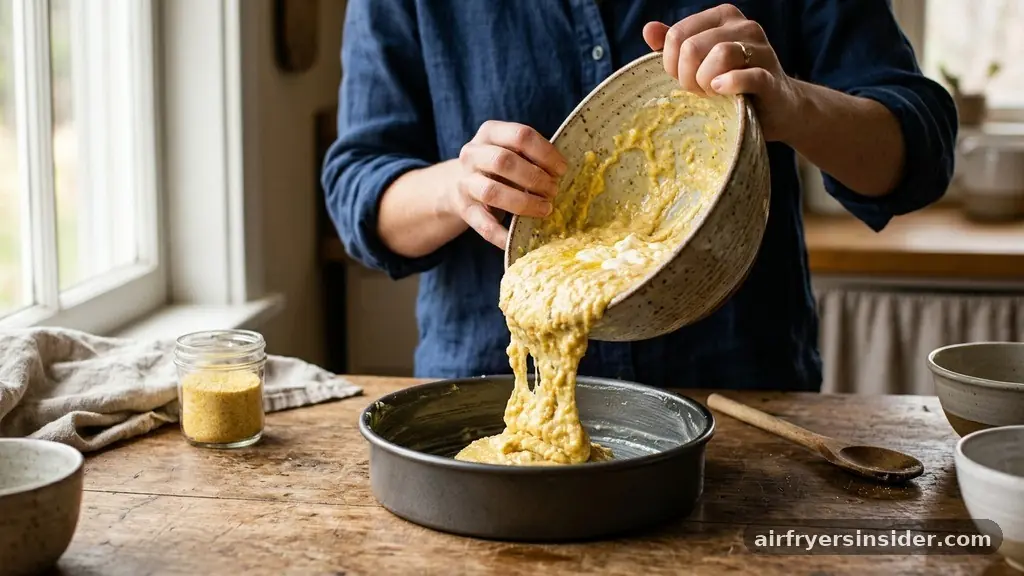
One of the biggest complaints about air-fried baked goods is that they can become dehydrated. The constant flow of air acts as a moisture-stripping force, which is great for crispy potatoes but problematic for a quick bread.
To combat this, ensure your batter has sufficient fat—whether from melted butter, oil, or sour cream. These fats coat the flour particles and prevent the moisture from evaporating too quickly during the initial stages of the bake.
Another trick is to avoid preheating for too long if your machine gets exceptionally hot. While preheating is generally recommended for most cooking, some air fryers reach extreme temperatures very quickly. If you are baking something with a lot of sugar, the preheat might cause the exterior to caramelize too fast.
Additionally, consider the moisture content of your specific ingredients. If you find your bread is consistently coming out dry, try adding a tablespoon of honey or maple syrup to the batter, as these humectants pull moisture into the crumb and help maintain a softer texture long after the bread is ready.
The Importance of the Toothpick Test
Because air fryers vary so much in performance, you cannot rely solely on a timer. The toothpick test remains the most reliable way to determine when your bread is finished. Insert a wooden skewer or toothpick into the very center of the cornbread; if it comes out with a few moist crumbs attached, you are in the sweet spot.
If it comes out covered in wet, runny batter, you need more time. If it comes out completely clean and the edges look slightly pulled away from the pan, you might have already slightly overcooked it.
Don’t be afraid to open the basket multiple times to check. Unlike a traditional oven where heat loss is a major concern, air fryers recover their temperature very quickly once the basket is slid back in.
Checking the progress every few minutes toward the end of the expected cooking window is much safer than waiting for a timer to go off and finding a blackened top. Keep a record of the specific time and temperature that worked for your model, as this will become your go-to reference for future batches.
Comparing Traditional vs. Air Fryer Methods
To understand the differences in output, it is helpful to look at how the two methods affect the physical properties of the cornbread. The table below outlines how the different heating environments change the final product.
| Feature | Traditional Oven | Air Fryer |
|---|---|---|
| Cooking Time | 25-35 Minutes | 15-22 Minutes |
| Crust Texture | Soft to lightly golden | Crispy, deep golden brown |
| Moisture Retention | High (slower evaporation) | Moderate (requires fat/sugar) |
| Batch Size | Large | Small/Single Pan |
As the table demonstrates, the primary trade-off is between speed and volume. If you are cooking for a large family, the air fryer may not be the most efficient tool unless you have a multi-level rack system.
However, for a weeknight dinner or a smaller gathering, the efficiency of the air fryer is unmatched. You achieve a superior crust and a faster turnaround time, provided you adjust your expectations regarding the batch size.
Tips for Better Results
If you want to move beyond basic recipes, consider these expert tips to improve your results.
- Use a muffin pan: Small silicone muffin cups are perfect for air fryers and ensure every portion gets an even distribution of heat.
- Don’t overcrowd: If you are using a rack, make sure the air can move freely between the pieces; if you block the airflow, the bread will steam rather than bake.
- Adjust your baking powder: In high-altitude areas or when using a convection setting, you may need to reduce your leavening agent slightly to prevent the bread from rising too fast and collapsing.
- Let it rest: Always let the bread sit in the pan for at least 5-10 minutes after taking it out; this allows the internal structure to set and makes it easier to remove without breaking.
- Brush with butter: For an extra indulgent touch, brush the top with melted honey-butter immediately after removing it from the air fryer while it is still hot.
These minor adjustments can take a standard recipe and turn it into something that tastes like it came from a professional kitchen. The beauty of the air fryer is its versatility, and once you get comfortable with the basics of convection baking, you will find yourself using it for all sorts of baked goods, not just cornbread.
Addressing Topical Gaps
Many enthusiasts wonder about the specific limitations of this method, particularly regarding ingredients like creamed corn or heavy mix-ins. A common concern is whether the extra moisture from creamed corn will prevent the center from setting. The reality is that as long as you increase the baking time slightly and ensure the pan is not too deep, the corn adds a wonderful, dense sweetness that works perfectly in the air fryer.
Another gap in common knowledge is the use of non-stick sprays. Because air fryer baskets are often non-stick, some people skip the oil, but for cornbread, a light coating of butter or oil in the pan is essential for easy removal and that classic fried-edge texture.
You might also ask if you can put thicker slices of bread in the air fryer to reheat them. Yes, you can, but use a lower temperature—around 300 degrees Fahrenheit—to warm them through without drying out the crumb.
If you are reheating, a quick brush of water or butter on the surface can help bring back that fresh-baked quality. Understanding these nuances helps you master the appliance beyond just following a basic recipe, allowing you to troubleshoot your own baking sessions with confidence.
FAQ
Can you use metal pans in an air fryer?
Yes, you can use metal pans in an air fryer as long as they are oven-safe and fit comfortably inside the basket. Ensure there is enough space around the sides to allow the hot air to circulate properly, which is essential for even baking and a consistent crust.
What is the ideal temperature for air fryer cornbread?
For most recipes, 350 degrees Fahrenheit is the sweet spot. While some ovens use 375 or 400, the rapid air circulation in an air fryer makes it more efficient. Starting at 350 prevents the top from burning before the center is fully cooked through and moist.
How do you know when the cornbread is done?
The most accurate method is the toothpick test. Insert a toothpick into the center; it should come out with a few moist crumbs. If it is wet with batter, add 3-5 minutes. If it comes out completely dry, you may have slightly overbaked it.
Can you use Jiffy mix in the air fryer?
Absolutely, Jiffy mix is one of the easiest ways to get started. Because it is formulated for smaller batches, it fits perfectly into most air fryer-safe pans. Just follow the package directions for the liquid, but keep an eye on the time as it will bake faster than in an oven.
Conclusion
Making cornbread in an air fryer is a surprisingly effective way to enjoy a classic comfort food without the hassle of a full-sized oven. By focusing on proper pan selection, adjusting your temperature for convection settings, and keeping a close eye on the baking process, you can achieve a moist interior and a beautiful, golden crust every time. Whether you prefer a simple boxed mix or a complex homemade recipe, the air fryer offers a unique, efficient environment that produces excellent results.
Once you nail the timing for your specific machine, you will likely find yourself reaching for the air fryer every time you need a quick, delicious side dish. Don’t be afraid to experiment with your favorite add-ins or techniques to make the recipe your own.
Meta Description: Discover if you can make cornbread in an air fryer with our expert guide on convection baking, pan selection, and tips for perfect, moist results.


