

Many home cooks wonder if they really can bake biscuits in an air fryer without sacrificing the quality of a traditional oven-baked batch. The answer is a resounding yes, and once you master the process, you might find yourself abandoning the conventional oven for smaller, quicker tasks.
Achieving that perfect, flaky texture while ensuring the center is fully cooked requires a shift in how you think about heat. When you understand the mechanics of how air circulation transforms refrigerated dough, you gain the ability to produce breakfast staples that are crispy on the outside and soft on the inside, all in a fraction of the time.
How Air Fryers Mimic Convection Ovens for Baking
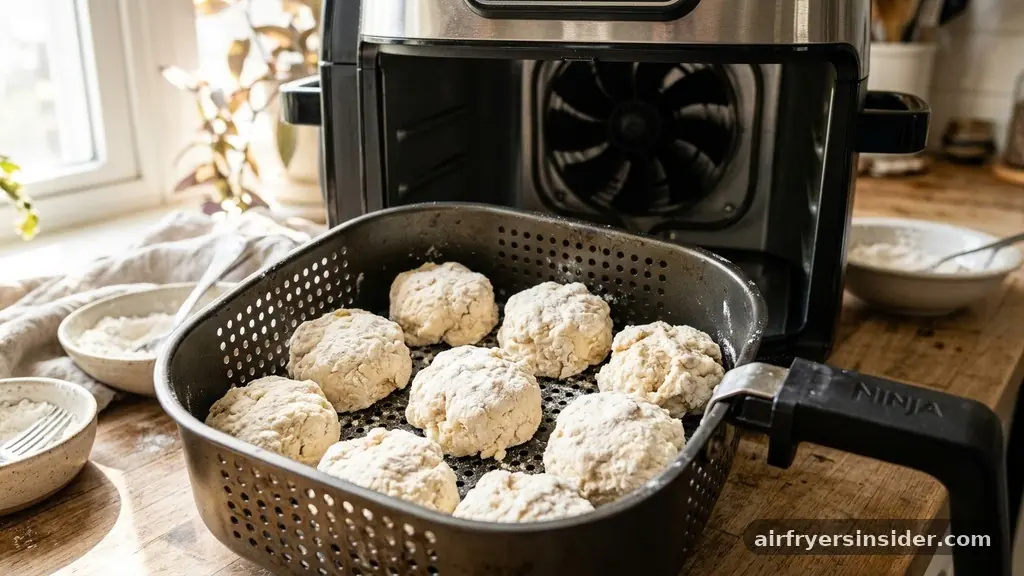
At its core, an air fryer is essentially a high-powered, compact convection oven. The secret to its efficiency lies in the powerful convection fan that forces hot air to circulate rapidly around the food.
When you place dough inside, this intense airflow creates a consistent environment that encourages the Maillard reaction, which is the chemical process responsible for that desirable golden brown color and depth of flavor. Unlike a standard oven, which may have cold spots or uneven heat distribution, the concentrated chamber of an air fryer ensures that the heat hits the dough from all angles almost immediately.
Because the space is so much smaller than a traditional oven, the heat intensity is significantly higher relative to the volume of the chamber. This means you don’t need to wait for the appliance to heat up for twenty minutes; a short preheating cycle is usually sufficient to get the unit ready for baking. When you are looking at whether you can bake biscuits in an air fryer, you must account for this increased speed.
The rapid movement of air works to set the structure of the dough quickly, which helps in achieving those sought-after flaky layers. If the heat is too low, the dough might deflate, but at the right temperature, the air fryer acts as a precision tool for pastry.
Selecting the Right Dough for Air Frying
Not all doughs behave the same way under the intense heat of a convection fan. Most people start with refrigerated biscuit tubes because they are formulated to rise quickly and consistently. Pillsbury Grands, for example, are a popular choice because their density holds up well to the immediate blast of heat.
However, you can also experiment with frozen biscuit dough, though you will need to adjust your approach. Frozen items require a lower temperature for a slightly longer duration to ensure the center thaws and cooks through before the exterior becomes too dark.
When choosing your dough, consider the size and thickness. An air fryer basket capacity is limited, and overcrowding can stifle the necessary air circulation. If you pack the basket too tightly, the air cannot flow between the biscuits, leading to raw centers and uneven browning.
It is better to bake in smaller batches, leaving at least an inch of space between each piece. If you are using scratch-made dough, ensure it is chilled before placing it in the basket. Cold fat creates better steam pockets, which are essential for that airy, layered texture we all associate with a great biscuit.
Essential Preparation and Best Practices
Before you drop the dough into the basket, a few simple steps will elevate your results. First, always use parchment paper or a silicone liner designed for air fryers. This prevents the dough from sticking to the non-stick basket and makes cleanup significantly easier.
If you are worried about the bottom of the biscuit not browning as well as the top, you can flip them halfway through the cooking process. This simple adjustment ensures that the heat distribution is balanced, especially since most air fryers have the heating element located at the top of the unit.
You should also consider applying a light butter wash or a quick mist of cooking spray to the tops of the biscuits before starting. A butter wash adds richness and promotes a deeper golden color, while a light spray can help the crust texture develop a satisfying crunch. Be careful with aerosol sprays, as some can damage the non-stick coating of the basket over time.
Instead, use a refillable oil mister or simply brush on melted butter. These small details ensure that your air-fried results look just as professional as those pulled from a standard baking sheet.
Understanding Temperature and Cooking Times
Temperature control is the most critical factor when working with an air fryer. Because these machines are so efficient, you generally need to lower the temperature compared to what you would use in a conventional oven. A good rule of thumb is to reduce the temperature by about 25 degrees Fahrenheit.
For instance, if your recipe calls for 375 degrees, aim for 350 degrees in the air fryer. This temperature conversion prevents the outside from burning while the interior remains doughy or undercooked.
The cooking time will also be drastically shorter. While a standard oven might take 15 to 20 minutes, an air fryer can often finish a batch in 8 to 12 minutes. Because every model varies, rely on visual cues rather than just the timer.
Look for that deep golden brown finish and ensure the biscuits have risen fully. If you are ever in doubt, you can check the internal temperature, which should reach around 190 to 200 degrees Fahrenheit for a fully cooked dough. Keeping a close eye on the process during those final few minutes is the best way to prevent accidental burning.
| Factor | Standard Oven | Air Fryer |
|---|---|---|
| Preheating | 15-20 minutes | 3-5 minutes |
| Cooking Time | 15-20 minutes | 8-12 minutes |
| Heat Source | Radiant Heat | Convection Circulation |
| Capacity | Large | Small/Medium |
Managing Air Circulation and Rack Placement
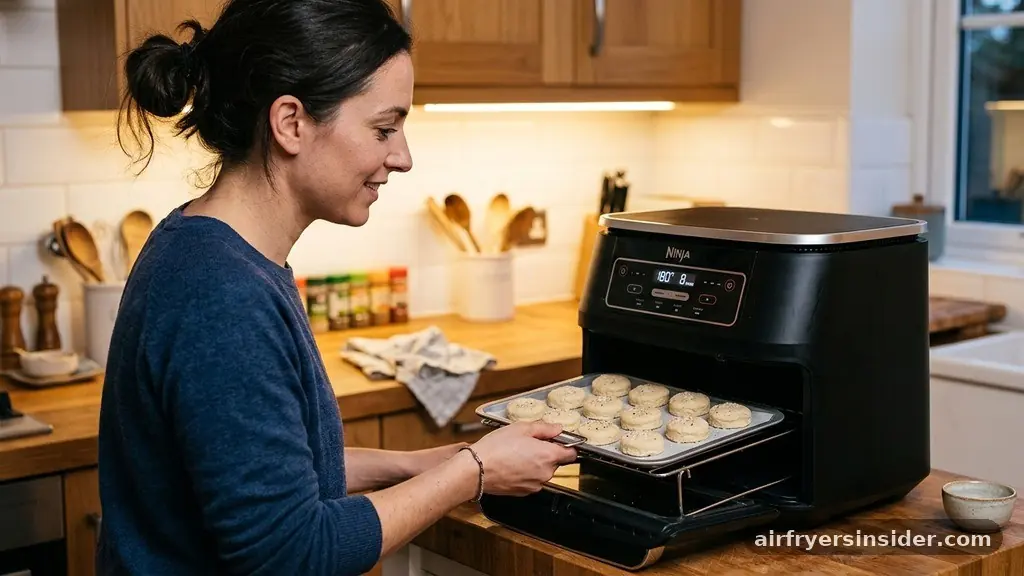
The physics of air frying relies entirely on the movement of air. If you place the biscuits too close to the heating element, the tops will char before the middle is set. Most air fryers have a basket that sits a few inches below the element, but if you have a model with adjustable racks, consider the placement carefully.
Placing the basket in the middle or lower position often yields the most even results. By keeping the biscuits slightly further from the direct heat source, you allow the ambient air to bake them through without scorching the exterior.
Another important aspect is the air fryer basket capacity. When you fill the basket, you are essentially creating a physical barrier to the airflow. If you notice your biscuits are browning unevenly, it is almost always a sign that the basket is overloaded.
Even if it looks like there is plenty of room, the air needs space to swirl around each individual item. If you have a family-sized batch to bake, resist the urge to stack them or crowd them into a single layer. It is faster to run two smaller, successful cycles than to try and save time with one failed, overcrowded batch.
Troubleshooting Common Issues
Even with the best intentions, things can go wrong when you’re learning a new culinary technique. A common complaint is the raw center, which happens when the temperature is set too high or the biscuits are too large.
If you find the outside is perfect but the inside is gummy, lower the temperature by another 10 degrees and increase the time slightly. This allows the heat to penetrate the dough more slowly, giving the center time to rise and bake without the exterior becoming overly dark or tough.
Another issue is the biscuit sticking to the bottom. If you aren’t using parchment paper, the dough can fuse to the metal, making it difficult to remove. If you don’t have liners, ensure you use a high-quality non-stick spray, but recognize that this might not be enough for some dough types.
Additionally, if the biscuits are flying around inside the basket due to the force of the fan—a common problem with lightweight dough—you can place a small metal rack or a wire trivet on top of them to keep them in place. This acts as a weight and prevents the airflow from flipping the biscuits during the cooking process.
Addressing Topical Gaps in Air Frying
Many guides fail to mention the importance of resting the dough. Just like meat, biscuit dough benefits from a brief rest before hitting the heat. If you have just taken the dough out of the refrigerator, letting it sit at room temperature for five minutes can help the gluten relax, leading to a more tender crumb.
Furthermore, many people forget that air fryers vary wildly in power. A 1500-watt air fryer will cook significantly faster than a smaller, lower-wattage model.
You must calibrate your own machine by starting with a test batch. Don’t assume the first recipe you find online will work perfectly on your first try.
Finally, consider the moisture levels. Air fryers are inherently dehydrating environments because they pull moisture out of the food to create that crispy exterior. If you are worried about your biscuits being too dry, you can place a small heat-safe ramekin with a tablespoon of water at the bottom of the basket during the first half of the cooking time.
The steam will help keep the biscuits moist as they rise. This is a pro-tip that many basic tutorials omit, yet it makes a massive difference in the final quality of the bread product.
Safety and Maintenance Considerations
Safety is paramount when dealing with high-heat appliances. Always ensure that your parchment paper is weighed down by the food; if it is too light, the fan might lift the paper and push it against the heating element, which can create a fire hazard.
Never leave the air fryer unattended during the first few times you use it to bake, as you need to learn the specific quirks of your machine. Keep the exterior of the air fryer clear of other objects to ensure that the vents are not blocked, as the machine needs to intake and exhaust air to function safely.
Maintenance also plays a role in how well your biscuits turn out. A dirty air fryer with built-up grease on the heating element can cause smoke and off-flavors. Before you start a baking session, ensure the basket and the heating element area are clean.
If there is old oil residue, the heat will cause it to smoke, which can transfer an unpleasant, burnt flavor to your delicate biscuits. Regular cleaning of the basket and the interior housing will not only make your food taste better but will also extend the lifespan of your appliance significantly.
Experimenting with Flavors and Toppings
Once you have mastered the basic technique, you can start to get creative with your biscuits. Because the air fryer is so fast, it is the perfect tool for making quick, personalized breakfast treats. You can easily add toppings before baking, such as shredded cheese, herbs, or even a cinnamon-sugar dusting.
If you choose to add cheese, do so in the last two minutes of cooking to prevent the dairy from burning while the biscuit finishes setting. The quick blast of heat in the air fryer is perfect for melting cheese into the crevices of the dough.
You can also use the air fryer to reheat leftovers or revive slightly stale biscuits. If you have a batch that has lost its initial crunch, a quick three-minute session at 300 degrees will bring them back to life, making them taste almost as fresh as when they first came out of the machine.
This versatility makes the air fryer an indispensable tool in the modern kitchen, especially for those who appreciate the convenience of small-batch baking. By treating the air fryer as a specialized oven rather than just a fryer, you open up a world of possibilities for quick, high-quality baked goods.
Frequently Asked Questions
Is it better to bake biscuits in an air fryer than a traditional oven?
The air fryer is faster and more energy-efficient for small batches, producing a crispier exterior. However, a traditional oven is superior for large quantities or when you need consistent, even baking across multiple trays. Use the air fryer for convenience and the oven for large-scale baking.
How do I prevent the centers of my biscuits from staying raw?
Lower the temperature by 25 degrees Fahrenheit compared to oven instructions and increase the cooking time slightly. This allows the heat to penetrate the dough fully. Also, ensure you are not overcrowding the basket, as proper air circulation is essential for the center to cook through.
Can I use frozen biscuit dough directly in the air fryer?
Yes, but you must adjust your approach. Cook the frozen dough at a lower temperature than you would for refrigerated tubes to allow it to thaw and rise before the outside browns. Expect the total cooking time to be several minutes longer than the instructions for refrigerated dough.
How can I tell when my air-fried biscuits are finished?
Look for a deep golden brown color on the top and bottom. The biscuits should feel firm to the touch and sound hollow when tapped. If you are unsure, use an instant-read thermometer to ensure the internal temperature has reached approximately 190 to 200 degrees Fahrenheit.
Conclusion
Mastering the art of baking biscuits in an air fryer is a rewarding skill that changes how you approach quick breakfasts and side dishes. By understanding the importance of air circulation, temperature management, and proper spacing, you can achieve a professional-quality bake that rivals any traditional oven. The key is to remain attentive during your first few attempts, as every appliance has its own unique heating profile.
Once you have dialed in your specific settings, you will likely find that this method becomes your go-to for its speed and consistent results. Don’t be afraid to experiment with different doughs and toppings to find your perfect combination. Start your next batch today and enjoy the convenience of perfectly golden, flaky biscuits in just a few minutes.


