

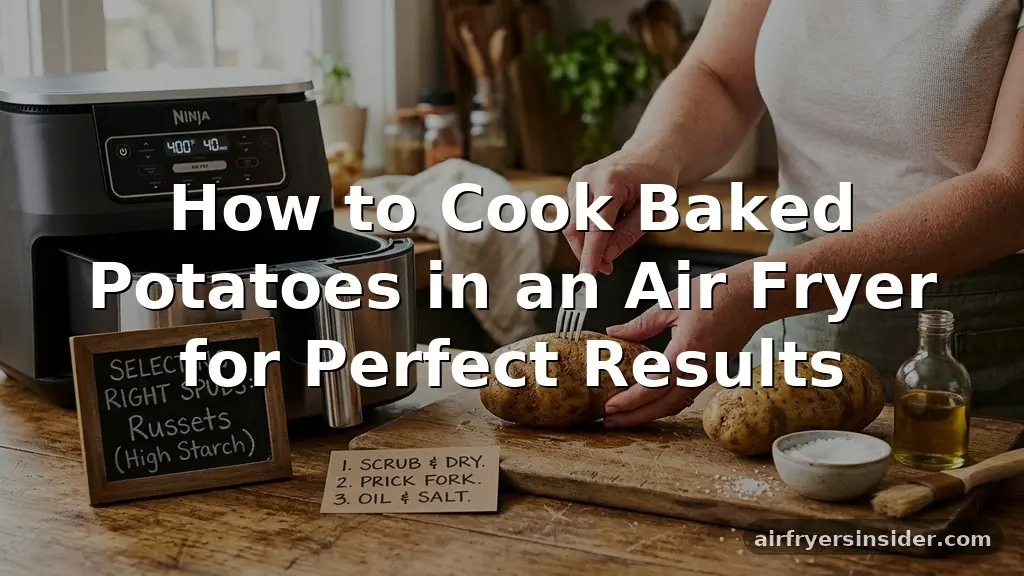
Achieving the perfect baked potato—one with a crackling, salty exterior and a cloud-like, fluffy center—has traditionally been the domain of the conventional oven. However, learning how to cook baked potatoes in an air fryer has revolutionized the process, offering a way to get superior texture in a fraction of the time.
Because an air fryer acts as a high-powered convection oven, it utilizes a powerful convection fan to circulate superheated air around the vegetable, ensuring even heat distribution and rapid starch gelatinization. This method is not merely a shortcut; it is a culinary upgrade that prioritizes both efficiency and the sensory experience of a well-prepared meal.
Selecting the Right Spuds for Air Frying
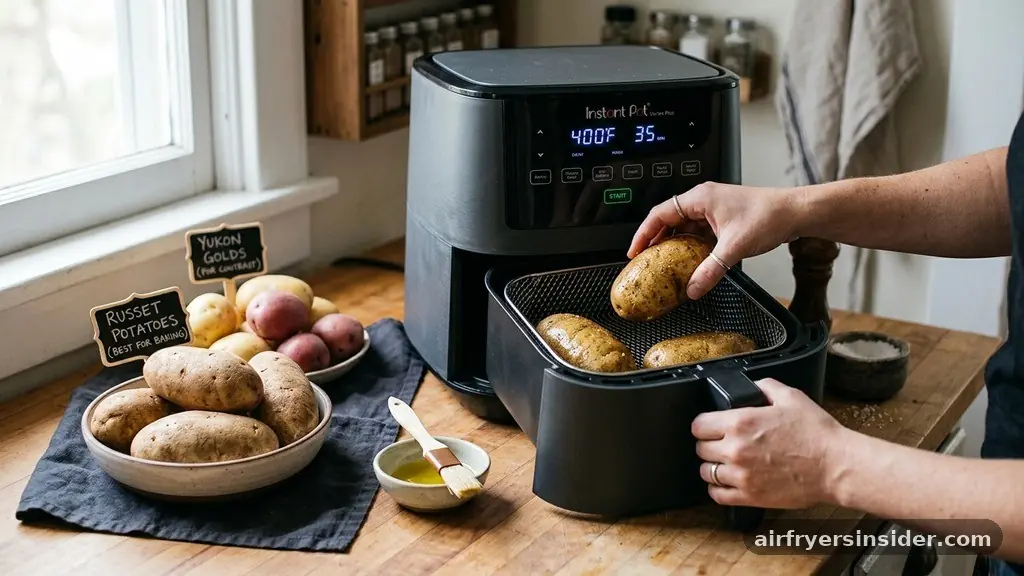
The foundation of a great baked potato lies in the variety you choose. Not all potatoes behave the same way under high-heat conditions. When you decide to cook baked potatoes in an air fryer, your primary goal is to achieve a soft interior that contrasts beautifully with a crispy skin.
For this reason, Russet potatoes—often referred to as Idaho potatoes—are the gold standard. These varieties are categorized as high-starch tubers. High starch content is essential because it allows the potato to fluff up perfectly once the heat penetrates the center.
Waxy potatoes, like red or new potatoes, contain more moisture and less starch. If you attempt to air-fry these, you will likely end up with a dense, gummy interior rather than the light, airy texture associated with a classic baked potato. When shopping, look for potatoes that are roughly uniform in size.
Consistency is the secret to even cooking; if you place a large potato next to a small one in the air fryer basket, the small one will dry out long before the large one reaches the target internal temperature. Aim for potatoes that are roughly six to eight ounces each, as this size fits comfortably in most standard air fryer baskets without overcrowding the chamber, which is vital for maintaining optimal air circulation.
The Importance of Preparation and Fork Pricking
Before you even plug in your appliance, you must treat your potatoes with care. Start by scrubbing the skins thoroughly under cold running water to remove any dirt or debris. Since you are aiming for a crispy skin that is actually edible, you want to ensure the surface is pristine.
After washing, pat the potatoes completely dry with a paper towel. Excess moisture on the surface of the potato can lead to steaming rather than roasting, which works against your goal of achieving a golden, crunchy texture.
Once dry, fork pricking is a non-negotiable step. Using a sharp fork, pierce the skin of the potato six to eight times all around. This process is essential for steam venting.
As the potato heats up, the internal moisture turns into steam. If there is nowhere for that steam to escape, the pressure can build up, potentially causing the potato to split or, in rare cases, burst.
Furthermore, these small holes allow the heat to penetrate deeper into the center of the potato, facilitating more efficient cooking. Think of these pricks as tiny chimneys that regulate the internal environment of your potato, ensuring the final product is cooked through without becoming a safety hazard.
Seasoning for the Perfect Crispy Skin
While a plain baked potato is a blank canvas, the secret to a professional-grade crust lies in how you prep the exterior. Once the potatoes are pricked, drizzle them with a small amount of olive oil.
The oil acts as a conductive medium, helping the heat transfer efficiently to the skin while promoting the Maillard reaction, which gives the skin its deep, savory color. Rub the oil over the entire surface of each potato, ensuring no spot is left bare.
After oiling, coat the potatoes generously with kosher salt. The coarse grains of kosher salt provide a satisfying crunch and enhance the earthy, natural flavor of the potato skin. You can also experiment with other seasonings like cracked black pepper, garlic powder, or dried rosemary, but salt is the essential element.
Avoid using aluminum foil during the cooking process. Many home cooks are accustomed to wrapping potatoes in foil for the oven, but in an air fryer, this is counterproductive.
The foil creates a barrier that traps moisture, effectively steaming the potato in its own skin. By leaving the potatoes naked, you allow the circulating air to dehydrate the skin, resulting in that coveted, restaurant-quality crispiness.
Mastering Air Fryer Temperature and Timing
The debate over the ideal cooking temperature for air-fried potatoes usually centers on the balance between speed and quality. For most standard air fryers, 400°F (200°C) is the sweet spot. At this temperature, the exterior browns and crisps while the interior slowly cooks to a fluffy consistency.
If you set the temperature too low, the potato will take too long and lose too much moisture, becoming shriveled. If you set it too high, the skin will burn before the center is tender.
The cooking time typically ranges from 35 to 50 minutes, depending on the size of the potato and the specific model of your air fryer. Because air fryers are essentially compact versions of a convection oven, they are incredibly efficient. To ensure accuracy, it is best to check the potatoes around the 35-minute mark.
Using a food thermometer is the most reliable way to gauge doneness. You are looking for an internal temperature of approximately 205°F to 210°F. When you insert the thermometer into the thickest part of the potato, it should slide in with zero resistance, indicating that the starch has fully broken down and the interior is perfectly soft.
Comparing Air Fryer Performance vs. Conventional Ovens
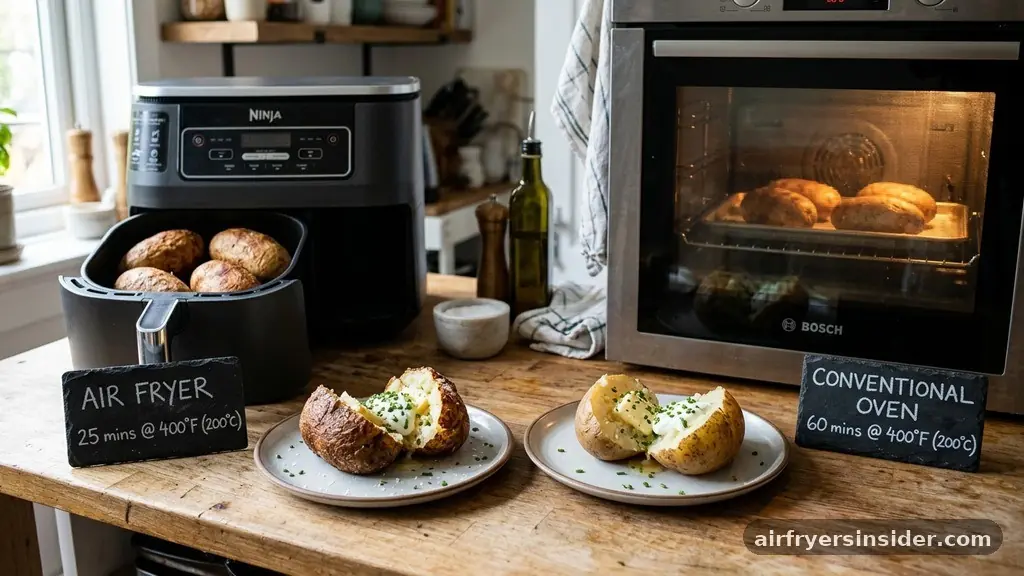
Understanding why the air fryer is superior for this specific task requires looking at the mechanics of heat transfer.
| Feature | Air Fryer | Conventional Oven |
|---|---|---|
| Cooking Speed | Fast (35-50 mins) | Slow (60-90 mins) |
| Energy Usage | Low (Efficient) | High (Large space) |
| Skin Texture | Extra Crispy | Soft to Crisp |
| Preheating | Minimal/Not Required | Lengthy |
As the table illustrates, the air fryer wins on both time and efficiency. The primary reason is the air circulation. In a standard oven, the air is stagnant unless the convection setting is active, and even then, the large volume of the oven cavity makes it difficult to achieve the same intensity of heat flow.
The air fryer’s small chamber forces the hot air to move at high speeds directly against the surface of the food. This constant movement is what transforms the skin from a simple potato peel into a savory, crunchy treat. Furthermore, you rarely need to worry about preheating an air fryer for this duration of cooking; the device reaches its target temperature almost instantly, saving you 10 to 15 minutes of waiting time.
To Microwave or Not to Microwave?
One of the most frequent questions regarding this process is whether microwave par-cooking is a valid strategy. If you are in a rush, you can microwave the potatoes for 3 to 5 minutes before transferring them to the air fryer. This jump-starts the internal cooking process, ensuring the center is soft.
However, there is a trade-off. Potatoes that are par-cooked in a microwave often lose some of their structural integrity, making them slightly more prone to breaking apart when handled with tongs.
If you have the time, it is highly recommended to cook the potatoes entirely in the air fryer. The gradual heat application allows the potato to dehydrate slightly, which results in a much better potato texture. When you microwave a potato, you are forcing moisture out rapidly, which can result in a slightly “boiled” rather than “baked” flavor.
Use the microwave method only when you are genuinely pressed for time and need a side dish on the table in under 30 minutes. If you choose this route, be sure to pat the potatoes dry again after the microwave cycle to ensure the skin can still crisp up effectively in the air fryer.
Common Pitfalls and How to Avoid Them
Even with a simple process, there are common mistakes that can lead to disappointing results. One major error is overcrowding the basket. Air fryers rely on the movement of hot air to cook; if you stack potatoes on top of each other, the air cannot reach the sides of the potatoes that are touching.
This results in uneven cooking and soft, pale patches on the skin. Always arrange the potatoes in a single layer with enough space between them for the air to flow freely.
Another pitfall involves kitchen safety. Because air fryers operate at high temperatures, the basket and the potatoes themselves will be extremely hot. Always use high-quality silicone-tipped tongs to remove the potatoes.
Never attempt to remove them with your hands, as the steam escaping from the inside of the potato can cause severe burns. Additionally, be mindful of where you place the hot basket.
Place it on a heat-resistant mat or a trivet, rather than directly on a laminate countertop, to avoid heat damage. Finally, remember that your air fryer will continue to radiate heat after it is turned off; keep it away from curtains or other flammable materials while it is cooling down.
Advanced Techniques for Elevated Baked Potatoes
Once you have mastered the basic method, you can start experimenting with flavors. For instance, you can use flavored oils instead of plain olive oil.
Infused oils like rosemary-garlic or truffle oil can add a layer of complexity to the skin. Some chefs swear by rubbing a small amount of rendered bacon fat on the potato before roasting, which imparts a smoky, savory depth that pairs perfectly with traditional toppings like sour cream and chives.
Another technique to consider is the “finish” stage. Once the potatoes reach the desired internal temperature, you can slice them open and return them to the air fryer basket for an additional two minutes. This allows the inner flesh to crisp up slightly, providing a wonderful textural contrast to the toppings you add.
You could even add a small pat of butter or a sprinkle of shredded sharp cheddar cheese inside the potato during this final stage. The air fryer will melt the cheese into the crevices of the potato, creating a decadent, restaurant-style side dish that is far superior to anything you could achieve with a standard oven alone.
Addressing Topical Gaps and Common Questions
To ensure this guide is truly comprehensive, it is important to address nuances that often go unnoticed in basic tutorials. Many readers ask about the effect of altitude on cooking times.
If you live at a high altitude, the boiling point of water is lower, which means potatoes may cook slightly faster but can also dry out more quickly. Keep a closer watch on your timer if you are cooking at elevation.
Another gap in many guides is the issue of cleaning. Starchy potatoes can leave a residue in the basket. To make cleanup easier, you can use a parchment paper liner designed for air fryers.
However, ensure that the paper is weighed down by the potato, or the air circulation will cause it to fly up and hit the heating element, which is a fire hazard. By following these specific tips—avoiding overcrowding, monitoring internal temperatures, and using the correct oils—you ensure that every batch of baked potatoes is consistent, delicious, and perfectly cooked.
Frequently Asked Questions
Is it faster to bake a potato in the oven or the air fryer?
The air fryer is significantly faster. While a conventional oven typically takes 60 to 90 minutes to bake a potato, an air fryer can accomplish the same result in 35 to 50 minutes. This efficiency is due to the smaller cooking chamber and the powerful convection fan that circulates heat.
Can you wrap a potato in foil and put it in the air fryer?
It is not recommended to wrap potatoes in foil when using an air fryer. Foil prevents the hot air from reaching the skin directly, which stops it from becoming crispy. Instead, the foil traps moisture, causing the potato to steam and resulting in a soft, soggy skin rather than a crisp one.
Should I microwave baked potatoes before air frying them?
You can microwave them to save time, but it is not necessary for the best texture. Par-cooking in a microwave for 3 to 5 minutes speeds up the process, but cooking the potato entirely in the air fryer produces a superior, crispier skin and a fluffier, more authentic baked potato interior.
How do I know when the baked potato is fully cooked?
The most accurate method is to use a food thermometer to check the internal temperature, which should be between 205°F and 210°F. Alternatively, you can test for doneness by piercing the center with a fork; the fork should slide in with absolutely no resistance, indicating the potato is perfectly tender.
Mastering how to cook baked potatoes in an air fryer is a skill that elevates a humble pantry staple into a gourmet side dish. By focusing on the selection of high-starch Russet potatoes, ensuring proper steam venting through fork pricking, and trusting the high-speed convection process rather than relying on foil or microwave shortcuts, you can consistently achieve that perfect balance of crispy, salty skin and light, fluffy interior.
Whether you are prepping a quick weeknight meal or a sophisticated dinner, the air fryer provides the precision and speed necessary to deliver consistent results every single time. By following the techniques outlined here, you can move past the limitations of traditional ovens and fully embrace the efficiency of modern air-frying technology.


