

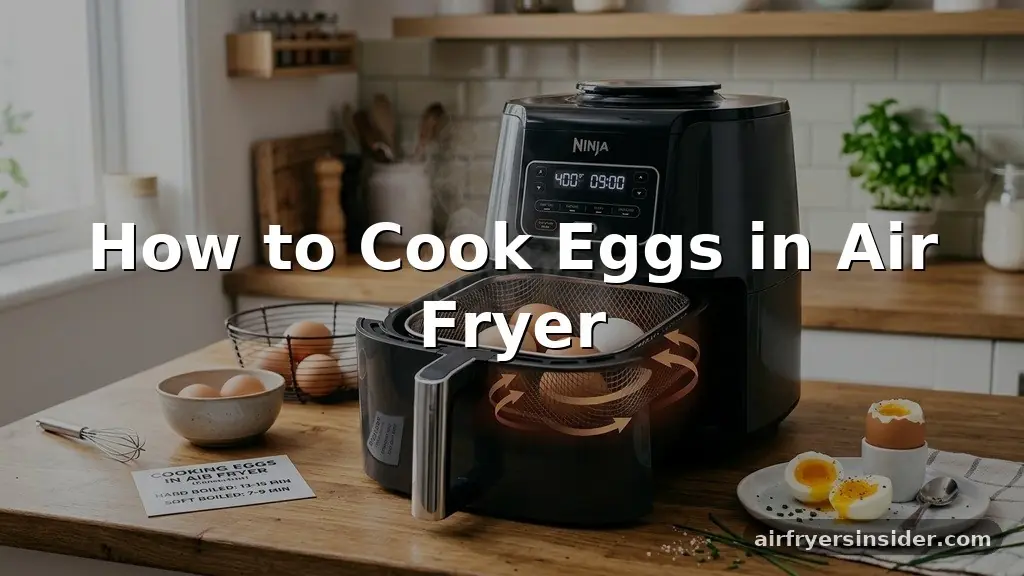
Learning how to cook eggs in air fryer setups is a revelation for anyone looking to streamline their morning routine. While most people associate these appliances with crispy wings or roasted vegetables, they are surprisingly adept at handling delicate proteins. By leveraging consistent convection heat, you can achieve perfect results without boiling a pot of water or hovering over a stovetop.
Whether you prefer a jammy center or a fully set yolk, the air fryer offers a level of precision that traditional methods often lack. Mastering this technique saves time, reduces cleanup, and ensures your breakfast is consistent every single day of the week.
Understanding Convection Heat for Egg Preparation
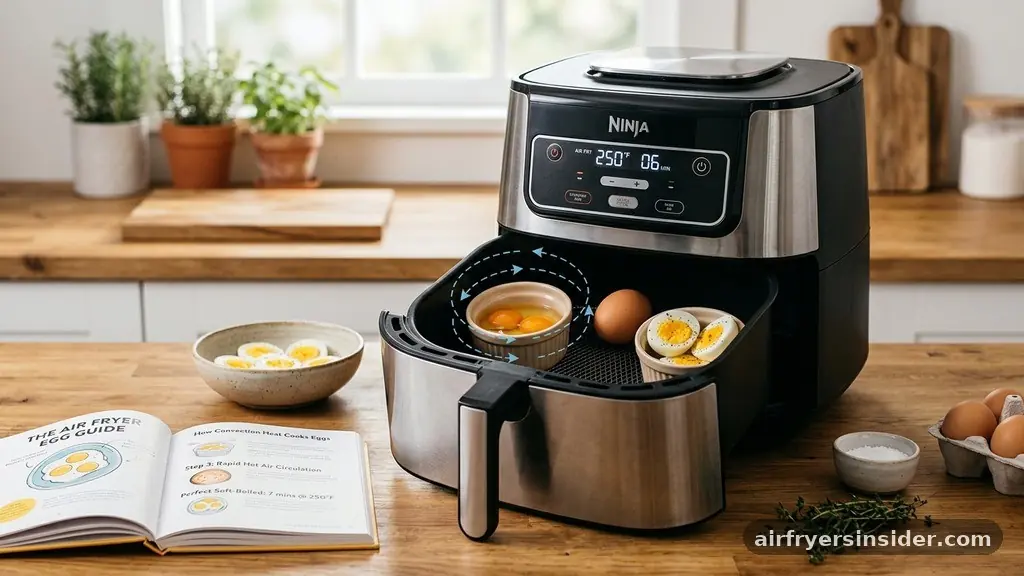
The magic behind the air fryer lies in its rapid air technology. Unlike a traditional oven that relies on radiant heat from a single source, an air fryer circulates hot air at high speeds around the food.
When you cook eggs in an air fryer, this airflow ensures that the temperature remains uniform throughout the basket. This consistency is crucial because eggs are sensitive to even minor fluctuations in heat.
Because the air is moving constantly, the heat transfer to the shell is more efficient than in stagnant hot water. This process causes the egg white to firm up quickly while the yolk remains at your desired consistency.
You don’t have to worry about the turbulent movement of boiling water cracking your shells. Instead, you get a gentle, steady environment that is ideal for achieving reliable, repeatable results.
Mastering Hard-Boiled Eggs Without the Water
The most popular application for this kitchen tool is making hard-boiled eggs. Contrary to the name, you aren’t boiling them at all.
You are essentially roasting them in their shells. This method is incredibly convenient because it eliminates the need to watch a pot and worry about the water boiling over or the eggs hitting the sides of the pan.
To start, preheat your unit to 250 degrees Fahrenheit (or about 120 degrees Celsius). Place your large eggs directly into the perforated basket. It is important to avoid overcrowding; leave enough space between each egg so the air can circulate freely.
For a standard hard-boiled result, you will typically need about 13 to 15 minutes of cooking time. Once the kitchen timer goes off, transferring them immediately to an ice bath is non-negotiable. This step stops the cooking process and makes the shell peeling process much smoother by shrinking the egg slightly inside the shell.
Achieving Perfect Soft-Boiled Results
If you prefer soft-boiled eggs with a liquid gold center, the air fryer is your best friend. The key here is precision with your timing.
Since the appliance heats up quickly, even one extra minute can turn a runny yolk into a firm one. You should aim for a cooking temperature of 250 degrees Fahrenheit, just as you would for hard-boiled versions.
For a soft, jammy yolk, set your timer for 9 to 10 minutes. If you want them even softer, start checking at 8 minutes. Because every machine varies in power and airflow, the first time you try this, it is wise to test just one or two eggs.
Keep a log of the time and the resulting yolk texture so you can dial in your preferences. Remember that the size of the egg matters; a jumbo egg will require an extra minute or two compared to a standard large egg.
Using Ramekins and Molds for Alternative Styles
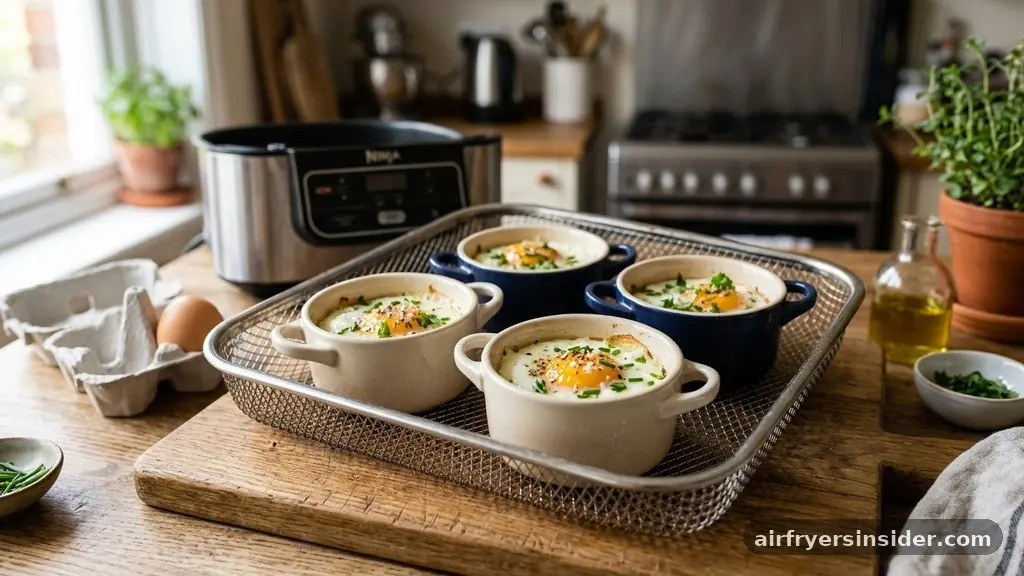
You aren’t limited to cooking eggs in their shells. If you want to make sunny-side up or over-easy eggs, you need to use a ramekin or silicone molds.
These tools allow you to contain the egg while the air circulates around the container, effectively “baking” the egg. This is a great way to prepare eggs for sandwiches or avocado toast without using a frying pan.
Before cracking your egg into the mold, use a light coating of non-stick spray. This is essential, as eggs are notorious for sticking to surfaces when cooked at high heat.
Place the ramekin directly into the basket and cook at 350 degrees Fahrenheit for about 5 to 7 minutes. Keep an eye on the whites; you want them fully opaque and set, while the yolk should still jiggle slightly when you nudge the mold.
| Egg Style | Temperature | Cooking Time |
|---|---|---|
| Hard-Boiled | 250°F | 13-15 Mins |
| Soft-Boiled | 250°F | 9-10 Mins |
| Sunny-Side Up | 350°F | 5-7 Mins |
Addressing Common Topical Gaps in Air Fryer Cooking
Many users wonder if cooking eggs this way is safe from a food safety perspective. The risk of salmonella is significantly reduced when eggs are heated thoroughly. The air fryer is perfectly capable of reaching the internal temperatures required to ensure safety, provided you follow the recommended times.
Another common concern is the “cracking” issue. Some people experience eggs cracking due to thermal shock—the rapid change in temperature when cold eggs hit a hot basket. To mitigate this, let your eggs sit on the counter for 10-15 minutes before cooking, or start them in a slightly cooler air fryer and let them come up to temperature with the machine.
One common mistake is neglecting the ice bath. People often think that because the eggs are “baked,” they don’t need to be cooled down. However, the residual heat inside the shell continues to cook the yolk even after you remove the eggs from the basket.
Skipping the cold water bath leads to overcooked yolks and a sulfurous aroma. Always have a bowl of ice and water ready before you begin.
Managing Protein Coagulation for Better Texture
Cooking is fundamentally about chemistry, specifically protein coagulation. When you heat an egg, the proteins in the white and yolk begin to unfold and bond together, turning from a liquid to a solid state. Whites coagulate at a lower temperature than yolks, which is why you can achieve a firm white and a runny yolk simultaneously.
When you use an air fryer, the dry heat promotes this coagulation process differently than boiling. The outer edges of the egg white can become slightly rubbery if the temperature is too high. This is why 250 degrees Fahrenheit is the sweet spot for in-shell cooking.
It is a lower, gentler heat that allows the heat to penetrate the shell and cook the center evenly before the outer layers become tough. Understanding this balance allows you to manipulate the texture of your eggs to your exact liking, whether you want them firm enough to slice for a salad or soft enough to dip toast into.
Tips for Easier Shell Peeling
One of the biggest frustrations with hard-boiled eggs is the shell sticking to the white. While the air fryer doesn’t cause this as often as boiling, it can still happen if the egg is extremely fresh. If you are struggling to peel your eggs, try these strategies:
- Use older eggs: Eggs that have been in the fridge for a week or more are actually better for hard-boiling because the pH levels change, making the membrane easier to separate from the shell.
- Don’t skip the ice bath: The rapid cooling causes the contents of the egg to contract slightly, pulling away from the shell wall.
- Crack the shell gently: Before peeling, tap the egg on the counter to create a network of cracks across the entire surface.
- Peel under running water: A little bit of water between the shell and the egg helps the shell slide off effortlessly.
Maintenance and Safety Considerations for Your Appliance
To keep your air fryer in top condition, always clean the perforated basket thoroughly after cooking eggs. If an egg happens to crack and leak inside the basket, the proteins can bake onto the surface, making it difficult to clean later.
Use a soft sponge and warm, soapy water. Avoid abrasive scrubbers that could damage the non-stick coating, as this will make future cooking sessions much more difficult.
Also, be mindful of the placement of your air fryer. It requires clearance on all sides for the vents to function correctly. If you place it too close to a wall, the hot air cannot escape, which leads to overheating and inconsistent cooking results.
By maintaining your machine and following the temperature guidelines, you ensure that your eggs come out perfectly every time. This simple kitchen hack transforms a basic ingredient into a versatile meal component that fits perfectly into a busy, modern lifestyle.
Frequently Asked Questions
Do I need to poke a hole in the egg before air frying?
It is not strictly necessary, but some people find that pricking a tiny hole in the bottom of the shell helps prevent cracking. This allows a small amount of air to escape as the egg heats up, reducing the internal pressure that causes the shell to burst during cooking.
Can I cook eggs directly on the basket rack?
Yes, you can place eggs directly on the rack. The air circulation is actually better when they aren’t sitting on a solid surface. Just ensure they are stable so they don’t roll around when you open or close the basket, as this could cause them to crack.
Why do my air fried eggs have brown spots on the shell?
Those brown spots are simply a reaction to the dry heat and are perfectly normal. They do not affect the taste or safety of the egg inside. It is a common occurrence when cooking eggs in an air fryer and is essentially a sign that the shell was exposed to direct, hot air currents.
Is it safe to store air fried eggs in the refrigerator?
Yes, you can store hard-boiled eggs in the refrigerator for up to one week. Keep them in their shells until you are ready to eat them to ensure they stay fresh and maintain their quality. Once peeled, they should be consumed within a day or two for the best flavor.
Conclusion
Learning how to cook eggs in air fryer setups is an efficient way to simplify your meal prep and enjoy consistent, high-quality results. By mastering the balance of temperature and time, you can move beyond simple boiling to creating a variety of textures that suit your breakfast needs. Whether you are aiming for a quick, protein-packed snack or a perfectly poached-style egg for a fancy brunch, the air fryer offers the control you need.
Start by testing a few eggs to find your preferred timing, and you will quickly see why this method has become a staple for home cooks everywhere. If you have any favorite seasonings or serving suggestions, feel free to experiment and make these eggs your own.
Meta Description: Learn how to cook eggs in air fryer with this guide. Discover the best temperatures and times for perfect hard-boiled, soft-boiled, and fried eggs.


