

Learning how to cook pork tenderloin in air fryer settings is one of the most effective ways to achieve a juicy, flavorful dinner without heating up your entire kitchen. Because the air fryer uses high-speed convection cooking, it mimics the results of a high-end oven while significantly reducing the time spent standing over a hot stove.
Whether you are a busy parent or someone looking for a quick weeknight protein fix, mastering this technique ensures you avoid the common pitfall of dried-out meat. By understanding the basics of temperature control and preparation, you can turn this lean cut of meat into a restaurant-quality meal in under thirty minutes.
Understanding the Basics of Pork Tenderloin Preparation
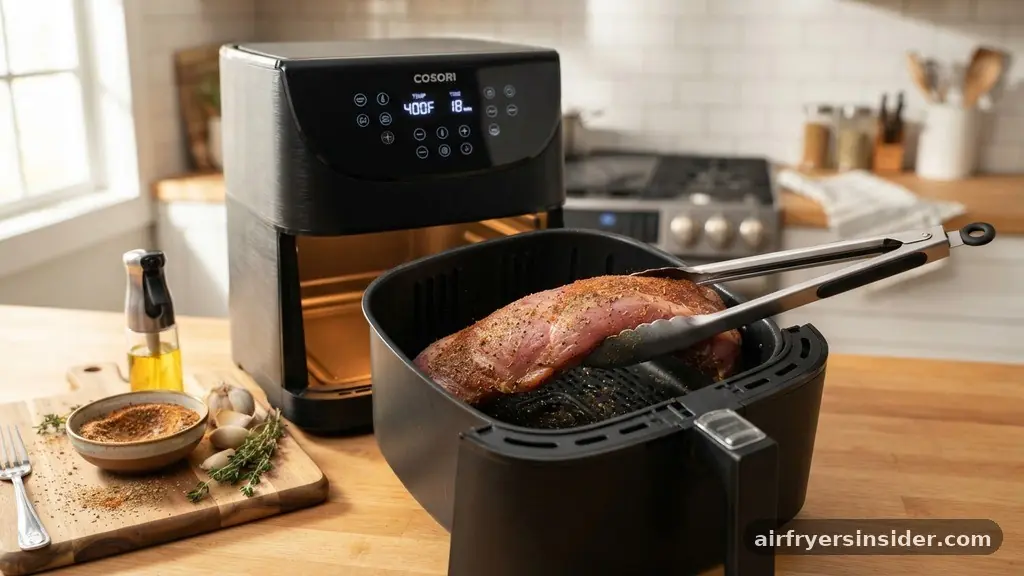
Before you even think about plugging in your machine, you need to prepare the meat properly. A pork tenderloin is inherently lean, which means it lacks the internal fat marbling that keeps other cuts moist during long cooking processes.
The first step involves removing the silver skin, a tough, connective tissue that runs along the length of the tenderloin. If left on, this membrane remains chewy and rubbery even after the meat is fully cooked, ruining the texture of your dish.
Use a sharp boneless knife to carefully slide underneath the silver skin, angling the blade slightly upward to peel it away without wasting too much of the lean meat underneath. Trimming is essential for an even cook, as thick pieces of connective tissue can prevent heat from penetrating the center uniformly.
Once trimmed, pat the tenderloin dry with paper towels. Removing surface moisture is crucial because it allows your seasonings to adhere better and helps the meat develop a desirable, crispy exterior rather than steaming in its own juices.
Crafting the Perfect Spice Rub and Marinade
A great pork tenderloin relies heavily on its seasoning profile. Since the meat is mild in flavor, it acts as a blank canvas for savory, sweet, or spicy aromatics.
A classic approach involves a simple dry rub that caramelizes under the intense heat of the air circulation. Combining brown sugar, garlic powder, and paprika creates a beautiful balance of sweetness and smokiness that pairs perfectly with the natural savory notes of the pork.
If you prefer a deeper infusion of flavor, consider using a savory marinade. Olive oil serves as the perfect base, helping the heat distribute evenly across the surface of the meat.
When mixing your rub, ensure you coat the entire tenderloin thoroughly, including the bottom. Don’t be afraid to press the spices into the meat to ensure they stay in place during the high-velocity cooking process.
- Brown sugar provides a caramelized crust and deep color.
- Garlic powder offers a punchy, savory baseline.
- Paprika adds a subtle smokiness and vibrant hue.
- Kosher salt draws out moisture initially but helps flavor the interior.
- Black pepper adds a necessary bite to counteract the sweetness.
The Importance of Preheating and Air Circulation
Many people assume air fryers work instantly, but just like a traditional oven, preheating is a critical step. When you place a cold tenderloin into a cold air fryer, the surface temperature rises too slowly, leading to a grey, unappealing exterior. Preheating your unit for three to five minutes at 400 degrees Fahrenheit ensures that the moment the meat hits the basket, the searing process begins immediately.
Proper air circulation is what makes the air fryer superior for this task. The fan forces hot air around the entire surface of the tenderloin, creating a crust that locks in moisture retention.
Avoid overcrowding the basket if you are cooking multiple pieces; the air needs space to move freely between the items. If you have a smaller unit, like some models of the Cosori or Ninja Foodi, it is better to cook the tenderloins one at a time to maintain the efficiency of the convection currents.
Managing Internal Temperature and USDA Guidelines
The biggest mistake home cooks make with pork is overcooking it. In the past, people were told to cook pork until it was grey throughout, but modern standards have changed.
According to USDA guidelines, pork is safe to consume once it reaches an internal temperature of 145 degrees Fahrenheit. Because the tenderloin is quite thin, it can jump from perfectly cooked to dry and tough in a matter of minutes.
Using a reliable meat thermometer is non-negotiable. You should insert the probe into the thickest part of the tenderloin to get an accurate reading.
Do not rely on the timer alone, as different air fryer models have varying wattages and airflow patterns. Checking the temperature a few minutes before the timer goes off will save your meal from becoming leather-like.
| Doneness Level | Internal Temp (F) | Texture Expectation |
|---|---|---|
| Medium-Rare | 145°F | Very juicy, slight pink center |
| Medium | 150°F | Tender, minimal pink |
| Well Done | 160°F+ | Firmer, potential dryness |
Mastering the Resting Period
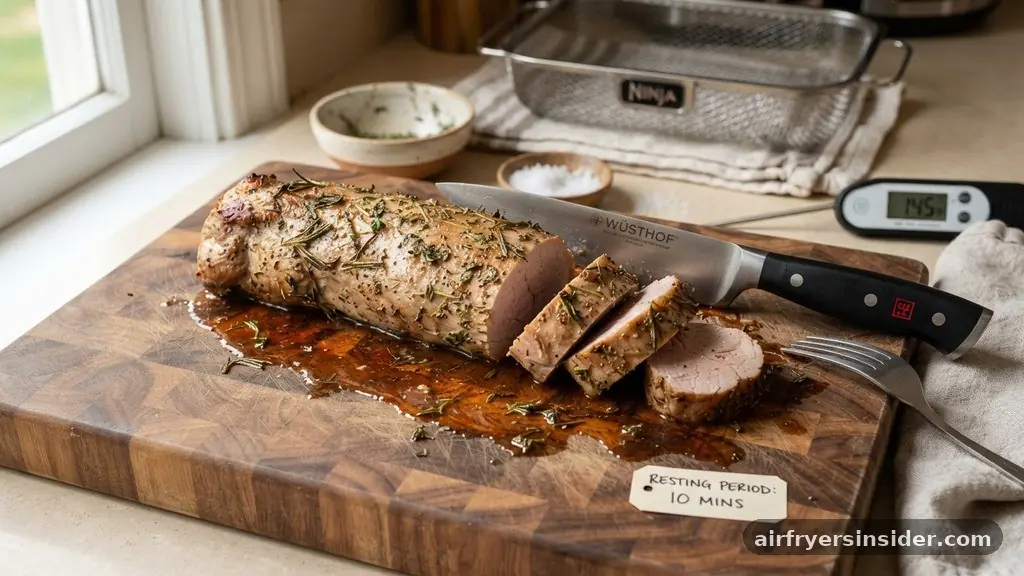
Once the thermometer reads 145 degrees Fahrenheit, you must remove the pork from the air fryer immediately. However, the cooking process doesn’t stop the second you pull the basket out.
Carryover cooking occurs as the residual heat trapped in the outer layers moves toward the center of the meat. If you slice into the tenderloin the second it comes out of the machine, all those precious juices will run out onto your cutting board, leaving you with dry meat.
Let the pork rest on a cutting board or a warm plate for at least five to ten minutes. This resting period allows the muscle fibers to relax and reabsorb the juices that were pushed to the center during the high-heat cooking.
Tent the meat loosely with aluminum foil to keep it warm while it rests. This step is the secret difference between a mediocre home-cooked meal and a professional-grade dish.
Pork Loin vs. Tenderloin: Why It Matters
It is common to confuse pork loin and pork tenderloin, but they are two very different cuts with distinct cooking requirements. A pork loin is wider, thicker, and often has a fat cap on one side.
It requires a longer cooking time and is better suited for roasting or slow cooking. The tenderloin, by contrast, is long, thin, and extremely lean.
If you try to cook a large pork loin using the same high-heat, short-duration method used for a tenderloin, the outside will burn before the inside is safe to eat. Always double-check your packaging at the grocery store. If you are ever in doubt, remember that the tenderloin is the thin, delicate muscle that runs along the backbone, while the loin is the larger, rectangular cut often sold as a roast.
Addressing Topical Gaps: Troubleshooting Common Issues
Many readers ask why their pork turned out dry even when they followed the timing. This usually happens because of inconsistent thickness.
If your tenderloin is significantly thicker on one end, the thin tail will be overcooked by the time the thick head is finished. To solve this, tuck the thin tail end under itself and secure it with a piece of kitchen twine to create a uniform cylinder.
Another frequent issue is the seasoning burning too quickly. If you use a rub with a high sugar content, it can turn bitter at temperatures above 375 degrees Fahrenheit.
If you notice your crust getting too dark before the internal temperature is reached, lower the heat to 350 degrees Fahrenheit and extend the cooking time slightly. This lower, slower approach prevents the sugar from scorching while still providing enough heat to finish the center.
Optimizing Your Air Fryer for Better Results
Different brands of air fryers, such as the Ninja Foodi or the Cosori, have distinct heating elements and fan speeds. A high-end Ninja Foodi often has more powerful fans, which means it might cook your pork faster than a basic basket-style model. Always start checking your meat at the lower end of the suggested cooking time range.
Keeping the interior of your air fryer clean also plays a role in how well your food cooks. A buildup of grease on the heating element or the fan can cause smoking and uneven heat distribution.
Wipe down the interior of your unit regularly, and ensure the basket is free of old residue. When the air can circulate without being obstructed by burnt-on grease, your food will develop a much more consistent, crispy exterior.
Flavor Variations and Serving Suggestions
Once you have mastered the basic technique, you can experiment with different flavor profiles. For a Mediterranean-inspired meal, try a rub made of dried oregano, lemon zest, and crushed fennel seeds. For an Asian-inspired twist, brush the tenderloin with a glaze of soy sauce, honey, and grated ginger during the last three minutes of the cooking time.
Pork tenderloin is incredibly versatile and pairs well with a variety of sides. Roasted root vegetables, a fresh arugula salad with balsamic vinaigrette, or even a simple herb-infused quinoa work beautifully to round out the meal. Because the pork is cooked in the air fryer, you can easily use your oven to roast vegetables simultaneously, making for a streamlined weeknight dinner routine that feels sophisticated without being complicated.
FAQ
How long do you cook pork tenderloin in the air fryer?
Typically, a standard 1-pound pork tenderloin takes about 15 to 20 minutes in an air fryer preheated to 400 degrees Fahrenheit. Always use a meat thermometer to check for an internal temperature of 145 degrees Fahrenheit to ensure it is perfectly cooked and safe to eat.
Is it better to cook pork tenderloin in the oven or air fryer?
The air fryer is generally faster and produces a better crust due to its high-speed convection cooking. While the oven is great for larger roasts, the air fryer is ideal for the tenderloin’s smaller size, effectively locking in moisture while providing a much faster turnaround time.
What is the best way to keep pork tenderloin moist?
To keep the meat moist, avoid overcooking it by using a meat thermometer. Additionally, remove the silver skin before seasoning, ensure you let the meat rest for at least five to ten minutes after cooking, and avoid cutting into it immediately, which allows the juices to redistribute.
Can I cook frozen pork tenderloin in the air fryer?
It is not recommended to cook a large, thick piece of pork tenderloin directly from frozen in the air fryer. The outside will likely overcook or burn before the center reaches a safe temperature. Always thaw the meat completely in the refrigerator before seasoning and cooking.
Conclusion
Mastering the art of how to cook pork tenderloin in air fryer appliances is a game-changer for your weeknight dinner rotation. By focusing on proper preparation, such as trimming the silver skin and using a meat thermometer to track the internal temperature, you can consistently produce succulent, flavorful results. The combination of high-speed air circulation and precise timing creates a texture that is difficult to achieve with other methods.
As you become more comfortable with the process, feel free to experiment with different spice rubs and glazes to keep your meals exciting. With these techniques in your toolkit, you are ready to enjoy perfectly cooked pork whenever you crave it. Happy cooking and enjoy your next delicious, stress-free meal!
Meta Description: Learn how to cook pork tenderloin in air fryer perfectly every time. Follow our simple, expert-backed steps for juicy, flavorful pork in under 30 minutes.


