

Understanding exactly how long does it take an air fryer to preheat is essential for anyone aiming to master the art of convection cooking. While many modern kitchen appliances offer a dedicated preheat cycle, the reality is that these compact powerhouses reach their target temperature much faster than a traditional oven.
Knowing the variables that influence this timing—from your specific machine’s wattage to the ambient temperature of your kitchen—allows you to achieve better crisping and more consistent browning. Whether you are preparing frozen snacks or a delicate protein, getting the thermal environment right before you drop the food in makes a massive difference in your final cooking performance.
The Mechanics of Rapid Air Technology
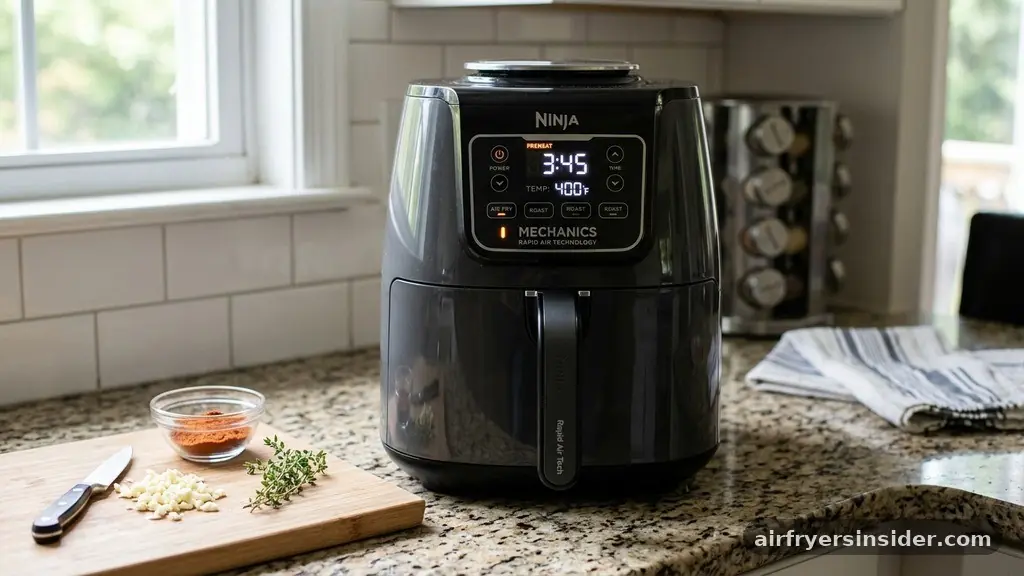
At its core, an air fryer is essentially a high-powered convection oven shrunk down to a countertop size. The primary mechanism responsible for its speed is rapid air technology, which relies on a powerful heating element located near the top of the unit.
A high-speed fan then forces this superheated air downward, circulating it around the food basket in a cyclonic pattern. Because the chamber is so small, the thermal mass is significantly lower than that of a standard wall oven, meaning the air reaches the target temperature in a fraction of the time.
When you trigger a preheat cycle, the appliance is working to stabilize the internal environment. The internal thermostat monitors the ambient temperature of the air inside the basket, cycling the heating element on and off to maintain a consistent output.
Most air fryers reach a set temperature between 350 and 400 degrees Fahrenheit in roughly three to five minutes. This speed is a major benefit for home cooks who need to get dinner on the table quickly, but it also means you need to be ready to add your ingredients as soon as the signal sounds to avoid unnecessary energy consumption.
Factors Influencing Preheat Duration
Not all machines perform identically, and several physical factors dictate how long the process takes. The most significant variable is the appliance wattage.
A 1700-watt unit will naturally heat up faster than a 1200-watt model because it can deliver more energy to the heating element in a shorter burst. If you are using a larger, dual-basket unit, you might find that it takes an extra minute or two to saturate the larger volume of air with heat compared to a compact, single-drawer model.
Another factor is the insulation quality and the material of the cooking chamber. High-end brands often feature better-sealed baskets that trap heat more effectively, while budget-friendly models might lose heat through the seams. Furthermore, the starting point matters.
If your kitchen is particularly cold during the winter, the air fryer has to work slightly harder to overcome the lower initial ambient temperature. Conversely, if you are running back-to-back batches, the unit will already be warm, and the preheat cycle will be almost instantaneous.
Understanding the Preheat Indicator Light
Most modern air fryers, such as the Ninja Foodi or the Cosori series, are equipped with a preheat indicator light or an audible beep. This feature is designed to tell you when the internal environment has reached the desired state.
However, it is important to understand that this light is triggered by the internal thermostat sensing the air temperature, not the temperature of the basket itself. When the light turns off or the timer stops, the air is hot, but the metal basket might still be gaining heat.
If you are looking for maximum crisping, some chefs recommend letting the empty basket sit inside the unit for an extra minute after the indicator light turns off. This ensures that the basket’s surface is fully saturated with heat, which is vital for the initial sear on proteins or for starting the Maillard reaction on vegetables.
While this isn’t strictly necessary for every recipe, it is a pro tip for those who want that extra level of crunch. Always monitor your machine during this stage, as leaving an empty, high-heat appliance running for too long can sometimes trigger safety guidelines or overheat the plastic components.
Comparing Popular Air Fryer Models
Different manufacturers optimize their heating cycles differently. Below is a general comparison of how long you can expect the preheat process to take for common models when set to 400 degrees Fahrenheit.
| Brand/Model | Estimated Preheat Time | Notes |
|---|---|---|
| Ninja Foodi | 3–4 minutes | High-wattage fan ensures rapid stabilization. |
| Cosori Pro | 3–5 minutes | Reliable thermostat with clear indicators. |
| Instant Vortex | 2–3 minutes | Very fast, but prone to rapid cooling if opened. |
| Budget Compact Units | 5–7 minutes | Lower wattage results in a slower ramp-up. |
As you can see, the variance is relatively small, but consistent across different styles. The Instant Vortex, for instance, is known for its aggressive heating element, which makes it one of the fastest on the market. If you are switching from one brand to another, pay close attention to your food during the first few cooks to see if your timing needs to be adjusted based on the specific heat distribution of your new machine.
The Necessity of Preheating for Different Foods
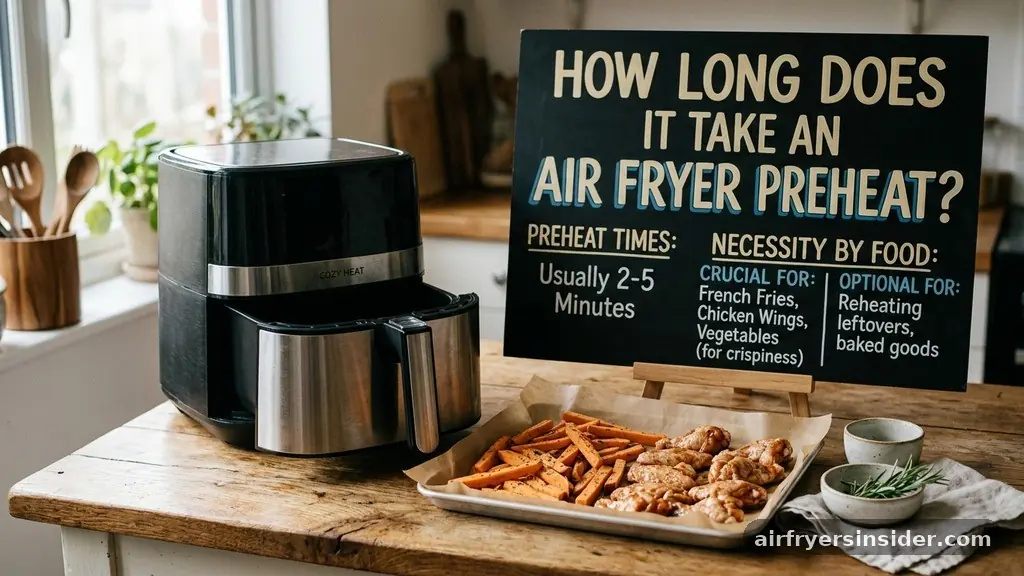
Do you always need to preheat? The answer depends largely on what you are cooking and the desired outcome. For frozen foods like fries, nuggets, or breaded items, preheating is almost always recommended.
These items benefit from an immediate blast of high heat, which helps moisture evaporate quickly from the surface, leading to a crispier texture. If you put frozen goods into a cold air fryer, they may thaw and release moisture before the air gets hot enough to crisp them, resulting in a soggy, unappealing finish.
However, for items that require a longer, slower cook, such as a whole chicken or a thick vegetable roast, the preheat step is less critical. By the time the food has been in the basket for 20 or 30 minutes, the internal environment will have reached the necessary temperature regardless of whether you started it cold.
In these cases, you can simply add the food, set the timer for an extra two minutes, and allow the machine to heat up with the food inside. This is a great way to save time and energy without sacrificing quality.
Manual Preheating Techniques
If your specific air fryer model does not have a dedicated preheat button, you can easily perform manual preheating. Simply set your desired temperature and let the machine run for three to five minutes before adding your food.
This manual approach is just as effective as the automatic cycles found on premium models. It ensures that the heat distribution is even before the ingredients are introduced, which is the primary goal of any preheat cycle.
When manually preheating, try to avoid opening the basket repeatedly to check the temperature. Every time you pull the basket out, you lose a significant amount of the stored heat, essentially resetting the thermal progress.
Trust the machine, set a timer on your phone if necessary, and wait for the preheat period to finish before adding your ingredients. This practice helps maintain the stability of the heating element and ensures that your cooking performance remains consistent from the first batch to the last.
Addressing Topical Gaps in Air Fryer Knowledge
Many users wonder if there are negative consequences to skipping the preheat phase entirely. While it won’t break your machine, it changes the cooking profile. Without an initial blast of heat, the Maillard reaction—the chemical process that gives browned food its distinct flavor—is delayed.
This means your food might be cooked through but lack the golden-brown crust you expect. Furthermore, if you are cooking multiple batches, failing to preheat properly can lead to uneven results where the first batch is pale while the second batch is perfectly crisp.
Another common gap in knowledge involves the impact of ambient temperature. If you store your air fryer in a cold garage or pantry, the initial preheat cycle will take longer. It is always best to keep your kitchen appliances on a room-temperature countertop to ensure the internal components aren’t starting from a chilled state.
Additionally, ensure there is enough clearance around the vents of your air fryer. If the unit cannot intake enough air because it is pressed against a wall, the heating element may struggle to reach the target temperature efficiently, leading to longer wait times and potential safety concerns.
Optimizing Energy Consumption and Performance
Air fryers are generally more energy-efficient than traditional ovens, but you can optimize this further by being mindful of your preheating habits. Since the unit heats up so quickly, there is rarely a need to preheat for more than five minutes.
If you are preheating for ten minutes, you are simply wasting electricity and potentially putting unnecessary wear on your appliance’s heating element. Stick to the “less is more” philosophy when it comes to the preheat duration.
To get the best results, try to organize your kitchen workflow so that you are ready to load the basket the moment the preheat cycle finishes. If the air fryer sits empty at 400 degrees for ten minutes, you are losing heat every time you open the door to check on something else, and you are also potentially overheating the internal components. By timing your prep work—chopping vegetables, seasoning meat, or retrieving items from the freezer—to align with the preheat cycle, you maximize your efficiency and ensure that the cooking process starts on the right foot.
Common Mistakes to Avoid
Even experienced users sometimes fall into traps that hinder their cooking performance. Here are some key points to remember to ensure your air fryer operates at its best.
- Avoid overstuffing the basket during the initial load; proper air circulation is what makes the food crispy.
- Don’t block the rear vents, as this prevents the hot air from escaping and can cause the internal thermostat to misread the temperature.
- Avoid using metal utensils inside the basket, as they can scratch the non-stick coating, which affects how food releases and potentially how heat is distributed.
- Don’t forget to shake or flip your food halfway through, even if you preheated perfectly, to ensure even browning on all sides.
- Ensure your unit is on a flat, heat-resistant surface to prevent any damage to your countertop during the high-heat cycles.
Following these simple guidelines will help you maintain your machine and ensure that every meal you prepare is as good as the last. Remember that the preheat cycle is just one part of the equation, and your overall success depends on how you manage the airflow and the density of the food within the cooking chamber.
FAQ: Common Questions About Preheating
How do I know when my air fryer is preheated?
Most air fryers will either sound a beep or turn off the preheat indicator light when the target temperature is reached. If your model lacks these features, you can safely assume it is preheated after running it at your desired temperature for approximately three to five minutes.
What happens if I don’t preheat my air fryer?
Skipping the preheat phase is not dangerous, but it can affect the texture of your food. Without the initial burst of heat, the surface of the food may not crisp up as effectively, leading to a softer or less browned result, particularly with frozen items or breaded snacks.
How long should I preheat for 400 degrees?
To reach 400 degrees Fahrenheit, most air fryers require between three and five minutes. If your kitchen is particularly cold or if you are using a very large, high-capacity model, you might want to extend this to six minutes to ensure the entire chamber is thoroughly saturated with heat.
Can I preheat the air fryer without a dedicated button?
Yes, you can easily perform manual preheating. Simply set the temperature to your desired level and set a timer for four minutes. Once the timer goes off, the unit will be sufficiently heated to start your cooking process. This method is just as effective as using a dedicated button.
Conclusion
Mastering the timing of your appliance is a simple way to elevate your home cooking. While the exact duration of how long does it take an air fryer to preheat varies slightly depending on your specific model and the ambient temperature of your kitchen, the three to five-minute window is a reliable rule of thumb. By focusing on consistent preheating, you ensure that your ingredients are met with the intense heat necessary to trigger the Maillard reaction, resulting in superior crisping and flavor.
Remember that preheating is a tool to be used strategically rather than a rigid requirement for every single recipe. Whether you are using a high-end unit or a compact model, understanding how your machine handles thermal distribution will give you the confidence to experiment with new recipes. Start paying attention to your preheat times today, and you will likely notice a marked improvement in the consistency and quality of your air-fried meals.
Meta Description: Learn how long it takes to preheat an air fryer and why this step is crucial for achieving the perfect crispy texture in your favorite meals.


