

Achieving the perfect, juicy bratwurst with a crispy, golden-brown exterior is often a challenge when relying on traditional stovetop or grill methods, especially during inclement weather. However, learning how long to cook brats in an air fryer can revolutionize your weeknight dinner routine.
By utilizing the rapid convection cooking technology inherent in modern air fryers, you can achieve that desirable snap and even browning without the hassle of managing a charcoal fire or standing over a grease-splattered skillet. Whether you are working with raw bratwurst or pre-cooked sausages, the air fryer offers a consistent environment that produces superior results if you follow the correct timing and temperature guidelines.
Understanding Air Fryer Mechanics for Sausage Preparation
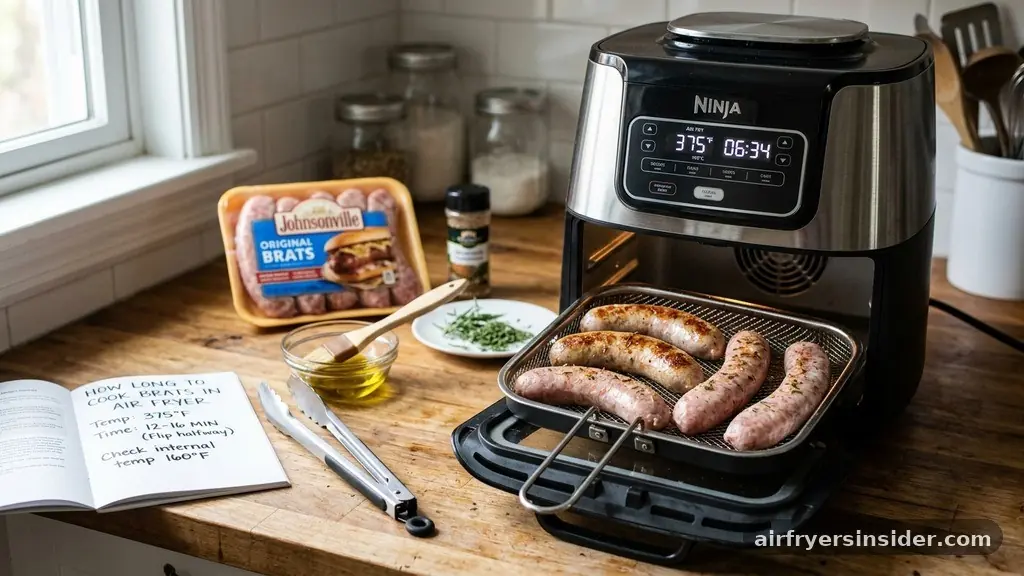
The primary reason air fryers excel at cooking sausages is their ability to circulate hot air at high speeds, which mimics the effect of a convection oven but with more intensity. When you place a brat into an air fryer basket, the intense heat immediately begins the process of fat rendering, which is essential for developing flavor and texture. Unlike boiling, which can wash away the savory juices of the meat, air frying creates a dry, high-heat environment that locks moisture inside the casing while crisping the outside.
To master this process, you must recognize that different air fryer models, such as a Ninja Foodi or a Cosori, may have slightly varying heating elements and airflow patterns. While the general timing remains consistent, the proximity of the heating element to the food can influence the rate of browning. It is always best to start with a standard temperature of 360 to 375 degrees Fahrenheit.
This range is high enough to induce the Maillard reaction—the chemical process that creates the delicious crust—without burning the skin before the center is cooked through. Because the air fryer is essentially a compact, high-powered fan oven, the heat distribution is far more uniform than in a pan, meaning you spend less time manually rotating the links to ensure even coloring.
The Importance of Internal Temperature and Food Safety
When discussing how long to cook brats in an air fryer, we must prioritize food safety and adhere to USDA guidelines. Regardless of the cooking method, raw pork products must reach a safe internal temperature to ensure that any potential pathogens are eliminated.
For bratwurst, the target temperature is 160 degrees Fahrenheit. Relying solely on a timer can be risky because the size of the sausage, the brand, and the starting temperature of the meat can all affect the total cooking time.
Using a reliable meat thermometer is the only way to be 100% certain that your meal is ready. When checking, insert the probe into the center of the thickest part of the brat. It is important to note that the casing may resist the thermometer slightly, but you should aim for the center of the meat for an accurate reading.
If you are cooking a batch, check at least two or three links to account for any hot spots in the basket. Once the thermometer reads 160 degrees, you are safe to proceed to the resting phase. Skipping this step or guessing based on appearance is a common mistake that can lead to either undercooked meat or, conversely, a dried-out, tough sausage that has been left in the heat far too long.
Preparing Raw Bratwurst for the Air Fryer
If you are starting with raw bratwurst, the preparation phase is slightly different than if you were heating up a pre-cooked variety. Many home cooks wonder if they should poke holes in the casing before cooking. Generally, this is a matter of personal preference, but it does serve a functional purpose.
Piercing the casing with a fork allows some of the excess fat to escape during the rendering process, which can prevent the casing from bursting due to internal steam pressure. However, if you prefer the “snap” of a pristine casing, you might choose to skip the poking.
Before placing them in the basket, you might consider a light oil spray. While bratwurst is naturally fatty, a fine mist of high-smoke-point oil can help initiate the browning process more quickly and ensure the skin doesn’t stick to the rack. Additionally, if you are concerned about cleanup, you can use parchment paper specifically designed for air fryers.
Ensure the paper is perforated to allow airflow; otherwise, you will obstruct the convection process and end up with unevenly cooked meat. Arrange the brats in a single layer, ensuring they are not touching. Proper spacing allows the hot air to surround each link, which is the secret to achieving that uniform golden brown finish across the entire surface.
Timing Guidelines for Various Bratwurst Types
The time required to cook brats depends heavily on whether you are using raw or pre-cooked links. The following table provides a general baseline for cooking at 360 degrees Fahrenheit, which is the sweet spot for most air fryers.
| Brat Type | Estimated Time | Flipping Frequency |
|---|---|---|
| Raw Bratwurst | 12–15 Minutes | Every 4-5 minutes |
| Pre-cooked Sausages | 7–9 Minutes | Once halfway through |
| Frozen Raw Brats | 18–22 Minutes | Every 5 minutes |
As indicated in the table, flipping is a necessary part of the process. Even with the best airflow, the side facing the bottom of the basket or the side touching the rack will not brown as effectively as the top.
By rotating the brats, you ensure that the heat is applied evenly, resulting in a consistent texture and color. For frozen items, you will naturally need to increase the time, and it is often helpful to lower the temperature slightly for the first few minutes to allow the center to thaw before the exterior crisps up too aggressively.
The Role of Preheating and Carryover Cooking
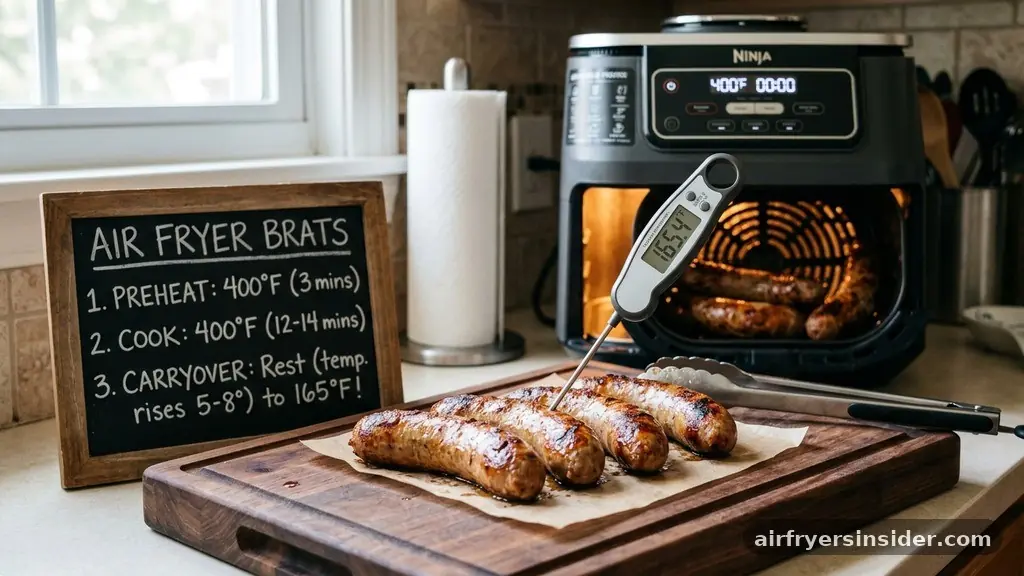
Many users skip the preheating phase, thinking it is unnecessary for an air fryer. However, preheating is vital for achieving that immediate sear that locks in moisture.
If you place a cold brat into a cold machine, it will essentially steam in its own juices while the unit warms up, which can result in a flabby casing rather than a crisp one. A quick three-minute preheat at your target temperature will ensure that the moment the brats hit the rack, the surface reaction begins.
Furthermore, you must account for carryover cooking. When you remove the brats from the air fryer, the internal temperature will continue to rise for a few minutes as the residual heat from the outer layers moves toward the center. If you pull the brats out at exactly 160 degrees, they may reach 165 or 170 degrees while resting, which could lead to a slightly drier texture.
For the juiciest results, you can pull them out when they reach approximately 155 to 158 degrees and let them sit for three to five minutes. This resting time is crucial for allowing the juices to redistribute throughout the meat, ensuring that the first bite is just as succulent as the last.
Addressing Common Topical Gaps: Browning and Snap
A frequent complaint among air fryer enthusiasts is the lack of “snap” or the failure to achieve a deep, dark brown color. This often occurs because the sausages are overcrowded or because they have been boiled beforehand.
While some recipes suggest boiling brats in beer or water before air frying to ensure they are cooked through, this process introduces moisture to the casing that the air fryer must then evaporate before browning can occur. If you want the best possible texture, skip the boiling step entirely.
If you find that your brats are not browning enough, try increasing the temperature to 400 degrees for the final two minutes of cooking. This “blasting” phase can help caramelize the exterior quickly. Another factor is the brand of the bratwurst.
High-quality brands like Johnsonville or local butcher-shop links often have higher protein and fat content, which reacts better to dry heat than lower-quality, filler-heavy sausages. If you find the skin is still too soft, ensure the brats are patted dry with a paper towel before they go into the basket. Moisture is the enemy of the Maillard reaction, so the drier the surface, the better the final sear will be.
Managing Different Air Fryer Models
The specific model of your air fryer will dictate how you manage the cooking process. A large-capacity Ninja Foodi often has a more powerful fan and a different heating element placement than a smaller, countertop Cosori basket-style unit.
In larger units, the air can sometimes circulate more violently, which can lead to faster browning. If you have a larger machine, keep a closer eye on the sausages around the 10-minute mark to ensure they aren’t darkening too quickly.
Additionally, the shape of the basket matters. If you have a square basket, you can often fit more sausages without them touching, which is ideal. If you have a round basket, you may be limited to four or five links to maintain proper spacing.
Never stack the sausages; air frying relies on the air passing between the items. If you stack them, the bottom ones will steam while the top ones brown, leading to a disastrously inconsistent meal.
Always prioritize spacing over quantity. If you need to cook a large package, do it in two batches; the time saved by overcrowding is lost in the poor quality of the end product.
Enhancing Flavor Profiles Beyond the Basic Brat
Once you have mastered the timing, you can experiment with how you flavor your brats. While a classic bratwurst is delicious on its own, you can enhance the experience by lightly brushing the links with a glaze during the last three minutes of cooking.
A mixture of Dijon mustard, a touch of brown sugar, or even a spicy BBQ sauce can add a layer of complexity. Because the air fryer is essentially a mini-oven, these glazes will caramelize beautifully, creating a sticky, savory crust.
You can also place aromatics in the bottom of the air fryer basket—underneath the rack—to infuse the sausages with flavor. Sliced onions or peppers placed below the brats will cook in the dripping fat, creating a perfect side dish while the brats cook above.
This maximizes the utility of the air fryer and ensures that the flavor profile of the meal is cohesive. Just be sure that the aromatics don’t block the airflow; keep them to the edges of the basket so the fan can still circulate air effectively around the meat.
Troubleshooting Common Issues
If you find that your brats are drying out, you are likely overcooking them. The most common cause of dry sausage is leaving them in the air fryer for too long.
Because the heat is so efficient, you don’t need the long cooking times required by a traditional grill. If you are worried about the center being done, use the thermometer rather than adding extra minutes “just to be safe.”
Conversely, if the casing is splitting and the meat is leaking out, your temperature might be too high, or you may be skipping the flipping process. If the casing gets too hot too fast, it will burst.
Flipping the sausages frequently—at least every four minutes—helps distribute the heat more evenly and prevents any single part of the casing from becoming brittle and prone to cracking. If you notice a particular link starting to split, move it to a cooler spot in the basket or remove it early if it is already at the target internal temperature.
Frequently Asked Questions
Should I poke holes in my brats before putting them in the air fryer?
It is optional but often recommended. Poking holes allows excess fat to render out and prevents the casing from bursting due to steam pressure. If you prefer a tighter, intact casing, you can skip this, but be prepared to flip them frequently to manage the internal heat.
Can I cook frozen brats directly in the air fryer?
Yes, you can cook them from frozen, though it requires more time. Increase the cooking duration by about 5 to 7 minutes compared to thawed brats. Start at a slightly lower temperature for the first few minutes to ensure the center thaws before the exterior begins to crisp.
Do I need to use oil when air frying sausages?
Bratwurst is naturally high in fat, so you do not need to add oil for the sake of cooking. However, a very light spray of oil can help achieve a more uniform golden-brown color and a crispier skin. It is not strictly necessary but can improve the aesthetic results.
How do I know when the brats are finished cooking?
The only foolproof method is using a meat thermometer. You are looking for an internal temperature of 160 degrees Fahrenheit. Relying on the clock is imprecise due to variations in appliance power and sausage thickness. Always check the thickest part of the link for an accurate reading.
Conclusion
Mastering the art of cooking bratwurst in an air fryer is a simple way to elevate a classic meal. By focusing on the correct temperature—typically 360 to 375 degrees Fahrenheit—and utilizing a meat thermometer to ensure an internal temperature of 160 degrees, you can consistently produce sausages that are juicy on the inside and perfectly browned on the outside. Remember that the key to success lies in proper spacing, regular flipping, and respecting the power of convection cooking.
Whether you are using a Ninja Foodi, Cosori, or another model, the principles remain the same: keep the air moving, monitor your temperatures, and allow for a brief resting time. With these techniques, you will find that the air fryer is perhaps the most efficient and effective tool in your kitchen for preparing high-quality bratwurst, delivering that professional-grade snap and flavor every single time you cook.


