

Achieving the perfect crunch on a convenience meal is often a challenge, but learning how long to cook chicken patties in air fryer settings can transform a simple snack into a restaurant-quality experience. The air fryer has revolutionized home cooking, particularly for frozen chicken patties, by utilizing rapid air circulation to mimic the effects of deep frying without the excess oil.
Whether you are aiming for a quick lunch or a late-night bite, mastering the timing and temperature is the secret to ensuring the exterior achieves that signature golden brown appearance while the center remains juicy and fully cooked. Because air fryers operate using powerful convection cooking technology, they provide a level of efficiency that traditional ovens simply cannot match, making them the preferred appliance for busy households looking for frozen food convenience.
Understanding the Mechanics of Air Fryer Poultry Preparation
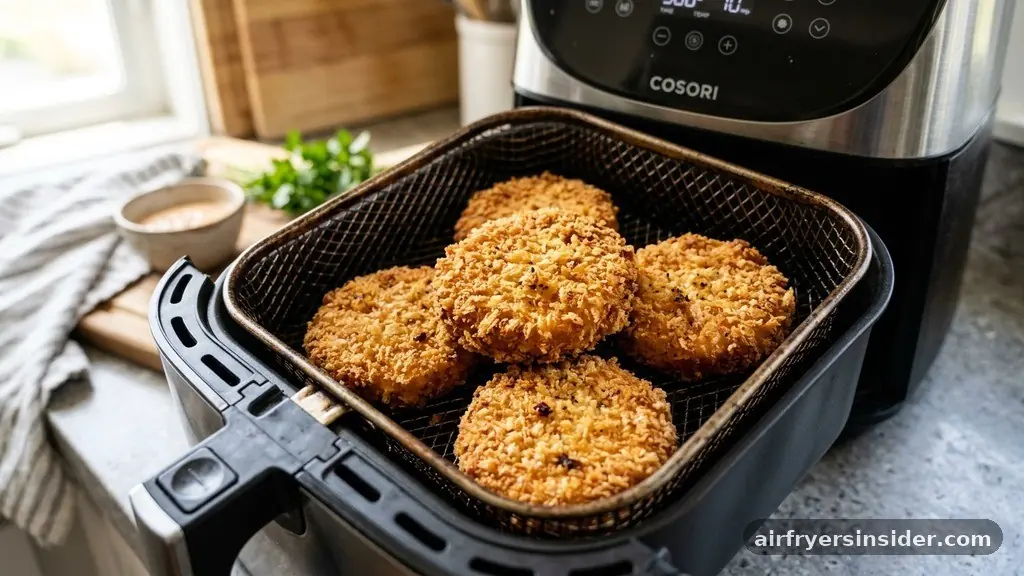
At its core, an air fryer is a compact convection oven that forces hot air to circulate at high speeds around the food. When you place a breaded item like a chicken patty inside, the heat hits the surface immediately, which is why you get that desirable crispy texture without needing to submerge the food in a vat of hot oil.
The primary concern when preparing processed chicken products is ensuring that the heat penetrates the center effectively before the breading burns. Most air fryers reach high temperatures quickly, which is why understanding the relationship between time and heat is vital.
The air frying time can vary significantly depending on the wattage of your appliance and the initial temperature of the patty. A preheated air fryer is almost always recommended to ensure that the cooking cycle begins at the optimal temperature, preventing the breading from becoming soggy.
Unlike a microwave, which can result in a rubbery texture, the air fryer maintains the structural integrity of the breading, ensuring the outer layer remains firm and satisfying. By utilizing convection cooking, the air fryer effectively dehydrates the surface of the breading just enough to create that crunch while locking in the moisture of the meat inside.
Determining the Ideal Temperature for Chicken Patties
When deciding on the right heat level, many home cooks struggle between 375 and 400 degrees Fahrenheit. For most breaded chicken products, 380°F to 400°F is the “sweet spot.”
Setting your unit to 400°F is generally the best approach if you want the fastest results and maximum crispiness. However, if you find that your specific air fryer runs hot—a common trait in high-powered models like the Ninja Foodi—you might want to drop the temperature slightly to 375°F to ensure the breading doesn’t darken too quickly before the inside is ready.
The goal is to achieve a balance where the crispy coating is uniform in color and the interior reaches a safe internal temperature. If the temperature is too low, the patty will take too long to cook and may dry out; if it is too high, you risk burning the outer layer while the center remains cool.
Most manufacturers of Tyson chicken or other store-brand patties provide instructions for an oven, but you can typically subtract about 20-30% of the recommended oven time when moving to an air fryer. Always keep an eye on the color; if the patties reach a deep golden brown before the timer ends, they are likely finished.
The Importance of Proper Airflow and Spacing
One of the most frequent mistakes made when air frying is overcrowding the basket. Because the appliance relies on rapid air circulation to cook food evenly, the air needs a clear path to move around each patty.
If you stack them on top of each other, the parts of the patties that are touching will remain soft and pale, defeating the purpose of using an air fryer. Ideally, you should arrange your chicken patties in a single layer with enough space between them to allow the heat to reach every surface.
If you are cooking for a larger group and need to fit more patties, you might be tempted to pile them up, but this will significantly increase the air frying time and result in uneven cooking. If you must cook in batches, it is better to do so sequentially.
You can keep the first batch warm in a low-temperature oven or simply rely on the residual heat of the air fryer to keep them warm while the second batch cooks. Remember that the air fryer basket acts as a chimney; restricting that flow of air will result in a less-than-optimal final product.
Table: Air Fryer Cooking Times for Chicken Patties
The following table provides a general guideline for cooking frozen, breaded chicken patties. Please note that exact times may vary based on your specific appliance’s wattage and the thickness of the patty.
| Patty Type | Temperature | Estimated Time | Flip Required? |
|---|---|---|---|
| Frozen, Standard Breaded | 400°F | 10-12 Minutes | Yes, at 6 minutes |
| Frozen, Extra Crispy/Thick | 380°F | 14-16 Minutes | Yes, at 8 minutes |
| Thawed/Fresh Patties | 375°F | 8-10 Minutes | Yes, at 5 minutes |
| Reheating Cooked Patties | 350°F | 3-5 Minutes | Optional |
Ensuring Poultry Safety and Proper Internal Temperature
When dealing with any form of poultry, poultry safety is the highest priority. While most commercial frozen chicken patties are pre-cooked, you must still ensure they are heated thoroughly.
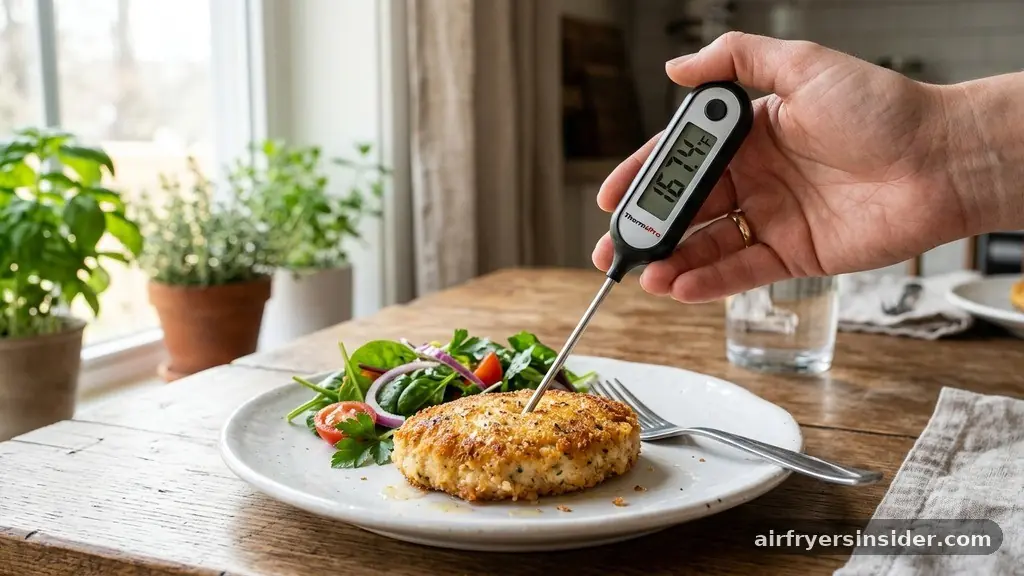
According to USDA guidelines, poultry should reach an internal temperature of 165°F to be considered safe for consumption. Even if the patty looks cooked on the outside, the center might still be cold if the air fryer was not preheated or if the patty was particularly thick.
The most reliable way to verify doneness is to use a high-quality food thermometer. Simply insert the probe into the thickest part of the patty. If you don’t have a thermometer, you can cut into one of the patties to ensure the meat is hot and steaming throughout.
Avoid the temptation to pull them out early just because they look brown; that crispy coating can sometimes be deceptive. By confirming the temperature, you ensure that you are following safe handling practices while enjoying your meal, especially when serving children or vulnerable individuals.
Techniques for Maximum Crispness
To elevate your air-fried chicken, a few simple techniques can make a world of difference. First, consider using a light application of cooking spray or a thin layer of oil.
While the patties themselves often contain some oil, a very light oil mist on the surface can help bridge the gap between “good” and “restaurant-quality” crispiness. Be careful not to use aerosol sprays containing propellants like lecithin, as these can sometimes damage the non-stick coating of your air fryer basket over time; instead, use a pump-style mister with olive or avocado oil.
Another effective trick is to flip halfway through the cooking process. Even though air fryers circulate air well, the underside of the patty often gets less direct heat than the top. Flipping ensures that both sides receive equal exposure to the hot air, preventing a soggy bottom.
If you are worried about cleanup, you can use parchment paper designed for air fryers, which often comes with holes to allow for airflow. This makes removing the patties much easier and keeps the basket cleaner without sacrificing the texture you are working so hard to achieve.
Addressing Common Challenges and Topical Gaps
One common issue users face is the breading falling off during the cooking process. This usually happens if the patties are handled too roughly or if they are moved too early in the cycle. To prevent this, let the patties sit in the basket for the first few minutes undisturbed.
Once a slight crust has formed, they will be much easier to flip without losing any of the breading. Another issue involves the smoke point of the oil used in the breading; if your air fryer starts smoking, it is usually a sign that the temperature is too high for that specific type of breading, or that there is debris at the bottom of the basket.
If you find that your patties are becoming medium-well on the outside but are still cold in the middle, you are likely dealing with a temperature that is too high. Simply reduce the heat by 25 degrees and add a couple of minutes to the total time.
This allows the heat to radiate inward more slowly, cooking the center without scorching the exterior. Additionally, if you are using a Ninja Foodi or a similar high-performance unit, remember that these machines often have a “broil” or “crisp” function that can be used for the final minute of cooking to add an extra layer of crunch.
The Role of Preheating and Residual Heat
While many people view the air fryer as a “throw it in and go” appliance, the preheated air fryer is a game-changer. Just like an oven, an air fryer needs to be at the correct temperature from the moment the food enters the chamber.
If you start with a cold basket, the patties will begin to defrost and potentially soak up any moisture released by the breading, leading to a less crispy result. Most modern air fryers have a dedicated preheat button, but if yours does not, simply running it empty for three minutes at your target temperature will suffice.
Furthermore, residual heat plays a role in the final moments of the cooking process. Once the timer goes off, don’t feel the need to serve the chicken immediately. Letting the patties rest in the basket for one or two minutes allows the internal juices to redistribute and the surface moisture to evaporate further.
This resting period ensures that the first bite is just as crispy as the last. It also provides a small buffer if you are preparing other sides, ensuring that everything is ready to serve at the same time without the chicken losing its peak texture.
Best Practices for Reheating Leftovers
Reheating chicken patties in an air fryer is far superior to using a microwave. When you reheat in a microwave, the moisture in the meat turns into steam, which makes the breading soggy and the meat chewy. In contrast, the air fryer effectively “refreshes” the breading.
To reheat, set your air fryer to 350°F and cook for 3 to 5 minutes. This temperature is lower than the initial cooking temperature because you are essentially warming the meat rather than cooking it from raw.
If you are dealing with a large quantity of leftovers, spread them out in the basket as you would with fresh patties. Avoid stacking them, even when reheating. If you find the patties are becoming too dry during the reheating process, you can lightly brush them with a tiny amount of water or oil before placing them in the basket.
This adds a bit of moisture back into the breading, helping it crisp up without becoming brittle. Following these simple steps will ensure that your second meal is just as enjoyable as the first, proving that frozen food convenience doesn’t have to mean sacrificing quality.
Frequently Asked Questions
Should I thaw my chicken patties before putting them in the air fryer?
No, you do not need to thaw your chicken patties. They are designed to be cooked directly from frozen. Cooking them from a frozen state is actually preferred because it prevents the breading from becoming overly saturated with moisture, which helps maintain that signature crispy texture.
How do I know if my chicken patties are fully cooked?
The most accurate method is to use a digital food thermometer to check the internal temperature. The meat should reach 165°F. If you don’t have a thermometer, ensure the center is steaming hot and the juices run clear when you cut into the thickest part of the patty.
Do I need to add oil to frozen chicken patties?
Most store-bought frozen patties are pre-fried, meaning they already contain oil in the breading. You do not strictly need to add more. However, a very light mist of oil can help achieve a deeper golden-brown color and a slightly crunchier exterior if you prefer that specific result.
Can I cook different brands of chicken patties at the same time?
Yes, provided they are of similar thickness. If one brand is significantly thinner than another, the thinner patty will likely finish faster. It is best to stick to one type of patty per batch to ensure that every piece reaches the perfect level of doneness simultaneously.
Conclusion
Mastering how long to cook chicken patties in air fryer settings is a simple yet effective way to improve your home cooking routine. By focusing on the correct temperature—typically between 380°F and 400°F—and ensuring proper airflow within the basket, you can achieve a perfect crispy texture that rivals any fast-food alternative. Whether you are relying on the frozen food convenience of Tyson chicken or other brands, the air fryer provides a consistent, efficient, and healthy method for preparing these processed chicken products.
Remember to utilize a food thermometer to verify that your meal meets USDA guidelines for poultry safety, and never underestimate the power of a quick flip halfway through the cooking cycle. With these strategies, you can consistently produce delicious, golden-brown chicken patties that satisfy every time, turning a quick meal into a highlight of your day.


