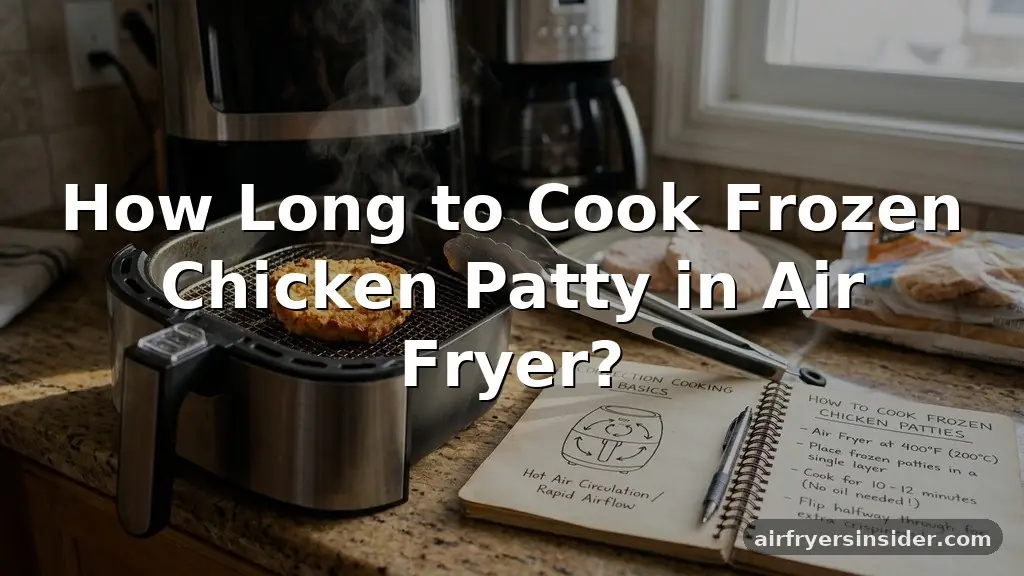
Mastering how long to cook frozen chicken patty in air fryer setups ensures you get a quick, delicious meal without the soggy texture often associated with microwave heating. Many home cooks struggle with achieving that perfect crunch while keeping the meat juicy, but the convection power of an air fryer makes this surprisingly easy.
By managing your temperatures and timing correctly, you can turn a simple frozen staple into a restaurant-quality lunch in under fifteen minutes. Whether you are using a compact basket model or a large multi-cooker, understanding the mechanics of heat distribution is the key to consistent results every single time you fire it up.
Understanding the Basics of Convection Cooking
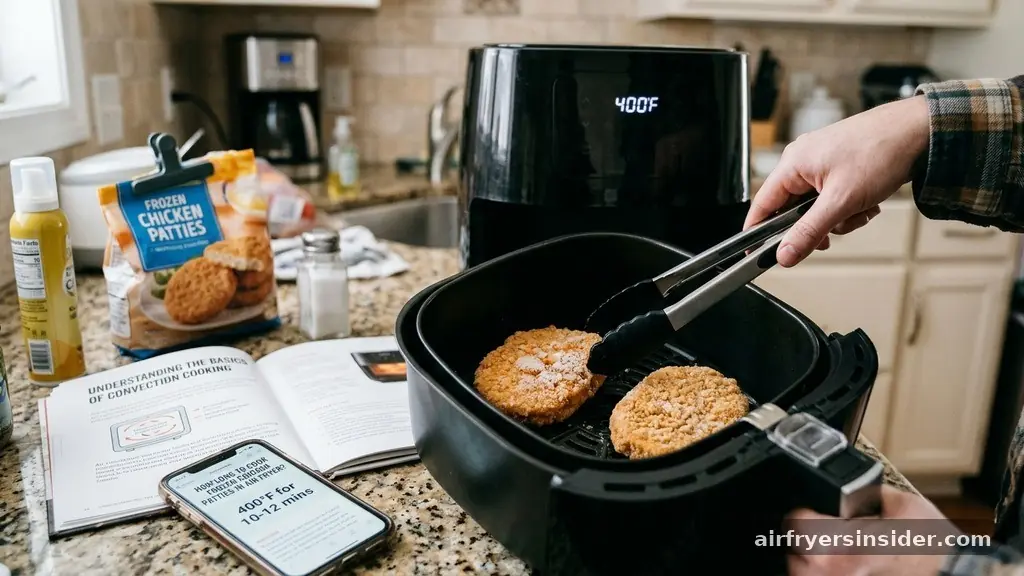
Air fryers are essentially high-powered convection ovens. They work by using a heating element and a powerful fan to circulate hot air rapidly around your food. When you are determining how long to cook frozen chicken patty in air fryer units, you are relying on this intense airflow to dehydrate the surface of the breading while simultaneously cooking the interior.
Unlike a standard oven, which relies on radiant heat, the air fryer forces hot air into every corner of the basket. This is why you get that desirable crispy texture without needing to deep-fry your dinner in a vat of oil.
Because the heat is so focused, the cooking time is significantly shorter than in a traditional oven. Most frozen, pre-cooked breaded chicken patties are designed to be heated through rather than cooked from raw, though the packaging will always specify this. If you are working with raw, breaded poultry, you must be much more vigilant about poultry safety.
Regardless of the type, the goal is a golden brown crust that snaps when you bite into it. If your air fryer is prone to hot spots, you will need to pay attention to the placement of the patties to ensure even browning across the board.
Determining the Ideal Temperature Settings
The most common temperature for air frying frozen convenience foods is 400 degrees Fahrenheit. This high heat is crucial because it helps the exterior breading crisp up immediately, locking in the moisture before the center dries out.
If you set the temperature too low, say around 325 or 350 degrees, the patty might become tough or leathery before the crust gets a chance to brown properly. The higher heat acts as a sear, providing that satisfying crunch that makes air-fried food so popular.
However, if you find that your particular air fryer runs hot—which is common in smaller models like the Cosori or certain Ninja Foodi configurations—you might want to drop the heat to 380 degrees. This prevents the edges of the breaded chicken from burning before the center is hot. Always monitor your first batch closely.
If the exterior looks dark brown after only five minutes, your unit is likely running hotter than the dial suggests. Adjusting your settings by twenty degrees can make the difference between a perfect meal and a charred one.
The Importance of Preheating Your Device
Many people skip preheating because they assume the air fryer is small enough to reach temperature instantly. While it does heat up faster than a conventional oven, giving it three to five minutes to stabilize ensures that the cooking process starts at the intended temperature.
When you drop a frozen patty into a cold basket, the breading can sometimes turn mushy as it sits in the rising heat. A preheated basket provides that immediate thermal shock necessary for a crisp finish.
Think of preheating as setting the stage for success. Once the air fryer reaches its target temperature, the fan is already moving at full speed, ready to distribute heat evenly. If you are cooking multiple patties, this consistency is vital.
Without preheating, the first few minutes are spent simply warming up the metal of the air fryer basket, which eats into your total cook time and can lead to uneven results. Set your timer for a quick preheat while you grab your condiments or prepare a side salad, and your chicken will thank you for the extra attention.
Managing Basket Capacity and Airflow
One of the biggest mistakes home cooks make is basket overcrowding. Air fryers rely entirely on air circulation to do their work. If you stack your patties on top of each other, the air cannot reach the sides or the bottom of the chicken.
This leads to uneven cooking, where the top is crisp, but the bottom remains soft, pale, and unappealing. You should always arrange your patties in a single layer, leaving at least a half-inch of space between each piece to allow the hot air to swirl freely.
If you have a large family and need to cook a significant amount of food, it is better to cook in multiple batches rather than trying to cram everything in at once. While it might seem like it takes longer, the quality of the final product is significantly higher.
If you must use parchment paper, ensure it is perforated specifically for air fryers. Using regular parchment paper can block the airflow, effectively turning your air fryer into a steaming chamber, which is the exact opposite of what you want for breaded items.
Flipping and Oil Spray Techniques
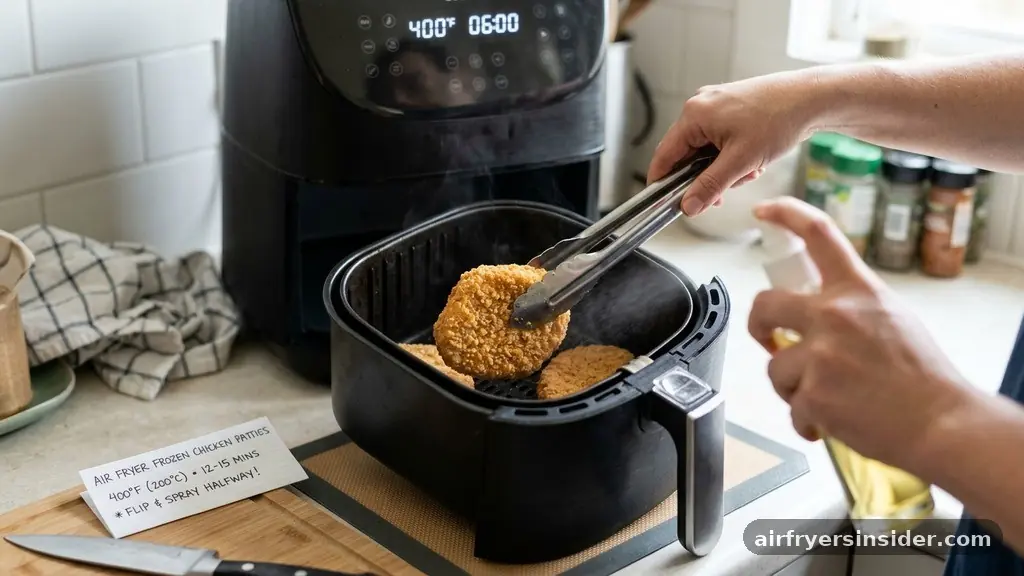
Even though air fryers are designed to circulate heat, flipping the patties halfway through the cooking time is a best practice. Most frozen chicken patties have a flat surface, but the bottom side tends to stay slightly cooler because it is touching the basket grate.
By turning them over at the halfway mark, you ensure that both sides get equal exposure to the direct heat. This simple step is the difference between a professional-looking result and one that looks like it came out of a microwave.
Additionally, a light oil spray can enhance the browning process. While the breading on frozen patties is usually pre-fried, a tiny mist of neutral oil like avocado or canola can help the crust achieve a deeper, more uniform color.
Do not use aerosol cooking sprays that contain soy lecithin, as these can build up and damage the non-stick coating of your air fryer basket over time. Instead, use a refillable oil mister to get a light, even coat on the surface of the chicken before you start the timer.
Ensuring Food Safety and Internal Temperature
When dealing with poultry, salmonella prevention is non-negotiable. Even if the package says the product is pre-cooked, you should always aim for an internal temperature of at least 165 degrees Fahrenheit. Using an instant-read thermometer is the only way to be 100% certain.
Simply stick the probe into the thickest part of the patty. If it registers below 165 degrees, add another minute or two to the cooking time. It is a small investment of time that provides peace of mind.
It is also important to consider the resting time. Once you remove the patties from the air fryer, let them sit for a minute or two on a plate. This allows the juices to redistribute and the internal heat to even out.
If you cut into the chicken immediately, the juices may run out, leaving the meat inside dry. A short rest keeps the patty moist and makes the eating experience much more enjoyable. This is especially true for thicker, premium-style chicken patties that have a more substantial meat content.
Common Troubleshooting Tips for Frozen Patties
If your patties are coming out consistently dry, check your temperature settings. It is possible that you are cooking them for too long. If they are coming out soggy, you might be overcrowding the basket or failing to preheat.
Sometimes, the issue is the brand of the patty itself. Some brands use a thicker breading that requires more time, while others use a thinner coating that browns in just a few minutes. If you find your specific brand is burning, try dropping the temperature by 10 degrees and extending the time by two minutes.
Another factor is the thickness of the patty. A standard thin patty might take 8-10 minutes, while a thick, gourmet-style patty could take 12-15. Always rely on your food thermometer rather than just following the time on the box.
The box instructions are usually written for conventional ovens and are often just a loose estimate for air fryers. Use the table below as a general reference for timing based on the thickness of your frozen chicken patties.
| Patty Thickness | Cooking Time at 400°F | Flip Required |
|---|---|---|
| Thin (Standard) | 8-10 Minutes | Yes |
| Medium (Breaded) | 10-12 Minutes | Yes |
| Thick (Gourmet) | 12-15 Minutes | Yes |
Addressing Topical Gaps
One common question that often goes unanswered is how to handle frozen breaded cutlets versus standard patties. Cutlets are often irregularly shaped, which means they cook unevenly. When cooking these, prioritize the thickest part of the meat when using your thermometer.
Another gap involves the use of aluminum foil. While you can use foil in an air fryer to make cleanup easier, it must be placed carefully.
Never cover the entire bottom of the basket, as this will disrupt the airflow. Instead, use a small piece of foil just large enough to hold the patty, or use a silicone mat designed for air fryers.
Additionally, many users wonder if they can cook frozen fries alongside the chicken. While it is possible, you must ensure that both items have similar cooking times. If the fries take 20 minutes and the chicken takes 10, you will end up with either raw chicken or burnt fries.
Always cook items with similar cooking requirements together. If you must combine them, add the chicken halfway through the fries’ cooking process, provided there is enough space in the basket to maintain proper airflow.
Optimizing the Air Frying Process
To truly master this, keep a small log of the brands you use and the times that worked best for them. Different manufacturers use different fillers and breading compositions, which react differently to the intense heat of an air fryer.
Over time, you will develop an intuition for how your specific machine handles frozen goods. Clean your basket regularly to prevent old oil buildup, which can smoke at 400 degrees and impart a bitter flavor to your food.
- Always check the internal temperature to ensure safety.
- Use an oil mister for a better, more even crunch.
- Avoid stacking food to keep the air circulation efficient.
- Flip halfway through to ensure both sides are golden brown.
- Preheat for at least 3 minutes for the best results.
- Rest the chicken for 2 minutes before serving.
By following these guidelines, you move away from guessing and toward a repeatable, high-quality result. The convenience of frozen chicken is undeniable, but it is the technique you apply in the air fryer that transforms it from a “fast food” compromise into a legitimate, tasty meal. Practice these steps, and you will find that you rarely, if ever, feel the need to order out for a chicken sandwich again.
Frequently Asked Questions
What is the recommended internal temperature for chicken patties?
For optimal poultry safety, your chicken patties should reach an internal temperature of 165 degrees Fahrenheit. Use an instant-read thermometer inserted into the thickest part of the patty to confirm it is fully cooked, ensuring the meat is safe to eat while remaining juicy and flavorful.
Do I really need to flip the patties while air frying?
Yes, flipping is essential for even cooking. Because the heat source in an air fryer is typically located at the top, the bottom of the patty will not brown as quickly as the top. Flipping halfway through ensures a uniform golden brown crust on both sides.
Can I cook frozen chicken patties on parchment paper?
You can use parchment paper, but it must be perforated to allow air circulation. Never use standard non-perforated parchment paper, as it will block the airflow and prevent the chicken from crisping properly. Always ensure the paper is weighed down by the food so it does not fly around.
Why do my chicken patties come out soggy?
Soggy patties usually result from overcrowding the air fryer basket or failing to preheat the device. If the air cannot circulate freely around the entire surface of the patty, moisture gets trapped. Ensure you have plenty of space between items and always preheat for at least three minutes.
Conclusion
Achieving the perfect texture when you learn how long to cook frozen chicken patty in air fryer units is a matter of balancing heat and airflow. By preheating your machine, maintaining a single layer in the basket, and using a thermometer to verify your internal temperature, you can consistently produce a crispy, delicious meal. Do not be afraid to adjust your timing based on your specific appliance, as every model performs slightly differently.
With a little practice, this method will become second nature, allowing you to prepare quick and reliable dinners whenever you are short on time. Experiment with different seasonings or dipping sauces to customize your meal, and feel free to share your own tips for the perfect air-fried chicken experience with your friends and family.