Figuring out how long to cook frozen chicken thighs in air fryer setups can save your dinner when you forget to pull meat from the freezer. Because air fryers rely on intense, focused heat, they are surprisingly capable of handling frozen poultry safely and efficiently.
Many home cooks worry about the texture or safety of skipping the thawing process, but with the right technique, you can achieve juicy, flavorful results without the wait. Understanding the mechanics of your appliance and following simple temperature checks will ensure your meal is both delicious and safe to eat every single time.
The Science of Air Frying Frozen Poultry
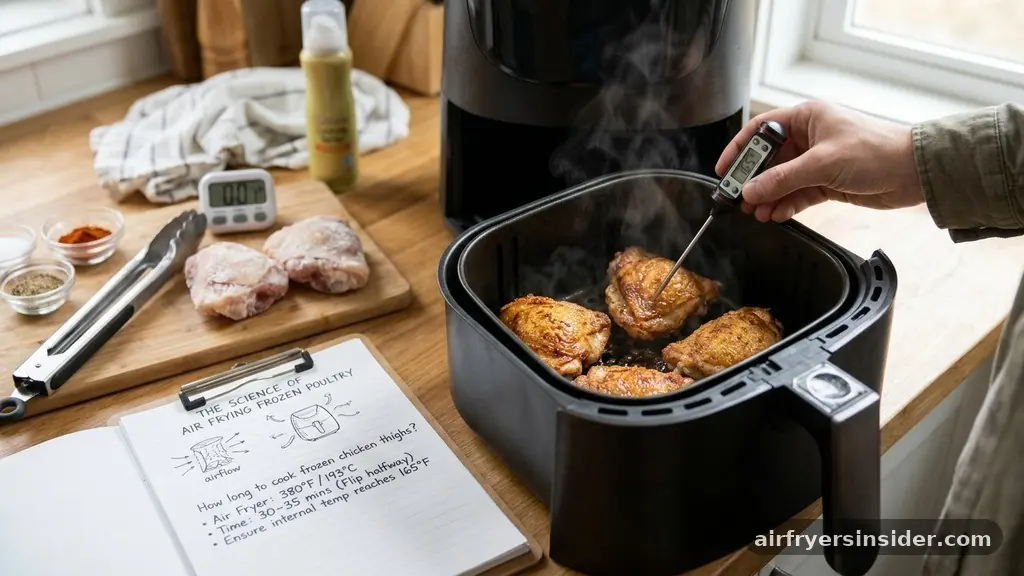
When you place frozen meat into an air fryer, you are essentially utilizing rapid air technology to blast the ice crystals and muscle fibers with intense heat. Unlike a traditional oven, which relies on ambient heat, the air fryer circulates hot air at high speeds around the food.
This process creates a consistent environment that promotes convection cooking, which is ideal for thawing and cooking simultaneously. Because the chicken is frozen, the exterior will begin to defrost and heat up while the center remains solid, allowing the unit to work through the layers of the meat gradually.
However, the challenge lies in balancing the exterior texture with the internal doneness. If the temperature is too high, the outside of the chicken will burn or dry out before the core reaches a safe temperature. If it is too low, the chicken might stay in the “danger zone” for bacteria growth for too long.
By maintaining a moderate heat, typically around 375 to 380 degrees Fahrenheit, you allow the heat to penetrate the frozen mass effectively. This method relies on the air circulation inherent in the device to prevent hot spots and ensure the chicken cooks evenly despite its initial icy state.
Safety First: Adhering to USDA Guidelines
The most critical aspect of cooking poultry is food safety. According to USDA guidelines, the primary concern with any meat is ensuring it reaches an internal temperature of 165 degrees Fahrenheit. When cooking from frozen, you cannot rely solely on a timer because the starting temperature and the thickness of the chicken thighs vary.
Using a reliable meat thermometer is non-negotiable. You must insert the probe into the thickest part of the thigh, making sure to avoid hitting the bone if you are using bone-in chicken thighs, as this can lead to an inaccurate reading.
Preventing food poisoning is the goal of these thermal standards. Because frozen chicken is prone to releasing excess moisture as it melts, the cooking process can sometimes be uneven. Always check the thickest section of the meat to confirm that the heat has fully penetrated the core.
If you find the exterior is browning too quickly but the internal temperature is still below 165 degrees, you can lower the heat slightly and continue cooking. Never rush this step; the safety of your meal depends on hitting that specific thermal threshold to eliminate the risk of salmonella.
Preparation and Seasoning Adhesion
One common mistake people make when working with frozen meat is trying to apply spices immediately. If you coat the frozen surface with a seasoning rub right away, the ice crystals will melt, pull the moisture out, and leave your spices sliding off into the bottom of the basket.
To ensure proper seasoning adhesion, wait until the chicken has cooked for at least five to eight minutes. Once the surface has thawed slightly and the initial moisture has evaporated, you can brush the meat with a little olive oil or melted butter and apply your dry rubs.
This delay in seasoning also helps with flavor development. As the chicken fat begins to rendered, it creates a natural base that helps the seasonings stick better to the skin or meat surface. For those who enjoy crispy skin, this rendered fat is essential.
If you are using boneless skinless chicken thighs, you might consider adding a light dusting of cornstarch or flour mixed into your spices to help create a crust. This small extra step compensates for the lack of skin and ensures the surface doesn’t become rubbery during the accelerated cooking process.
Optimizing the Air Fryer Basket
The way you arrange the chicken in your air fryer significantly impacts the final outcome. Because the goal is to get air moving around every piece, overcrowding is the enemy of quality. If you jam the basket full of frozen thighs, the air cannot circulate properly, leading to steamed, pale chicken instead of nicely browned, tender meat.
Aim for a single layer with enough space between each thigh to allow the hot air to pass through. If you have a large amount of chicken, it is better to cook in batches rather than cramming everything in at once.
Using parchment paper can be a helpful trick for cleanup, but be mindful of how you place it. Never place parchment paper in the basket while preheating without the weight of the food on top, as it can blow into the heating element and cause a fire. Once the chicken is in, the weight of the meat will hold the paper down.
While some people worry that paper blocks airflow, modern air fryer-safe parchment liners come with pre-cut holes designed to maintain the necessary air circulation. This keeps your basket cleaner and makes it easier to remove the chicken once it finishes cooking.
Time and Temperature Variables
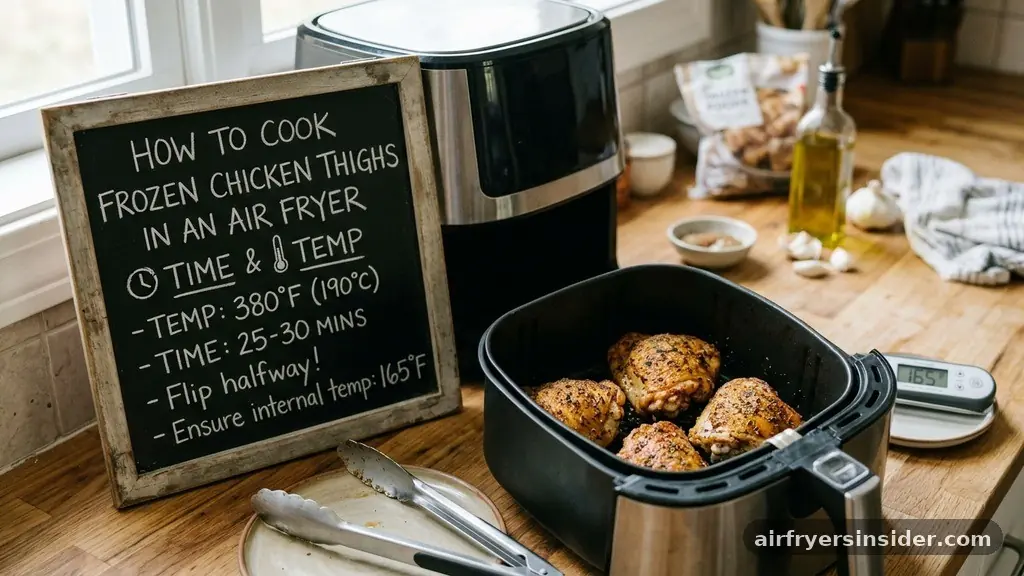
There is no single “magic number” for how long to cook frozen chicken thighs in air fryer units, as it depends heavily on the model you own. A smaller, countertop unit with a powerful fan might cook faster than a large, oven-style air fryer. Generally, you should plan for a total cooking time ranging from 20 to 30 minutes.
Start by checking the progress at the 15-minute mark. At this point, you can flip the thighs, drain any excess water that has accumulated, and apply your oil and seasonings.
| Chicken Type | Estimated Time | Recommended Temp |
|---|---|---|
| Boneless Thighs | 18–22 minutes | 380°F |
| Bone-in Thighs | 25–35 minutes | 375°F |
Keep in mind that these times are estimates. Your instant-read thermometer is the only tool that can give you a definitive answer.
If you are cooking bone-in pieces, the extra mass of the bone acts as an insulator, which is why they generally require a longer time at a slightly lower temperature to ensure the inside cooks through without drying out the surface. Always account for carryover cooking as well; the chicken will continue to cook for a few minutes after you remove it from the basket, so you can pull it out when it hits 160 degrees and let it rest until it reaches the safe 165-degree mark.
Addressing Common Topical Gaps
Many people wonder if they need to worry about the “frozen” aspect affecting the texture of the meat. A common misconception is that cooking from frozen results in tough, stringy chicken. In reality, because air frying is essentially a form of dry-heat roasting, it actually does a great job of keeping the meat moist if you don’t overcook it.
Another gap in knowledge involves the preheating process. While many recipes skip this, preheating your air fryer for 3-5 minutes is highly recommended when starting with frozen items. The initial blast of heat helps start the browning process immediately, which is crucial since the frozen meat will naturally lower the air temperature inside the chamber when you first add it.
Some users also ask about the difference in handling various sizes of chicken thighs. Larger, organic, or thick-cut thighs will naturally require more time than smaller, thin ones. If your chicken thighs are stuck together in a frozen block, do not try to force them apart with a knife, as this is a safety hazard.
Instead, cook them for a few minutes until they soften, then use tongs to gently separate them, season them, and continue the process. This ensures that every piece receives equal heat exposure, leading to a much more consistent result across the entire batch.
Troubleshooting Common Issues
If you find that your chicken is coming out with a soggy exterior, you are likely dealing with too much moisture release. Frozen meat contains ice that turns into water during the heating process. If that water doesn’t evaporate quickly enough, it steams the chicken.
To fix this, ensure you are not crowding the basket, as mentioned earlier. Additionally, you can pat the chicken dry with a paper towel once it has thawed enough during the first stage of cooking. This removes surface moisture and allows for better browning.
Another common issue is uneven cooking. This usually stems from the placement of the chicken. If you have a basket-style air fryer, the center often receives more direct heat than the edges.
Halfway through the cooking process, take the basket out, give it a good shake, or rearrange the thighs. Rotating their positions ensures that no single piece is stuck in a “cool spot” for too long.
If you’re using a tray-style air fryer, rotate the trays from top to bottom if your unit has multiple levels. These simple adjustments can make a massive difference in the final texture of your meal.
The Role of Fats and Oils
When air frying, you might be tempted to skip the oil entirely to keep the meal “light,” but a light coating of oil is essential for heat conduction. The oil helps bridge the gap between the air and the food, effectively frying the surface and creating that desirable texture. For chicken thighs, which are naturally fatty, you don’t need much.
A quick spritz of avocado oil or a light brush of olive oil is sufficient. This oil also acts as a vehicle for your seasonings, ensuring they don’t just fall off into the bottom of the basket.
If you are concerned about smoke, choose an oil with a high smoke point, such as avocado or grapeseed oil, rather than extra virgin olive oil, which can burn at high temperatures. Since the air fryer is essentially an oven with a high-powered fan, any oil that drips onto the bottom of the unit can smoke if it gets too hot. Keeping the basket clean and using just enough oil to coat the skin is the best way to avoid a kitchen filled with smoke while ensuring the chicken stays juicy and flavorful.
Post-Cooking Best Practices
Once you have verified that your chicken has reached 165 degrees, it is tempting to serve it immediately. However, letting the meat rest for three to five minutes is vital. Resting allows the juices to redistribute throughout the muscle fibers.
If you cut into the chicken immediately after pulling it from the air fryer, all those flavorful juices will run out onto the cutting board, leaving you with dry meat. This is particularly important for frozen-to-cooked methods, as the rapid temperature shift can make the muscle fibers more prone to releasing moisture if not given time to settle.
Finally, consider the presentation. Since air-fried chicken can sometimes look a bit pale compared to deep-fried or pan-seared versions, a quick garnish of fresh herbs like parsley or a squeeze of lemon juice can elevate the final dish.
If the skin isn’t as crispy as you would like, you can increase the temperature to 400 degrees for the final two minutes of cooking to give it a quick, high-heat blast. This “finishing” step is a great way to ensure that professional-level texture without the risk of overcooking the center of the thigh.
FAQ
Do I need to defrost chicken thighs before air frying?
No, you do not need to defrost them. You can cook them directly from frozen. This method is perfectly safe as long as you use a meat thermometer to ensure the internal temperature reaches 165 degrees Fahrenheit, which confirms the poultry is cooked through and safe to eat.
What is the best temperature for cooking frozen chicken thighs?
Setting your air fryer to 375 or 380 degrees Fahrenheit is ideal. This temperature range is high enough to brown the exterior and render the fat properly but moderate enough to allow the heat to reach the center of the frozen meat without drying out the outer layers.
How do I make the skin crispy when cooking from frozen?
To achieve crispy skin, wait until the chicken has thawed slightly in the air fryer—usually after 8 to 10 minutes—before applying oil and seasonings. You can also increase the heat to 400 degrees Fahrenheit for the last two minutes of cooking to give the skin a final, intense crisp.
Is it safe to eat chicken cooked from frozen in an air fryer?
Yes, it is safe, provided you follow the proper internal temperature guidelines. Use an instant-read thermometer to check the thickest part of the thigh. Once it hits 165 degrees Fahrenheit, the chicken is fully cooked and safe, effectively eliminating any risks associated with raw or undercooked poultry.
Conclusion
Mastering the process of how long to cook frozen chicken thighs in air fryer appliances is a practical skill that turns a kitchen “oops” into a delicious, reliable meal. By focusing on the internal temperature, utilizing the right heat settings, and ensuring good air circulation, you can achieve results that rival fresh-cooked poultry. Remember to use your meat thermometer as your primary guide rather than just the timer, as every appliance and every batch of chicken will vary slightly in size and density.
With these techniques, you can confidently prepare a healthy, tasty dinner even when your meal planning doesn’t go exactly as expected. Keep experimenting with different spice rubs and cooking times to find the perfect balance that works for your specific air fryer model and personal taste preferences.