

Cooking pork spare ribs in an air fryer might seem unconventional compared to traditional smoking or oven-roasting, but it is a surprisingly effective method for smaller batches. Achieving the perfect balance of tenderness and texture requires understanding how long to cook spare ribs in air fryer setups, as the concentrated convection cooking environment can quickly dry out meat if not managed correctly. By utilizing the right temperature settings and a strategic approach to moisture retention, you can enjoy succulent results that rival slow-cooked alternatives without waiting all day.
Understanding the Mechanics of Air Fryer Ribs
The primary challenge when working with an air fryer is that it functions as a high-powered convection oven. Unlike a smoker that relies on low and slow heat to break down connective tissue, an air fryer uses intense, circulating air to cook food rapidly.
When you consider how long to cook spare ribs in air fryer units, you must account for this speed. The goal is to simulate the environment of a BBQ pit while working within a much smaller, faster-heating space.
Because air fryers are compact, the air moves significantly faster than in a standard oven. This creates a powerful searing effect on the surface of the meat.
If you run the device at too high a temperature for the entire duration, the exterior will become tough and leathery before the interior collagen has a chance to soften. Successful preparation involves a two-stage process: an initial period of covered, gentle cooking followed by a final, uncovered stage to achieve that signature bark or glaze.
Preparing the Meat for Optimal Results
Before you even worry about the timing, the preparation of the rack is critical. Many home cooks overlook the silver skin, a tough membrane on the bone side of the ribs. If left intact, this membrane prevents seasonings from penetrating the meat and creates a chewy, unappealing texture.
Use a butter knife to gently lift the edge of the membrane, then pull it away firmly using a paper towel for better grip. Removing this is essential for achieving that sought-after fall-off-the-bone quality.
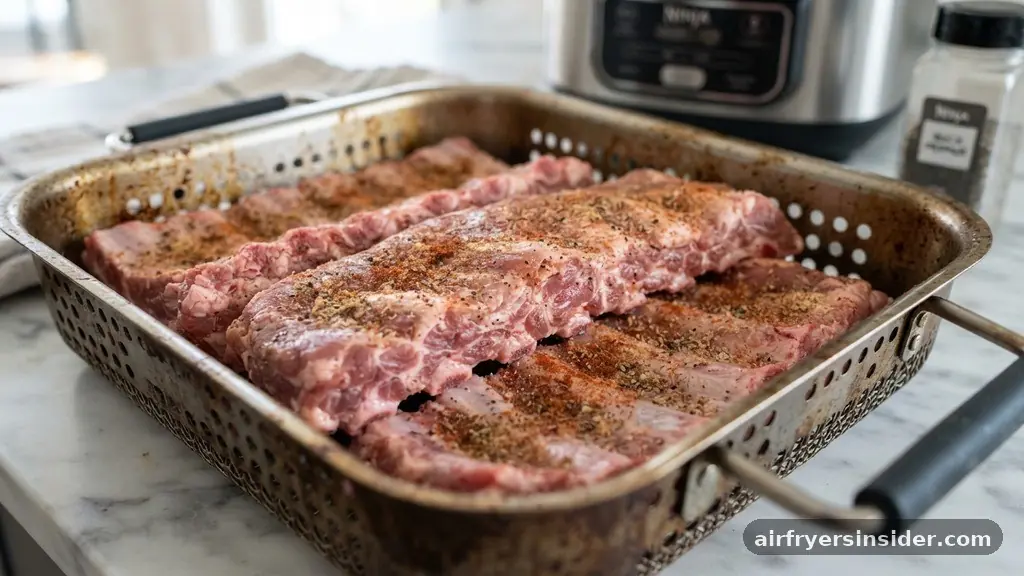
Once the membrane is removed, applying a high-quality dry rub is the next step. You want a mixture that balances salt, brown sugar, paprika, and garlic powder to create a flavorful crust.
Massage the rub into every crevice of the meat. If you have the time, letting the seasoned ribs sit in the refrigerator for an hour helps the salt draw moisture to the surface and then reabsorb it, which significantly improves the final flavor profile and juiciness of the pork.
The Importance of Preheating and Arrangement
Many people skip preheating, but it is a fundamental step for consistent results. Whether you are using a Ninja Foodi or a Cosori model, letting the machine reach its target temperature ensures that the cooking time remains predictable. Without preheating, the initial minutes of your cook time are effectively wasted, leading to uneven browning and potentially undercooked meat near the bone.
When loading the air fryer basket, avoid overcrowding. If the rack of ribs is too large for your basket, you must cut it into smaller sections—usually three or four ribs per piece.
The air needs to circulate freely around each section to ensure even cooking. If the pieces are packed too tightly, you will end up with steamed meat rather than roasted ribs, which defeats the purpose of using an air fryer.
Mastering the Low and Slow Phase
To achieve the best texture, you should start by wrapping the ribs in heavy-duty aluminum foil. This foil wrap technique is the secret to tenderizing the meat.
By trapping the steam inside, you allow the connective tissue to break down in a moisture-rich environment. During this phase, you should set your air fryer to a lower temperature, typically around 300°F to 325°F.
This stage usually lasts for about 30 to 45 minutes, depending on the thickness of the ribs. The goal here is not to brown the exterior but to ensure the meat is cooked through and tender.
If you skip the foil, the dry heat of the air fryer will harden the exterior before the inside is ready. Think of this as the “braising” portion of the cooking process, where you are essentially using the air fryer as a miniature pressure cooker or steam oven.
The Final Browning and Caramelization
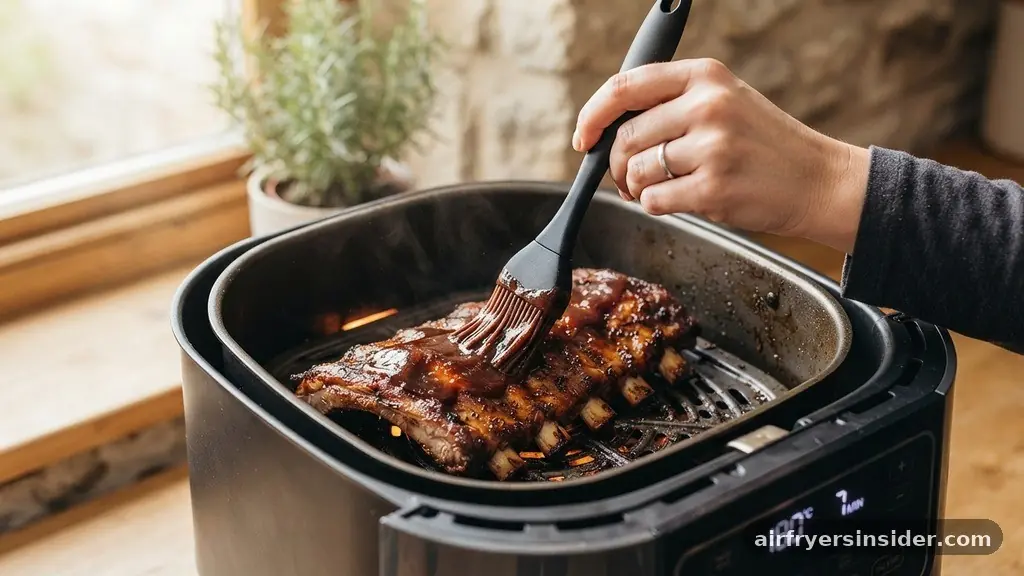
After the foil-wrapped phase, it is time to remove the ribs and apply your favorite barbecue sauce. This is when the magic happens. Unwrap the ribs, brush them generously with sauce, and return them to the air fryer basket.
Increase the temperature to roughly 375°F to 390°F for the final 5 to 10 minutes. This high heat triggers the Maillard reaction, resulting in beautiful browning and sticky caramelization.
Keep a close eye on the ribs during this final stage. Because sugary sauces can burn quickly in an air fryer, you only need a few minutes to get that perfect, slightly charred finish.
This is the moment where you create the contrast between the tender interior and the flavorful, sticky exterior. If you prefer a dry-rub-only rib, you can skip the sauce and just increase the heat for a few minutes to crisp up the edges of the meat.
| Cooking Phase | Temperature | Estimated Time |
|---|---|---|
| Steaming (Foil Wrapped) | 325°F (163°C) | 35–45 Minutes |
| Glazing/Browning | 380°F (193°C) | 5–8 Minutes |
Verifying Doneness with a Meat Thermometer
Relying solely on a timer is risky, as different air fryer models vary in their heating efficiency. A reliable meat thermometer is your best tool for success.
You want to aim for an internal temperature of at least 190°F to 205°F for pork spare ribs. At this range, the collagen has fully broken down, and the meat will pull away from the bone with minimal resistance.
Insert the probe into the thickest part of the meat, being careful not to touch the bone, as this can give you a false reading. If the temperature is lower than 185°F, the ribs will likely be tough and chewy.
If you find they aren’t quite there, simply return them to the air fryer for another 5 minutes of covered cooking. Investing in this quick check prevents the disappointment of serving undercooked or dry ribs.
Addressing Common Topical Gaps
A common question involves whether you should use a rack or place the ribs directly in the basket. For the best airflow, using a small metal rack inside the air fryer basket is ideal, as it allows heat to hit the bottom of the ribs. If you don’t have one, placing them directly on the basket surface is fine, but you should flip them halfway through the initial cooking phase to ensure even color.
Another gap often ignored is the resting period. Just like a steak or a roast, ribs need to rest for at least 10 minutes after being removed from the heat. This allows the juices to redistribute throughout the meat fibers.
If you cut into them immediately, the precious juices will run out onto the cutting board, leaving you with drier meat. Patience during this final step is just as important as the actual cooking time.
Equipment Variations and Performance
Different brands of air fryers perform differently. A Ninja Foodi, for example, often has more power and better airflow than smaller, budget-friendly models.
If you are using a smaller unit, you may need to adjust your cooking time upward by 5 to 10 minutes because the recovery time after opening the basket is longer. Always prioritize the internal temperature over the suggested time ranges.
If you are using a basket-style air fryer, be mindful of the “hot spots” near the heating element. Most models circulate air from the top down.
If you notice one side of the ribs browning faster than the other, rotate the basket or the ribs themselves. Small adjustments during the process are standard practice for anyone looking to master air fryer cooking.
- Always remove the silver skin to ensure a tender bite.
- Use high-quality dry rubs at least an hour before cooking.
- Preheat the air fryer to ensure consistent temperature from the start.
- Wrap the ribs in foil to lock in moisture during the first phase.
- Use a meat thermometer to confirm an internal temp of 190°F-205°F.
- Let the ribs rest for 10 minutes before slicing to retain juices.
FAQ Section
How can I tell if my ribs are done without a thermometer?
You can perform the “bend test.” Use tongs to lift the rack from one end; if the meat cracks slightly and the rack bends significantly toward the floor, it is likely tender. However, a meat thermometer is always the most accurate way to ensure safety and perfect texture.
Can I cook frozen spare ribs in an air fryer?
It is not recommended. Cooking from frozen leads to uneven results where the exterior overcooks while the center remains icy. Always thaw your ribs completely in the refrigerator before seasoning and cooking them to ensure the rub adheres properly and the meat cooks through evenly.
Why do my ribs turn out dry in the air fryer?
Dryness usually occurs due to two factors: cooking at too high a temperature for too long, or skipping the foil wrap. The foil wrap is essential for braising the meat in its own juices. If you skip this, the intense convection air will dehydrate the pork very quickly.
How many ribs can fit in an air fryer at once?
This depends on the capacity of your basket. You should never stack ribs on top of each other. If you have to layer them, the air cannot circulate, and the ribs will steam rather than roast. It is better to cook in smaller batches to ensure every piece gets that delicious, crispy finish.
Conclusion
Mastering how long to cook spare ribs in air fryer setups ultimately comes down to managing moisture and temperature. By respecting the need for a low-heat, foil-wrapped steaming phase followed by a high-heat finishing blast, you can achieve results that rival the best slow-cooked methods. Remember that the size of your rack and the specific performance of your appliance will require minor adjustments, so rely on your meat thermometer to guide you to the perfect level of doneness.
With these techniques in your kitchen repertoire, you can enjoy savory, tender ribs any night of the week without needing a full-sized smoker. Start with a high-quality dry rub and keep your process consistent, and you will quickly find that the air fryer is a reliable tool for your favorite pork dishes.
Meta Description: Learn how long to cook spare ribs in air fryer for perfect results. Discover timing, temperature settings, and expert tips for tender, juicy pork ribs.


