


Achieving the perfect balance of a golden-brown crust and juicy, tender meat when preparing pork in an air fryer is a common culinary challenge. Because thin pork chops have such a small margin for error, understanding exactly how long to cook thin pork chops in air fryer is essential for avoiding dry, tough results.
When you work with cuts that are often 1/2 inch thick, the high-intensity heat of an air fryer can transform them from succulent to overdone in a matter of seconds. By mastering the relationship between time, temperature, and preparation, you can turn these affordable, quick-cooking proteins into a staple weeknight meal that rivals restaurant quality.
Understanding the Mechanics of Air Frying Thin Cuts
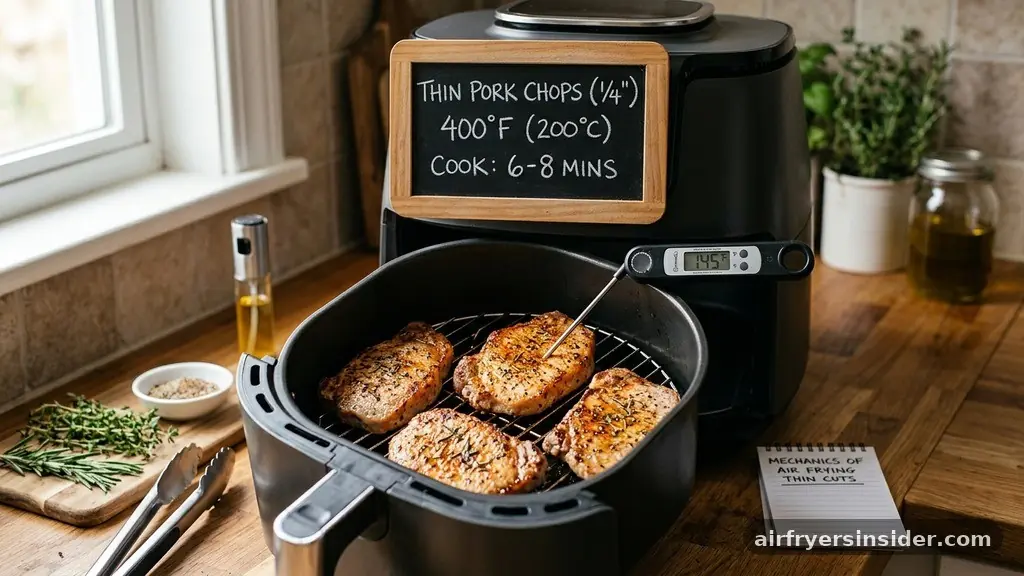
The primary reason air fryers are so effective for pork is their ability to facilitate rapid air circulation. Unlike a standard convection oven, which moves air at a slower velocity, an air fryer forces hot air into a compact chamber. This creates a powerful thermal environment that mimics deep frying.
When you place boneless pork chops—specifically those cut to a 1/2 inch thickness—into this environment, the exterior undergoes a rapid Maillard reaction. This chemical process between amino acids and reducing sugars is what gives the meat that desirable, savory, caramelized crust.
However, the speed of this process is a double-edged sword. Because the pork chop thickness is minimal, the heat penetrates the center of the meat almost instantly. If you leave the chops in for even a minute too long, the proteins tighten excessively, squeezing out the natural juices and resulting in a chewy texture.
To combat this, you must treat thin pork chops as a high-heat, short-duration project. The goal is to maximize the surface browning while keeping the internal temperature strictly controlled. Proper air fryer usage involves preheating the unit, which ensures that the cooking process begins immediately upon contact, rather than during a slow ramp-up period where the meat might steam instead of sear.
Optimal Temperature Settings for Thin Pork Chops
Determining the right temperature is just as critical as timing. While many air fryer recipes default to 400 degrees Fahrenheit, this may be too aggressive for very thin cuts. For a 1/2 inch chop, 375 degrees Fahrenheit is often the sweet spot.
This slightly lower temperature allows the exterior to develop color without drying out the interior before the meat reaches a safe internal temperature. If you prefer a crunchier, breaded coating, you might bump the temperature back up to 400 degrees Fahrenheit to ensure the breadcrumbs crisp up quickly before the meat overcooks.
Consistency in your heat application is paramount. If your air fryer is prone to hot spots, you may find that the side closest to the heating element browns faster than the others. Regardless of the chosen temperature, the total cooking time for a thin chop typically falls between six and nine minutes.
This range accounts for variations in the specific model of your air fryer, the starting temperature of the meat, and whether the chops were seasoned while cold or at room temperature. Always aim for a steady, high-heat environment, and resist the urge to crowd the air fryer basket, as this restricts airflow and leads to uneven cooking.
The Critical Role of Moisture Retention
One of the biggest complaints home cooks have regarding air-fried pork is that the result is often dry. Moisture retention is the key to success. Because thin pork chops lack the fat marbling found in thicker cuts like rib chops or pork loin roasts, they are naturally more susceptible to dehydration.
To mitigate this, you should coat the chops in a thin layer of healthy fat, such as olive oil. This fat acts as a conductor for heat, ensuring the surface browns evenly, while also creating a barrier that helps lock in the meat’s natural moisture.
Beyond the fat, the way you season your pork plays a role in how it retains water. A high-quality dry rub containing salt is essential, but timing matters. If you salt the meat too far in advance, the salt can draw moisture out to the surface through osmosis.
For thin cuts, it is best to season immediately before they go into the basket. Furthermore, using a non-stick cooking spray on the basket rack prevents the meat from tearing when you flip it. Tearing the surface of the meat provides an escape route for juices, which is a common reason why thin pork chops fail to stay succulent.
Step-by-Step Preparation for Perfect Results
Achieving consistent results requires a disciplined approach to preparation. Start by removing your pork chops from the refrigerator about 15 to 20 minutes before cooking.
Bringing the meat closer to room temperature ensures that the center cooks at a rate closer to the exterior, reducing the risk of a raw center or a burnt outside. Pat the chops dry with paper towels; excess surface moisture is the enemy of a good sear, as it creates steam that prevents the meat from browning effectively.
Once dried, brush both sides lightly with olive oil. This is the foundation for your seasoning. Whether you prefer a simple blend of garlic powder, paprika, and salt, or a complex spice mix, ensure it is applied evenly.
If you are using breadcrumbs, press them firmly into the meat to ensure they adhere, then lightly mist the top with cooking spray. This extra step helps the breadcrumbs achieve a golden, fried appearance rather than a dry, powdery texture. Place the chops in the air fryer basket in a single layer, ensuring they do not overlap.
| Thickness | Temp (°F) | Estimated Time | Internal Target |
|---|---|---|---|
| 1/4 inch | 375°F | 5–6 minutes | 145°F |
| 1/2 inch | 375°F | 7–9 minutes | 145°F |
| 3/4 inch | 380°F | 10–12 minutes | 145°F |
Mastering Food Safety and Internal Temperature
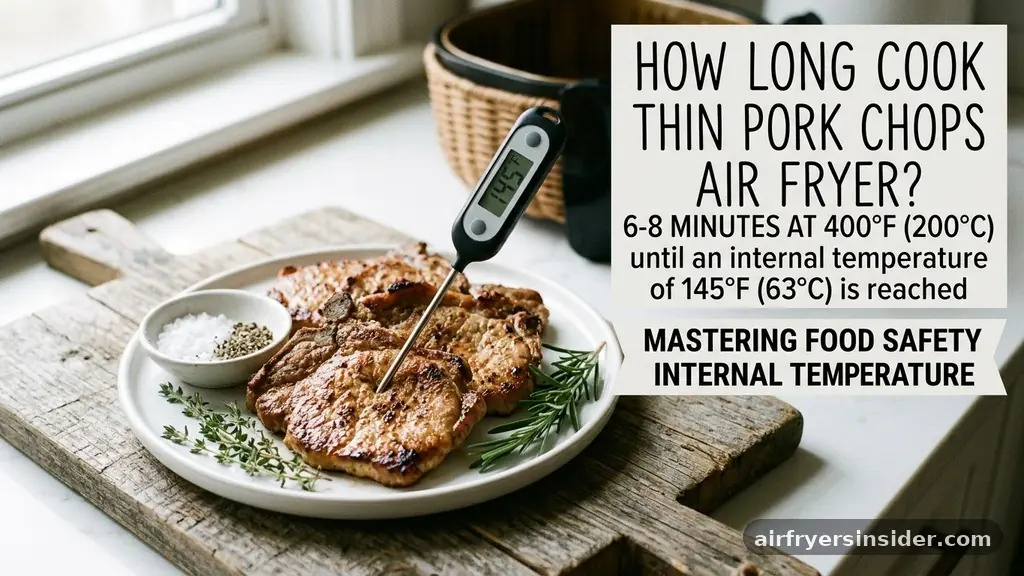
When dealing with pork, food safety is non-negotiable. While the USDA previously recommended cooking pork to 160 degrees Fahrenheit, the current standard is 145 degrees Fahrenheit, followed by a necessary resting period.
Using a reliable meat thermometer is the only way to guarantee that you have hit this target without guessing. Because thin pork chops cook so rapidly, they can jump from 145 degrees to 160 degrees in less than a minute.
You should insert the thermometer into the thickest part of the chop, avoiding the bone if you are using bone-in cuts. The meat will continue to rise in temperature after it is removed from the air fryer due to carryover cooking. If you pull the chops at exactly 145 degrees, the residual heat will likely push them to 150 or 155 degrees while they rest, which is still safe and juicy.
If you wait until the thermometer reads 160 degrees while the meat is still in the air fryer, you have likely already overcooked it. Always err on the side of pulling the meat slightly early, as the residual heat is your ally in reaching the perfect final temperature.
Common Mistakes to Avoid
Many home cooks fall into traps that compromise the quality of their air-fried pork. The most frequent error is neglecting to preheat the air fryer. If the unit is cold when you start, the pork will begin to cook slowly, essentially dehydrating before the surface has a chance to crisp.
This leads to a rubbery texture that is difficult to fix. Another major mistake is overcrowding the basket. Proper airflow is what defines “air frying”; if the chops are touching or overlapping, the air cannot circulate around the sides of the meat, resulting in steamed, pale, and unevenly cooked pork.
Additionally, many people forget the importance of the resting period. It is tempting to serve the food immediately, but letting the meat sit for three to five minutes allows the internal juices to redistribute throughout the muscle fibers. If you cut into the chop the moment it leaves the basket, you will see the juices run out onto your cutting board, leaving the meat dry.
Finally, avoid using too much oil. While fat is good for browning, an excessive amount can pool at the bottom of the basket, potentially leading to smoke or a greasy, unappealing crust. Use just enough to coat the meat lightly.
Addressing Topical Gaps: Variations and Troubleshooting
One aspect often overlooked in standard recipes is how to handle different types of pork chops, such as bone-in versus boneless, or breaded versus naked. Bone-in chops generally take slightly longer to cook than boneless ones because the bone acts as an insulator, slowing the heat transfer to the center of the meat.
If you are cooking bone-in 1/2 inch chops, add about one to two minutes to your total cooking time. When it comes to breading, the coating acts as a protective shield, which can actually help keep the meat moist, but it also means you need to be more careful with the air fryer temperature to prevent the coating from burning before the pork is done.
If you find your pork is consistently coming out dry, try brining the chops for 30 minutes in a simple mixture of water, salt, and a touch of sugar before cooking. This process helps the muscle fibers absorb extra water, providing a buffer against the intense heat of the air fryer.
If you are struggling with a lack of flavor, consider using a dry rub that includes brown sugar or smoked paprika, which will caramelize beautifully during the high-heat cycle. Troubleshooting these issues is a matter of adjusting your variables one at a time, starting with your thermometer accuracy and ending with your preparation techniques.
The Importance of the Resting Period
The resting period is perhaps the most underrated step in the entire cooking process. When pork chops are subjected to the intense heat of an air fryer, the proteins contract and push the internal juices toward the center of the meat.
If you slice into the chop immediately, these juices are released onto the plate rather than remaining in the meat. Allowing the chops to rest for at least three to five minutes gives the proteins a chance to relax and the juices to reabsorb, ensuring that every bite is succulent.
During this time, you can also take advantage of the carryover cooking effect. Because the surface of the meat is significantly hotter than the interior, the heat will continue to migrate inward. This allows you to finish the cooking process gently without the risk of drying out the outer layers.
You can tent the pork loosely with aluminum foil to keep it warm, but be careful not to wrap it too tightly, as this will trap steam and soften the crispy crust you worked so hard to achieve. A loose foil tent is the perfect compromise for maintaining temperature and texture during those final minutes of preparation.
Building a Consistent Routine for Weeknight Meals
To integrate this method into your regular cooking rotation, focus on streamlining your prep work. Keep your pantry staples—such as kosher salt, black pepper, garlic powder, onion powder, and dried herbs—in a dedicated blend. Having a “go-to” spice mix means you don’t have to think about seasoning every time you want a quick meal.
Additionally, investing in a high-quality, quick-read meat thermometer will pay for itself in saved meals. Once you have a reliable process, you can experiment with different flavor profiles, such as a lemon-herb crust or a spicy Cajun rub, without worrying about the underlying technical execution.
* Always preheat your air fryer for 3-5 minutes before adding the meat.
* Pat the pork dry to ensure a superior crust formation.
* Use a light coating of oil to enhance browning and moisture.
* Avoid overlapping the chops to maintain optimal airflow.
* Use a digital thermometer to pull the meat at 145°F.
* Rest the meat for 5 minutes before serving to lock in juices.
By focusing on these principles, you will find that cooking thin pork chops in the air fryer becomes an intuitive and rewarding task. It is a method that rewards precision and preparation, allowing you to produce a protein-rich meal that is both healthy and incredibly flavorful in under 15 minutes total time.
Frequently Asked Questions
How can I tell if my thin pork chops are done without a thermometer?
While a thermometer is the gold standard, you can check for doneness by pressing the meat. It should feel firm but have a slight spring-back. If it feels mushy, it is undercooked; if it feels rock-hard, it is likely overcooked. However, always verify with a thermometer for safety.
Can I cook frozen thin pork chops directly in the air fryer?
Yes, but you will need to adjust the time and temperature. Lower the heat to 350°F and increase the cooking time by 3 to 5 minutes. You should also season the meat halfway through the cooking process once the exterior has thawed enough for the spices to adhere properly.
Why do my breaded pork chops turn out soggy in the air fryer?
Soggy breading is usually caused by insufficient oil or overcrowding. Ensure you lightly spray the breaded surface with oil, which helps the crumbs crisp up. Also, make sure there is plenty of space between the chops so the hot air can reach all sides of the breading effectively.
How do I prevent the edges of the pork chops from burning?
If the edges are browning too quickly, your air fryer might be too close to the heating element, or the temperature is set too high. Try lowering the temperature by 25 degrees and flipping the chops halfway through. If the issue persists, use a slightly lower rack position if your air fryer model allows it.


