Figuring out how long to reheat a burger in an air fryer can save your lunch from the dreaded sogginess of a microwave or the uneven drying of a conventional oven. When you have a high-quality leftover burger, you want to restore that initial texture without turning the meat into a rubbery puck.
Understanding the balance between heat and time is key to ensuring your meal tastes just as good as the first time. By applying the right techniques, you can achieve a juicy interior and a lightly toasted bun, making those leftovers feel like a fresh meal rather than a sad compromise.
Understanding the Mechanics of Air Fryer Reheating
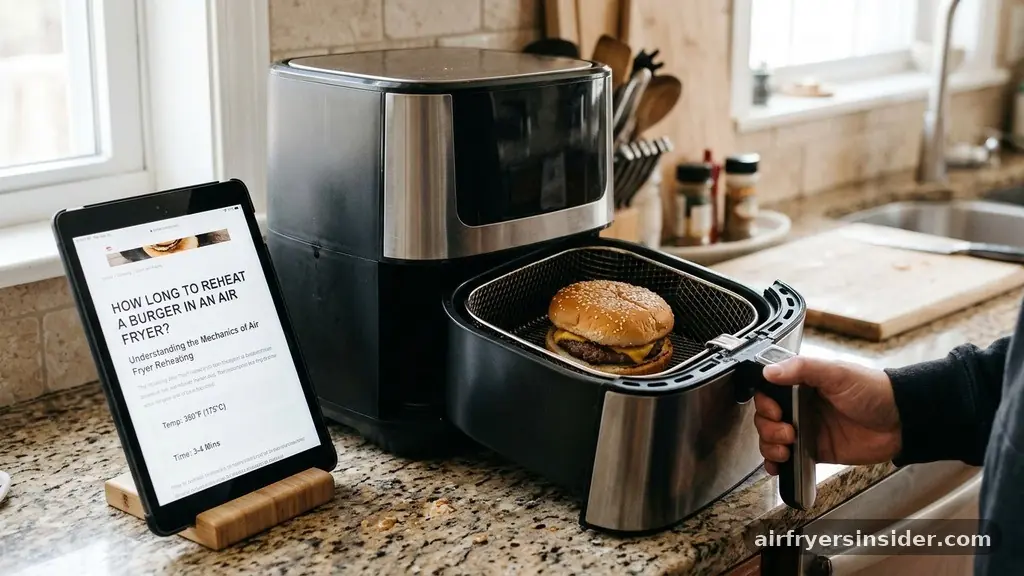
The air fryer works primarily through convection, circulating hot air rapidly around the food to create a crisp exterior. When you reheat a burger patty, you are essentially trying to warm the center without overcooking the proteins, which would lead to a loss of moisture.
Because the air fryer is so efficient, it can easily overdry a patty if you aren’t careful. The goal is to reach an internal temperature that is safe and pleasant to eat without scorching the outside.
Think of the air fryer as a miniature, high-powered convection oven. It excels at refreshing textures that have gone soft in the refrigerator. However, because a burger is a complex assembly of meat, bread, and potentially toppings, you cannot treat it like a simple chicken wing.
If you just toss the whole thing in, the bun will likely burn before the meat is warm. Mastering the timing requires a nuanced approach that considers the density of the patty and the sensitivity of the bread.
Optimal Temperature and Timing for Success
To achieve the best results, you should set your device to a moderate temperature. We recommend 350 degrees Fahrenheit (roughly 175 degrees Celsius) as the sweet spot for reheating.
At this temperature, the air is hot enough to crisp the edges but gentle enough to warm the center without drying it out. Generally, you should aim for a cooking time of about 3 to 5 minutes for a standard-sized patty.
If your burger is particularly thick or was stored in the refrigerator for a long time, it might need an extra minute or two. Always monitor the progress, especially during the final stages of the cycle. If you notice the edges of the bun starting to darken too quickly, you can pull the burger out early or tent a small piece of aluminum foil over the top to shield it from the direct heat source.
Handling the Bun and Toppings
One of the most common mistakes is reheating the entire burger as a single unit right from the start. A bun contains a high amount of moisture that evaporates quickly, often leading to a texture that is either too chewy or completely charred.
For the best results, disassemble the burger before placing it in the air fryer. You can reheat the patty first and then add the bun back in for the final minute of the cycle.
If your burger includes fresh toppings like tomato or pickles, remove them before reheating. These ingredients contain high water content and will turn mushy or unpleasantly warm if subjected to the air fryer’s heat.
You can easily reassemble the burger with fresh, cold toppings once the patty and bun are warmed to your satisfaction. This separation ensures that every component of the meal maintains its intended temperature and texture profile.
Tips for Maintaining Moisture
To keep your gourmet-style patty from becoming dry, you can employ a few simple culinary tricks. Adding a tiny amount of moisture—such as a light brush of butter on the bun or a small splash of water in the bottom of the air fryer basket (if your model allows)—can create a steam effect that helps rehydrate the meat.
Another effective strategy is to place a slice of cheese on the patty during the last minute of heating. The melting cheese acts as a barrier, trapping the juices beneath it.
It is also crucial to preheat your unit for at least two to three minutes before starting. A cold air fryer takes longer to reach the target temperature, which extends the time the burger spends in the machine.
That extra time is exactly when the meat loses its internal moisture. By starting with a hot environment, you ensure that the reheating process is as quick as possible, which is the ultimate secret to preserving the quality of your leftovers.
Avoiding Common Pitfalls
When learning how to reheat a burger in an air fryer, you must avoid overcrowding the basket. Airflow is the engine of the air fryer; if you block that flow by packing too many items in, the heat won’t circulate evenly.
This leads to parts of the burger being stone cold while other areas become burnt. If you are reheating multiple burgers, do them in batches or ensure there is at least an inch of space between them.
Furthermore, do not rely on the microwave as a shortcut. While a microwave is fast, it heats food by agitating water molecules, which often results in a rubbery texture for meat and a soggy, limp texture for bread.
The air fryer is superior because it restores the Maillard reaction—that delightful browning—on the surface of the patty. It is worth the extra few minutes of effort to ensure your meal remains appetizing and retains its structural integrity.
Safety and Quality Best Practices
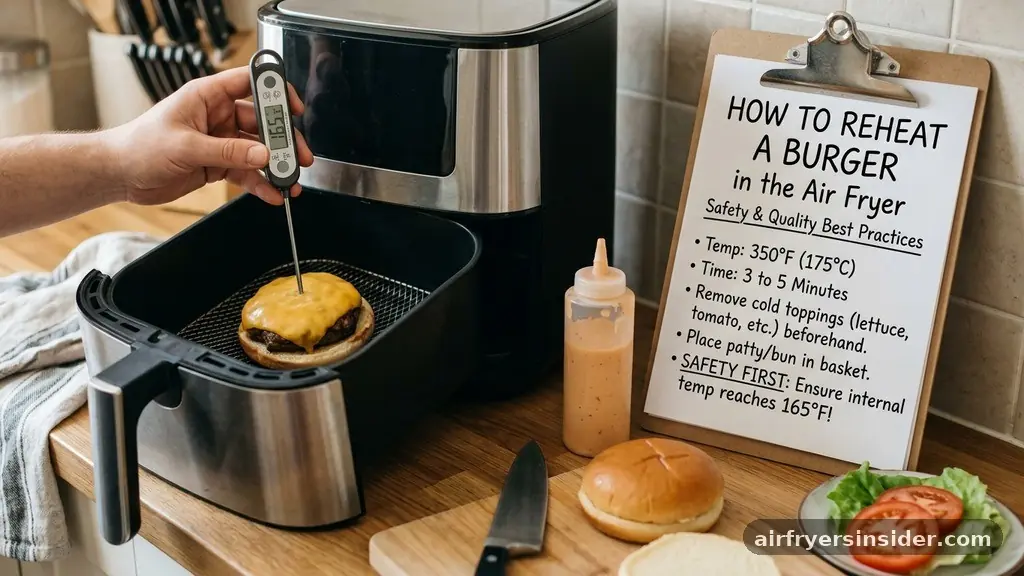
Maintaining high standards of food safety is non-negotiable when dealing with leftover meat. Ensure that your burger was stored in an airtight container in the refrigerator within two hours of its initial cooking. When reheating, the goal is to bring the internal temperature of the patty back up to a range where it is pleasant, but you must ensure it is heated through thoroughly.
If you are unsure whether the center is warm, use a meat thermometer. The USDA recommends reheating cooked leftovers to an internal temperature of 165 degrees Fahrenheit.
While this is the official guideline for safety, many find that 140 to 150 degrees is sufficient for a burger that was already cooked to medium or medium-well. Just be mindful of how long the meat has been sitting in the fridge; if it has been more than three days, it is best to discard it rather than risk illness.
Comparing Reheating Methods
It is helpful to see how the air fryer stacks up against other common kitchen appliances. The following table provides a quick comparison of how different methods affect the final quality of your leftover burger.
| Method | Texture Result | Speed | Convenience |
|---|---|---|---|
| Air Fryer | Crispy, juicy | Fast | High |
| Microwave | Soggy, rubbery | Very Fast | Very High |
| Oven | Good, but dry | Slow | Medium |
| Stovetop | Variable | Medium | Low |
As shown, the air fryer offers the best balance of speed and quality. While the microwave is technically faster, the trade-off in texture is significant.
The oven provides a decent result but requires significant preheating time and energy, making it less practical for a single burger. The stovetop can work well, especially if you add a bit of oil, but it requires constant monitoring to prevent burning.
Addressing Topical Gaps
Many users ask if they can reheat a burger that already has toppings on it. While we strongly suggest removing them, if you are in a rush and decide to leave them on, consider the specific ingredients. Lettuce and tomato will wilt and become unappetizing.
Onions and bacon, however, often hold up surprisingly well under the heat. If you absolutely must leave the toppings on, keep the temperature slightly lower—around 300 degrees—and reduce the time by a minute to prevent the vegetables from completely disintegrating.
Another frequent question concerns the bun. Some people prefer a soft bun, while others like a toasted one. If you want a soft, steamed-style bun, wrap the bread in a small piece of damp paper towel for the final minute of the cycle.
This creates a mini-steamer inside the air fryer. If you prefer a crisp, toasted bun, leave it naked and place it in for the final 60 seconds. These minor adjustments allow you to customize the final product to your specific preferences.
Refining Your Technique
To perfect your reheating routine, take notes on how your specific model behaves. Some air fryers are more powerful than others, meaning your 350-degree setting might be more intense than someone else’s.
If you find your burgers are consistently drying out, try lowering the temperature to 330 degrees and adding an extra minute to the time. This slower, gentler approach can often yield a more consistent, juicy result.
Additionally, consider the fat content of the patty. A lean turkey burger will dry out much faster than a higher-fat beef patty. If you are reheating a leaner meat, you might need to use a light spray of cooking oil to compensate for the lack of internal fat.
Conversely, a very fatty burger might release a lot of grease during the reheating process. If you notice a lot of smoke, it is a sign that the grease in the bottom of the basket is burning. In this case, pull the burger out, wipe the basket clean, and finish the process.
FAQ
Can I reheat a burger with the bun in the air fryer?
Yes, you can, but it is best to add the bun during the final minute of the process. If you put the whole burger in from the start, the bread will likely dry out or burn before the patty is adequately heated through.
What is the best temperature to reheat a burger?
The optimal temperature is 350 degrees Fahrenheit. This provides enough heat to crisp the exterior and warm the center without overcooking the meat. Always preheat your device for a few minutes before starting to ensure even cooking and better moisture retention.
How do I stop the bun from getting soggy?
Avoid the microwave, which is the primary cause of soggy bread. Using the air fryer is already a step in the right direction. To keep the bun from drying out, consider brushing it with a little butter or toasting it separately during the final minute of the reheating cycle.
Can I reheat a frozen burger patty?
Yes, but you should thaw it in the refrigerator first for the best results. If you must cook it from frozen, increase the time significantly and lower the temperature to 300 degrees to ensure the center reaches a safe temperature before the outside becomes charred.
Conclusion
Mastering how long to reheat a burger in an air fryer is a simple way to elevate your leftovers and reduce food waste. By focusing on temperature control, separating the components, and respecting the need for airflow, you can consistently achieve a meal that rivals the original. Remember that every air fryer is unique, so don’t be afraid to experiment with the timing and settings until you find the perfect balance for your specific preferences.
With these techniques in your kitchen repertoire, you will never have to settle for a disappointing, soggy reheated burger again. Grab your leftovers, set your timer, and enjoy a much better lunch tomorrow.
Meta Description: Learn exactly how long to reheat a burger in an air fryer for the perfect juicy result. Discover tips on timing, temperature, and keeping the bun crisp.