

Figuring out how long to reheat french fries in air fryer is the secret to avoiding the disappointment of soggy, rubbery leftovers. Most people make the mistake of tossing them in the microwave, which turns once-crispy spuds into a mushy disaster. By utilizing the rapid air circulation of an air fryer, you can restore that original crunch and golden brown finish in just a few minutes.
Whether you are dealing with thick-cut steak fries or thin, fast food shoestring varieties, the process remains remarkably consistent and efficient. Getting the timing and temperature right ensures your snack tastes fresh rather than tired and limp.
Why the Air Fryer Outperforms Other Reheating Methods
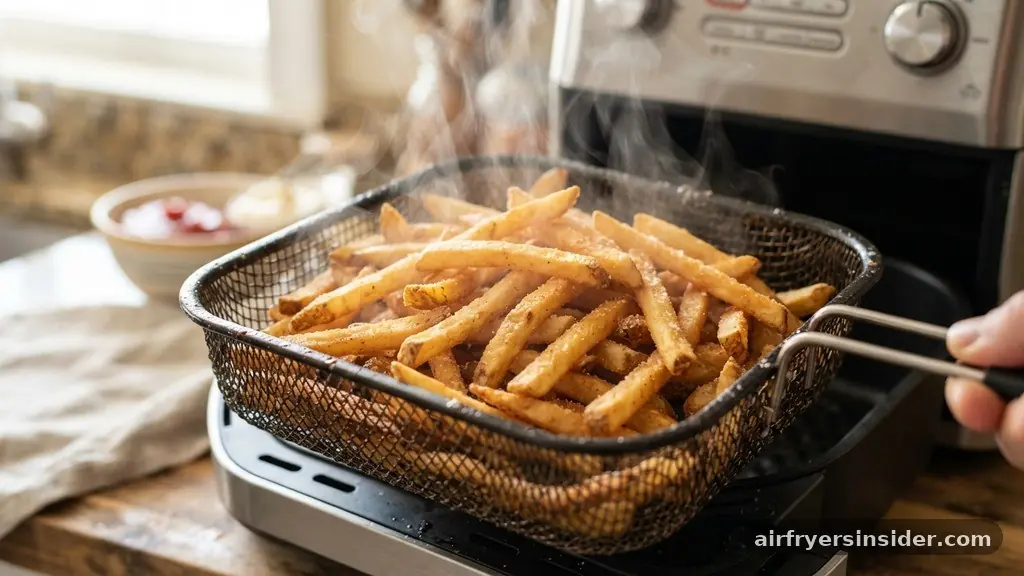
When you look at the physics of reheating, the air fryer acts like a miniature, high-powered convection oven. Traditional microwaves heat food by exciting water molecules, which creates steam.
This trapped steam is the enemy of any fried food because it softens the exterior and destroys the structural integrity of the potato starch. On the other hand, the air fryer forces hot air around the food at high speeds, effectively dehydrating the surface just enough to recreate that signature crispiness.
Ovens are another common alternative, but they suffer from significant drawbacks regarding efficiency and texture. A standard oven takes far too long to preheat, and heating up a massive appliance just to revive a small bowl of leftovers is often impractical. By the time the oven reaches the ideal temperature, your fries might already be drying out too much.
The air fryer basket allows for optimal heat distribution, targeting the exterior of the fry without waiting for the internal moisture to completely evaporate. This balance is what keeps the center fluffy while the crust regains its crunch.
Determining the Ideal Temperature for Maximum Crispiness
The temperature you choose dictates the outcome of your reheating session. If the heat is too low, the fries will sit in the basket for too long, losing more internal moisture than necessary and becoming tough.
If the heat is too high, the outside will burn before the heat can penetrate the center. Most culinary experts and home cooks agree that 350°F to 375°F is the sweet spot for most potato products.
At 350°F, you are gently warming the fry while allowing enough time for the exterior to crisp up without scorching. If you prefer a faster approach and are confident in your monitoring, 375°F works well for thinner, shoestring fries that need a quick blast of heat.
Avoid going straight to 400°F unless you are working with very thick, frozen-style wedges, as high heat can lead to an uneven texture where the edges are dark brown while the middle remains lukewarm. Always consider the thickness of the fry when adjusting your settings.
The Importance of a Single Layer for Airflow
One of the most critical rules in air frying is avoiding overcrowding. When you dump a mountain of leftovers into the basket, you impede the very air circulation that makes the appliance effective.
The air needs to touch every side of the fry to ensure uniform heating. If the basket is stacked, the fries in the middle will simply steam each other, resulting in a soggy pile that defeats the purpose of using the air fryer.
Arrange your fries in a single layer, ensuring they aren’t touching if possible. If you have a large amount of leftovers, it is significantly better to run the machine twice than to cram them all in at once.
This approach guarantees that the hot air reaches the entire surface area of each fry, resulting in a consistent golden brown color across the entire batch. If you find your fries are clumped together, give the basket a good shake halfway through the process to redistribute them and break up any clusters.
Mastering the Timing for Different Fry Styles
Knowing how long to reheat french fries in air fryer depends largely on the initial thickness of the potato. A thin, fast food fry has a high surface-area-to-volume ratio, meaning it heats up and crisps almost instantly. A thick, pub-style steak fry requires a slightly longer duration to ensure the center reaches a palatable temperature.
| Fry Thickness | Recommended Temp | Estimated Time |
|---|---|---|
| Shoestring/Thin | 375°F | 3-4 minutes |
| Standard Cut | 360°F | 4-5 minutes |
| Steak/Thick Cut | 350°F | 6-8 minutes |
These times are estimates, and your specific model might vary in power. If you are using a high-wattage unit like a Ninja Foodi, the heat may be more intense, potentially shortening the duration by a minute or so.
Always start on the lower end of the time spectrum and check the progress. It is far easier to add another minute of cooking than it is to fix a batch of over-dried or burnt potatoes.
Using Oil Sprays for Enhanced Texture
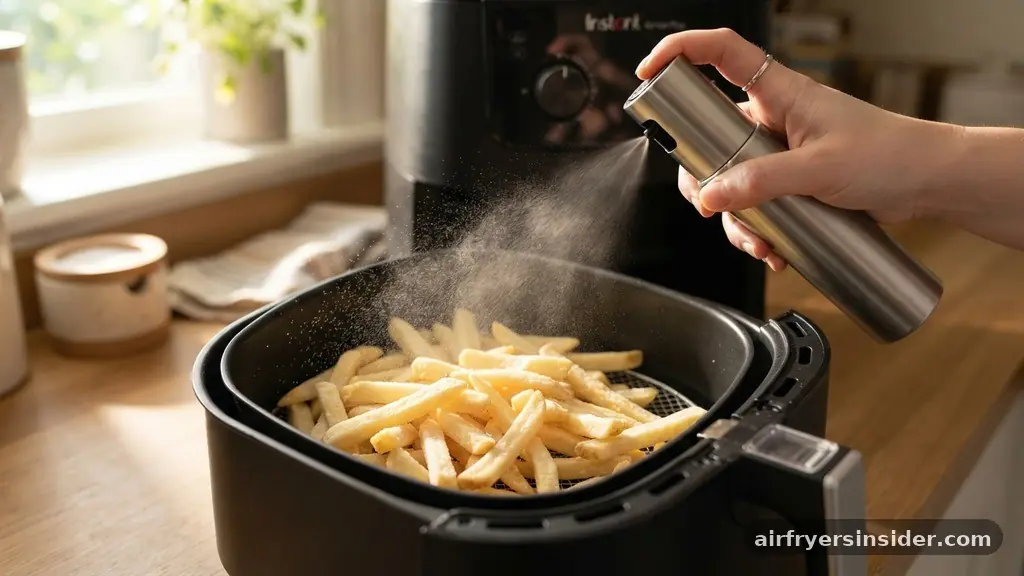
While leftover fries already contain some residual oil from their initial cooking, a light mist of high-smoke-point oil can work wonders. A quick spritz of avocado or canola oil before tossing the fries into the basket helps conduct heat more effectively. This creates a more uniform crust and helps mimic the experience of fresh frying.
Be careful not to overdo it. You only need a very light coating. If you spray too much, the excess oil will pool at the bottom of the basket, potentially creating smoke or making the fries greasy rather than crisp.
If you don’t have an oil mister, you can lightly toss the fries in a bowl with a teaspoon of oil before transferring them to the air fryer. This ensures even coverage without the risk of creating a localized puddle of grease.
Addressing Topical Gaps: Common Pitfalls to Avoid
Many people struggle with the “limp fry” phenomenon even after using an air fryer. Often, this is due to moisture buildup in the basket during the first minute of cooking.
If your fries were stored in a container that held a lot of steam, they might be quite damp when you take them out. To combat this, you can lay them out on a paper towel for a minute before air frying to absorb excess surface moisture.
Another common gap in knowledge is the role of preheating. While many air fryers don’t strictly require a preheat like a traditional oven, doing so can make a massive difference in the final texture of your fries.
By preheating the basket for two or three minutes, you ensure the cooking process starts at the target temperature immediately. This prevents the fries from sitting in a warm, humid environment as the machine slowly climbs to heat, which is the primary cause of texture degradation.
The Role of Seasoning After Reheating
One aspect of reheating that is frequently overlooked is the loss of flavor. Salt and other seasonings tend to migrate or lose their punch once a fry has cooled down and been refrigerated.
After you have successfully reheated your fries, take a moment to refresh the seasoning. A light sprinkle of sea salt, smoked paprika, or even a touch of garlic powder can revitalize the flavor profile significantly.
Since the surface of the fry is hot and slightly porous after being in the air fryer, it is the perfect time for new seasoning to adhere. If you wait until the fries have cooled down again, the seasoning will simply fall off. By tossing the hot fries in a bowl with your preferred spices immediately upon removing them from the basket, you ensure every bite is as flavorful as it is crispy.
Managing Large Batches Effectively
If you are reheating a large portion for a group, the “single layer” rule becomes a logistical challenge. The best strategy is to work in batches, keeping the first batch warm in a low-temperature oven while you finish the rest. Alternatively, if you have an air fryer with a rack or a divider, you can utilize the vertical space to increase capacity without sacrificing airflow.
Avoid the temptation to pile them up and just increase the cooking time. Increasing the time will only result in the fries on the outside edges becoming burnt and leathery while the ones in the center remain cold and soggy. If you find yourself frequently reheating large amounts of food, consider investing in an air fryer with a larger basket or a multi-rack system designed for better air circulation.
Maintaining Your Equipment for Consistent Results
The performance of your air fryer depends on how well you maintain the basket and the heating element. Over time, grease and crumbs can accumulate at the bottom of the unit, which can cause smoking and uneven heat distribution. Cleaning the basket after every use ensures that the airflow isn’t obstructed by burnt-on debris.
Periodically checking the fan and heating element for buildup is also a good practice. If the air circulation is restricted, you will never get that perfect crispiness regardless of the temperature or time settings. Keep the interior clean, and your air fryer will continue to produce consistent results every single time you need to breathe new life into your leftovers.
FAQ
How long do you air fry french fries that are already cooked?
For most standard-sized fries, three to five minutes at 350°F to 375°F is sufficient. Thinner shoestring fries may only need three minutes, while thicker steak-cut fries might require six to eight minutes to ensure the center is heated through properly.
What is the best way to heat up leftover french fries?
The air fryer is objectively the best method because its rapid air circulation mimics a convection oven. It removes excess moisture from the surface while heating the interior, ensuring the fries regain their signature crunch without becoming soft or greasy like they do in a microwave.
Should I preheat my air fryer before reheating fries?
Yes, preheating for two to three minutes is highly recommended. It ensures the air fryer is at the optimal temperature the moment you insert the fries, preventing the fries from sitting in a warming, humid environment that can lead to a soggy texture.
How do I make sure my fries don’t get dry?
Avoid overcooking by checking them at the three-minute mark. If you are worried about them drying out, a very light mist of oil before air frying helps retain moisture inside while crisping the exterior. Keep the temperature moderate, around 350°F, to prevent rapid dehydration.
Conclusion
Successfully reviving leftover fries is all about managing moisture and heat distribution. By using the air fryer, you bypass the soggy pitfalls of the microwave and the slow, inefficient process of the conventional oven. Remember to preheat your unit, arrange the fries in a single layer to facilitate airflow, and keep a close eye on the timer.
Even a few minutes at the right temperature can transform a sad, limp leftover into a snack that tastes remarkably close to fresh. With these techniques for how long to reheat french fries in air fryer, you can stop throwing away perfectly good food and start enjoying your leftovers to the fullest. Experiment with the timing based on your specific appliance, and don’t forget to add a fresh pinch of salt once they are ready.


