
Reheating leftover fried snacks can feel like a gamble, but figuring out exactly how long to reheat mozzarella sticks in an air fryer transforms soggy leftovers into a restaurant-quality treat. When you use the right method, you avoid the rubbery, uneven heating common with microwaves and instead restore that satisfying crunch. Getting the timing and heat levels correct ensures the cheese inside reaches a perfect melted consistency without leaking out of the breading.
Whether you are dealing with restaurant leftovers or frozen appetizers you decided to finish later, this approach guarantees your snack remains a highlight of your meal.
Why the Air Fryer is the Superior Reheating Tool 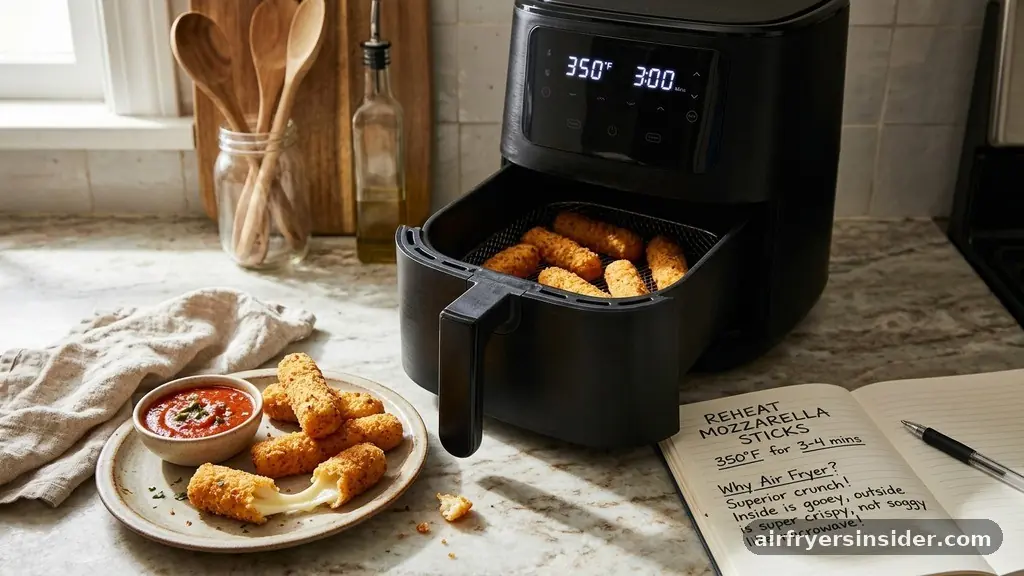
Many people reach for the microwave when they want a quick snack, but microwaves are notorious for destroying the integrity of breaded foods. When you reheat breaded cheese in a microwave, the moisture trapped in the breading turns into steam, resulting in a soft, mushy, and often unappetizing texture.
The air fryer, by contrast, utilizes powerful convection heat to circulate hot air rapidly around the food. This process dries out the surface of the breading just enough to bring back that signature crunch while gently warming the interior.
By choosing to use an air fryer, you are essentially mimicking the original deep-frying environment, albeit with much less oil and significantly better control. This method is far superior to the oven as well, which can take ten to fifteen minutes just to preheat. The air fryer reaches the required temperature in seconds, making it an efficient choice for snack preparation.
Because the basket allows for optimal airflow, you don’t have to worry about the bottom of your sticks getting soggy, which is a common complaint when using a traditional baking sheet.
Recommended Temperature and Timing for Perfect Mozzarella Sticks
For most standard-sized cheese sticks, setting your air fryer to 350 degrees Fahrenheit is the sweet spot. This temperature is high enough to generate a crispy finish on the exterior breading but gentle enough that the cheese doesn’t liquefy and burst through its shell before the center is hot. If you crank the heat up to 400 degrees, you risk burning the crust before the core has a chance to warm through, leading to a disappointing contrast between a charred exterior and a cold center.
The total cooking time usually falls between three and five minutes. If you are starting with refrigerated leftovers, three minutes is often plenty. For sticks that were stored in the freezer or are slightly larger than average, you might need to push that to five minutes.
Always keep a close eye on them during the final minute of the cycle. If you notice the breading starting to look golden brown and tiny bubbles of oil forming on the surface, they are likely ready to be pulled out and served immediately.
Preparing Your Leftovers for the Best Results
Before you even turn on the machine, a little bit of preparation goes a long way. Start by taking your mozzarella sticks out of the refrigerator a few minutes before you plan to reheat them.
This takes the chill off and helps the center warm up more evenly. If you have a light oil spray, give the sticks a very quick, fine mist before placing them in the basket. While the breading is already fried, a tiny bit of fresh oil helps the breading crisp up more effectively, especially if it has absorbed some moisture in the fridge.
Another critical step is ensuring they are not touching inside the basket. Air fryers rely on the circulation of hot air to work their magic; if the sticks are crowded or stacked, the air cannot reach every side of the breading. This leads to soft spots where the sticks touch each other.
Give each piece enough room to breathe so the convection heat can effectively crisp the entire surface area. If you have a large batch, it is always better to reheat them in two smaller, separate batches rather than overcrowding the basket.
Managing the Internal Temperature of Your Snack
One of the biggest challenges when reheating breaded cheese is preventing the dreaded “blowout,” where the cheese melts too quickly and spills out. Achieving the right internal temperature is a balancing act.
You want the cheese to be molten and stringy, but you don’t want it to reach a state where it loses all structural integrity. This is why the 350-degree setting is generally preferred over higher temperatures; it provides a controlled, steady heat that warms the core gradually.
If you find that your cheese is consistently leaking, you might be overcooking them. Remember that you are reheating, not cooking from scratch. The cheese is already processed and ready to eat, so you are really just bringing the temperature back up to a point where it is enjoyable.
If you notice the cheese starting to bulge, that is your cue that it is time to remove them from the heat immediately. Letting them sit for sixty seconds after they come out of the air fryer also allows the cheese to settle slightly, making the first bite much more manageable.
Common Troubleshooting for Reheated Appetizers 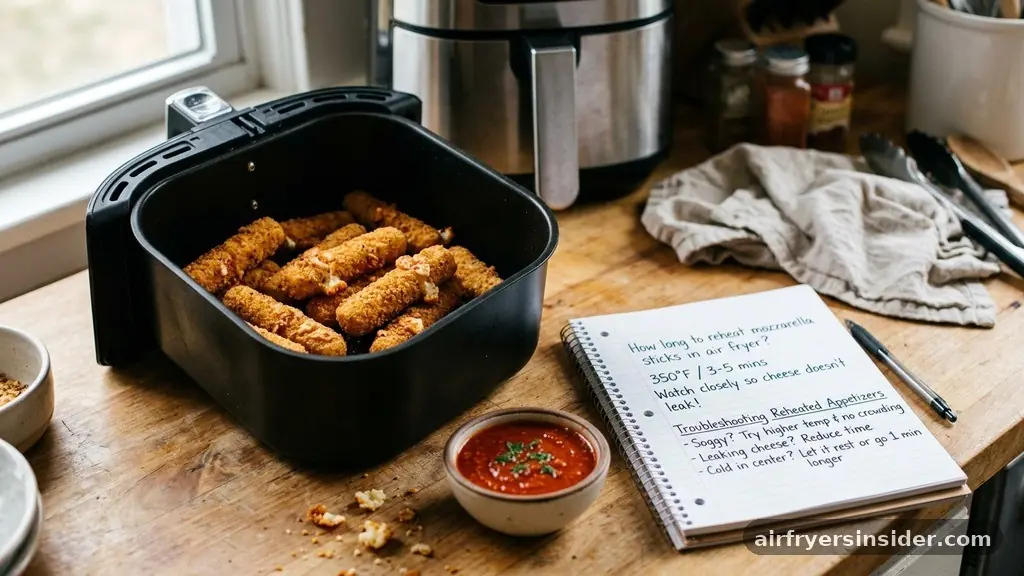
Even with the best intentions, things can go wrong. If you find your sticks are dry or hard, you likely left them in the air fryer for too long.
Since air fryers are so efficient, even an extra minute can take a snack from perfect to parched. Conversely, if the center is still cold but the outside is hot, your air fryer might be running hotter than the dial suggests, or the sticks were packed too tightly.
| Issue | Likely Cause | Solution |
|---|---|---|
| Soggy breading | Poor airflow | Don’t stack sticks; leave space between them. |
| Cheese leaking out | Overheating | Reduce time by 60 seconds; lower temperature. |
| Cold center | Sticks too cold | Let sit at room temp for 10 minutes before heating. |
| Burnt exterior | Temperature too high | Drop temp to 325-350 degrees Fahrenheit. |
If you are dealing with a particularly stubborn batch that refuses to crisp up, try a quick “preheat” of the air fryer itself. Running the machine empty for three minutes at 350 degrees before adding your food ensures that the walls of the basket are already hot. This gives the breading an immediate blast of heat, which is essential for getting that crispy finish you crave.
Why Microwave Alternatives Are Worth the Effort
It is tempting to throw your leftovers into the microwave for thirty seconds, but you are almost guaranteed to lose the texture that makes mozzarella sticks enjoyable.
The microwave works by exciting water molecules, which creates steam. In a breaded food item, this steam is trapped under the crust, turning the breading into a soggy, limp layer. Furthermore, the cheese inside a microwave will often overheat and become rubbery or tough rather than gooey and melted.
Using the air fryer as a microwave alternative is a commitment to quality. While it takes an extra few minutes, the difference in food texture is undeniable. You are essentially reclaiming the snack’s original state.
When you prioritize the air fryer over the microwave, you aren’t just heating food; you are maintaining the integrity of the dish. It is a small investment of time that prevents the disappointment of a soggy, sad snack that just doesn’t hit the spot the way it should.
Tips for Optimal Texture and Flavor
To really take your reheated snacks to the next level, consider how you serve them.
A great dipping sauce can hide a multitude of sins, but if you have followed the air fryer instructions correctly, your sticks should be able to stand on their own. If you want to add a little extra flair, lightly dusting the sticks with a tiny pinch of garlic powder or dried parsley immediately after they come out of the air fryer can make them taste freshly prepared.
The type of breading also plays a role in how well they reheat. Panko-crusted sticks tend to hold their crunch better than those with a fine, flour-based breading. If you notice your specific brand of mozzarella stick tends to get soft, try spritzing them with just a touch more oil before putting them back in the heat.
It sounds counterintuitive, but a little fat helps conduct the heat into the crust more evenly, ensuring that the entire surface turns golden and crisp rather than just heating through.
Topical Gaps: Variations in Appliance Performance
A common gap in knowledge involves the variation between different kitchen appliances. Not all air fryers are built the same way.
A basket-style air fryer, which is the most common, provides a very focused convection environment. However, some larger toaster-oven style air fryers have heating elements that are closer to the food, which can cause the breading to brown much faster than in a deep basket unit.
If you are using a toaster-oven style appliance, you should place your sticks on the middle rack. If the top rack is too close to the heating element, the top of the breading will burn before the cheese has a chance to melt. Additionally, if you have a high-wattage air fryer, you might find that you need to reduce your cooking time by thirty to sixty seconds compared to a lower-wattage model.
Getting to know your specific machine is just as important as the general guidelines provided. Always start on the shorter end of the recommended time range and add more if necessary; you can always add more time, but you cannot fix a burnt stick.
Mastering the Art of Snack Preparation
Ultimately, the goal of reheating is to return the food to its original, peak condition.
By focusing on the temperature, the arrangement in the basket, and the timing, you can turn a pile of leftovers into a meal that feels brand new. The air fryer is a versatile tool that excels at this specific task because it understands the mechanics of crisping breading while maintaining the moisture of the cheese.
Once you master the rhythm of your own appliance, you will find that reheating becomes second nature. It is less about following a rigid set of rules and more about understanding the relationship between heat, airflow, and the specific composition of your breaded cheese. Keep your temperature steady, ensure that air can flow freely around every piece, and don’t be afraid to pull them early if they look perfect.
With these habits, you will never have to settle for a soggy snack again.
Frequently Asked Questions What is the best way to reheat mozzarella sticks in the air fryer?
The best way is to preheat your air fryer to 350 degrees Fahrenheit. Arrange the sticks in a single layer without touching, lightly spray with oil if desired, and heat for three to five minutes. Monitor them closely during the last minute to ensure the cheese doesn’t leak.
How long do I reheat mozzarella sticks for?
For refrigerated sticks, three minutes is usually sufficient.
If you are starting from frozen, you may need to increase the time to five or six minutes. Always check for a golden-brown crust and slight softening to determine if they are ready to be removed from the basket.
How long to air fry mozzarella sticks at 400 degrees?
While some recipes suggest 400 degrees, it is generally too high for reheating. At this temperature, the breading often burns before the cheese is fully melted.
It is better to use 350 degrees for a slightly longer duration to ensure the center is warm without burning the exterior.
Can I reheat frozen mozzarella sticks directly in the air fryer?
Yes, you can reheat frozen sticks directly in the air fryer without thawing. Simply add one or two extra minutes to the total cooking time. Ensure they are spaced out properly to allow for optimal airflow, as the frozen core will take longer to reach the ideal internal temperature.
Conclusion
Successfully reheating your snacks is all about balancing heat and timing to restore that original, crispy exterior.
By following the guidelines for using your air fryer, you ensure that the mozzarella sticks maintain a delicious melted consistency while the breading regains its crunch. Remember that every air fryer performs differently, so treat these time and temperature suggestions as a starting point. As you become more familiar with how your specific kitchen appliance handles breaded cheese, you will find it easy to get perfect results every single time.
Don’t let your leftovers go to waste; with a little bit of care, they can taste just as good as they did the first time around. Enjoy your snack and feel free to experiment with different dipping sauces to round out the experience.
Meta Description: Learn exactly how long to reheat mozzarella sticks in an air fryer to achieve a perfectly crispy finish and gooey melted center every time.