

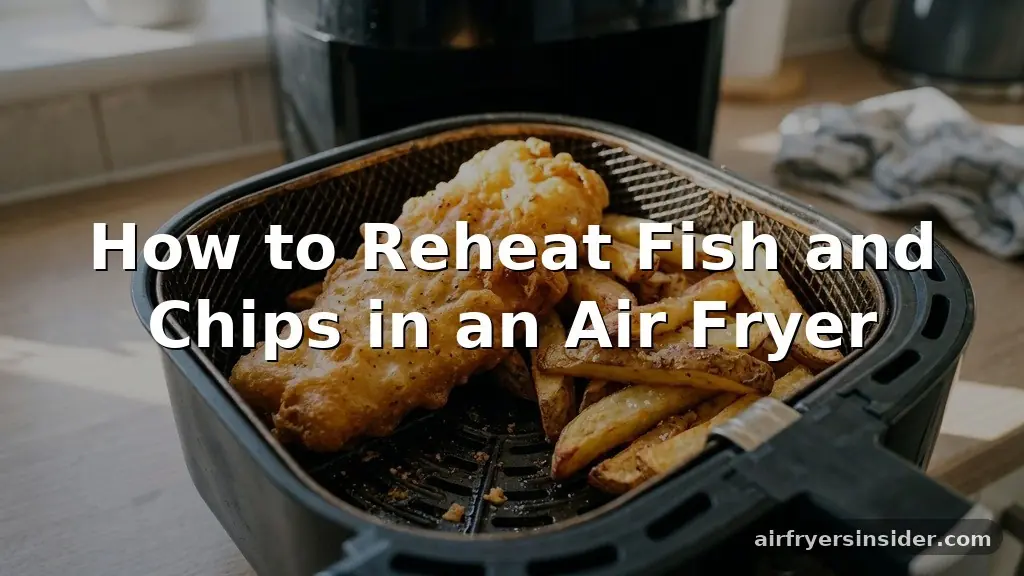
Mastering the art of reheating fish and chips in an air fryer is the secret to enjoying yesterday’s takeaway as if it were fresh from the fryer. When leftovers sit in the fridge, the batter absorbs moisture, leading to a limp, unappetizing meal. By using the high-speed convection of an air fryer, you can bypass the sogginess that often plagues microwave reheating.
This method restores the crunch of the batter while ensuring the fish remains flaky and succulent inside. Whether you are using a standard basket model or a high-end Ninja Foodi, these techniques will help you reclaim that perfect, restaurant-quality texture in just a few minutes.
The Science of Air Frying for Leftovers
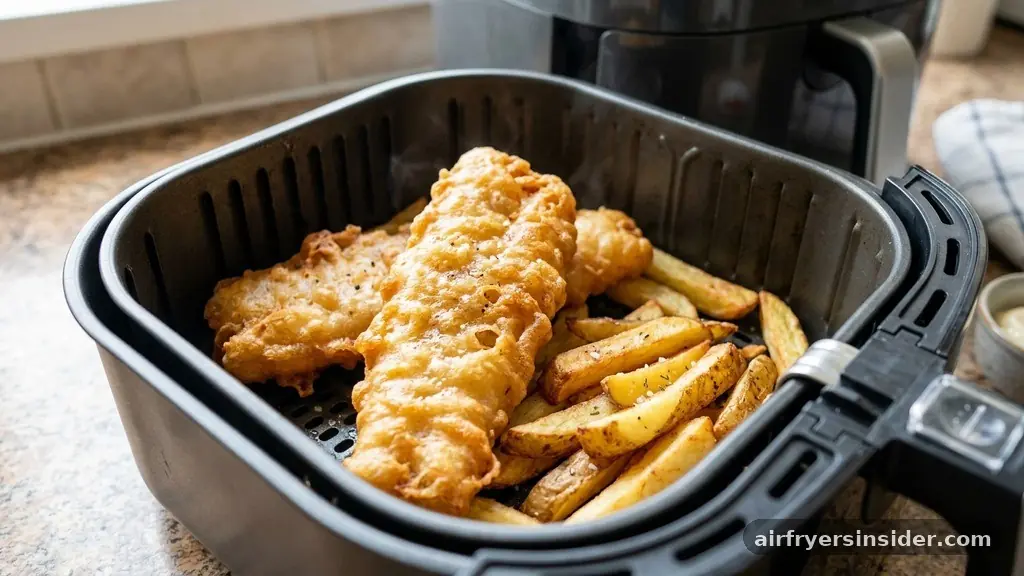
The primary reason an air fryer succeeds where a microwave fails is the way it handles moisture. A microwave works by agitating water molecules, which effectively steams the food from the inside out. For battered fish, this is a disaster, as it turns the crispy exterior into a gummy, soft mess.
In contrast, an air fryer acts as a miniature convection oven, circulating hot air at high speeds around the food. This rapid airflow wicks away excess surface moisture, which is the key to achieving that signature crispy batter.
When you reheat fish and chips in an air fryer, you are essentially re-frying the exterior without submerging the meal in a vat of hot oil. The convection process ensures even heat distribution, preventing the cold spots common in oven reheating.
Because the basket is perforated, air can circulate underneath the food as well, which is crucial for preventing the bottom of the chips from becoming soft. Understanding this mechanism allows you to adjust your approach based on the wattage and capacity of your specific appliance.
Optimal Temperature and Timing for Best Results
Achieving the perfect balance requires precision. If the temperature is too low, the food will dry out before it becomes crispy. If it is too high, the exterior will burn while the center remains cold.
For most fish and chips, an optimal temperature is between 370°F and 390°F (185°C to 200°C). This range is high enough to reactivate the residual oil in the batter, creating a fresh crunch, but gentle enough to avoid charring the delicate fish.
Timing depends heavily on the thickness of the fish and the volume of chips. A single portion typically needs only 5 to 8 minutes, whereas a full basket might require closer to 10 or 12 minutes. You should always aim to spread the items out in a single layer to maximize airflow.
If you pile them up, the middle pieces will steam rather than crisp. Keeping the load light is the most reliable way to ensure even results, so if you have a large amount of leftovers, consider reheating them in two separate batches.
Essential Tips for Maintaining Batter Texture
The biggest challenge with reheating fried food is keeping the crust intact. If the batter has already become extremely soggy, it may be difficult to fully revive the crunch. A light spritz of oil spray can be a game-changer here.
A tiny amount of neutral oil, such as canola or grapeseed, helps conduct heat back into the batter and promotes browning. Do not overdo it; a very fine mist is all that is required to provide that extra lift.
Another vital tip is to avoid overcrowding the basket. Proper airflow is the engine of the air fryer, and if you block the vents or stack the food, the moisture has nowhere to escape. You should also make sure the basket is completely dry before placing your fish and chips inside.
If you have any excess grease pooling at the bottom of the air fryer drawer, wipe it out before starting. This prevents the food from sitting in old, cold oil, which can lead to an unpleasant, greasy taste rather than a clean, crispy finish.
Common Mistakes to Avoid
Many home cooks fall into the trap of using the same settings for everything. One of the most common mistakes is forgetting to preheat the device. While air fryers heat up quickly, starting with a cold unit means the food spends extra time in the chamber while the air reaches temperature, which can cause the batter to soften further.
Always run the unit for 2–3 minutes empty before adding your food. This ensures the cooking process starts immediately upon contact with the heat.
Another error is failing to shake or flip the food halfway through the cycle. While fish fillets are delicate and should be flipped carefully with a spatula, the chips definitely need a good shake. This movement redistributes the pieces, exposing all sides to the hot air.
Ignoring this step often results in unevenly cooked chips, where some are perfectly golden and others remain pale and soft. Finally, avoid using parchment paper or liners unless absolutely necessary, as these can significantly restrict the airflow that is essential for a crispy result.
Food Safety Considerations for Leftovers
When dealing with leftover fish and chips, food safety is just as important as texture. Fish is highly perishable and should never be left at room temperature for more than two hours. Once refrigerated, it should be consumed within two days.
When reheating, the goal is to reach an internal temperature of at least 165°F (74°C) to ensure any potential bacteria are neutralized. Using a meat thermometer is the best way to verify that the thickest part of the fish has reached this safe threshold.
If you are unsure how long the food has been sitting out or if it has been stored improperly, it is better to discard it. Seafood is particularly sensitive to temperature abuse, and the batter can harbor bacteria if it was not handled correctly after the initial takeaway meal. Always store your leftovers in an airtight container to keep them from absorbing other odors in the fridge, and never reheat the same portion of fish more than once.
Comparing Reheating Methods
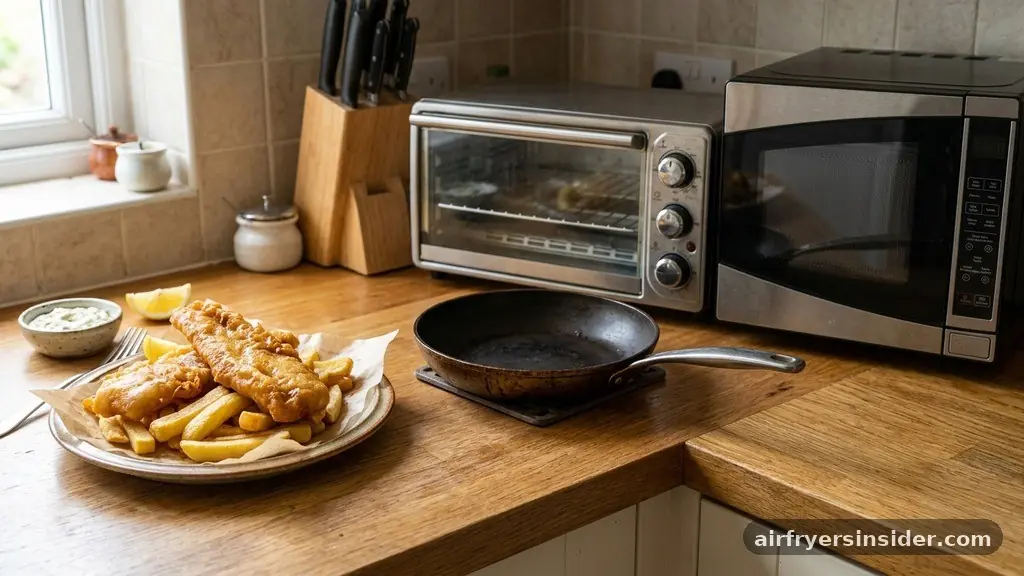
The effectiveness of various kitchen appliances for restoring fried food varies significantly. The following table illustrates how the air fryer stacks up against other common methods for reheating your meal.
| Method | Texture Outcome | Efficiency | Ease of Use |
|---|---|---|---|
| Air Fryer | Crispy and light | High | Excellent |
| Microwave | Soggy and limp | Very High | Poor |
| Oven | Fairly crispy | Low | Moderate |
| Frying Pan | Greasy | Moderate | Difficult |
As shown, the air fryer is superior for texture, while the microwave is only useful if you are in a rush and do not care about the quality of the batter. The oven is a viable backup, but it takes much longer to preheat and often results in a less uniform crunch due to the lack of intense air circulation.
Addressing Topical Gaps: Reheating Different Types of Batter
Not all fish and chips are created equal. You might be dealing with a light tempura batter, a thick beer batter, or a classic breadcrumb coating. Each reacts differently to the intense heat of an air fryer.
Beer-battered fish, which is typically thicker and more porous, tends to hold onto more moisture. For this type, you may need to increase the time by 1–2 minutes compared to lighter, thinner batters. If you find the batter is browning too quickly, you can loosely tent the fish with a small piece of aluminum foil for the first half of the cycle.
Breaded fish is generally more forgiving and will crisp up faster than traditional batter. If you are reheating fish sticks or breaded fillets, keep a close eye on them, as the crumbs can burn quickly at high temperatures.
If your chips are particularly thick, like “steak-cut” chips, they will benefit from a slightly lower temperature for a longer duration, allowing the heat to penetrate the center without burning the exterior. Adjusting your strategy based on the specific type of batter and the cut of the potato is the hallmark of an expert home cook.
Leveraging Ninja Foodi and Advanced Models
If you own a device like a Ninja Foodi or another multi-cooker with air crisping capabilities, you have a slight advantage. These units often have more powerful fans and more precise temperature controls than basic budget models. Many Ninja Foodi models allow for “Air Crisp” settings that are specifically calibrated to mimic deep frying.
You should take advantage of any rack accessories that come with your unit. Using a rack can elevate the fish, allowing for 360-degree airflow, which is particularly useful if you are reheating a large piece of fish that might otherwise sit flat against the basket.
Furthermore, some advanced models have a “reheat” function. While this is often just a lower-temperature air fry setting, it is worth experimenting with.
If your model has specific presets, try them out, but do not be afraid to override them if you find that your food is browning too fast or not crisping enough. The key is to treat the appliance as a tool that you control, rather than relying solely on pre-programmed buttons that were designed for fresh food rather than leftovers.
Maximizing the Experience with Proper Serving
Once your fish and chips are perfectly reheated, the way you serve them matters. Since the process of reheating can slightly reduce the moisture content of the fish, consider serving it with a high-quality tartare sauce or a wedge of fresh lemon.
The acidity helps cut through any residual oil and brightens the flavor, making the meal taste significantly fresher. You might also want to sprinkle a little extra sea salt or malt vinegar on your chips the moment they come out of the basket, as the heat will help the seasonings adhere to the surface.
If you are planning to make this a regular habit, keep a log of your successes. Note which temperature and time worked best for your specific air fryer model and your favorite local takeaway shop.
Every shop uses a slightly different batter recipe and potato variety, so there is no single “magic number” that works for everyone. By keeping these small details in mind, you can turn a simple leftover meal into a convenient and delicious dinner that feels like a deliberate treat rather than a compromise.
Frequently Asked Questions
How can I tell if my fish is heated through without burning the batter?
Use an instant-read meat thermometer to check the center of the thickest part of the fish. It should reach 165°F (74°C). If you don’t have a thermometer, carefully insert a small knife into the center; if it comes out hot to the touch after a few seconds, the fish is ready.
Is it possible to reheat fish and chips together in the same basket?
Yes, you can, provided you don’t overcrowd the basket. Place the fish pieces first, ensuring they have space, and then fill the gaps with the chips. If you have a large volume, it is always better to do the fish first and then the chips, or use two batches to ensure quality.
Can I use aluminum foil in the air fryer to make cleanup easier?
You can, but it is not recommended for the entire bottom of the basket as it blocks the airflow. If you must use it, use a small piece just under the fish to catch drips, but keep the sides of the basket clear so the air can circulate properly.
Why does my batter still taste soggy even after air frying?
This usually happens because of overcrowding or not enough cooking time. If the basket is too full, the moisture from the chips and fish cannot escape. Try using a smaller portion, or increase the temperature by 10 degrees and shake the chips more frequently during the cooking process.
The secret to successfully reheating fish and chips in an air fryer lies in managing moisture and airflow. By preheating your unit and avoiding the temptation to overcrowd the basket, you can easily restore that elusive, crispy texture that makes takeaway meals so enjoyable. Remember to use a light mist of oil if the batter looks dry and always ensure the fish is heated thoroughly to a safe internal temperature.
With a little practice, your air fryer will become your most trusted tool for turning yesterday’s leftovers into a delicious, crunchy lunch or dinner. Experiment with your specific model’s settings to find the timing that works best for your favorite style of fish and chips, and enjoy your perfectly revived meal.
Meta Description: Learn how to reheat fish and chips in an air fryer to keep the batter crispy and the fish succulent. Follow these expert tips for perfect leftovers.


