

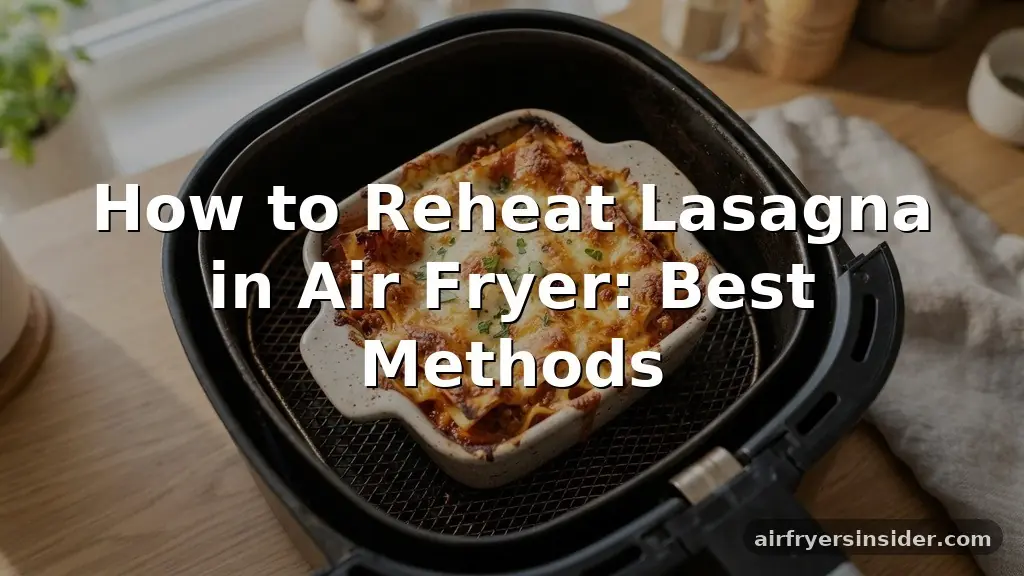
Getting that perfect, restaurant-quality texture when reheating lasagna in an air fryer is a common challenge for home cooks. Unlike a microwave, which often turns layers into a mushy heap, the air fryer utilizes intense convection heat to restore the structural integrity of your meal.
By understanding how to manage moisture retention and heat distribution, you can transform cold, refrigerated leftovers into a dish that tastes just as fresh as it did when it first came out of the oven. Mastering these reheating techniques ensures your pasta layers stay tender while the cheese develops those sought-after crispy edges.
Why the Air Fryer Outperforms Traditional Methods
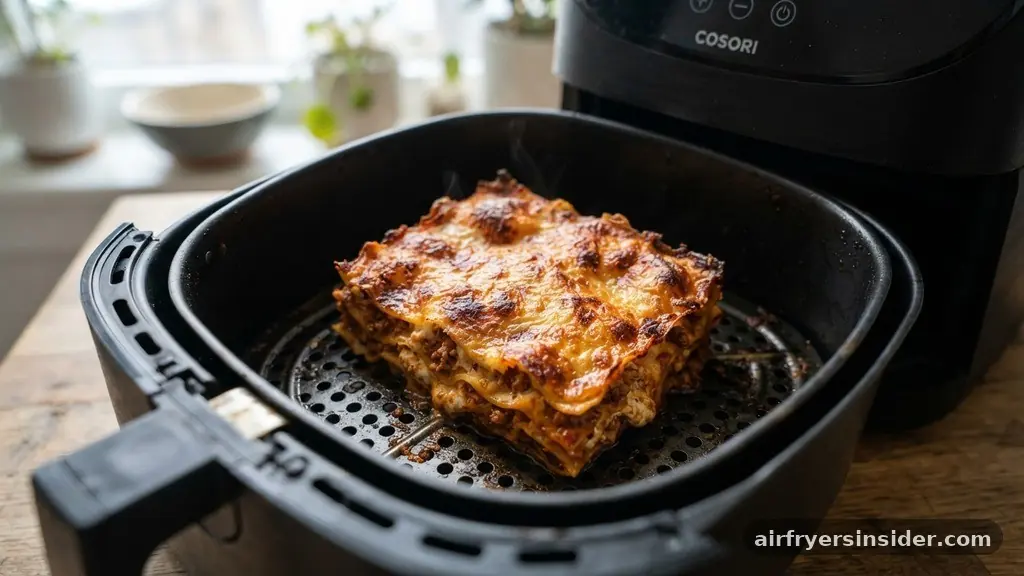
When you consider the standard ways to warm up food, the microwave is usually the default, yet it is often the worst choice for complex dishes like lasagna. Microwaves work by exciting water molecules, which frequently results in uneven heating, leaving the center cold while the edges become rubbery.
In contrast, the air fryer operates like a miniature convection oven, circulating hot air rapidly around the baking dish. This thermal circulation is the secret to maintaining the balance between the tomato sauce and the delicate pasta sheets.
Using an air fryer also saves significant time compared to a conventional oven. Preheating a full-sized oven for a single square of lasagna is inefficient, consuming energy and taking up to twenty minutes just to reach the desired temperature. An air fryer reaches its target heat in mere moments.
Because the cooking chamber is small, the heat is focused directly on the food, ensuring that the ricotta and meat sauce are heated through without the top layer of cheese burning before the center is warm. This efficiency makes it the ideal tool for quick, high-quality weeknight meals.
Preparing Your Leftover Pasta for Optimal Reheating
Preparation is the most critical step in ensuring your meal doesn’t turn into a dried-out disaster. You cannot simply throw a cold chunk of pasta into the basket and expect excellence. First, consider the size of your slice.
If the lasagna is cold and firm, it holds its shape better, but you should still ensure it fits comfortably within your air fryer basket or an appropriate oven-safe container. If you are using a container, remember that it will act as a barrier to the air, so you may need to adjust your timing slightly.
Adding a small amount of moisture can prevent the dry noodles that often plague reheated pasta dishes. A light splash of water or a tiny bit of extra sauce on top can compensate for the moisture lost during the initial storage period.
If you are worried about the top layer of mozzarella cheese browning too quickly, you can create a temporary lid using a small piece of aluminum foil. This allows the interior to heat up thoroughly before you expose the top to the direct heat of the heating element for that final crisping stage.
Managing Temperature and Timing for Perfect Results
Achieving the correct reheating temperature is a balancing act between speed and texture. If the temperature is too high, the exterior will crisp up or char before the center of the lasagna has even begun to thaw.
Most experts recommend a moderate range, typically between 320°F and 350°F. This range is high enough to generate the necessary heat for the meat sauce to bubble, but low enough to prevent the edges from becoming overly brittle or burnt.
Monitoring your reheat cycles is essential because every air fryer model performs slightly differently. You should treat the first attempt as a learning process, checking the center of the pasta with a food thermometer if you are uncertain.
Aiming for an internal temperature of at least 165°F ensures food safety, which is paramount when dealing with dairy-heavy dishes like lasagna. By checking periodically, you can pull the dish out the moment it reaches the perfect consistency, avoiding the dreaded soggy or burnt outcomes.
The Role of Accessories in Air Fryer Cooking
You might wonder if you can place food directly into the basket. While you certainly can for items like fries, lasagna is a different beast entirely.
Using a liner or a specific container is usually the best approach. Parchment paper can be used to prevent sticking, but it must be weighed down by the food so it does not fly up into the heating element, which is a major kitchen safety concern. A better option is often a small, heat-resistant ceramic or glass dish that fits snugly into your basket.
Using a container also makes serving much easier, as you can lift the entire portion out without it falling apart. If you don’t have a small dish, you can fashion one out of aluminum foil. Simply fold the edges of the foil up to create a tray that holds the lasagna together.
This method provides the added benefit of being disposable, saving you cleanup time. Regardless of the method you choose, ensure that there is enough space around the sides of the container for the air to circulate effectively, as blocking the airflow will negate the benefits of the convection process.
Addressing Common Challenges: The Soggy vs. Dry Dilemma
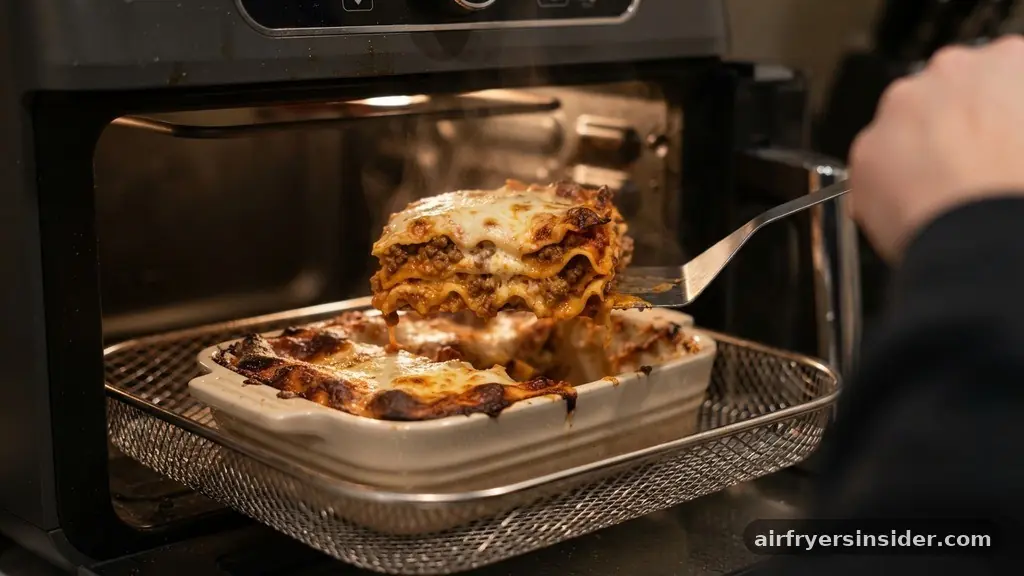
One of the most frequent complaints regarding reheating is the inconsistency of the final texture. You might find that your lasagna ends up with a soggy crust on the bottom or, conversely, that the top layer of pasta has become hardened and unpalatable.
This usually happens because of uneven heat distribution or excessive moisture trapped in the wrong places. To avoid this, consider flipping or rotating the dish if your model requires it, though this is rarely necessary with small slices.
If you find that your lasagna is consistently drying out, it is likely that the air fryer is running for too long at too high a temperature. You can combat this by adding a tiny bit of water to the bottom of the air fryer basket, which creates a small amount of steam.
This steam keeps the air inside the basket humid enough to prevent the pasta from hardening. Conversely, if your lasagna is too soggy, try removing any cover during the last two minutes of the process to allow the surface moisture to evaporate, giving you that desirable, slightly browned cheese top.
Food Safety and Storage Best Practices
Understanding how to store your lasagna before you even consider reheating it is vital for both flavor and safety. Lasagna is a dense dish, and it takes a long time to cool down once it leaves the oven. Leaving it out on the counter for too long encourages bacterial growth.
Always portion your leftovers into smaller, airtight containers as soon as the dish has stopped steaming. This allows for faster cooling in the refrigerator and makes it much easier to pull out a single serving later.
When you are ready to reheat, never leave the lasagna out on the counter to reach room temperature before putting it in the air fryer. This is a common mistake that can lead to rapid bacterial multiplication.
Take the container directly from the fridge to the air fryer. If you are using a frozen portion, you will need to adjust your reheating techniques significantly, typically by lowering the temperature and increasing the time to allow for a slow thaw during the initial phase of the cycle.
| Method | Texture Quality | Speed | Moisture Control |
|---|---|---|---|
| Air Fryer | Excellent (Crispy top) | Fast | High (with foil) |
| Microwave | Poor (Soft/Mushy) | Very Fast | Low (often dries out) |
| Conventional Oven | Good (Even) | Slow | High |
Topical Gaps: What Most Guides Miss
Many people ask if you can put lasagna directly into the air fryer basket without a liner. While the answer is technically yes, it is rarely a good idea. The sauce, cheese, and grease will drip through the grate and onto the bottom of the basket, creating a difficult mess to clean and potentially causing the heating element to smoke.
Another frequently overlooked point is the density of the lasagna. A slice with thick layers of meat and heavy cheese will require a different duration than a vegetable-based lasagna with higher water content.
Another gap in common advice is the impact of the air fryer’s power. A 1700-watt unit will heat food significantly faster than a smaller, lower-wattage appliance. You should always adjust your expectations based on your specific machine.
If you are reheating a piece that is particularly large or thick, you might need to slice it in half to ensure the middle gets hot enough. Ignoring the internal density of the portion is why so many people end up with a hot exterior and a cold, frozen center.
Optimizing the Reheating Process for Different Ingredients
The specific ingredients in your lasagna affect how it behaves under intense heat. A lasagna packed with heavy meat sauce tends to hold onto heat better than a lighter, vegetable-based version.
If you are using a recipe with a lot of ricotta, be aware that this cheese has a high moisture content and can sometimes separate if heated too aggressively. This is another reason why keeping the temperature moderate is essential; you want to warm the components without causing the fats and liquids to break down and pool at the bottom of your dish.
If your lasagna has a heavy layer of béchamel or a very thick cheese topping, you might need to use the aluminum foil method for the majority of the reheating time. This ensures the topping doesn’t brown prematurely.
Once the center is up to temperature, you can remove the foil for the final minute to allow the cheese to melt perfectly. This layered approach to heating is what separates a mediocre reheated meal from one that tastes like it was freshly baked in a professional kitchen.
Refining Your Technique for Consistent Results
Becoming proficient at this process requires a bit of experimentation. Start by noting how long your specific portion takes to reach the ideal temperature. Keep a mental or written log of these times.
You will find that after two or three attempts, you will no longer need to check the internal temperature with a probe because you will know exactly how your air fryer handles your favorite recipe. This level of familiarity makes the process feel effortless and removes the guesswork from your weeknight routine.
Remember that the goal is to enjoy your food, not to stress over the mechanics of the appliance. If you find that one day your lasagna is slightly crispier than you intended, don’t be discouraged. Simply add a little extra sauce next time or use the foil for longer.
These small adjustments are the hallmarks of a skilled home cook who understands their equipment. By focusing on the balance of heat and moisture, you can reliably turn leftovers into a meal you look forward to eating again and again.
Frequently Asked Questions
Can you reheat leftover lasagna in an air fryer safely?
Yes, it is perfectly safe to reheat lasagna in an air fryer. Ensure the center reaches an internal temperature of at least 165°F to guarantee food safety. Using an oven-safe container or a foil tray helps manage the mess and ensures even heating throughout the dish.
What is the best way to reheat leftover lasagna without drying it out?
The best approach is to use a moderate temperature, around 325°F, and cover the lasagna with aluminum foil for the first half of the process. Adding a small splash of water or extra sauce before reheating helps maintain moisture, preventing the noodles from becoming hard or brittle.
Can you put lasagna directly into the air fryer basket?
While possible, it is not recommended. Direct contact causes sauce and cheese to drip into the base of the air fryer, which is difficult to clean and may cause smoking. Always use a small, oven-safe dish or a makeshift foil tray to contain the layers and keep your appliance clean.
How do I prevent the cheese on top from burning?
Covering the lasagna with a piece of aluminum foil is the most effective way to prevent the top from burning. Only remove the foil during the final two minutes of the cycle if you want to crisp up the cheese or achieve a golden-brown finish on the top layer.
Conclusion
Mastering the art of reheating lasagna in an air fryer transforms what is often a disappointing leftover experience into a genuinely enjoyable meal. By prioritizing moisture retention through the use of foil and moderate temperatures, you can ensure that the delicate balance of sauce, cheese, and pasta is preserved perfectly. The air fryer offers a speed and efficiency that traditional ovens cannot match, provided you take a moment to consider the density of your portion and the specific power of your machine.
As you continue to experiment with these techniques, you will find that your leftovers become a reliable, high-quality option for any busy day. Experiment with your timing, keep an eye on the internal temperature, and enjoy the convenience of perfectly reheated pasta anytime you need it.


