

Knowing exactly how long to reheat fries in an air fryer transforms yesterday’s sad, limp leftovers into a snack that rivals the original serving. Most people struggle with soggy, unappealing results because they lack a consistent strategy for managing heat and airflow. By mastering the right timing and temperature, you can restore that coveted crunch without drying out the potato interior.
Whether you are dealing with thin shoestring cuts or hearty steak fries, this approach ensures your snack stays crispy rather than ending up as a greasy mess. Understanding the mechanics of convection cooking is the secret to revitalizing your leftovers successfully every single time.
The Science of Reheating Fries with Convection
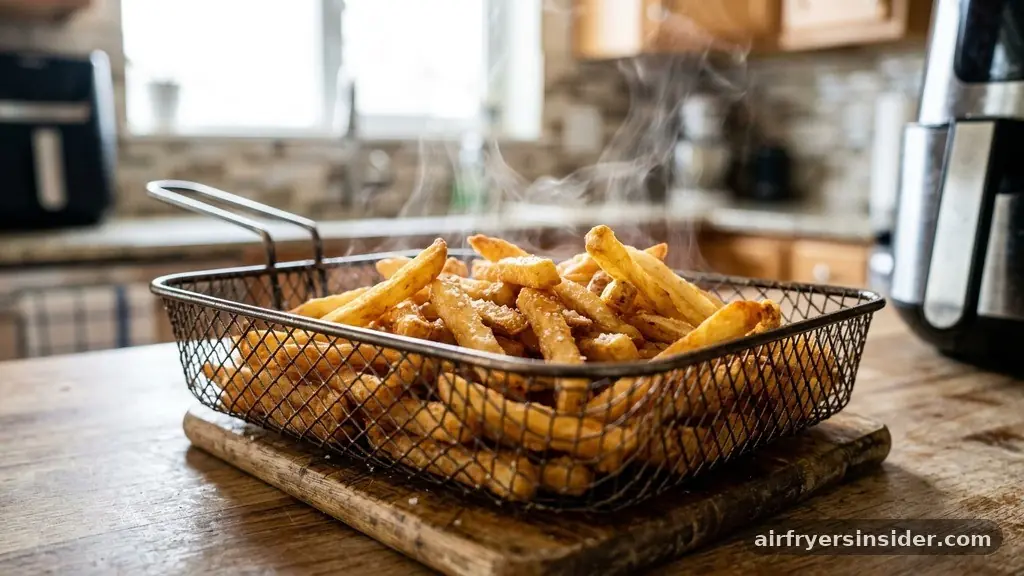
The air fryer works by circulating hot air at high speeds, which is why it is the superior tool for reheating compared to a microwave. When you place cold fries into the basket, the machine creates a high-heat blast that immediately targets the exterior moisture.
This process rapidly evaporates the surface water that usually makes fries soggy after they have been sitting in the refrigerator. Unlike a traditional oven, which takes time to heat up and often cooks unevenly, the air fryer uses intense airflow to crisp the potato skin in a fraction of the time.
The key to success lies in the interaction between the hot air and the starch structures within the potato. If you heat them too slowly, the fries simply absorb the residual oil and become limp.
If you heat them too quickly at an incorrect temperature, you risk burning the outside while the center remains cold. By leveraging the convection power of your device, you ensure that the heat penetrates the entire fry, restoring the texture that defines a perfect snack.
Determining the Optimal Temperature Settings
Finding the Optimal Temperature Settings is arguably more important than the exact duration of the process. Most professional chefs and home cooks agree that 350°F to 375°F (175°C to 190°C) is the “sweet spot” for restoring leftovers. At this range, the heat is high enough to trigger the Maillard reaction—the chemical process that gives fried foods their golden-brown color and savory flavor—without causing the surface to char before the middle is warm.
Using a temperature above 400°F often leads to uneven cooking, where the edges of the fries turn to carbon while the insides stay lukewarm. Conversely, staying below 325°F will result in a long wait time that leaves the potato feeling dense and oily.
Always verify your air fryer’s capabilities, as some powerful models run hotter than others. If you are unsure, start at 350°F and adjust upward if you prefer a more aggressive crunch.
Step-by-Step Timing Guidelines for Different Styles
Because fry styles vary in density and surface area, the Recommended Reheating Duration changes based on the cut. A thin, delicate shoestring fry will reach peak crispiness much faster than a heavy, dense steak fry. To achieve the best results, you must tailor your approach to the specific variety you are serving.
Reheating Duration by Fry Type
| Fry Type | Recommended Time | Suggested Temp |
|---|---|---|
| Shoestring | 2–3 Minutes | 350°F |
| Crinkle-Cut | 3–4 Minutes | 360°F |
| Steak Fries | 4–6 Minutes | 375°F |
These Step-by-Step Timing Guidelines serve as a baseline for your efforts. Always perform a quick check halfway through the cycle. Pulling the basket out to shake the contents ensures that the heat is distributed evenly across all pieces, preventing any single fry from bearing the brunt of the heat for too long.
The Importance of Basket Capacity and Airflow
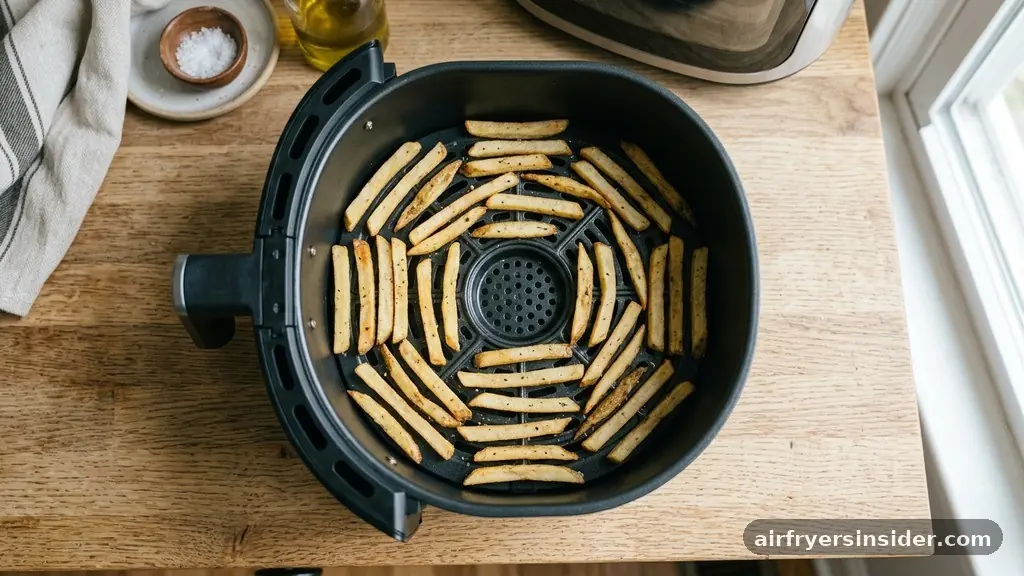
One of the most common mistakes when using an air fryer is failing to avoid overcrowding the basket. When you stack fries on top of each other, you create a barrier that blocks the essential airflow required to crisp the food. If the air cannot circulate freely around every side of the potato, you are effectively steaming the fries rather than air frying them, often resulting in soggy textures that no one enjoys.
To maintain the quality of your leftovers, arrange the fries in a single layer whenever possible. If you have a large batch, it is far better to reheat them in two separate rounds than to cram them all into the basket at once.
While it may take a few extra minutes, the difference in texture is significant. Proper spacing allows the hot air to reach every surface, ensuring that even the fries in the center of the pile get that satisfying crunch.
Tips for Better Results Using Oil and Seasoning
Beyond just timing, there are small adjustments you can make to elevate the quality of your reheated fries. While the fries likely still contain some residual oil from their original cooking, a very light spritz of an oil mist can act as a catalyst for crispiness. A high-smoke-point oil like canola or avocado oil works best, as it will not burn or impart an unpleasant flavor during the short reheating cycle.
Additionally, do not be afraid to re-season. Much of the original salt and seasoning may have been lost or absorbed into the potato during storage.
A quick pinch of sea salt or a dash of smoked paprika immediately after pulling the fries from the air fryer can make them taste fresh out of the deep fryer. Adding these finishing touches restores the vibrant flavor profile that often fades when food sits in the fridge for more than a few hours.
Preheating and Internal Temperature Considerations
While many people skip this step, preheating your air fryer for two to three minutes before adding the fries creates a consistent environment from the very first second. This prevents the fries from sitting in a warming chamber while the machine struggles to reach the target heat, which can lead to a dry or chewy texture. By starting with a hot basket, you ensure that the exterior crisping process begins immediately.
Regarding the internal temperature, your goal is for the center of the fry to reach roughly 165°F to ensure it is thoroughly heated. Because fries are relatively small, you rarely need a meat thermometer to check this, but you can use the “touch test.” If the center feels soft and yielding, and the exterior provides a distinct resistance when you bite into it, your fries have reached the perfect state.
Addressing Common Challenges and Topical Gaps
Many home cooks wonder if it is possible to reheat frozen fries that were never cooked, or how to handle fries that were already heavily sauced. If you are reheating frozen fries, the process is slightly different; you should skip the preheat and add an extra two minutes to the duration.
For sauced fries, like poutine or chili cheese fries, the air fryer is generally not the right tool. The high-speed fan will blow the toppings off, and the liquid will create a steam-filled environment that prevents any crisping.
Another gap in common knowledge involves the use of aluminum foil. While foil can make cleanup easier, it significantly restricts the airflow within the basket.
If you must use a liner, opt for perforated parchment paper designed specifically for air fryers. This allows the heat to pass through the holes while keeping your basket clean, ensuring that your reheating efforts remain effective and efficient.
The Impact of Different Air Fryer Models
It is vital to recognize that not all air fryers are created equal, and your specific model might dictate the exact time required. A small, compact unit with a powerful fan often cooks faster than a large, oven-style air fryer with a more diffuse heating element. If you own a popular model like the Ninja, you might find that the high-heat blast is more intense, meaning you should pull your food out thirty seconds earlier than the guidelines suggest.
Consistency is a learned skill. Keep a note of how your specific machine handles potatoes. If you find your fries are consistently getting too dark, lower the temperature by 10 degrees next time.
If they are not getting crisp enough, increase the time rather than the heat. By treating your air fryer like any other precision kitchen tool, you will eventually develop an intuition for the exact timing needed for your favorite snacks.
Frequently Asked Questions
Is it worth reheating fries in an air fryer?
Yes, it is the most effective method available. Unlike the microwave, which turns fries into soft, rubbery sticks, the air fryer restores the original crispiness by removing moisture. It is a quick, efficient process that makes leftovers taste nearly as good as they did when first cooked.
Can I reheat shoestring, crinkle-cut, and thick-cut fries the same way?
While the method is the same, the timing must be adjusted. Thin shoestring fries require less time, usually 2 to 3 minutes, while thicker steak fries need 4 to 6 minutes to ensure the center is heated through without burning the exterior. Always adjust based on the fry’s density.
Does the air fryer make reheated fries dry?
If done correctly, it should not. The key is to keep the temperature moderate (350°F to 375°F) and the duration short. A very light mist of oil can also help retain internal moisture while the exterior crisps up, preventing the potato from becoming overly dry or chalky.
Should I preheat the air fryer before reheating?
Preheating for 2 to 3 minutes is highly recommended. It ensures that the air within the basket is at the target temperature the moment you start cooking. This immediate exposure to heat helps crisp the surface quickly, preventing the fries from becoming soggy while waiting for the machine to warm.
Conclusion
Mastering how long to reheat fries in an air fryer is a simple way to reduce food waste while enjoying your favorite snacks at their best. By focusing on proper airflow, avoiding overcrowded baskets, and selecting the right temperature for your specific fry style, you can achieve a perfect, crunchy result every time. Remember that the goal is to balance the restoration of the crispy exterior with a warm, fluffy interior, which is easily achieved through the convection power of your appliance.
Start with the suggested timings provided, observe how your specific machine performs, and feel free to adjust as you gain confidence. With these techniques, you will never have to settle for soggy leftovers again, ensuring every fry is as delicious as the first.


